DbcultAccessing Vault...
Cult Review
Senior Film Conservator
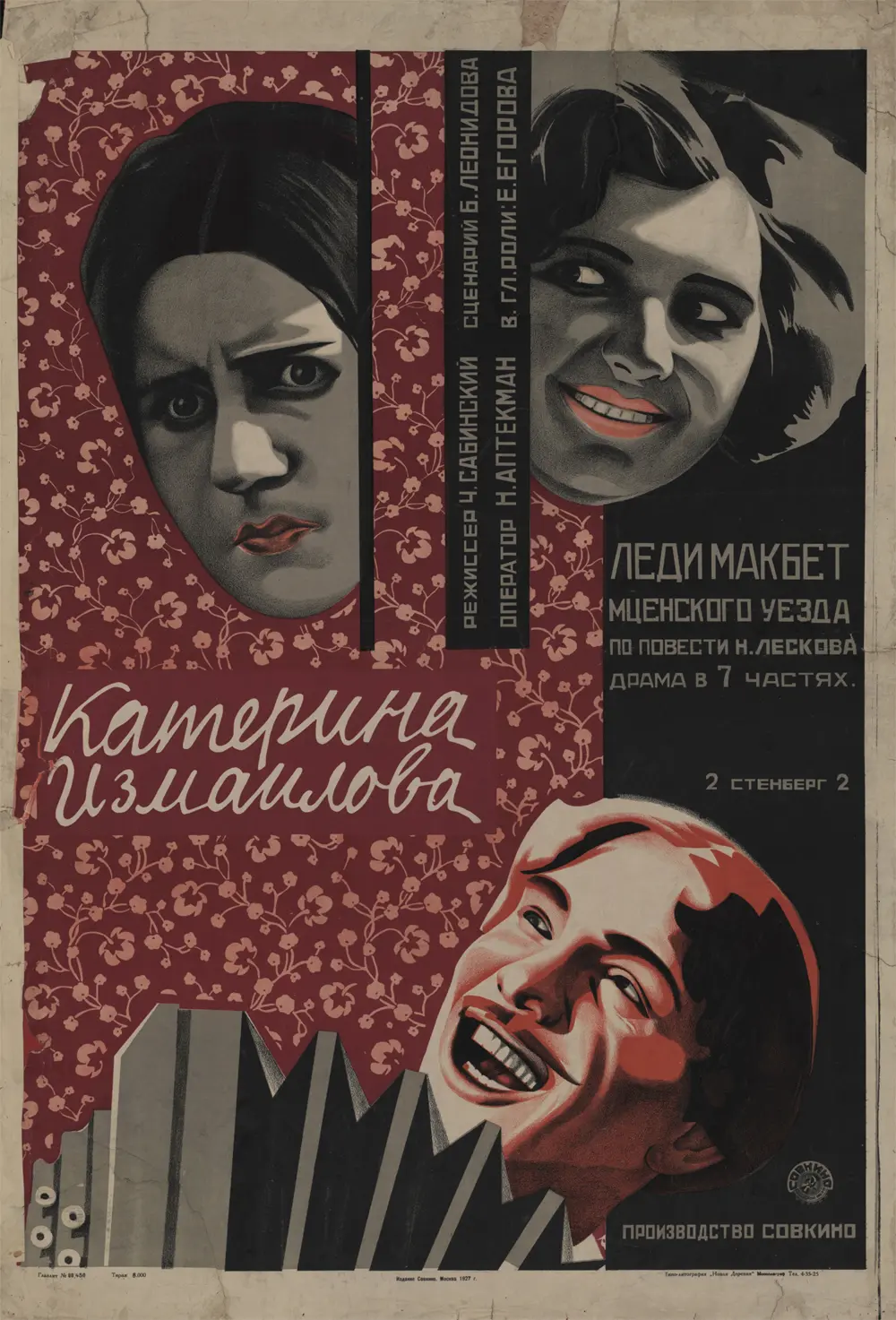
Is Katerina Izmailova a film that demands your attention in the modern era? Short answer: Yes, but only if you have the stomach for a narrative that offers absolutely no light at the end of the tunnel.
This film is for viewers who appreciate the intersection of high opera and gritty realism, and for those who enjoy psychological character studies that don't shy away from the grotesque. It is emphatically not for anyone seeking a traditional romance or a fast-paced thriller; its rhythms are tied to the slow, agonizing pulse of Shostakovich’s score.
Before diving into the murky depths of this Soviet classic, let's establish the ground rules for its success and failure.
Katerina Izmailova is worth watching because it is a rare example of an opera film that feels like a genuine piece of cinema rather than a staged performance. The direction by Mikhail Shapiro ensures that the camera isn't just a passive observer but an active participant in Katerina's descent. If you value atmosphere over action and psychological complexity over moral clarity, this is an essential watch. It captures a specific brand of Russian nihilism that is both beautiful and terrifying.
The film centers on Katerina, played with a simmering, quiet intensity by Zoya Valevskaya. Unlike the more flamboyant portrayals of female killers in films like Alraune, Valevskaya’s Katerina is a woman of few words and heavy silences. Her boredom is her primary motivation. It’s a dangerous, stagnant boredom that breeds violence. When she poisons her father-in-law, played with a repulsive, oily authority by Nikolai Simonov, there is no grand monologue. There is only the sound of the wind and the oppressive ticking of the clock.
The murder of her husband is even more clinical. The film excels at showing the banality of evil within a domestic setting. The kitchen, the cellar, and the bedroom become sites of execution. The lighting in these scenes is intentionally flat, stripping away the glamour often associated with 'noir' crimes. It feels real. It feels dirty. This isn't the stylized violence of J'accuse!; it is a clumsy, desperate grab for a life that Katerina doesn't even fully understand.
The transition to the Siberian sequence is where the film truly tests the viewer. The lush, albeit suffocating, interiors of the first half are replaced by a monochromatic wasteland. Here, the film takes on the quality of a funeral march. The pacing slows down significantly, mirroring the literal march of the prisoners. This is where we see the true nature of Sergei, the lover for whom Katerina sacrificed everything. Sergei is not a tragic hero; he is a pathetic opportunist.
The moment Sergei begins to mock Katerina in front of the younger prisoner, Sonetka, is perhaps more painful than any of the physical violence earlier in the film. It’s a brutal realization. Katerina killed for a man who views her as nothing more than a ticket to a better life, and once that ticket is punched, she is discarded. The film’s handling of this betrayal is masterful, using the vast, empty landscape to emphasize Katerina’s total isolation. She is alone among thousands.
Mikhail Shapiro’s direction is surprisingly modern for a 1966 Soviet production. He avoids the stagey pitfalls that plague many opera adaptations. The use of close-ups is particularly effective. We spend a lot of time looking at Valevskaya’s eyes, which seem to go dead long before the film’s climax. The cinematography captures the textures of the period—the heavy wool of the coats, the damp stone of the cellar, the freezing water of the river—with a tactile quality that makes the environment feel like a character in itself.
The pacing is deliberate. Some might call it slow. I call it necessary. To understand Katerina’s break from reality, we need to feel the passage of time in that house. We need to feel the weight of the silence. When the music finally swells, it doesn't feel like an accompaniment; it feels like an explosion of the character’s inner turmoil. It’s an aggressive score that demands the viewer's full attention, much like the intense thematic weight of Medea di Portamedina.
One could argue that Katerina is a victim of a patriarchal society that gave her no outlet for her intellect or her passion. I disagree. While the society is undoubtedly oppressive, the film makes it clear that Katerina’s choices are hers alone. She is not a victim of circumstance; she is a predator who miscalculated the nature of her prey. This is what makes the film so uncomfortable. We want to root for her escape, but her methods are so devoid of empathy that we are left adrift.
Her final act of violence in the river is not an act of justice. It is an act of total nihilism. She doesn't just want to die; she wants to take the source of her pain with her into the void. It’s a terrifyingly selfish conclusion. The film refuses to give her the dignity of a 'tragic' end. It just ends. It’s cold. It works. But it’s flawed in its relentless refusal to offer a single moment of warmth.
Katerina Izmailova is a difficult, demanding, and ultimately rewarding piece of cinema. It strips away the artifice of the 'doomed lover' trope and reveals the ugly, transactional nature of desperation. While it lacks the epic scale of something like J'accuse!, it compensates with an internal intensity that is almost unbearable. It is a film that lingers in the mind like a cold draft in an old house. If you are prepared for its darkness, it is a journey worth taking. It is a stark realization of human frailty. It is a masterpiece of misery.

IMDb —
1917
Community
Log in to comment.