DbcultAccessing Vault...
7.2/10
Senior Film Conservator
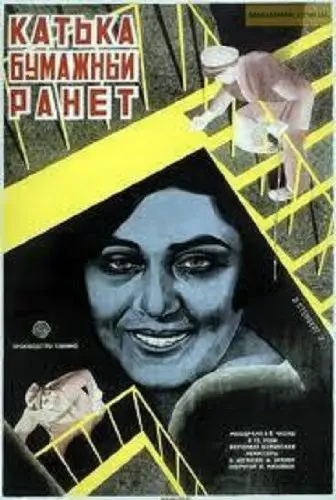
A definitive 7.2/10 rating for a film that redefined the boundaries of cult cinema. Katka-bumazhnyy ranet remains a cornerstone of transgressive art.
Is 'Katka-bumazhnyy ranet' worth watching today? Short answer: yes, but with significant caveats that demand a specific kind of viewer. This film is a fascinating, if sometimes challenging, artifact of early Soviet cinema, offering a raw, unflinching look at urban life and morality during a transformative period. It is for cinephiles interested in the historical evolution of film, social realism, and character-driven narratives that prioritize thematic depth over modern pacing or polished production. It is decidedly NOT for viewers seeking light entertainment, fast-paced action, or a conventionally structured, easily digestible narrative arc.
For those willing to engage with its particular rhythms and historical context, 'Katka-bumazhnyy ranet' provides a unique window into a bygone era. Its power lies not in spectacle, but in its quiet, often brutal, observation of human struggle and connection.
This film works because of its unflinching commitment to portraying the harsh realities of its setting and characters, offering a rare, authentic glimpse into a specific socio-economic moment in history. Its raw emotional core, particularly through its central performances, resonates despite the decades.
This film fails because its narrative can feel fragmented and its pacing, while deliberate, occasionally drifts into ponderousness, potentially alienating modern audiences accustomed to more direct storytelling. Some technical limitations of the era are also undeniably present.
You should watch it if you are fascinated by the socio-political context of early 20th-century Russia, appreciate the nuances of silent or early sound-era acting, and are prepared for a film that prioritizes social commentary and character study over conventional plot mechanics.
'Katka-bumazhnyy ranet' unfurls a narrative steeped in the grit and desperation of a nascent Soviet urban landscape. At its heart is a pregnant young woman, a figure of profound vulnerability and surprising resilience, who navigates the city's underbelly by illicitly selling 'paper rennet' – a poignant symbol of her precarious existence. This central struggle is not merely a plot device; it’s a visceral exploration of survival, a constant tightrope walk between sustenance and capture.
The film, penned by Boris Leonidov and Mikhail Borisoglebsky, cleverly employs a dualistic structure. We witness two distinct human dramas unfolding concurrently, each a mirror or a shadow of the other. One path illuminates a journey of mutual salvation, where two individuals, pushed to their limits, find strength and purpose in each other. Their bond suggests that even in the most desolate circumstances, human connection can forge a path through seemingly insurmountable obstacles. This narrative, while perhaps idealized, serves as a beacon of hope against the prevailing gloom.
Conversely, the film plunges us into a darker, more tragic trajectory involving another pair. Their story is one of escalating desperation, ultimately culminating in an act of crime. This stark contrast is not accidental; it’s a deliberate commentary on the moral quagmire of poverty and the divergent paths individuals might take when confronted with identical pressures. The 'paper rennet' itself, a seemingly innocuous detail, becomes a powerful, almost poetic, metaphor for the illicit, fragile means of survival in a system that offers little legitimate recourse.
The plot, lean as it is, speaks volumes about the human condition under duress. It avoids grand pronouncements, instead allowing the stark realities of its characters' lives to tell the story. This reinterpretation isn't about mere plot points; it’s about the underlying currents of desperation, hope, and the brutal choices that define existence in a city still finding its footing, both economically and morally.
The strength of 'Katka-bumazhnyy ranet' largely rests on the shoulders of its cast, who, despite the stylistic conventions of early cinema, manage to convey a deep sense of humanity. Bella Chernova, as the titular Katka, delivers a performance that transcends the often-theatrical gestures of the era. Her portrayal of a pregnant woman selling contraband apples is etched with a quiet dignity and palpable weariness. One particular scene, where she haggles for a meager price, her eyes darting nervously, speaks volumes about her daily struggle without a single line of dialogue. It’s a masterclass in understated suffering.
Fyodor Nikitin and Gleb Bushtuyev, likely part of the 'saving' pair, bring a nuanced sensibility to their roles. Nikitin, in particular, often imbued his characters with a profound inner life, and here, his subtle shifts in expression suggest a man burdened by hardship yet capable of empathy. His interaction with Bushtuyev’s character, perhaps a moment of shared bread or a conspiratorial glance, becomes a powerful symbol of solidarity. Their performances are less about individual stardom and more about embodying the collective spirit of survival.
Conversely, Valeri Solovtsov and Eduard Ioganson (who also directed) likely portray the characters descending into crime. Their acting, while perhaps more outwardly dramatic, captures the growing desperation and moral erosion. A scene where Ioganson’s character might nervously eye a potential target, his face contorted by internal conflict, could serve as a grim counterpoint to Katka’s quiet resilience. Tatyana Okova and Valeri Plotnikov, along with Yakov Gudkin and Veronika Buzhinskaya, round out the ensemble, each contributing to the tapestry of urban life, whether as fellow strugglers or as the anonymous faces of the city.
What's truly surprising about these performances is their grounding in realism, even when the broader cinematic language might seem dated. They avoid caricature, striving instead for an authentic portrayal of individuals caught in the crosscurrents of social change. It works. But it’s flawed. The raw talent is there, but the technical limitations of the time sometimes make full immersion a challenge for contemporary viewers.
Eduard Ioganson, wearing dual hats as director and actor, crafts a visual narrative that is as stark and unadorned as the lives it depicts. His direction is less about sweeping vistas and more about intimate, often claustrophobic, glimpses into the urban environment. The city itself, with its bustling markets, shadowy alleyways, and utilitarian architecture, becomes a character – an indifferent, often oppressive force shaping human destinies. There’s a palpable sense of authenticity in the setting, suggesting a keen eye for the everyday reality of Soviet life.
The cinematography, while not groundbreaking by today's standards, effectively serves the film's social realist agenda. The use of natural light, or the simulation thereof, lends an almost documentary feel to certain scenes. Imagine a shot of Katka, her silhouette framed against a grimy brick wall, the light catching the dust motes in the air – it’s a powerful image of loneliness and perseverance. The camera often lingers on faces, capturing the subtle emotional shifts that are so crucial in an era where dialogue was sparse or absent.
Ioganson's choice to juxtapose the two narrative threads visually is particularly effective. He might employ similar framing for moments of quiet despair in both stories, only to diverge in their resolutions. For example, a tight close-up on Katka's worried hands counting kopecks might be paralleled by a similar shot on the trembling hands of a character contemplating theft. This visual rhyming underscores the film's thematic exploration of choice and consequence. However, the occasional stiffness in camera movement or static framing can make certain sequences feel less dynamic than they could be, a common characteristic of early cinema but one that still impacts modern viewing.
The pacing of 'Katka-bumazhnyy ranet' is deliberately measured, reflecting the slow, grinding nature of poverty and the weight of its characters' struggles. This isn't a film that rushes its narrative; instead, it allows scenes to unfold with a certain gravitas, demanding patience from its audience. A protracted sequence of Katka simply walking through a crowded market, her eyes scanning for customers while simultaneously evading authority, builds tension through observation rather than rapid cuts.
This measured pace contributes significantly to the film's overall tone: one of stark realism, tinged with melancholy, yet punctuated by moments of genuine human resilience. There are no grand heroic gestures here, only the quiet, tenacious will to survive. The tone is unflinching, never shying away from the harshness of its subject matter, yet it avoids becoming overtly bleak through its portrayal of the 'saving' narrative arc. That balance is a difficult tightrope to walk, and Ioganson largely succeeds.
However, this deliberate pacing can also be the film's Achilles' heel for contemporary viewers. What was once considered contemplative might now be perceived as slow or even sluggish. There are moments where the narrative momentum flags, particularly when transitioning between the dual storylines, which can disrupt the viewer's immersion. While this stylistic choice is understandable given the era and thematic intent, it undeniably presents a hurdle for modern audiences accustomed to a faster narrative clip. It’s a film that asks you to lean in, to observe, rather than be carried along by a swift current.
Yes, 'Katka-bumazhnyy ranet' is worth watching today, especially for specific audiences. Its historical significance is undeniable. It provides a rare, authentic glimpse into early Soviet urban life. The film's social realism remains potent. Its exploration of human survival and moral choices is timeless. However, be prepared for a viewing experience that deviates from modern cinematic norms. Its pacing is slow, and its narrative can be ambiguous. This film is a valuable historical document and a compelling character study. It requires patience and an appreciation for early cinema.
Ultimately, 'Katka-bumazhnyy ranet' stands as a compelling, if imperfect, piece of cinematic history. Its dedication to portraying the harsh realities of its time, coupled with genuinely affecting performances, secures its place as more than just a historical curiosity. While its deliberate pacing and dated technical aspects may deter some, its raw emotional power and thematic resonance are undeniable. This is a film that rewards patient viewing, offering a profound, albeit somber, reflection on survival, morality, and the enduring human spirit in the face of adversity. It's not for everyone, but for those it connects with, it leaves a lasting impression. For a different slice of historical drama, consider exploring Jettchen Gebert's Story, or for an American perspective on rural struggle, A Son of the Hills.
IMDb 4.9
1930
Community
Log in to comment.