A Nitrate Nocturne: How The Veiled Marriage Turns Moral Rot into Gold
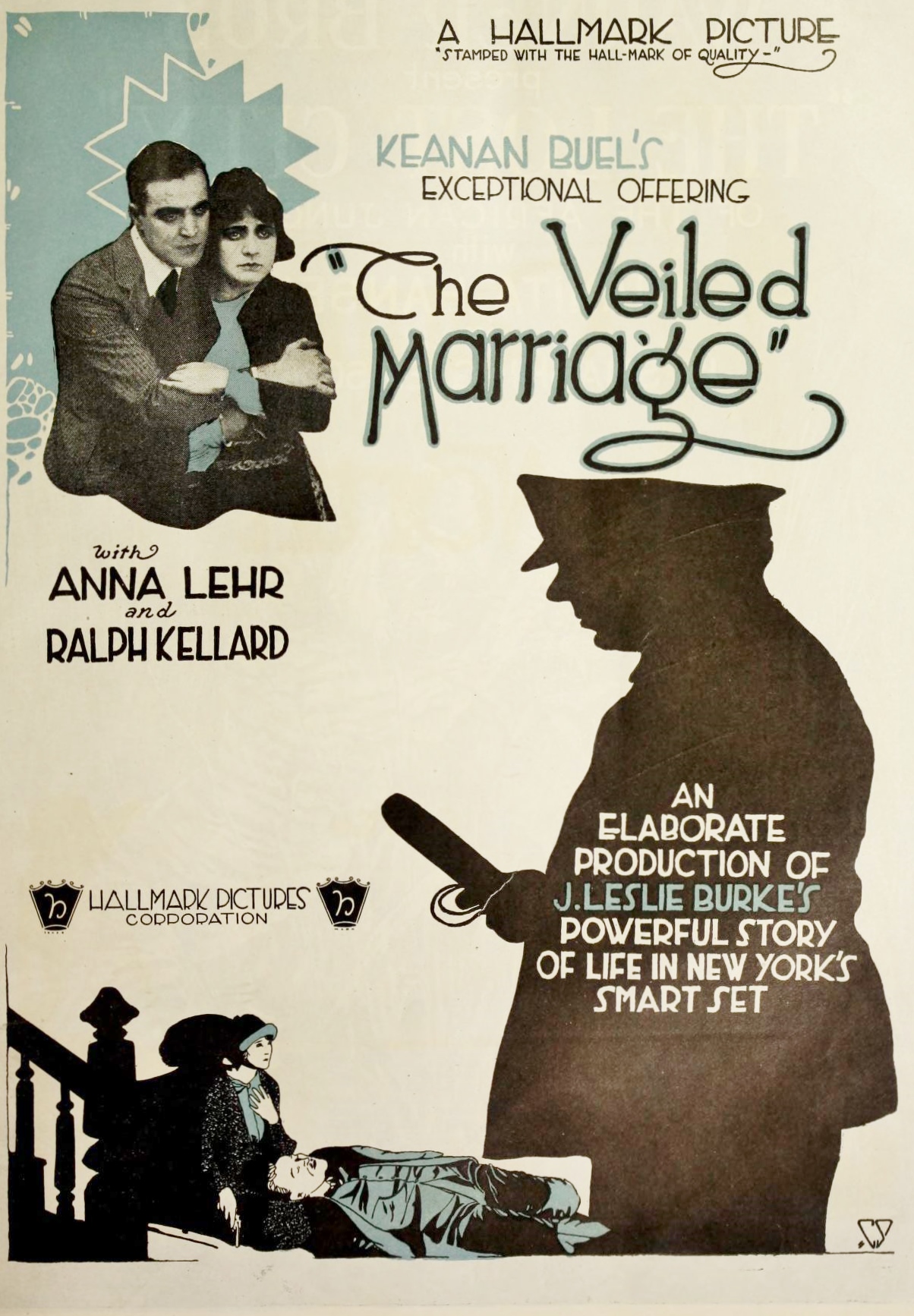
Picture a reel still warm from the projectionist’s claw, its acetate breath smelling of popcorn and perdition—that’s the smoky incense curling around The Veiled Marriage, a 1922 obscurity so steeped in cynicism it makes von Stroheim look like a boy scout. Forgotten for a century, this Manhattan bacchanalia of forged signatures and ocular trauma feels staggeringly nouveau, as though Twitter mob justice were already loitering in the speakeasy shadows.
Director John J. Glavey—whose name history misplaced like a handkerchief—marshals a society tableau where friendship is a liquid asset to be distilled, re-barrelled, and sold at markup. Fred Peyton, plated in top-hat arrogance, glides through silk-curtained salons as if entitled to every photon; John Browning, the passive prince of capital, drifts behind him like an overfed shadow. Their camaraderie is less a bromance than a leveraged buy-out of conscience.
Blinded by Gaslight: Margaret’s Metamorphosis
Enter Margaret Fallon, a tenement orchid whose radiance is so economically inconvenient you can practically hear the coins rattling in Peyton’s pupils when he first spots her mending garments by candle. Dorothy Walters, never a marquee immortal, plays her with a tremulous mix of steel and starch: eyes that blaze defiance even after the explosion razes her retinas. The film’s mid-section traps her in a chiaroscuro underworld—bandages like chalk lines across her face—while Peyton’s quill scrapes parchment, substituting her name into another woman’s contract. The camera doesn’t cut away; it lingers, sadistic voyeur, until the forgery becomes sacrament.
What chills is how Glavey refuses to frame the marriage as farce. The ceremony is staged with ecclesiastical gravitas: candles gutter, organ wheezes, and the priest’s mouth forms the binding words while the bride’s gaze is fixed on nothingness. The sequence anticipates Hitchcock’s Vertigo by thirty-six years, swapping obsession for outright felony, and it lands like a shiver inside a cathedral.
Amnesia as Meet-Cute: The Second First Impression
Once Margaret’s sight trickles back, the screenplay engineers one of silent cinema’s most perverse “meet-cutes.” Browning, now bankrupt after market bloodletting, advertises for domestic help; Margaret answers, unaware the man who signed her marital death warrant is the same one burning her toast at dawn. Their tentative courtship—inked in piano chords and mismatched saucers—could feel sitcom-ish, yet William Carr plays Browning with such hang-dog sincerity that dread pools beneath every smile. We know the matrimonial anvil dangles overhead; they don’t. The suspense is Vertigo-adjacent again, but warmer, like watching two moths flirt inside a lit furnace.
Peyton’s Comeuppance: Gunfire in the Gilded Cage
Every Jacobean revenge tale demands a bloody invoice, and the film pays with operatic flourish. Peyton’s discarded mistress—Anna Lehr in a role so brief she’s practically a footnote—emerges from the velvet shadows, revolver glinting like a final exclamation mark. The shot is fired off-camera; we only glimpse the crimson bloom seeping through Peyton’s white waistcoat as he collapses atop stock certificates. His death is less moral punctuation than systemic shrug: the market corrects even human chattel.
With the forger dispatched, the last reel races to annul the fraud, unspooling legal exposition at break-neck speed. Yet the emotional payoff lands softly: Browning and Margaret stand before a judge, technically strangers, spiritually spouses, requesting a divorce from one another so they may remarry with eyes wide open. It’s a legal paradox so absurd it loops back to romantic.
Visual Alchemy: Tinted Shadows and Gas-Flare Yellows
Surviving prints—only two are known—survive in 16mm reductions, yet their tinting remains voluptuous. Night sequences swim in aquamarine, as though the screen itself holds breath underwater; ballroom scenes flare with amber that makes champagne look like molten topaz. The palette amplifies the moral temperature: cold blues for deception, sulphuric yellows for revelry, and a final blush of rose when the lovers reunite.
Performances Trapped in Nitrate: Carr vs. Charles
William Carr’s Browning is all hesitations and half-finished gestures, a man perpetually discovering his own skeleton in the cupboard. John Charles, by contrast, frosts Peyton with matinee-idol vanity—every smirk calibrated to sell bonds or steal hearts. Their clash is less good-versus-evil than liquidity-versus-liability, and the film refuses to grant either man a monopoly on charisma.
Gender & Capital: Women as Exchange Currency
Viewed through a 2024 prism, The Veiled Marriage is a scalding study of patriarchal arbitrage. Margaret is traded, blindfolded, between portfolios; even her eventual employment is a patronage transaction. Yet Walters bestows on her a quiet ledger-balancing agency: every stitch she sews reclaims time stolen, every glance post-sight-restoration rewrites the contract. The film may indict the market, but it also lets its heroine audit the books.
Sound of Silence: Musical Accompaniment Then & Now
In 1922 the film toured with a small-town pianist cueing Tchaikovsky fragments; today, revival houses commission new scores. I caught a MoMA screening backed by a four-piece ensemble weaving klezmer clarinet into salon waltz—discord that mirrored the ethical vertigo. Search YouTube for bootleg uploads and you’ll find synth scores that turn Margaret’s blindness into neon noir; both interpretations feel valid, proof that silent cinema is a Rorschach test for cultural temperature.
Restoration Status: Where to Watch & How to Lobby
Rights are tangled in the Edison Trust graveyard. The surviving 16mm elements reside in the Library of Congress paper-print vault, digitised at 2K but unrestored. A 2025 crowdfunding campaign—#LiftTheVeil—aims to reconstruct missing intertitles via AI lip-reading of the 35mm original negative (long thought lost in the 1935 Fox vault fire). Fans of drug-tinged melodramas or orphan narratives should donate: the same lab restored Tangled Fates last year.
Final Projection: Why This Forgotten Curio Deserves a 4K Renaissance
Because it prefigures every prestige scam saga—from Dangerous Liaisons to Vertigo—while retaining the gutter perfume of pre-Code New York. Because its gender politics feel eerily synchronous with today’s crypto bros tokenising girlfriends as NFTs. Because Dorothy Walters’ luminous agony could launch a thousand think-pieces on disability representation. And because, at a crisp 67 minutes, it hits like a shot of bootleg absinthe: sweet on the tongue, corrosive in the veins, leaving you giddy with the aftertaste of burnt sugar and ruined lives.
Watch it whenever some cinephile claims silent cinema was quaint. Then watch them fall silent.
For comparative hangovers, chase it with When Men Are Tempted or the Italian fatalism of L’autobus della morte. But return to The Veiled Marriage when you crave a tale that weds Jacobean cruelty to Jazz-Age jazz, then annuls the union with a single smoking bullet.