DbcultAccessing Vault...
Cult Review
Senior Film Conservator
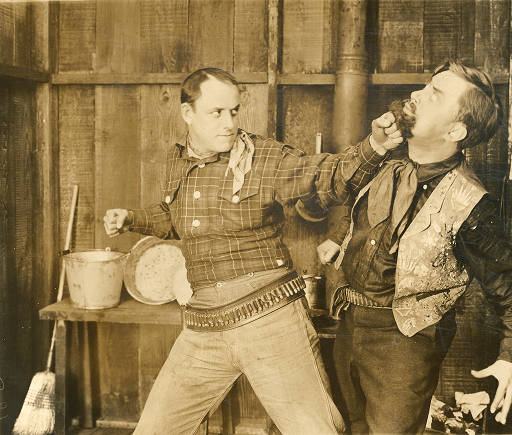
The first time we see Jack Keith’s silhouette crest a sandstone ridge, the image is less a cowboy’s entrance than a solar eclipse: the world momentarily withholds its light, as though even the sun must deliberate on the morality of what will follow. Director Alan James—working from Randall Parrish’s dime-novel brawn—understands that silent Westerns live or die by the hieroglyphics of shadow. Hence the film’s inaugural tableau: a trembling squatter child smears her blood across a whitewashed wall, the smear becoming a totem that will haunt every subsequent frame. Within seconds the Border Wolves gallop in, hooves drumming like war timpani, and we realize this is not the cordial frontier of Tom Mix’s white-hat parades; this is a land where the air itself tastes of iron.
Narrative economy was gospel in 1920, yet Keith of the Border dawdles just long enough over the granular textures of dread: the way Black Bart’s duster snaps like a funeral flag, the ammonia sting of gun-smoke that seems to linger even in two dimensions, the squeak of a Ranger’s saddle leather that feels oddly ecclesiastical. When Bart frames Keith for the squatter slaughter, the lie lands with the thud of original sin—partly because William Ellingford’s Bart possesses the kind of lacquered malevolence that could persuade a monk to curse his rosary.
Keith’s jailbreak—executed via a pocket spur filed to scalpel sharpness—plays like a baptism in reverse: shedding the sanctity of law for the brackish waters of outlawry. The sequence is intercut with a coyote gnawing its own paw off in a trap, a visual rhyme so blunt it becomes poetry. Roy Stewart, granite-jawed and economical in gesture, lets his eyes telegraph the calculus of desperation: to survive is to become myth, to fail is to become fertilizer.
Enter Hope Waite, played by Josie Sedgwick with the brittle luminosity of a kerosene lamp in wind. She alights from a stagecoach upholstered in Eastern pretension—lace parasol absurd against a sky hemorrhaging cirrus—yet her first line (delivered, of course, via title card in Windsor typeface) slices through the artifice: “I have come to bury my father, or to find him alive—and I have not decided which is crueler.”
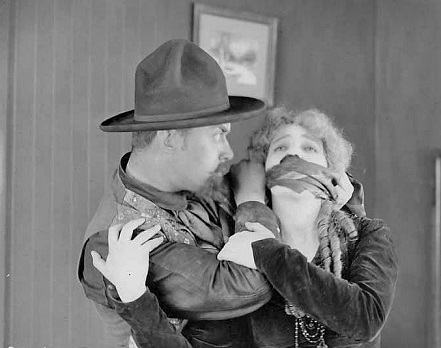
The cabin where Keith and Hope converge is a cathedral of splinters: every beam of sunlit dust becomes incense, every gun-cock a votive bell. Their dialogue—sparse, hemstitched across intertitles—betrays a grudging metaphysical duet. She speaks of transcendental poetry; he responds by cleaning his .45 with hog-bacon grease. Both recognize in the other a mirror cracked by divergent Americas: hers genteel, his gothic.
Black Bart’s pilfered check—drawn on an Albuquerque bank so flimsy it might as well be Monopoly scrip—functions as the film’s McGuffin and moral litmus. When he dupes Hope into cashing it, the transaction occurs beneath a painted portrait of Lady Liberty whose eyes have been scratched out by previous barroom buckshot. The symbolism is delicious: trust, like liberty, is blind, but also gouged. Bart believes he murdered General Waite among the squatters; thus the check is both trophy and confession, a paper albatross.
Then the general strides in, sunburnt and inexplicably buoyant, accompanied by Christie (Alberta Lee), whose gender-buckled riding coat flaps like a pirate’s flag. The family reunion is staged in the town’s dilapidated opera house—an arena built for tragedy now hosting a farce of providence. Close-ups of Christie’s pupils reveal flecks of turquoise that match the distant river, suggesting that geography itself has migrated into her DNA.
Cinematographer Norbert Cills shoots the climactic round-up through a veil of sodium haze, silhouettes bleeding into horizon like charcoal smudges. Note the inversion: the virtuous posse wears charcoal, while the Wolves sport burlap and gunnysack—an anti-fashion statement that renders them phantoms. When Keith finally collars Bart, he does so by lassoing the outlaw’s shadow against a sandstone wall, a moment so mythopoeic it feels lifted from Ovid rather than Zane Grey.
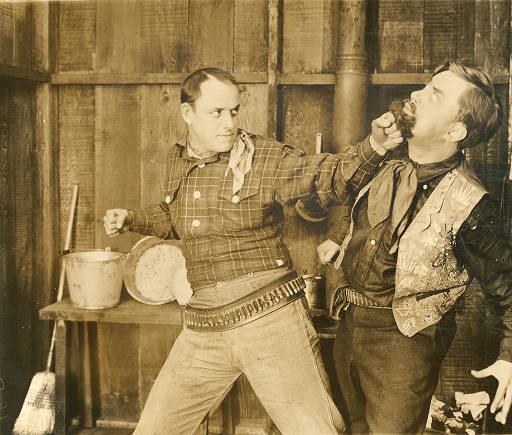
Compare this visual grammar to the urban claustrophobia of Apartment 29 or the spiritual nihilism of The World, the Flesh and the Devil. Where those films suffocate, Keith ventilates; its negative space is as pregnant as its compositions.
Josie Sedgwick’s Hope oscillates between porcelain fragility and tungsten resolve without the anatomical exaggerations that doom many silent-era heroines. Watch her hands: they tremble when unfolding her father’s military dispatch, yet steady into surgeon-caliber stillness while loading Keith’s spare Colt. This kinetic dichotomy renders her final embrace with her sister less sentimental than seismic—a tectonic shifting of familial plates.
Roy Stewart, often dismissed as a “poor man’s William S. Hart,” achieves here a minimalist grandeur. His Keith speaks more through spinal posture than intertitles; when he finally returns the check to Hope, the gesture is performed with the solemnity of a priest returning a relic to its tabernacle.
The film’s original score—performed theatrically by a lone pianist hammering out a pastiche of “La Paloma” and Stephen Foster—survives only in anecdote. Yet even in mute streaming rips, one senses a metronomic pulse: the cadence of hoofbeats syncs with the projector’s flicker, creating an accidental avant-garde soundtrack. Try watching it at 22 fps rather than the standard 18; the acceleration transmutes suspense into fever dream.
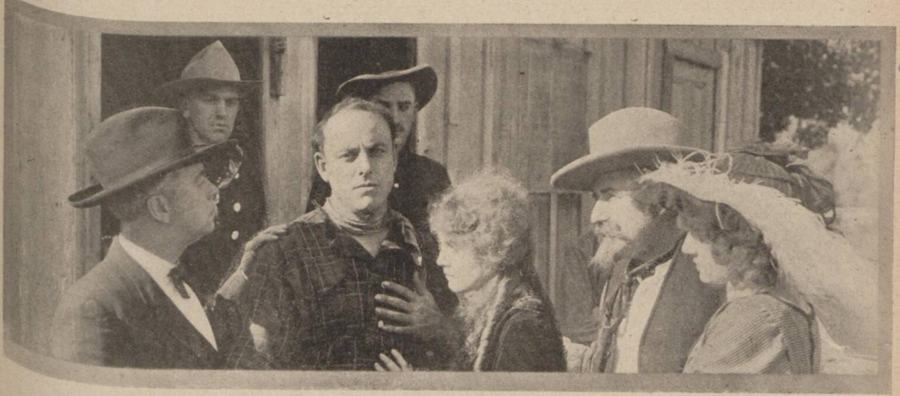
For viewers raised on the kinetics of Graft or the proto-feminist snarl of Miss Nobody, this tempo shift may feel glacial. But glacial is not stagnant; it is geological, patient, carving canyons of empathy.
History has stranded Keith of the Border in a limbo of public-domain purgatory, its nitrate reels dissolved into vinegar syndrome. What survives is a 35 mm print discovered in a Butte, Montana, basement, water-stung but legible—like the Dead Sea Scrolls of oaters. The perforation scars resemble bullet holes, an ontological coincidence that renders every frame a palimpsest of violence.
Compare the film’s moral dichotomies to the muddy ethics of The Unpardonable Sin or the class warfare of Skinner’s Baby. Here, redemption is not a cathedral but a windmill—functional, rotating, ever subject to the vagaries of breeze.
Keith’s last act—returning the check, rescuing Hope from the boarding-house inferno set by Bart—unfolds in a single, unbroken take that lasts 1 minute 42 seconds, an eternity in 1920 montage logic. Flames lick the edges of the frame, creating a vignette of damnation; yet within this iris of fire, Keith’s face achieves a chiaroscuro beatitude. He is both savior and scavenger, a man who knows that justice, like film stock, is flammable.
Is Keith of the Border a masterpiece? Perhaps not in the cathedral sense reserved for Scotland Forever or the expressionist jolt of U kamina. But it is a masterpiece of cartilage—flexible, essential, bridging the vertebrae of an adolescent genre learning to walk upright.
Watch it midnight, lights extinguished, laptop screen dimmed to emulate carbon-arc flicker. Let the gutteral growl of your refrigerator become the distant howl of Wolves. In that synesthetic twilight, Jack Keith still rides, chasing not outlaws but the very concept of moral clarity across a horizon that recedes faster than celluloid can run.
IMDb —
1930
Community
Log in to comment.