DbcultAccessing Vault...
Cult Review
Senior Film Conservator
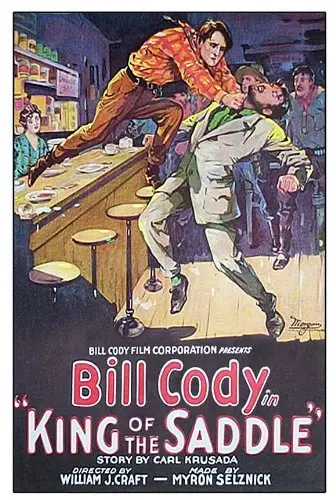
Is this film worth watching today? Short answer: Only if you are a student of the silent era or a Western genre completist. For the average modern viewer, the pacing will feel glacial and the tropes overly familiar, but for those interested in the evolution of the action hero, it is an essential piece of the puzzle.
This film is for: Historians of the American West, fans of early stunt work, and those who appreciate the raw, unpolished beginnings of Hollywood’s most enduring genre. It is NOT for: Viewers who require complex character arcs, high-definition spectacle, or a narrative that deviates from the 'hero saves the ranch' formula.
1) This film works because it understands the visual language of the horse. Bill Cody’s physical rapport with his mount provides a kinetic energy that dialogue would only slow down.
2) This film fails because the antagonist is a cardboard cutout of villainy with no discernible motive beyond 'being bad,' which saps the tension from the middle act.
3) You should watch it if you want to see the exact moment when the Western hero transitioned from a historical figure into a commercial icon.
In King of the Saddle, Bill Cody doesn't so much act as he occupies space. There is a rigid, almost statuesque quality to his performance that feels jarring when compared to the naturalistic styles we see today. However, in the context of 1926, Cody was the peak of masculine reliability. He uses his eyes to convey authority, a necessary skill when you lack a soundtrack to bolster your presence.
Take the scene where he first encounters the rustlers near the watering hole. There are no grand speeches. There is only a slow, deliberate adjustment of his hat. It’s a moment of pure posturing that works because the camera lingers just long enough to make the audience feel the weight of his gaze. It is a far cry from the more experimental performances found in European cinema of the time, such as Les gaz mortels, but it serves its purpose perfectly.
The supporting cast, particularly Joan Meredith, provides the necessary contrast. While Cody is the immovable object, Meredith is the emotional force that gives the conflict stakes. Her performance is heightened—typical of the silent era—but she manages to ground the melodrama in a way that makes the threat to her ranch feel personal rather than just a plot device.
Carl Krusada’s writing and the direction (often attributed to Richard Thorpe’s circle) prioritize efficiency over artistry. Every shot is designed to move the story forward. There is no room for the poetic digressions you might find in a film like Tiger Rose. Instead, we get a workmanlike approach to filmmaking that is admirable in its clarity.
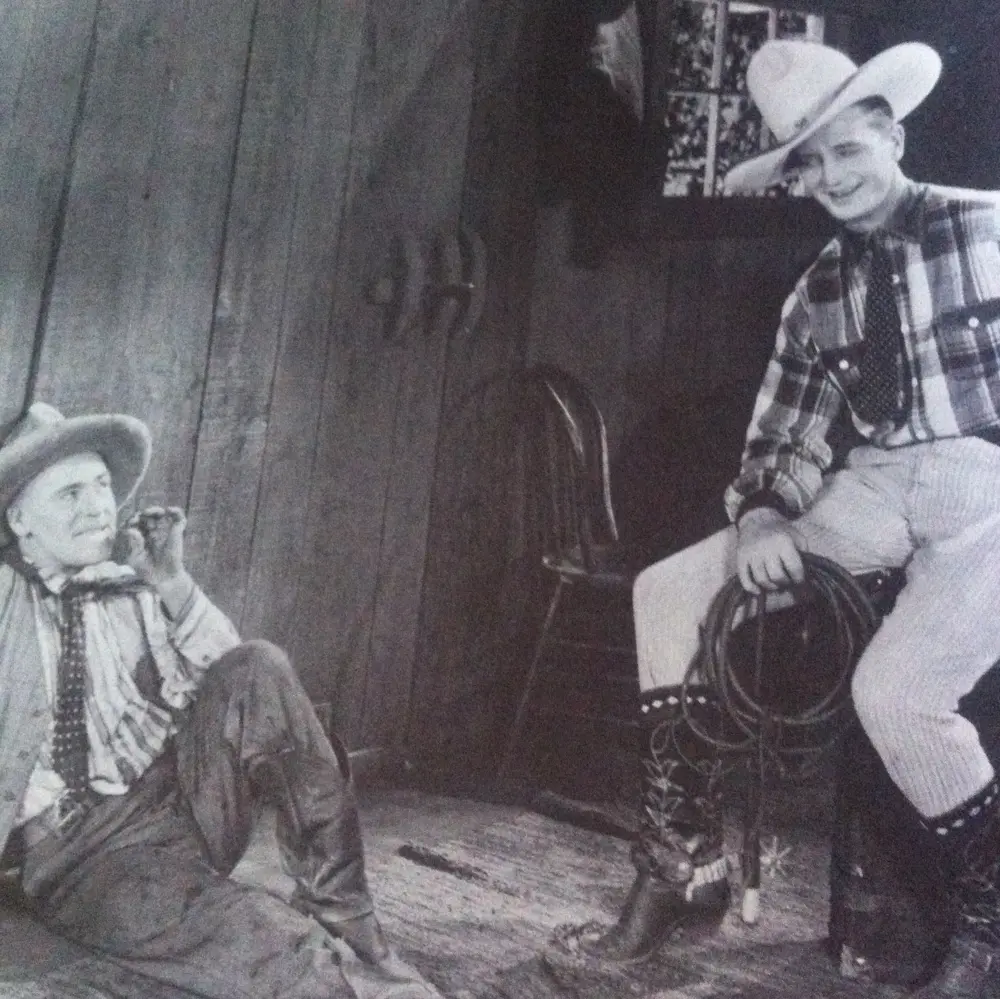
The cinematography relies heavily on natural light and the vast, unforgiving horizons of the American landscape. The use of deep focus in the exterior shots allows the viewer to see the scale of the threat long before the characters do. When the villains appear as tiny specks on a distant ridge, the sense of impending doom is more effective than any orchestral swell could achieve. It is a primitive form of suspense, but it is undeniably effective.
Compare this to the more urban, claustrophobic settings of The Firing Line. In King of the Saddle, the environment is a character in itself. The dust, the scrub brush, and the rocky outcrops aren't just backdrops; they are obstacles that the hero must navigate. The film succeeds in making the West feel like a place where survival is earned, not given.
If there is one area where the film struggles, it is the integration of Billy Franey’s comic relief. Franey was a staple of the era, often appearing in shorts like Tut! Tut! King or His New Papa. In a serious Western, his slapstick antics feel like they belong in a different movie entirely.
There is a specific sequence involving a stubborn mule that goes on for nearly four minutes. It adds nothing to the plot and completely kills the momentum built during the previous cattle-rustling scene. It’s a reminder that 1920s cinema was still experimenting with tone, often throwing everything at the wall to see what stuck. It doesn't work. It’s flawed. But it is a fascinating look at the 'variety show' mentality that still plagued feature films of the time.
Even when compared to other genre experiments like Monkeying Around, the humor here feels dated. However, the sheer earnestness of the production makes these tonal shifts forgivable, if not entirely enjoyable.
King of the Saddle is worth watching if you want to understand the foundations of the Western genre. It is a blueprint for the thousands of 'B-Westerns' that would follow in the 1930s and 40s. While it lacks the psychological depth of later masterpieces, its dedication to physical storytelling is impressive.
The film offers a window into a time when the West was still a living memory for some and a burgeoning myth for others. To watch it is to watch the birth of an American legend. It is dry, it is repetitive, but it is also remarkably honest about what it wants to be: a simple story of a man, his horse, and his gun.
Pros:
The location shooting is authentic and provides a gritty atmosphere that studio sets of the era couldn't match. Bill Cody’s screen presence is undeniable, even without sound. The final chase sequence is a marvel of early action editing.
Cons:
The plot is paper-thin and predictable from the first five minutes. The female lead is given very little to do in the final act. The film’s pacing suffers from the inclusion of dated comic relief that halts the narrative flow.
King of the Saddle is a functional, workmanlike piece of silent cinema. It doesn't strive for the artistic heights of Ostap Bandura or the social commentary of The Ragamuffin. Instead, it settles for being a reliable piece of entertainment for a 1926 audience. Today, its value is largely historical. It is a skeleton of a movie—the bare bones of what we now recognize as the action genre. It isn't a masterpiece, but it is a vital brick in the wall of cinema history. Watch it for the history, stay for the stunts, but keep your expectations in check.
IMDb 6.6
1935
Community
Log in to comment.