DbcultAccessing Vault...
5.3/10
Senior Film Conservator
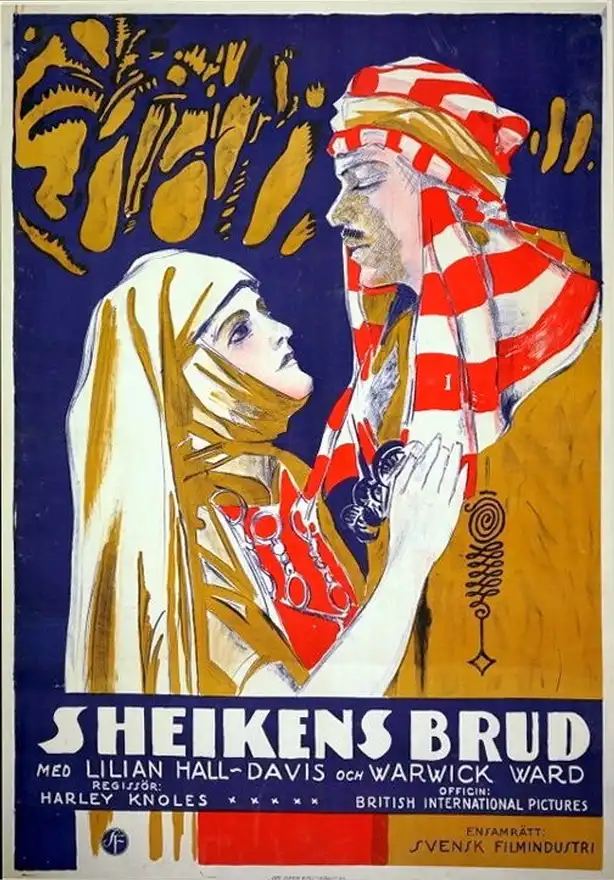
A definitive 5.3/10 rating for a film that redefined the boundaries of cult cinema. King's Mate remains a cornerstone of transgressive art.
If you have a high tolerance for 1920s desert melodramas where everyone looks like they’re wearing three layers of wool in a heatwave, King's Mate is probably worth your time. It’s not a masterpiece, and it’s certainly not as vibrant as something like The Glorious Adventure, but it has this specific, dusty charm that only late silent films from the British studios seem to capture. If you hate slow-moving plots where the central conflict could be solved by a five-minute conversation, you should probably skip this one.
The whole premise relies on Jameson Thomas playing a "British Riff chief." It’s a ridiculous concept on paper, and honestly, it doesn't get much more believable on screen. Thomas spends a lot of the movie looking intensely at the horizon, trying to look both tribal and aristocratic at the same time. His makeup is... a choice. It’s that heavy, theatrical bronze that makes his eyes look unnaturally white. There’s a scene early on where he’s standing outside a tent, and the way he holds his cape makes him look less like a desert warrior and more like he’s waiting for a bus in Piccadilly.
Lillian Hall-Davis is the girl he "rescues" by marrying. She’s a great silent actress—she has those eyes that seem to take up half her face—but for the first thirty minutes, the movie asks her to do nothing but look terrified. There’s a specific shot inside a dark tent where the lighting is actually quite beautiful, catching the edge of her hair, but the scene drags on for about two minutes too long. You’re just sitting there waiting for her to do something other than shrink away from the camera. When she finally realizes she’s not in immediate danger, the shift in her expression is so subtle it almost feels like it belongs in a better movie.
The pacing is where things get really shaky. There are these long sequences of the tribe riding across the dunes. It’s clearly meant to look epic, but after the fourth or fifth shot of horses moving from right to left, you start noticing the extras in the back. There’s one guy on the far left who looks like he’s having a genuinely hard time keeping his horse under control, and I found myself watching him more than the actual leads. It’s those little moments of unintentional reality that keep these old films alive for me.
I have to mention Warwick Ward. He plays the villainous element with a mustache that deserves its own billing. He does this thing with his eyebrows whenever he’s plotting something that is so over-the-top it becomes the most entertaining part of the film. He’s much more fun to watch than the stoic Jameson Thomas, who seems to be taking the whole "honor among the dunes" thing way too seriously.

There’s a weird edit about halfway through, right after a confrontation in the camp. It cuts from a high-tension moment to a static shot of a goat just standing there. It feels like a mistake, or maybe they lost a few feet of film and just patched it together with whatever b-roll was lying around. It’s jarring, and it completely kills the mood, but in a way that made me laugh out loud. It’s that kind of imperfection that makes watching these preserved silents feel like a personal discovery rather than a polished product.
The chemistry between Thomas and Hall-Davis is... functional? It’s hard to call it romantic when the whole relationship starts with her being a captive. The movie tries to sell it as this noble sacrifice on his part, but there’s an underlying awkwardness that the director doesn't quite know how to handle. They have one scene near a well where they finally seem to connect, and for a second, you can see what the writers were going for. But then a group of tribesmen walk into the frame and the movie remembers it has to be an action-drama again.
Compared to something like Rustling a Bride, which handles the "forced marriage turned real" trope with a bit more spark, King's Mate feels a bit stiff. It’s very British in its restraint, which is a weird thing to say about a movie set in the Sahara with people running around in robes. It’s like they wanted to make a desert epic but couldn't quite let go of the drawing-room manners.
The costumes are a highlight, mostly because of how impractical they look. Everyone is draped in heavy fabrics that look like they’d be miserable in the sun. You can see the sweat on the actors' faces, and I don't think it's all character work. It gives the film a physical weight that modern digital stuff lacks. When someone falls in the sand, you can practically feel the grit in your own teeth.
Is it a lost classic? No. But it’s a fascinating look at what British audiences in 1928 thought was exotic. It’s a bit clumsy, the ending feels rushed—almost like they ran out of money and just decided to stop filming—and the "hero" is a bit of a stick in the mud. But if you like looking at the background of shots and seeing how people used to build sets out of nothing, there’s plenty to chew on here. Just don't expect it to move you to tears.
IMDb 5.7
1935
Community
Log in to comment.