DbcultAccessing Vault...
5.8/10
Senior Film Conservator
A definitive 5.8/10 rating for a film that redefined the boundaries of cult cinema. Kismet remains a cornerstone of transgressive art.
The first time I saw Kismet I expected moth-eaten exotica, a museum relic wheezing under the weight of its own turbans. What unspooled instead was a silken gauntlet hurled across a century: a film that pirouettes on the knife-edge between bawdy burlesque and metaphysical sting. Edward Knoblock and Charles E. Whittaker’s screenplay detonates the Arabian Nights template, scattering its bones across Baghdad’s labyrinth, then reassembles them into a Möbius strip where every greed-soaked wish loops back to bite the wisher.
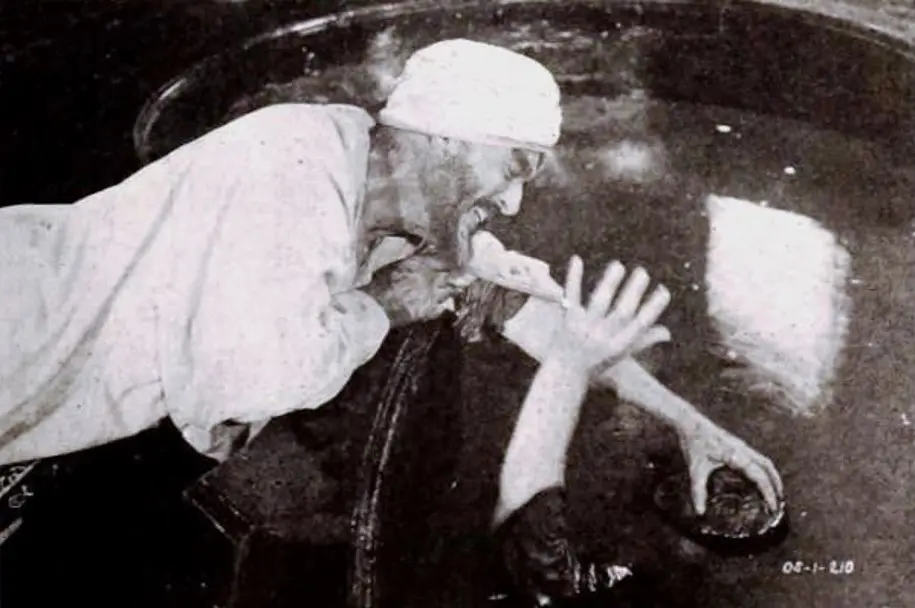
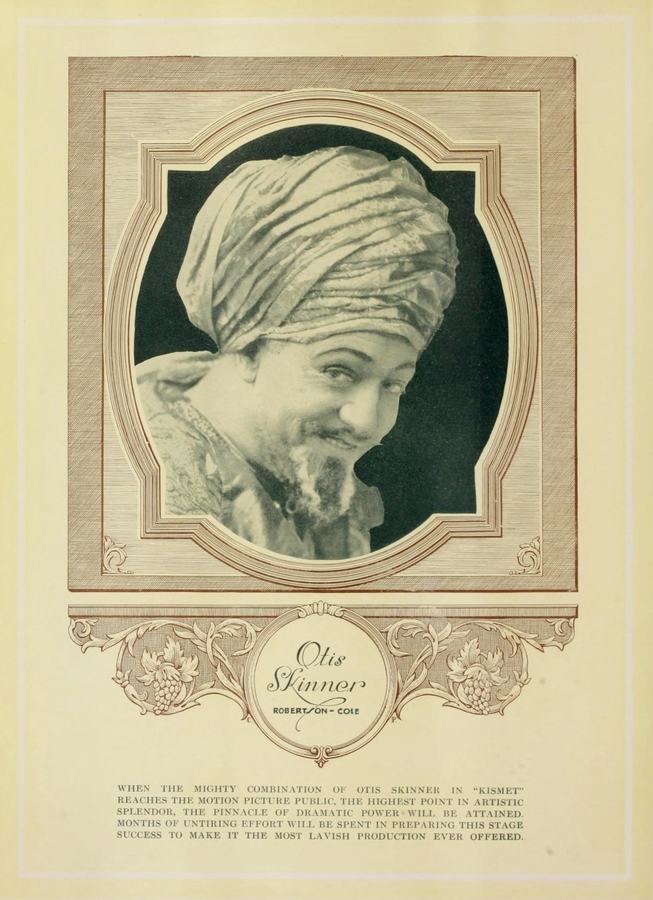
Director William C. deMille (yes, the less-lauded brother) stages the alleyways like a Caravaggio junkyard: torchlight licks faces until cheekbones become bronze cliffs, while darkness pools so thick you could float a coin on it. The 35mm restoration I caught at Bologna’s Il Cinema Ritrovato pulses with hand-tinted amber nights and sea-blue dawn, colors that slither across the screen like living serpents. When Hajj (Otis Skinner, magnetic even in stillness) sells his lame leg as a relic to gullible pilgrims, the amber glow turns sickly sulfur, prefiguring the hell-price he’ll pay.
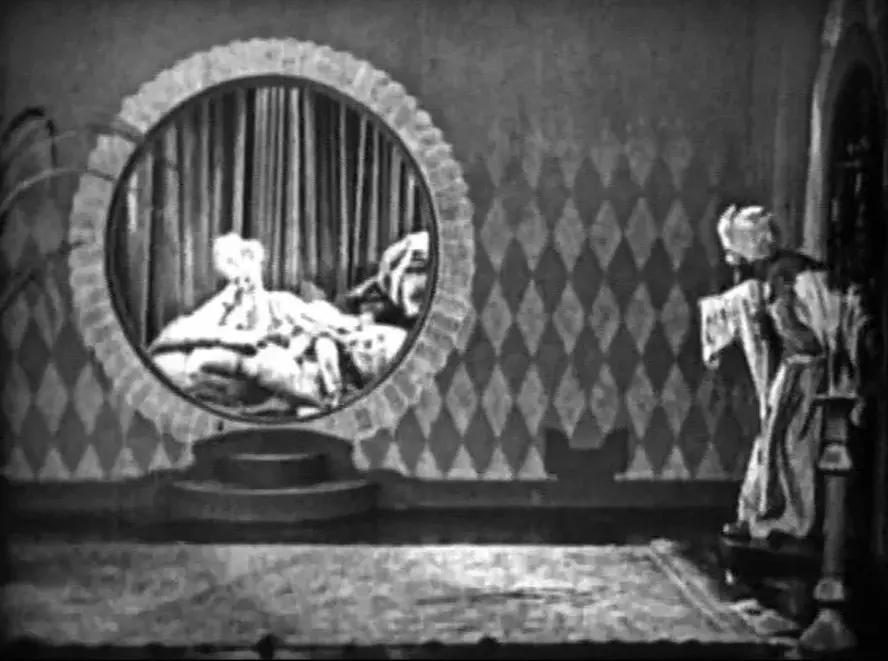
Silent-film acting often ages into mime-on-melodrama, yet Skinner’s performance is a violin that refuses screechy vibrato. Watch the micro-twitch in his left eye when he realizes his daughter has slipped beyond his puppet strings—a flinch so minute it could be a dust mote. He alternates between Monte Cristo cunning and barrier-breaking vulnerability without ever begging our sympathy. The result is a moral mirage: we root for the swindler because his grin is the only honest thing in a city of gilded lies.
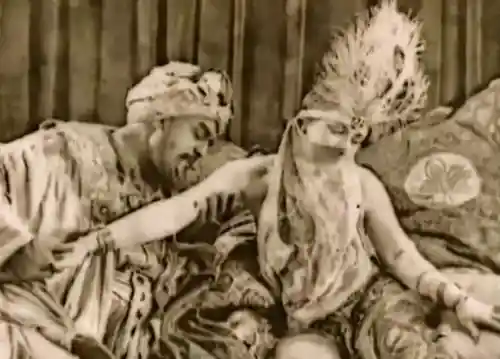
Marguerite Comont’s Lalume, the queen’s confidante, slinks through torch smoke like a cat who has read all the scrolls and eaten the canaries. Her eyelids are half-drawn battle curtains; when she finally speaks with the silent-film grammar of glances, she tells us that desire is just another currency depreciating under the sun. Rosemary Theby’s Marsinah, the beggar’s daughter, appears at first to be the pawn in Hajj’s royal chess match, yet her final tableau—standing barefoot on palace marble, deciding her own checkmate—feels like a suffragette banner planted in Arabian sand. Compare her arc to the eponymous Maggie Pepper or the secret-serviced Sylvia: all three heroines weaponize the very scripts written to entrap them.
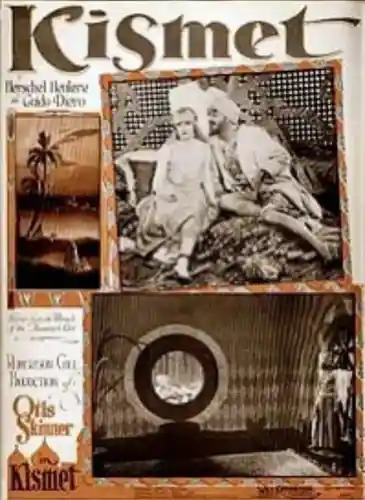
DeMille lifts visual pickpocket tricks from everywhere: the crowded depth staging of Les Grands, the silhouette play from A Coo-ee from Home, even the vertiginous staircase ascension that Griffith popularized. Yet the theft feels celebratory, like a magpie lining its nest with shards of stained glass. The camera glides through bazaars on what must have been improvised dollies—wooden planks laid across donkey carts—so that spices seem to waft right into your sinus. When Hajj dupes the executioner with a rigged cup of prophecy, the cut to the poisoned goblet’s POV is so abrupt it predates Hitchcock’s subjective camera by a decade.
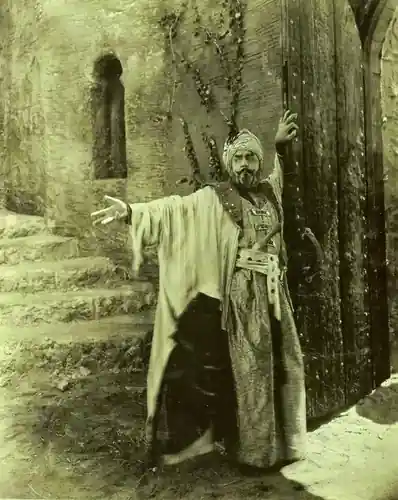
Let’s not perfume the elephant: Kismet bathes in Orientalism like a perfumed bather in milk. The turbans are taller than minarets, the accents swing like scimitars, every mosque looks suspiciously like a stage set left over from The Cup of Life. Yet the film is cannily self-aware. When Hajj brags that his prayer rug once flew to Mecca, the camera cuts to a moth-eaten mat with more patches than a drunkard’s liver. The fakery winks at its own absurdity, turning kitsch into critique. It’s as if the movie tells us: yes, this East is a fever dream cooked up in a Hollywood backlot, but watch how even fever dreams can outwit tyrants.
I watched it with the new score by the Silesian Improvisers, a riot of oud, ney, and prepared piano that crashes into swing breaks whenever Hajj hatches a scam. The dissonance is glorious: Baghdad becomes a jazz club where fate deals hot licks. Yet the film’s original 1920 exhibitors often screened it with nothing but projector clatter and the occasional showman reciting dialogue. That void, too, works: silence amplifies the rustle of imaginary silks, lets you hear your own moral compass clicking like a loose spool.
Fast-forward a century and Hajj’s DNA recombines into New Love for Old’s cynical journalist, into the con-artist lovers of Landing an Heiress, even into the vengeful banker of A Debtor to the Law. The template is irresistible: a trickster who believes the world owes him wonder, and who discovers—too late—that the debt is owed in the currency of his own pulse. Kismet reminds us that every hustle carries a hidden clause: the moment you wager your daughter’s future, you gamble the last piece of yourself that still remembers how to kneel.
By the time the caliph’s guards drag Hajj toward the palace wall, the beggar’s grin has calcified into a death-mask rictus. Yet the film cuts to a final iris shot closing around his eye, and in that black circle we glimpse a starfield—an entire cosmos where destiny is just another street hustle. The iris shuts, the lights come up, and you walk out wondering whether your own five-year plan is any less delusional than a prayer rug promising flight. That is the sleight-of-hand miracle of Kismet: it pickpockets the certainty right out of your pocket, then leaves you grateful for the lighter load.
IMDb 5.5
1930
Community
Log in to comment.