DbcultAccessing Vault...
Cult Review
Senior Film Conservator
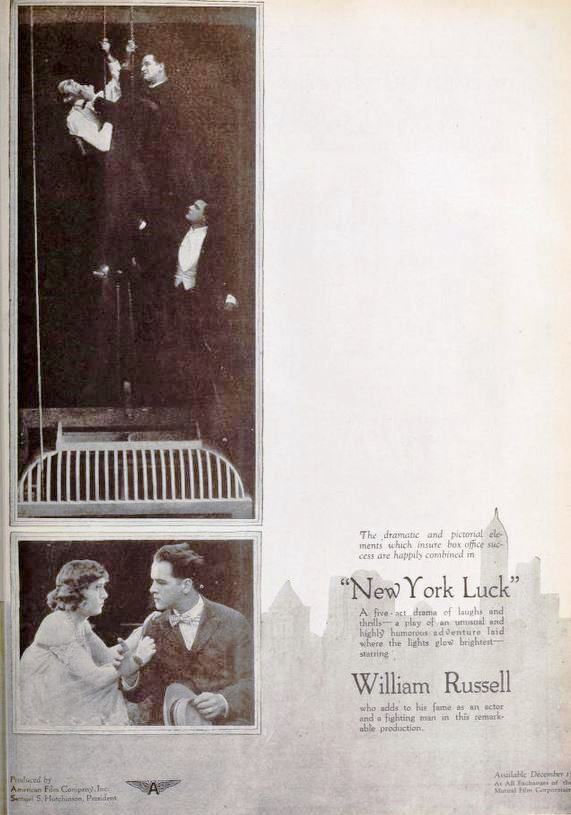
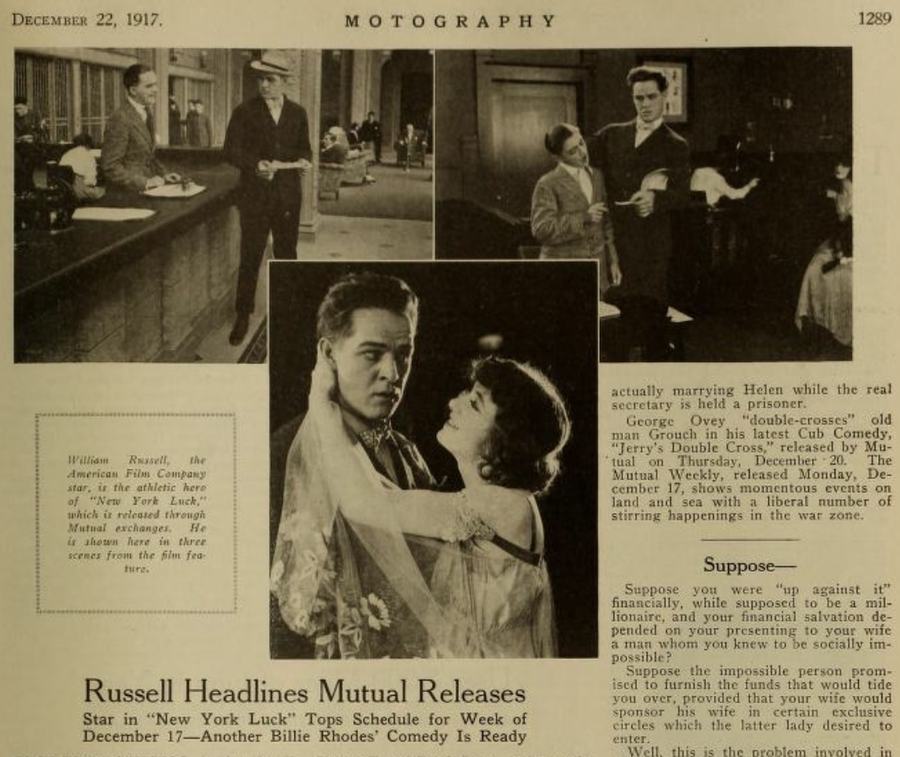
The nickelodeon gods of 1920 were in a puckish mood when they green-lit New York Luck,a film that treats Manhattan like an origami metropolis—fold,crease,tear,unfold—until the skyline resembles a paper cut-out silhouetted against lemon-yellow dawn.For modern viewers raised on algorithmic plot arcs,the picture’s looping Möbius-strip narrative feels almost crypto-viral:boy meets city,boy becomes city,boy authors city,boy ultimately cashes royalty checks from city.
Begin with the purse—an ivory kid-leather sac that functions like a secular reliquary.Inside nestles a sepia carte-de-visite of Gwendolyn Van Loon,her lips brushed with cobalt tint as if some moonlit hand retouched desire itself.Nick’s retrieval of this object is no mere propulsion device;it is the first graffito on the blank wall of his identity.Every subsequent encounter—whether with cigar-chewing casting clerks or monocled impostors—becomes a palimpsest overwritten by that initial image.Note how cinematographer Edward Paul (moonlighting from his usual lab-coat perch at the studio) bathes the purse in a single shaft of top-light,making the clasp glint like a micro-supernova against the Pullman’s velvet seat.It is the film’s first intimation that objects will boss humans around.
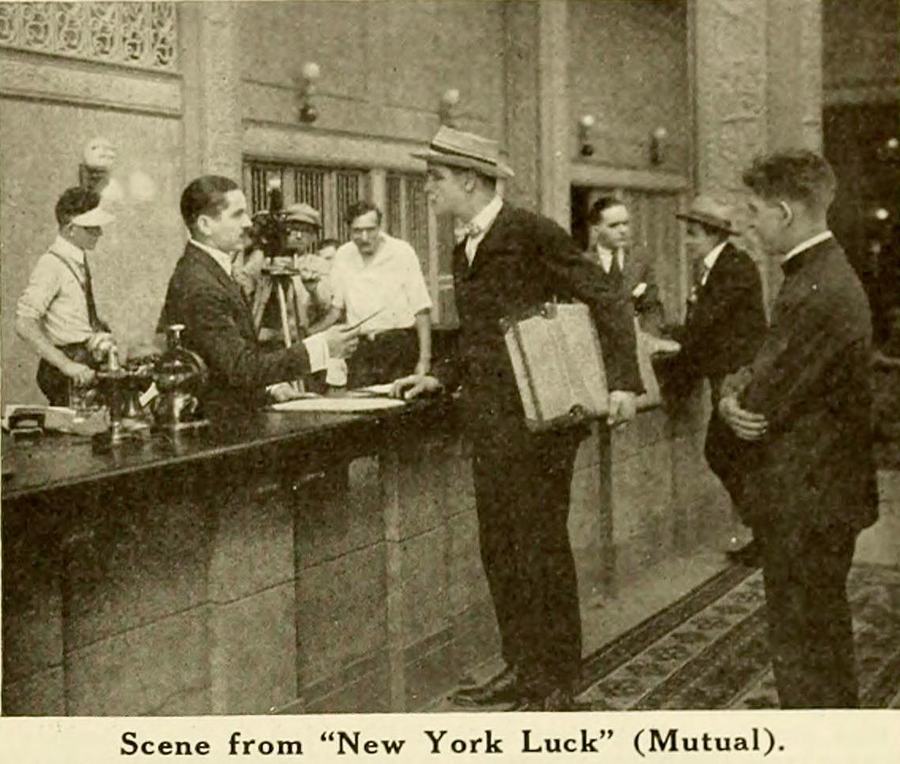
Upon arrival at Grand Central,Nick steps into a tracking shot that glides forward while the station’s barrel vault appears to recede—a visual oxymoron that nails the immigrant’s paradox:the closer you get,the farther the goal looms.Later,inside the Van Loon manse,director Chester B. Clapp cranks the camera up a spiral staircase that seems hewn from alabaster cloud;maids and butlers descend like chess pieces sliding down a M.C. Escher board.The sequence recalls the vertiginous interiors of Hypocrisy,yet where that film moralizes,here the architecture merely winks:a building can be a con artist too.
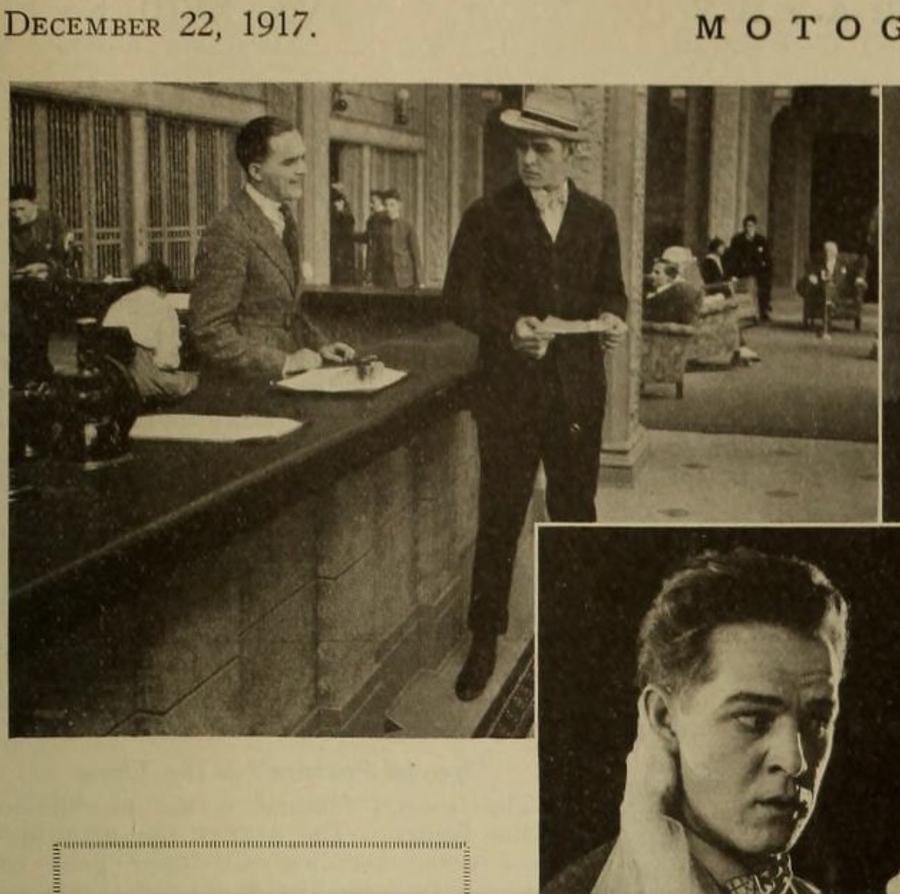
William Russell essays Nick with a repertoire of micro-gestures:eyebrows vaulted in perpetual astonishment,fingers drumming Morse code on thigh muscles,Adam’s apple bobbing like a fishing lure whenever Gwendolyn glides into medium shot.His bodily grammar splits once he adopts the “Steve Diamond” alias;shoulders square,jaw slides forward,eyes adopt the smoked-glass sheen of someone who has memorized the gangster gazette from back-page pulp.The performance anticipates the protean shape-shifting seen two years later in The New York Peacock,but Russell’s doppelgänger dance is lighter,soused in the champagne fizz of self-invention rather than the absinthe of tragic fate.
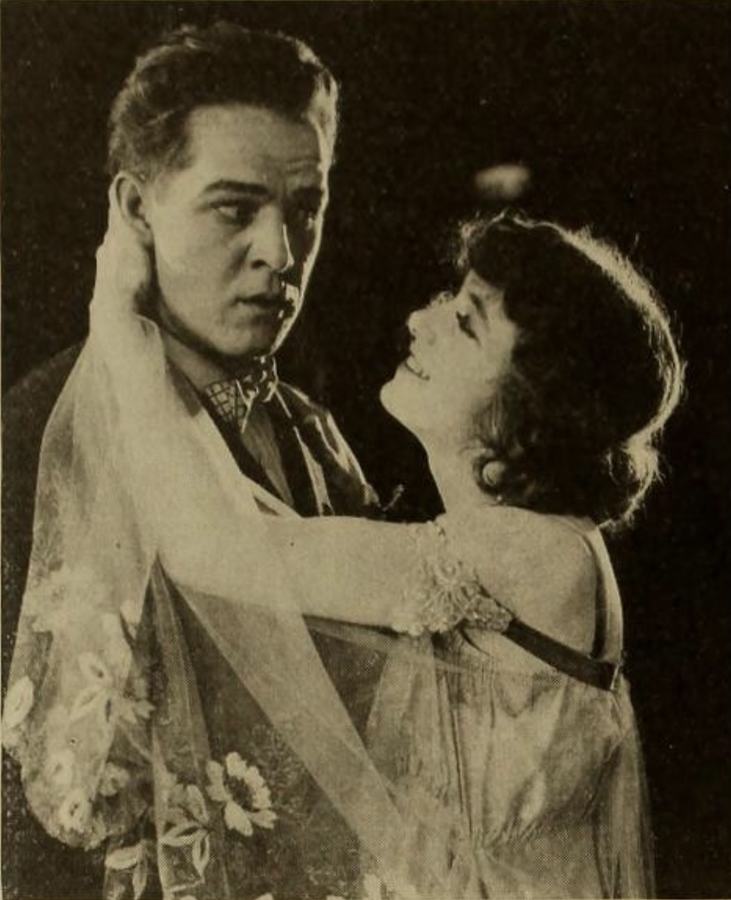
Francelia Billington’s Gwendolyn arrives midway between Edwardian corsetry and jazz-age fringe.She enters the frame veiled like a Byzantine icon;the veil lifts to reveal eyes that perform their own exposition—half dare,half eye-roll.Instead of functioning as mere MacGuffin,she commandeers narrative agency:in the climactic ballroom scene she wields a cigarette holder like a conductor’s baton,redirecting the crooks’attention with a tilt of wrist and smoke spiral.One intertitle,lettered in Art-Nouveau curlicues,has her quip: “A girl may forgive a lie if the liar ad libs it in iambic pentameter.” The line,ascribed to scenarist Charles T. Dazey,deserves resurrection on midnight tee-shirts.
Edward Peil Sr. essays the faux-aristocrat with such oleaginous charm that each close-up feels like a bribe.He sports a dove-grey topper tilted at the angle of a question mark;his walking stick unscrews to reveal a stiletto,an elegant metaphor for his conversational style.Peil modulates voicelessness into advantage—every lifted eyebrow becomes a paragraph of deceit.Compare his snake-oil suavity to the proletarian brute Al Ferguson essays as the real Steve Diamond,all cauliflower ears and knuckles that click like dice.Ferguson’s entrance,backlit by a warehouse doorway,turns the screen into a binary split:soft evil vs.hard evil,velvet vs.sandpaper.
Most silent confections of the era chase their morality tale with a chaser of piety;New York Luck opts instead for epistemological fireworks.The curtain-pull that the entire heist sprang from Nick’s typewriter could have capsized the narrative,yet the film lands the stunt because it has already seeded meta DNA:Keen’s earlier lecture on scenario economics,the purse-photo that behaves like a proto-plot hole,the way Manhattan geography folds in on itself like origami cranes.A rapid montage—negative images of skyscrapers,intertitles flapping like semaphore flags—announces the paradigm flip,and suddenly we are inside a screening room watching financiers guffaw at Nick’s yarn.Keen’s offer of a writing post converts fraud into vocation,an alchemy that feels oddly autobiographical:the dime-novelist screenwriters were literally scripting their own promotions.
Surviving prints,asphalt-gray on first glance,unfurl discreet chromatic feints when backlit by modern LED panels:amber for Pullman lamps,coral for cigarette embers,sea-foam for hotel corridors—each tint applied by brush at the Edison lab.These hand-painted photons lend the metropolis a bruised romanticism,as though the city itself were blushing at its own bluster.Where Moondyne used monochrome to sculpt Caravaggio shadows,New York Luck splashes color as emotional parenthetical,an early ancestor to the expressive palettes later flaunted by Friday the 13th’s Technoid nightmares.
Act one motors along like a Mack Sennett farce—pratfalls in baggage cars,slapstick with collapsing valises—yet by the ballroom sequence the tempo downshifts to a sinister adagio,a metronome syncopated by the drip of chandeliers crystals.The tonal whiplash shouldn’t work;it does,because the film posits velocity as the native dialect of urban ambition and stasis as the luxury of the con.When the camera finally dollies back from Nick’s beaming acceptance of Keen’s offer,the slowed motion feels like oxygen after a sprint,a final exhalation that seals the fairytale.
Archival cue sheets prescribe a potpourri of Irving Berlin jaunt and Dvořák largo for the rural flashbacks—an aural collision that mirrors the protagonist’s cultural vertigo.Modern festivals often commission new scores,but the most electric accompaniment remains a solo piano that pounds out ragtime until the heist,then pivots to Satie-esque gymnopédies,letting silence pool between notes like blood on pavement.
You can trace the helix of New York Luck in disparate descendants:the meta-games of The Stunt Man,the hustler-makes-good arc of Midnight Cowboy,even the candy-colored confections of La La Land,where dreamers pirouette across a traffic jam.Yet few successors dare the film’s final paradox:that self-invention and self-delusion share a Siamese pulse,an insight jazz-age America understood long before Instagram bios commodified persona.
Is the film flawless?Hardly.A subplot involving a pick-pocketing newsboy evaporates without payoff,suggesting last-minute edits demanded by a jittery distributor.Yet such blemishes enhance the artifact’s charm,like craquelure on a Qing vase.The movie’s abiding miracle lies in its willingness to let artifice trumpet itself,to proclaim that stories are the supreme confidence game,and that maybe—just maybe—the grifters who script them deserve our applause rather than our subpoenas.In an age hungry for authenticity as a marketable brand,New York Luck winks and whispers:forge on,liar;the city needs your fairy tales to keep its lights burning.
Seek it out on 16 mm at repertory houses,or pester streaming archivists to digitize the lone surviving print at the Library of Congress Packard Campus.When the image shivers onto screen—scratches like summer lightning—lean forward and cup your ear;you’ll almost hear the projector itself chuckle at the gag that the biggest con is cinema’s promise to turn shadow into platinum.
IMDb 5.8
1930
Community
Log in to comment.