DbcultAccessing Vault...
Cult Review
Senior Film Conservator
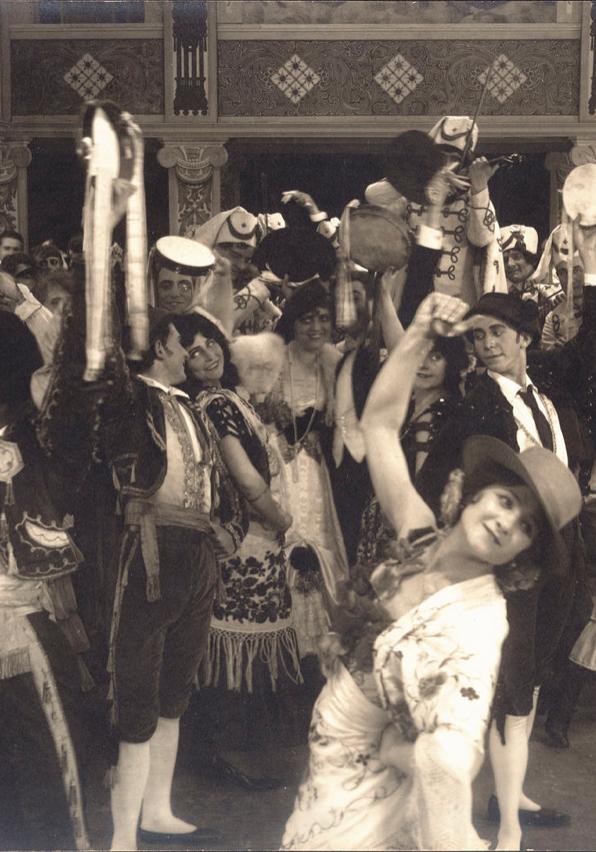
Stepping back into the nascent days of cinematic storytelling, one encounters a fascinating landscape of moral parables and grand melodramas. Among these, the Danish silent film Kvinden med de smukke Øjne (The Woman with the Beautiful Eyes) emerges as a potent, if often overlooked, examination of human frailty, the corrosive nature of unchecked desire, and the profound tragedy of familial disintegration. Penned by Aage Barfoed, this narrative transcends its era, offering a timeless reflection on the perils of succumbing to superficial allure and the devastating ripple effects such choices can have on those closest to us. It's a testament to early cinema's power to convey complex psychological states without a single spoken word, relying instead on the nuanced performances of its ensemble and the evocative visual language of the camera.
At the heart of this unfolding tragedy is Louis de Toussaint, portrayed with a compelling blend of youthful abandon and tragic susceptibility by Gunnar Sommerfeldt. Louis is not inherently malicious, but rather a man adrift, easily swayed by the immediate gratification of pleasure. His debauchery isn't a calculated villainy; it's a symptom of a deeper malaise, perhaps an emptiness he seeks to fill with lavish distractions. The film paints a vivid picture of a young man caught in a relentless eddy of self-indulgence, where every impulse is permitted, every whim catered to. This isn't merely about spending money; it's about spending life itself on fleeting moments, neglecting the edifice of responsibility that once upheld his family's standing. Sommerfeldt’s portrayal, through exaggerated gestures and expressions typical of the silent era, effectively communicates this descent, transforming Louis from a carefree heir to a puppet dancing on the strings of his own desires. His trajectory serves as a stark warning, a narrative device that resonates with an almost Greek tragedy, where fate is less an external force and more an internal flaw magnified by circumstance.
And then there is Luzette, the titular woman with the beautiful eyes, brought to life with captivating intensity by Marie Dinesen. She is the catalyst, the femme fatale whose charm is as intoxicating as it is destructive. Luzette is not merely Louis’s girlfriend; she is his enabler, his temptress, and ultimately, his undoing. Her influence is insidious, a soft, silken web woven from flattery and manufactured desire that slowly chokes Louis’s better judgment. The film doesn't necessarily demonize her in a simplistic manner; rather, it portrays her as a force of nature, driven by her own appetites, perhaps for luxury, perhaps for power over another. Her beauty, those 'beautiful eyes,' become a metaphor for the deceptive allure of superficiality, masking a deeper, more predatory instinct. Dinesen's performance must have been pivotal, conveying through subtle shifts in gaze and posture the depth of Luzette's manipulative prowess, making her both an object of desire and a harbinger of doom. She embodies the classic archetype of the destructive muse, her presence a constant drain on Louis's dwindling resources and moral fortitude. This dynamic is reminiscent of other silent era dramas exploring the dangers of obsessive relationships, where one partner's will subsumes the other, leading to inevitable catastrophe. For instance, one might draw parallels to the powerful, often morally ambiguous female characters in films like The Rose of Blood, where passion and peril walk hand-in-hand, or even the complex marital dynamics explored in His Brother's Wife, though with a distinct focus on external manipulation rather than internal marital strife.
In stark contrast to Louis’s reckless abandon stands his elder brother, André, portrayed by Johannes Ring. André is the embodiment of responsibility, the stoic pillar attempting to hold together a crumbling legacy. His concern for Louis is not merely financial; it's deeply fraternal, tinged with anguish and a desperate desire to salvage his brother from the precipice. Ring’s performance, while perhaps less flamboyant than Sommerfeldt’s, carries the weight of the film’s moral conscience. His furrowed brow, his gestures of exasperation and despair, speak volumes about the silent agony of watching a loved one self-destruct. André is the character through whom the audience experiences the true cost of Louis’s choices – not just in lost wealth, but in broken trust and emotional devastation. He represents the futile struggle against an irresistible current, a man clinging to the wreckage of their shared inheritance. This theme of unwavering loyalty in the face of profound disappointment is a powerful one, finding echoes in other narratives of the period, such as Loyalty, where personal steadfastness is tested by external pressures and internal conflicts. André’s journey is one of profound helplessness, illustrating that sometimes, even the strongest bonds of kinship cannot withstand the relentless assault of self-inflicted ruin.
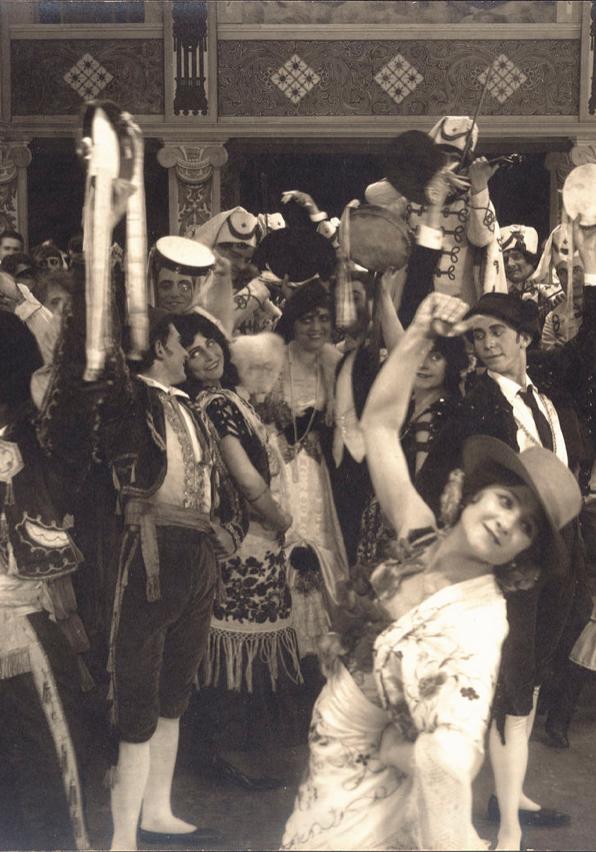
Aage Barfoed’s screenplay masterfully weaves together several profound themes. The most overt is the cautionary tale of unchecked decadence. The film serves as a societal critique, perhaps reflecting anxieties about rapidly changing social mores and the perceived erosion of traditional values in an increasingly materialistic world. The swift disappearance of the de Toussaint wealth is not just a plot device; it's a symbol of the fleeting nature of material possessions when confronted with insatiable desire. Beyond mere financial ruin, the narrative explores moral decay. Louis’s character arc is a descent into a moral abyss, where his actions become increasingly self-serving and oblivious to the suffering he inflicts. Luzette, in turn, exemplifies the seductive power of vice, her 'beautiful eyes' blinding Louis to the truth of his predicament. The film also delves into the complex dynamics of sibling relationships. André's struggle to intervene, to save his brother, speaks volumes about the limits of fraternal love and the pain of witnessing another's downfall. There's a palpable sense of inevitability that permeates the narrative, a feeling that once Louis embarks on this path, there is little hope for true redemption. Yet, even in this bleak landscape, there might be a faint, elusive glimmer of hope, perhaps in the lessons learned, or the ultimate realization of the hollowness of their pursuits. This exploration of moral consequences and the arduous path to self-awareness finds resonance in films like The Conquest of Canaan, which often deals with protagonists overcoming personal failings and societal pressures.
The cinematic language of Kvinden med de smukke Øjne is, by necessity, a triumph of visual storytelling. Without spoken dialogue, the weight of narrative progression and emotional resonance falls squarely on the shoulders of the director (though uncredited, the visual style speaks volumes) and the cinematographer. The use of mise-en-scène would have been crucial: opulent sets and costumes for Louis and Luzette's scenes, contrasting with perhaps more somber, formal settings for André, visually underscore the thematic divide. Lighting, too, would have played a significant role, perhaps casting Luzette in alluring, yet often shadowed, light, while André might be bathed in harsher, more revealing illumination. The actors’ performances, as mentioned, are necessarily broad, relying on codified gestures and facial expressions to convey inner turmoil, joy, despair, and manipulation. Close-ups, though less frequent in early cinema, would have been deployed strategically to emphasize the 'beautiful eyes' of Luzette or the tormented gaze of André. The pacing, dictated by intertitles and the rhythm of scene transitions, would have built tension, allowing the audience to slowly witness the erosion of fortune and morality. This careful orchestration of visual elements is what elevates silent cinema beyond mere moving pictures into a legitimate art form, capable of profound emotional depth and intricate narrative construction. The film's reliance on visual metaphor and physical performance places it firmly within the tradition of early Nordic cinema, known for its psychological depth and often stark realism, even amidst melodramatic plots.
While specific directorial credits are often sparse for films of this vintage, the collective artistic vision behind Kvinden med de smukke Øjne contributed to the rich tapestry of early Danish cinema. This period, roughly from 1910 to 1920, was a golden age for Danish film, producing works that were technically innovative and thematically ambitious, gaining international acclaim. Films from Nordisk Film, a prominent studio of the time, often explored complex social issues, psychological dramas, and moral dilemmas, distinguishing themselves from the more straightforward action or comedy prevalent elsewhere. Kvinden med de smukke Øjne fits perfectly within this tradition, offering a nuanced character study wrapped in a compelling dramatic package. The performances by Marie Dinesen, Alma Hinding, Johannes Ring, Lilly Jacobson, Gunnar Sommerfeldt, Robert Schmidt, Johanne Fritz-Petersen, and Aage Hertel, though viewed through the lens of a century-old acting style, undoubtedly contributed to its impact. They embodied the exaggerated yet emotionally resonant performances that defined the era, allowing audiences to connect with the characters' plights on a visceral level. The film's exploration of themes like temptation, financial irresponsibility, and the corrosive effect of a manipulative relationship ensures its continued relevance, proving that human nature's fundamental struggles remain constant, regardless of the technological advancements in storytelling. It serves as a valuable artifact, not just for film historians, but for anyone interested in the enduring power of narrative to reflect and comment on the human condition. Its legacy lies not just in its existence, but in its ability to still provoke thought and discussion about the choices we make and the paths we tread.
In conclusion, Kvinden med de smukke Øjne stands as more than just a historical curiosity; it is a meticulously crafted drama that delves into the darker recesses of human desire and the devastating consequences of unchecked indulgence. Barfoed's narrative, brought to life by a dedicated cast, presents a cautionary tale that resonates deeply. The film's ability to communicate such intricate emotional and moral landscapes without relying on spoken dialogue is a testament to the artistry of silent cinema. It reminds us that the allure of fleeting pleasure, often personified by a captivating figure like Luzette, can lead even the most privileged individuals down a path of irreversible ruin, leaving behind a trail of broken promises and shattered lives. The silent screen, in this instance, speaks volumes, echoing a warning that remains relevant even in our cacophonous modern world. It encourages us to ponder the true cost of our desires and the profound responsibility we bear, not just for ourselves, but for those whose lives are intertwined with our own. This cinematic gem, though from a bygone era, continues to offer compelling insights into the timeless dance between temptation and integrity, a dance that often culminates in tragic beauty and profound regret. Its narrative arc, while seemingly simple, unpacks layers of psychological complexity, making it a worthy subject of continued study and appreciation within the annals of film history.
IMDb —
1917
Community
Log in to comment.