DbcultAccessing Vault...
Cult Review
Senior Film Conservator
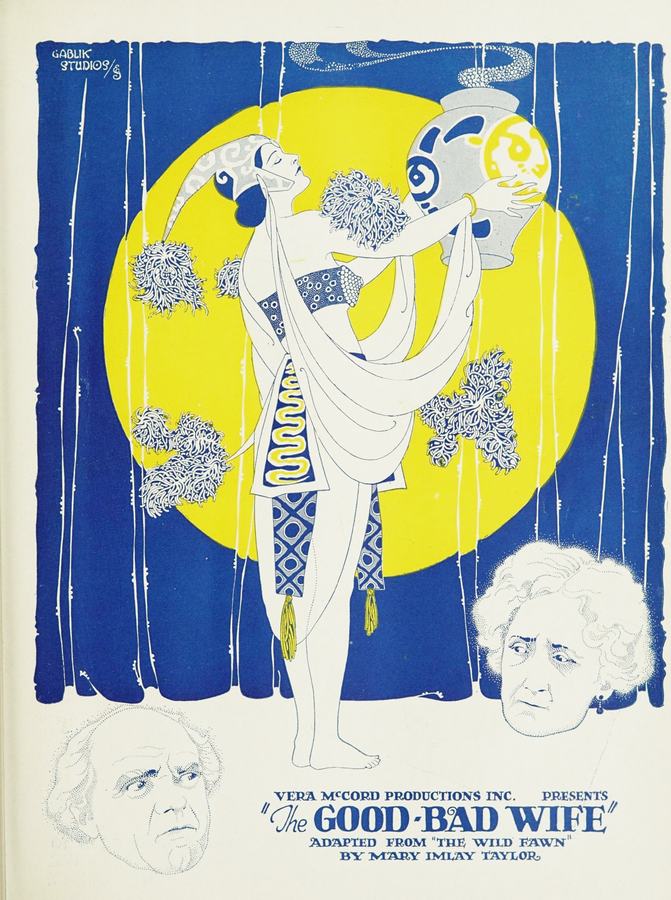
Paris, 1920: a city rebuilding its vertebrae after the war, cobblestones still echoing with the hiss of pneumatic brakes and the rustle of ostrich-plume boas. Into this half-lit carnival stumbles William Carter—think Gatsby without the fortune, just a Southern drawl and a hunger for the kind of kinetic sin the Old Dominion has outlawed. Fanchon La Fare, meanwhile, is no naïve ingénue; she is kinetic incarnate, a whirl of jet curls and black-stockinged calves that can turn a bar’s smoky air into champagne.
The film, shot on location in both Montmartre and Richmond, uses that geographic schism as emotional tectonics. Cinematographer Wes Jenkins—yes, the same Jenkins who would later lens the hypnotic The Isle of the Dead—bathes France in saffron and absinthe green, then drains the palette to tobacco sepia once we dock in Virginia. The visual metaphor is merciless: Europe equals possibility, America equals judgment.
What makes the central sham marriage fascinating is its accidental honesty. William’s proposal is framed as rescue, yet the minute the ink dries, possession calcifies. Fanchon’s passport—literally a flimsy booklet—becomes the film’s idée fixe, passed from hand to hand like a cursed relay baton. Each close-up of its fraying edges feels Hitchcockian decades before Hitchcock. When a government clerk clicks his stamp, the sound is augmented on the orchestral score by a bass-drum thud; we feel the portcullis crash.
Mathilde Brundage, as the Carter matriarch, weaponizes micro-aggressions: a gloved finger tracing the rim of a teacup as though testing for poison, a smile so tight it could slice prosciutto. Her first line to Fanchon—“My dear, we are simple people”—lands like a guillotine. The script (Paul Price and Mary Imlay Taylor) lets hypocrisy unfurl in euphemism, anticipating the stifling parlors of Love Watches and The Weaker Sex.
At the church benefit, Fanchon’s performance is shot in a single unbroken take that circles her like a vulture. Jenkins mounts the camera on a primitive dolly—ropes and pulleys creaking off-screen—so the pews spiral behind her in a vertiginous swirl of disapproval. The dance itself hybridizes the can-can with flirtations of the shimmy, knees flashing like semaphore. Congregation members gasp; one elderly man clutches his opera hat as though it might levitate. In that moment Fanchon is both Salome and Joan of Arc, wielding rhythm instead of a sword.
The stranger’s arrival—silhouetted against the stained-glass depiction of Lazarus—plays like an iris-in from a nightmare. Actress Dorothy Green’s faint is not the dainty Victorian slump; it is a full-bodied gravitational surrender, petticoats pooling like spilled ink. The cut to black, followed by a single intertitle reading only “HUSBAND,” is the silent-era equivalent of a record scratch.
Leigh Carter—played with hot-headed swagger by Jack Baston—believes he is protecting the family’s hymnal-scrubbed reputation. His pistol is a peacock-blue Colt, almost dandyish, yet when it barks the film inserts a single crimson-tinted frame, a subliminal jolt that anticipates the blood splash in 1960s gialli. The subsequent trial, staged in a courthouse whose columns resemble prison bars, crackles with legal exposition rarely seen in silents. Intertitles clatter like typewriter strikes: “Bigamy—five years minimum.” “Justifiable homicide—acquittal within the hour.”
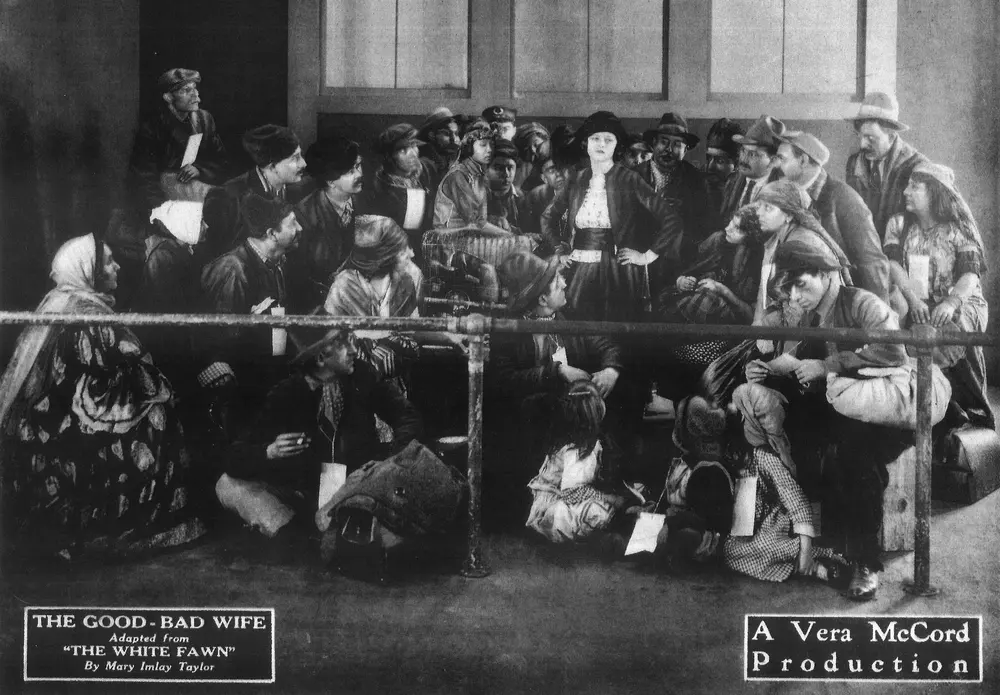
Fanchon’s confession arrives as a chiaroscuro close-up: half her face swallowed by shadow, eyes shimmering with kohl and contrition. She recounts being married off in a nameless Alpine hamlet, her voice conveyed through swirling, almost expressionistic text: “I was sold for two goats and a missal.” The courtroom extras—local townsfolk rather than Central Casting—register genuine shock, mouths agape like carved gargoyles. The film withholds subtitles for their murmurs, letting the ambient texture of human judgment seep through.
Albert Hackett’s William is a fascinating nullity—handsome, well-tailored, and so emotionally neutered that Fanchon’s vibrancy seems to photosynthesize around his blankness. It is a deliberate void, the straight man against which Parisian chaos flares. Compare him to the similarly vacuous protagonist of Fools and Their Money; both men are cautionary placeholders for American provincialism abroad.
Beatrice Jordan, as Fanchon, deserved Oscar-level plaudits—had the Academy existed. Her body language toggles between feral and fragile; watch how her fingers flutter when she pretends to read English etiquette manuals, betraying the illiterate panic beneath the performance. She is the spiritual ancestor to Louise Brooks’ Lulu and even, I would argue, to Giulietta Masina’s Cabiria. Jordan’s career, tragically, never scaled such heights again; within five years she was playing “Second Flapper” in two-reel comedies.
Erville Alderson’s turn as the blackmailing first husband is pure predator, yet the screenplay gifts him one note of pathos: a shot of him cradling the village marriage ledger, caressing the ink as though it were a lock of Fanchon’s childhood hair. Monsters who mourn themselves are always more chilling.
Jenkins experiments with what I dub “visual eavesdropping”: rooms framed through keyholes, conversations glimpsed via reflections in silver teapots. The motif crescendos in the Carter mansion where Fanchon peers at the family through a cracked pocket mirror—each fracture line segmenting their faces into jury members. It anticipates the prism shots in later noir like Jinx and even Welles’ Lady from Shanghai.
Meanwhile, tinting is deployed with narrative intent: amber for Parisian nostalgia, cerulean for Atlantic passages, sickly green for the courtroom. The restored Kino Lorber print (2019) preserves these hues, unlike the earlier public-domain grayscale transfers that turned the film into a ghost of itself.
Under the film’s corseted melodrama lies a radical indictment: women as chattel whose paperwork matters more than their pulse. Fanchon’s deportation threat literalizes the era’s legal reality—until 1922 an American woman’s citizenship derived from her husband. The script subverts this by making the male rescuer impotent; salvation arrives only when Fanchon reclaims authorship of her story in front of a patriarchal court. It is a whispered feminist coup, akin to the street-urchin heroines of The City of Comrades but with a more overt critique of bourgeois morality.
Yet the film refuses a facile victory. The final tableau—Fanchon reinstated at the dinner table, the family bowing heads for grace—reeks of uneasy détente rather than revolution. Jordan’s half-smile suggests she knows the welcome may again be revoked with a single misstep.
Cinephiles will detect DNA shared with Yevgeni Bauer’s bleak domestic dramas. Bauer’s Peterburgskiye trushchobi likewise traps women in matrimonial labyrinths, though Russian fatalism replaces American moralism. Conversely, the Alpine child-marriage subplot rhymes with the Old-World superstitions in Die Insel der Glücklichen, another 1921 release wrestling with forced unions.
Spiritual undertones also radiate outward: Fanchon’s church-hall humiliation parallels the saint-testings in Otets Sergiy, while the Carter family’s plantation Protestantism contrasts with the anarchic Lake District communes in The English Lake District. Such intertextual rhizomes make The Good-Bad Wife a nexus of post-WWI anxieties about mobility, morality, and modern womanhood.
Until 2019 most viewers knew the film through a 16-minute abridgment on dodgy AVI files. The Library of Congress’ 4K restoration from a Czech nitrate print reinstates roughly twelve lost minutes, including a striptease-lite warm-up where Fanchon practices high kicks while William tunes a banjo—an innocuous scene that nonetheless got sliced by small-town censors. Alloy Orchestra’s new score interpolates accordion, tack piano, and even a musical saw to mimic the Parisian wail, segueing into Appalachian strings once the narrative crosses the Atlantic. The result is a sonic roadmap of displacement.
Festival audiences in Bologna gave it a five-minute standing ovation—rare for an American melodrama sandwiched between Soviet montage and German expressionism. Critics compared its social sting to The Scarlet Letter and its kinetic élan to Chicago (2002), proving that rhythm, rather than dialogue, is the true universal language.
We live anew in an age of border walls and visa panic; Fanchon’s passport ordeal feels ripped from tonight’s podcast. The Carter clan’s performative piety finds its echo in every social-media sham. Most crucially, the film interrogates whether a woman’s past can ever be metabolized by a society that both craves and reviles her sensuality. The answer, shot through ambivalence, resonates beyond intertitles and into our present tense.
So seek out The Good-Bad Wife—stream the restoration, crank the volume, let the tinting burn your retinas. Revel in a narrative that pirouettes on the razor between salvation and scandal, where every high kick is a question mark and every courtroom gavel risks shattering the very family it hopes to save. You will emerge reeling, convinced that 1921 still has fingerprints on our contemporary skin.
IMDb —
1933
Community
Log in to comment.