DbcultAccessing Vault...
Cult Review
Senior Film Conservator
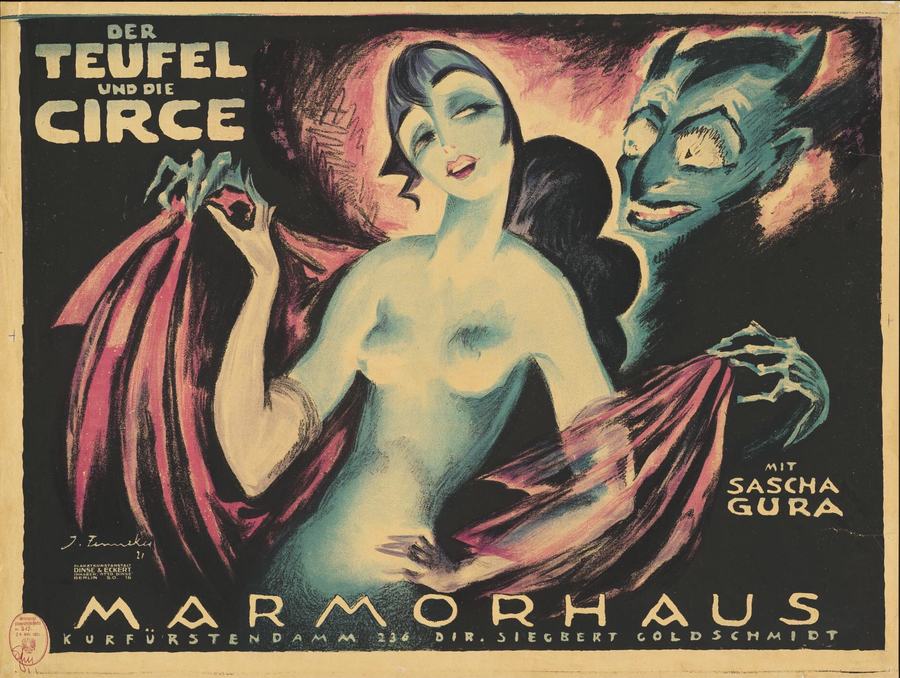
Teufel und Circe, a 1950s European dark fantasy, emerges as a forgotten gem of cinematic alchemy, where the mythic and the monstrous entwine with unsettling grace. Alf Zengerling’s screenplay, steeped in baroque symbolism and existential dread, crafts a narrative that feels both archaic and prescient. The film’s title—translating to The Devil and Circe—hints at its thematic duality: a clash between classical mythology and the modern psyche’s shadowy recesses.
Eduard von Winterstein, in a career-defining performance, embodies Professor Albrecht von Rostock, a scholar whose intellectual arrogance becomes his undoing. His descent into obsession begins at a dusty academic conference, where he encounters Margarete Kupfer’s enigmatic Iphigenia, a reclusive mystic whose aura of both vulnerability and menace dominates every scene. Their dynamic, charged with Freudian undertones, becomes the fulcrum of the film’s exploration of power and submission. Winterstein’s portrayal is a masterclass in controlled intensity, his character’s unraveling mirrored in the disintegration of his moral compass.
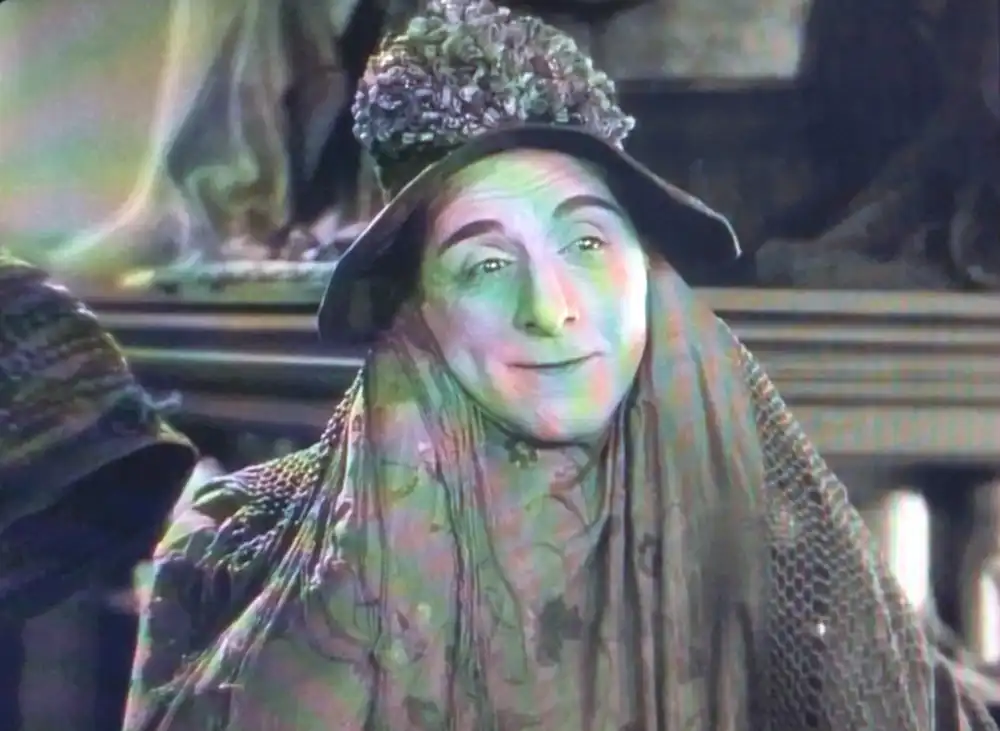
Kupfer, radiant yet unnerving, transforms Iphigenia into a modern Circe: a figure who lures with intellect as much as with allure. Her performance is a study in contradictions—her gaze alternates between innocence and omniscience, her dialogue laced with riddles that refuse to yield easy interpretations. The chemistry between her and Winterstein crackles with a volatile energy, suggesting a partnership built on mutual exploitation masked as fascination.
The supporting cast elevates the film into the realm of the extraordinary. Sascha Gura’s Baroness von Stein, a rival occultist with a penchant for ritualistic theater, brings a campy flamboyance that contrasts sharply with the protagonist’s cerebral rigidity. Her scenes with Walter von Allwoerden’s brooding monk—whose silent intensity recalls the best of silent film acting traditions—form the film’s most visually arresting sequences. The trio’s interactions, often staged in candlelit chambers or moonlit forests, evoke a dreamlike quality that blurs the line between reality and hallucination.
Heinz Erdmann’s cinematography deserves particular acclaim. His framing of the story’s gothic settings—cluttered libraries with peeling frescoes, crumbling monasteries overgrown with ivy—creates an atmosphere of decaying grandeur. The use of chiaroscuro is masterful, with light and shadow becoming characters in their own right. One standout sequence, a midnight ritual conducted in a mirror-lined chamber, employs reflections so disorientingly layered that the viewer questions the very fabric of the narrative’s reality.
Zengerling’s script, while occasionally overwritten with metaphysical jargon, excels in its psychological nuance. The dialogue, peppered with references to Nietzsche and ancient texts, serves as both a narrative device and a thematic anchor. The film’s pacing, deliberate and methodical, allows the tension to build like a slow-burning fuse. By its climax—a confrontation between the protagonist and a literal embodiment of his guilt (played with chilling austerity by Heinz Erdmann)—the audience is left grappling with the same existential questions that haunt the characters.
Visually, Teufel und Circe is a feast of contrasts. The production design, a blend of Art Nouveau decadence and Soviet-era starkness, reflects the ideological tensions of its era. Costumes are equally telling: Kupfer’s flowing, diaphanous gowns juxtapose with von Winterstein’s tailored academic garb, a visual metaphor for the clash between spiritualism and rationalism. The film’s score, a haunting blend of theremin wails and pipe organ drones, lingers in the memory like a half-remembered lullaby.
If the film has any weaknesses, it lies in its occasionally heavy-handed symbolism. Certain scenes—particularly a surreal dream sequence involving a labyrinth of mirrors—risk alienating viewers seeking narrative clarity. Additionally, the subplot involving von Allwoerden’s monk, while beautifully acted, feels underdeveloped, serving more as a narrative MacGuffin than a fully realized character.
Comparisons to contemporary works are inevitable. Like Flirting with Terror, Teufel und Circe employs paranoia as a narrative engine, though with a far more cerebral bent. Its mythological underpinnings recall Rupert of Hentzau’s adventurous spirit, yet substitutes swashbuckling for psychological excavation. The film’s gothic sensibilities also echo The House of Mystery, though with a distinctly European melancholy.
In the broader context of 1950s cinema, Teufel und Circe occupies a unique space. It is neither a postwar rubble film nor a straightforward genre piece, but something in between—a work of art that defies easy categorization. Its exploration of obsession and redemption, filtered through the lens of myth, resonates with a timeless quality. The film’s ambiguity, rather than being a flaw, becomes its greatest strength, inviting multiple viewings and interpretations.
For modern audiences, the film offers a glimpse into a bygone era of cinematic experimentation. Its themes of moral ambiguity and the seductive power of the unknown remain strikingly relevant. While its visual style may feel dated to some, its emotional core remains undimmed. In an age of CGI excess, Teufel und Circe stands as a testament to the power of suggestion, atmosphere, and the human face.
Ultimately, this is a film that demands patience and attention. Those who surrender to its rhythms will find themselves rewarded with a haunting, unforgettable experience. For others, it may prove an acquired taste, its slow burns and intellectual pretensions requiring a certain tolerance for ambiguity. But in the end, isn’t that the essence of true art—a work that resists easy answers, challenging us to look beyond the surface?
IMDb —
1919
Community
Log in to comment.