DbcultAccessing Vault...
Cult Review
Senior Film Conservator
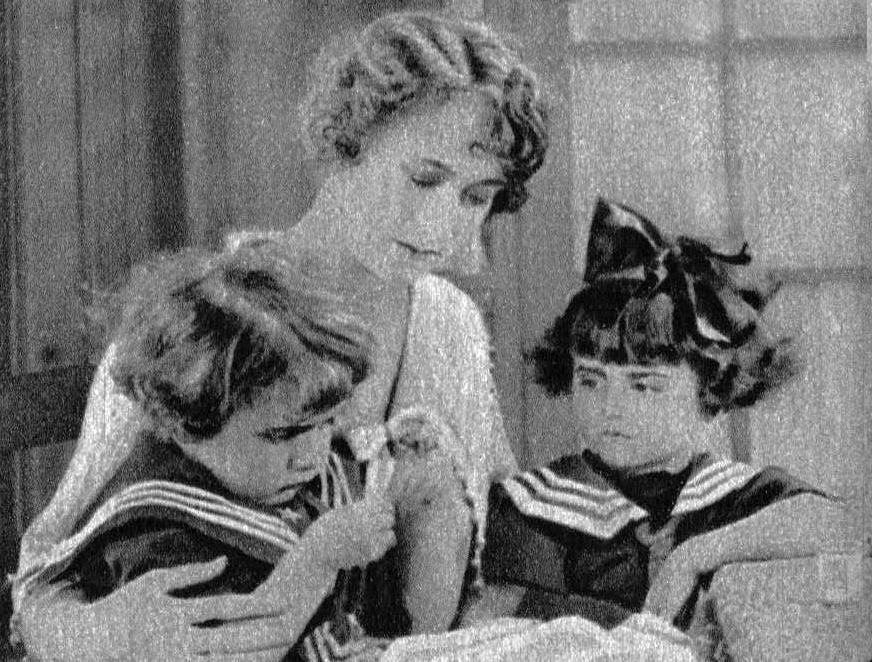
To witness La bâillonnée - Épisode 1: Entre deux haines is to step into a bygone era of French cinematographic sophistication that often goes overlooked in the shadow of the avant-garde movements that followed. Directed by the visionary Charles Burguet, this 1922 serial represents the pinnacle of the ciné-roman, a uniquely Gallic fusion of literature and moving images. Unlike the kinetic, often haphazard energy found in The Girl and the Game, Burguet’s work possesses a deliberate, almost architectural sense of pacing. The narrative does not merely unfold; it constructs itself, brick by painful brick, around the central theme of ancestral hatred.
The visual language employed here is nothing short of revolutionary for its time. The interplay of light and shadow—preceding the height of German Expressionism—creates a landscape where the characters' internal turmoil is mirrored by their physical environment. When we compare the atmospheric density of this film to something like Os Faroleiros, we see a shared DNA in the use of localized textures to evoke a sense of isolation. However, Burguet elevates the melodrama by grounding it in a hyper-specific French social reality, where reputation and silence are the currencies of survival.
The ensemble gathered for this production is a testament to the depth of talent in the early French studio system. A young Pierre Fresnay, long before his legendary turns in La Grande Illusion, displays an embryonic brilliance that is impossible to ignore. His performance is characterized by a restrained intensity, a stark contrast to the broader histrionics often associated with the silent era. He moves through the frames with a modern sensibility, his eyes conveying a depth of field that the cameras of 1922 were barely beginning to capture. Alongside him, Paul Guidé provides a stoic anchor, his presence lending the film a gravitas that balances the more heightened emotional beats of the plot.
The female leads, particularly Marie-Thérèse Décosse, navigate the treacherous waters of the 'damsel in distress' trope with surprising agency. While the title suggests a woman silenced, the performance suggests a subterranean roar. This complexity reminds me of the nuanced characterizations in Den skønne Evelyn, where the protagonist must navigate a world designed to render her invisible. In Entre deux haines, the 'gag' is both literal and metaphorical, representing the societal constraints that bind the characters to their predetermined fates.
The screenplay, penned by Paul Rouget and Pierre Decourcelle, is a masterclass in serialized storytelling. It avoids the episodic fatigue that plagued many contemporary works like The Million Dollar Mystery. Instead, it opts for a symphonic structure, where each scene builds upon the last to create a crescendo of tension. The 'hatred' mentioned in the title is not a singular event but a pervasive atmosphere, a fog that rolls in from the past to choke the present. This thematic obsession with the weight of the past is a recurring motif in silent cinema, yet here it feels uniquely visceral, perhaps due to the proximity of the production to the trauma of the Great War.
Consider the way the film handles the concept of justice. Unlike the more straightforward moralism of A Pardoned Lifer, La bâillonnée dwells in the grey areas of human motivation. There are no easy villains here, only victims of a cycle of retribution that none seem capable of breaking. This moral ambiguity is what gives the film its lasting power. It asks the audience to empathize with characters who are often their own worst enemies, trapped in a socio-political cage of their own making.
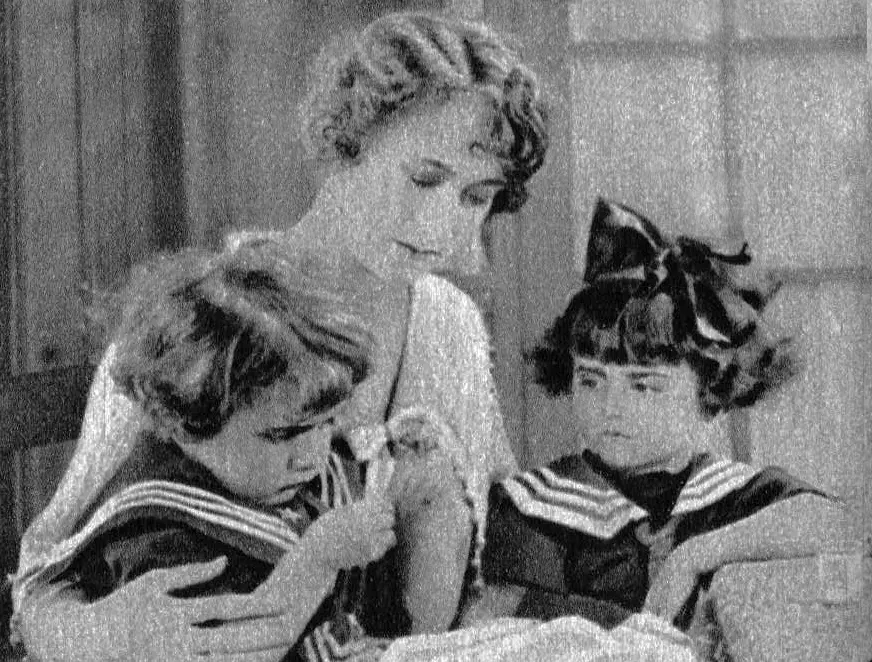
The cinematography in this first episode is an exquisite display of early 20th-century craft. The use of location shooting provides a sense of place that is often lacking in the stage-bound productions of the era. The crumbling estates and windswept vistas serve as more than just scenery; they are active participants in the drama. This level of environmental storytelling is reminiscent of Mother o' Mine, though Burguet utilizes a more sophisticated editing rhythm to heighten the psychological stakes. The way the camera lingers on a closed door or a discarded letter speaks volumes, transforming mundane objects into symbols of impending doom.
Furthermore, the film’s engagement with the 'gagged' motif is handled with a poetic touch. It is not merely a device for suspense but a powerful visual metaphor for the silencing of the feminine voice in a patriarchal society. This theme resonates even more strongly when compared to A Man's Prerogative, which explores similar territory but with less stylistic flair. Burguet’s film is a cry from the depths of a forced silence, a cinematic protest wrapped in the guise of a popular thriller.
As we dissect the intricacies of this first episode, it becomes clear that La bâillonnée was ahead of its time in its understanding of long-form narrative. It shares a certain kinship with The Lone Wolf's Daughter in its ability to sustain mystery over multiple chapters, yet it possesses a literary depth that its American counterparts often lacked. The influence of the French 'feuilleton' tradition is evident in every frame, creating a reading experience through the lens of a camera. The film demands an attentive viewer, one willing to look past the surface level of the plot to find the underlying critiques of class and gender.
Even when compared to large-scale epics like Samson und Delila, Entre deux haines holds its own through its sheer emotional honesty. It doesn't need thousands of extras or massive sets to convey the magnitude of its tragedy. Instead, it finds the epic within the intimate, the cosmic within the domestic. The stakes are not the fall of empires, but the destruction of a single soul caught between two fires. This focus on the individual within the machinery of fate is what makes the film a timeless piece of art.
The restoration of such works allows us to appreciate the technical prowess of the 1920s. The clarity of the compositions and the nuance of the tinting—when available—reveal a world of vibrant detail. Unlike the more domestic comedies of the time, such as Skinner's Dress Suit, La bâillonnée utilizes the medium to explore the darker corners of the human psyche. The film’s ability to evoke a specific time and place is unparalleled, offering a window into a post-war France that was struggling to reconcile its romantic past with a fragmented, modernizing present. It captures a society in flux, much like the characters in The House That Jazz Built, though with a significantly more somber tone.
The collaborative efforts of the cast, from Louis Leubas to Berthe Jalabert, create a lived-in reality that is essential for the melodrama to function. Every gesture, every glance, is calculated to contribute to the overall mood of suspense. This is not the slapstick world of Three Good Pals; this is a world where every action has a consequence, and every silence is a lie. The film’s commitment to this tone is unwavering, making it one of the most cohesive serials of the silent era. It eschews the easy out of 'if you believe it, it's so' logic found in If You Believe It, It's So, opting instead for a gritty, uncompromising realism that still feels fresh today.
Ultimately, La bâillonnée - Épisode 1: Entre deux haines is a profound meditation on the impossibility of escape. The characters are bound by blood, by law, and by the very air they breathe. It is a haunting start to a journey that promises no easy resolutions. In the pantheon of silent cinema, it deserves a place of honor, not just as a historical curiosity, but as a vibrant, breathing piece of storytelling that continues to challenge and provoke. It stands as a stark reminder that some of the most powerful stories ever told were those that didn't need a single spoken word to be heard. While it may share some DNA with the guilt-ridden narratives of Schuldig or the lightheartedness of Little Miss Nobody, it occupies a space entirely its own—a space between two hatreds, where the only truth is the one that cannot be spoken.
Community
Log in to comment.