DbcultAccessing Vault...
Cult Review
Senior Film Conservator
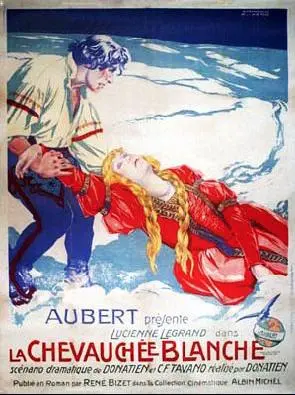
The silent era was never merely a precursor to sound; it was a distinct aesthetic language that reached its zenith in the mid-1920s. Within this crucible of creativity, La chevauchée blanche stands as a monolith of French impressionistic filmmaking. Directed by the polymathic Donatien, who also takes a central role in the cast, the film is a masterclass in using the environment as a primary antagonist. While many films of the period, such as the later Pyotr Velikiy, sought to capture the grandeur of history through scale, Donatien focuses on the internal geography of his characters, using the vast, snowy expanses of the location to mirror the emptiness and chill of the human heart.
The cinematography in La chevauchée blanche is nothing short of revolutionary for 1924. The lens captures the interplay between light and ice with a sensitivity that suggests the cameraman was not merely recording a scene, but conducting an orchestra of shadows. The stark whiteness of the landscape provides a high-contrast backdrop that makes the black-clad figures of Kracheivsky and Jean Dax pop with a graphic, almost woodcut-like quality. This isn't the soft, romanticized snow of a Christmas card; it is a lethal, blinding force. In this regard, the film shares a certain DNA with the atmospheric tension found in Humility, though Donatien swaps religious austerity for a more secular, primal despair.
Donatien and Charles-Félix Tavano’s writing avoids the melodramatic pitfalls that plagued many of their contemporaries. Instead of relying on over-the-top intertitles to convey emotion, they trust the kinetic energy of the frame. The 'white ride' itself is a recurring motif—a journey that promises liberation but often leads only to further entrapment. The pacing is deliberate, demanding a level of patience from the viewer that is rewarded with a profound sense of immersion. It lacks the frenetic energy of Alias Ladyfingers, opting instead for a slow-burn intensity that feels modern even a century later.
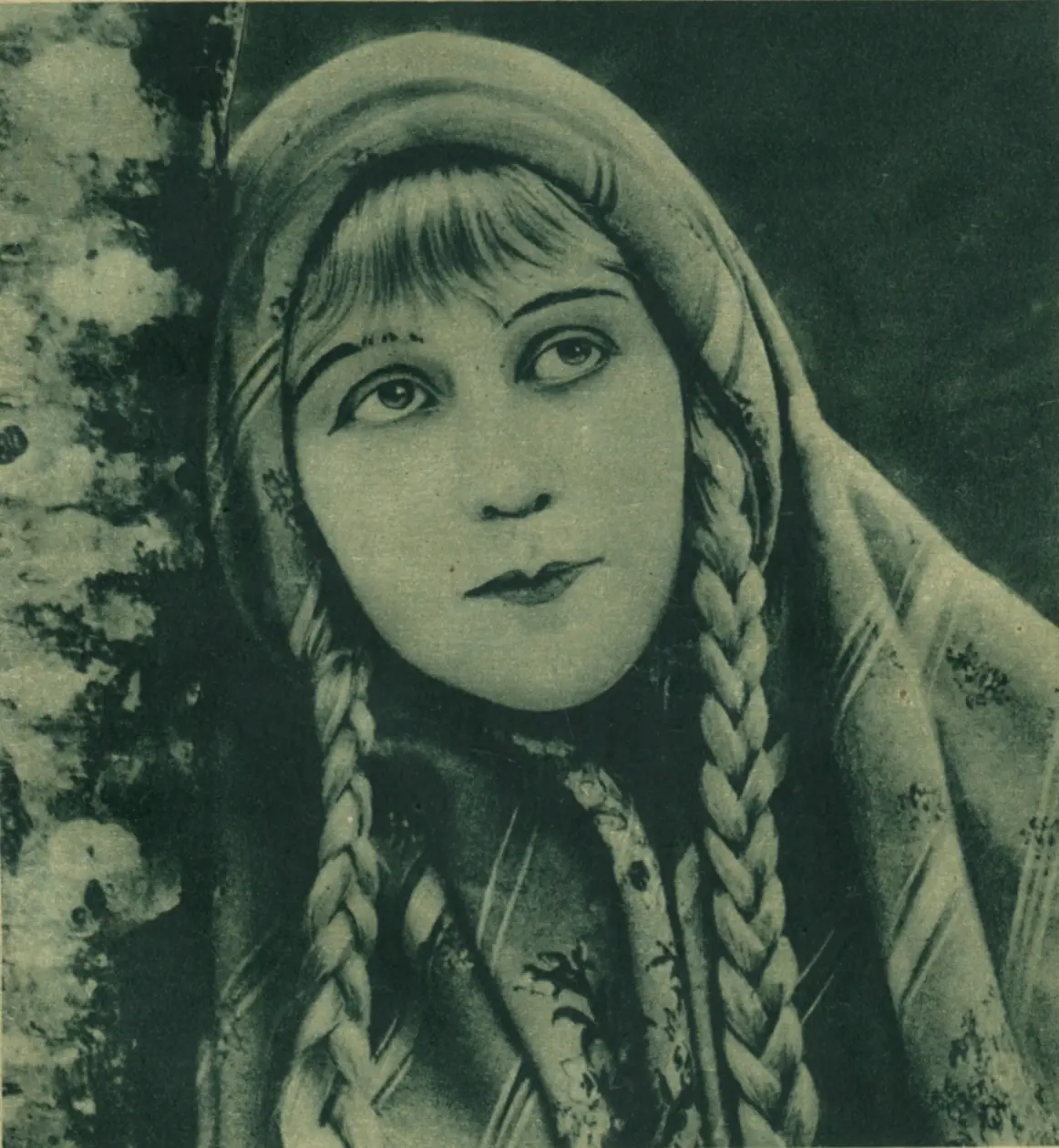
Lucienne Legrand delivers a performance that anchors the film’s more abstract tendencies. Her ability to convey complex internal shifts—from hope to harrowing realization—without the aid of dialogue is a testament to the power of silent screen acting. She doesn't just inhabit the space; she defines it. When compared to the performances in Bella Donna (1923), Legrand’s work feels significantly more grounded and less reliant on the exoticism that characterized many female leads of the era. She is a woman of the elements, her face etched with the same wind-worn resilience as the trees that dot the horizon.
Jean Dax provides a compelling foil, his presence bringing a theatrical weight that balances Donatien’s more naturalistic approach. The chemistry between the cast members is palpable, suggesting a world that exists far beyond the edges of the screen. This depth of characterization is what elevates La chevauchée blanche above the standard fare of the 1920s. It isn't just a story about a ride; it’s a story about the ghosts we carry with us and the lengths we go to outrun them. The film’s exploration of the soul’s darker corners reminds one of Man and His Soul, yet it possesses a visual elegance that the latter often lacks.
Donatien’s direction is characterized by a surprising economy of movement. He understands that in a landscape of such overwhelming scale, the smallest gesture can carry the weight of an avalanche. His use of deep focus allows the environment to remain a constant, looming presence, even during intimate close-ups. This creates a sense of claustrophobia despite the wide-open spaces—a paradox that drives the film’s psychological tension. It is a far cry from the lightheartedness of Fresh Paint (1922) or the satirical bite of Distilled Love. Donatien is interested in the sublime—the point where beauty and terror intersect.
The collaboration with Tavano results in a script that feels remarkably cohesive. Every scene serves the overarching theme of the 'white ride' as a transfigurative experience. Whether the characters are navigating the literal snowdrifts or the metaphorical drifts of their own lives, the direction remains unflinching. This film doesn't offer easy answers or a comforting resolution. It leaves the viewer out in the cold, reflecting on the fragility of human connection. The structural integrity of the plot is more robust than The Ne'er-Do-Well (1923), focusing on a singular emotional arc rather than a series of disparate adventures.
To understand La chevauchée blanche, one must view it within the broader context of 1920s European cinema. It was a time of transition, where the wounds of the Great War were still visible in the art of the continent. The film’s obsession with isolation and the harshness of nature can be seen as a reflection of a society trying to find its footing in a world that had become unrecognizable. It lacks the vengeful fire of Bride of Vengeance, opting instead for a quiet, simmering resentment that is arguably more devastating. There is a purity here, an artistic integrity that refuses to pander to the audience’s desire for a 'happy ending'.
The film also invites comparison to A Tüz in its use of elemental forces to drive the plot. While A Tüz uses fire as its central metaphor, Donatien uses the absence of heat—the absolute zero of the soul. This thematic consistency makes the film a vital piece of the silent era’s canon. It explores the same questions of morality and redemption found in The Man Worthwhile or Forbidden Paths, but it does so with a visual sophistication that sets it apart. It is an 'art film' in the truest sense, prioritizing mood and metaphor over simple exposition.
From a technical standpoint, the film’s restoration (where available) reveals a surprising amount of detail. The textures of the costumes—the heavy wools, the fur, the leather—add a tactile dimension to the viewing experience. You can almost feel the bite of the wind and the crunch of the snow underfoot. This sensory immersion is a hallmark of Donatien’s style. He doesn't just want you to watch the film; he wants you to inhabit it. The use of tinting and toning in various prints adds another layer of emotional resonance, with cool blues and stark whites emphasizing the life-draining nature of the setting.
In the lineage of silent dramas, La chevauchée blanche occupies a space similar to Inspiration or Body and Soul (1920), focusing on the intersection of physical struggle and spiritual crisis. However, its unique setting and the sheer audacity of its visual metaphors give it a distinct identity. It is a film that rewards repeated viewings, as each pass reveals new nuances in the performances and new depths in the cinematography. It is a reminder that even in the 'primitive' days of cinema, directors were capable of creating works of immense complexity and lasting power.
Ultimately, La chevauchée blanche is a testament to the power of the image. It proves that you don't need a thousand lines of dialogue to tell a story of profound human significance. Sometimes, all you need is a horse, a rider, and an endless horizon of white. It is a stark, beautiful, and deeply moving piece of history that deserves to be remembered alongside the great works of the era, such as Trois familles. For those willing to brave the cold, the rewards are infinite.
IMDb 6.5
1934
Community
Log in to comment.