DbcultAccessing Vault...
Cult Review
Senior Film Conservator
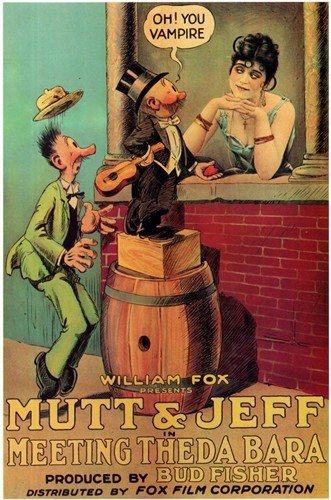
Ah, the silent era. A time when shadows danced with nascent dreams, when the flicker of celluloid ignited imaginations, and when stars were forged in the crucible of public adoration, often more myth than human. Among these celestial bodies, few shone with such singular, almost dangerous, luminescence as Theda Bara. Her very name became synonymous with the 'vamp,' a creature of exotic allure and destructive charm, a cinematic archetype that captivated and scandalized audiences in equal measure. And it is into this world, both real and imagined, that 'Meeting Theda Bara', a delightful and often insightful comedic short from 1918, plunges us.
Crafted by the singular vision of Bud Fisher, who not only penned the narrative but also graced the screen with his presence, this film is more than just a fleeting glimpse into a bygone era of moviemaking. It’s a playful meta-commentary on the burgeoning cult of celebrity, the intoxicating power of the silver screen, and the often-hilarious disconnect between the manufactured image and the prosaic reality. Fisher, best known for his groundbreaking 'Mutt and Jeff' comic strip, brings a distinct cartoonist’s sensibility to the screen: a keen eye for physical comedy, exaggerated expressions, and a narrative structure built around escalating absurdity. His protagonist, also named Bud, is a relatable everyman, a somewhat meek artist whose life is suddenly thrown into disarray by an almost pathological infatuation with the titular star. This isn't just a crush; it's an obsession, a complete surrender to the manufactured mystique of the vamp, a figure who, as films like Vampyrdanserinden (1911) had already shown, held a potent, almost supernatural sway over the male psyche.
The narrative, while seemingly simple, possesses a surprising depth in its exploration of fan culture and the illusion of stardom. Bud's journey to meet Theda Bara is less about a physical destination and more about a psychological one – a quest to reconcile the ethereal screen goddess with a flesh-and-blood woman. His schemes, initially clumsy, quickly escalate into a series of increasingly elaborate and farcical attempts to penetrate the sacred space of the studio lot. We witness him attempting to disguise himself, employing various ruses, and inadvertently stumbling into the chaotic heart of a film production. These sequences are where Fisher’s comedic genius truly shines, evoking the kind of boisterous, physical humor that would become a hallmark of silent comedy. The film’s pacing, a crucial element in silent shorts, is expertly managed, building momentum with each failed attempt, each near-miss, each moment of mistaken identity.
One particular highlight involves Bud’s hilarious entanglement with a bustling film set. The film within a film, though merely a backdrop to Bud’s antics, offers a fascinating, if exaggerated, peek behind the curtain of early Hollywood moviemaking. The frantic energy, the larger-than-life characters, and the sheer controlled chaos of a silent film production are rendered with an affectionate, yet satirical, eye. This kind of self-referential humor, where the film itself playfully acknowledges its own medium, was quite advanced for its time, demonstrating a nascent awareness of cinema’s own burgeoning mythology. It’s a delightful contrast to the more earnest dramatic endeavors of the period, such as His Vindication or The Pride of the Firm, which often took their narrative stakes with unyielding seriousness.
Bud Fisher, in the dual role of writer and performer, delivers a performance that is both endearing and utterly captivating. His portrayal of the obsessed cartoonist is a masterclass in silent film acting, relying heavily on exaggerated facial expressions, precise physical comedy, and a palpable sense of wide-eyed wonderment. He manages to convey Bud’s escalating desperation and unwavering determination with remarkable clarity, even without the benefit of spoken dialogue. His movements are fluid, his reactions perfectly timed, eliciting genuine laughter from the audience without ever resorting to cheap gags. Fisher’s comedic timing is impeccable, a testament to his understanding of visual storytelling honed through years of creating comic strips. One can almost see the panels of a 'Mutt and Jeff' strip come to life through his animated gestures and expressive pantomime.
The true genius of Fisher’s performance, however, lies in his ability to imbue Bud with a certain vulnerability. He isn't just a clown; he's a dreamer, a man utterly enthralled by the magic of cinema, whose journey reflects the aspirations and illusions of countless fans. When he finally encounters what he believes to be Theda Bara, only to discover a flamboyant character actress, his momentary confusion and subsequent embarrassment are played with a nuanced humor that avoids cruelty. It’s a moment that could have easily veered into mean-spirited parody, but Fisher maintains a gentle touch, reminding us that Bud's quest, though misguided, stems from a place of genuine admiration. This scene, in particular, offers a fascinating parallel to the theatrical grandiosity often seen in films like The Footlights of Fate, where stage personas and dramatic revelations are central, here turned on its head for comedic effect.
The film's ultimate revelation, the actual meeting with Theda Bara, is handled with a surprising degree of realism and understated humor. Instead of a dramatic, vampish confrontation, Bud encounters a woman who is, perhaps, a little weary of her own manufactured image. This demystification of the star, the peeling back of the carefully constructed layers of exoticism and danger, is the film's most potent commentary. It suggests that even in the nascent days of Hollywood, the gap between public persona and private reality was already vast. Bara, the enigmatic temptress of films like Die Lieblingsfrau des Maharadscha (1916), who captivated audiences with her dark eyes and alluring movements, is here presented as an almost ordinary human being, a poignant subversion of audience expectations.
This depiction is remarkably prescient, foreshadowing the continuous struggle between celebrity and authenticity that plagues the entertainment industry to this day. It subtly challenges the notion that stars are truly the characters they portray on screen, reminding us that behind every carefully crafted image, there is a person, often far less dramatic or mysterious than their public expects. This nuanced portrayal elevates 'Meeting Theda Bara' beyond mere slapstick, imbuing it with a thoughtful reflection on the nature of fame. It’s a stark contrast to films that revelled in the exotic allure of their female leads, such as Sumerki zhenskoy dushi (1913), which delved deep into the psychological complexities of its protagonist, but still maintained a certain dramatic distance.
Visually, the film is a testament to the resourcefulness and ingenuity of early cinema. While perhaps lacking the grand scale of some contemporary epics, it excels in its use of close-ups for comedic effect and its dynamic staging of physical gags. The sets, likely real studio backlots and interiors, offer a rare glimpse into the practicalities of silent film production, adding an unexpected layer of historical document to the comedic narrative. The cinematography, though straightforward, effectively captures Fisher’s expressive performance and the bustling energy of the studio environment. The interplay of light and shadow, so crucial in silent films, is employed to enhance both the comedic moments and the slightly melancholic undertones of Bud’s eventual disillusionment.
Thematically, the film resonates with a timeless quality. It speaks to the universal human desire for connection, even with those who exist in a realm seemingly beyond reach. Bud’s journey, though specific to the silent film era, mirrors the fan experience across generations, whether it’s idolizing a movie star, a musician, or a sports hero. The film gently pokes fun at this idolization while simultaneously acknowledging its power. It’s a nuanced exploration of the public’s relationship with its entertainers, a relationship built on projection, fantasy, and often, a profound misunderstanding of the individual behind the persona. This thematic depth sets it apart from more straightforward comedies of the time, aligning it more with works that subtly critiqued societal norms, even if through a comedic lens, much like the gentle social commentary sometimes found in a film like In Mizzoura (1914) or the adventurous spirit of The Dawn Maker (1916) in its pursuit of new horizons.
While 'Meeting Theda Bara' might not be as widely known as some of the grander productions of its time, its rediscovery offers invaluable insights into the early days of Hollywood comedy and the evolution of celebrity culture. It’s a testament to Bud Fisher’s multifaceted talent, extending his creative reach beyond the printed page into the nascent world of cinema. The film serves as a charming historical document, preserving not only a comedic sensibility but also a snapshot of the cultural landscape that embraced and created figures like Theda Bara. For film historians and casual viewers alike, it offers a rare opportunity to witness a pivotal moment in cinematic history through a uniquely humorous lens. It stands as a fascinating counterpoint to more dramatic or overtly sensational films featuring exotic figures, perhaps even echoing the subtle irony one might find in a detective story like Der Bär von Baskerville (1915) or its thematic cousin Paws of the Bear (1917), where the true nature of a perceived menace is gradually revealed to be something quite different from initial expectations.
The film's ability to blend straightforward physical comedy with a more contemplative examination of fame is its enduring strength. It never preaches, never condescends, but rather invites the audience to laugh along with Bud’s misadventures while simultaneously reflecting on their own relationship with the figures they admire. It’s a delightful paradox, a film that uses humor to reveal deeper truths about human nature and the manufactured spectacle of celebrity. Unlike the often-stark realities presented in films like We'll Take Her Children in Amongst Our Own (1915), which dealt with social issues, or the simple narratives of Wooden Shoes (1917), Fisher’s film chooses a lighter, more satirical path to its insights. Its whimsical approach to a serious topic, much like the unexpected twists in The Guilty Egg (1908) or the elusive nature of the protagonist in The Governor's Ghost (1917), ensures its charm.
Ultimately, 'Meeting Theda Bara' is a charming, intelligent, and historically significant piece of early American cinema. It’s a film that, despite its brevity, leaves a lasting impression, not just for its comedic prowess, but for its remarkably insightful commentary on the enduring power of celebrity and the often-humorous collision of fantasy and reality. It’s a must-see for anyone interested in the silent era, the evolution of comedy, or simply a delightful, well-crafted story that continues to resonate over a century later. Fisher’s work here, much like the ambitious spirit conveyed in The Upstart (1916), showcases a willingness to push boundaries, even within the confines of a comedic short, establishing a nuanced and thoughtful piece of entertainment that transcends its era.
IMDb 7
1935
Community
Log in to comment.