DbcultAccessing Vault...
Cult Review
Senior Film Conservator
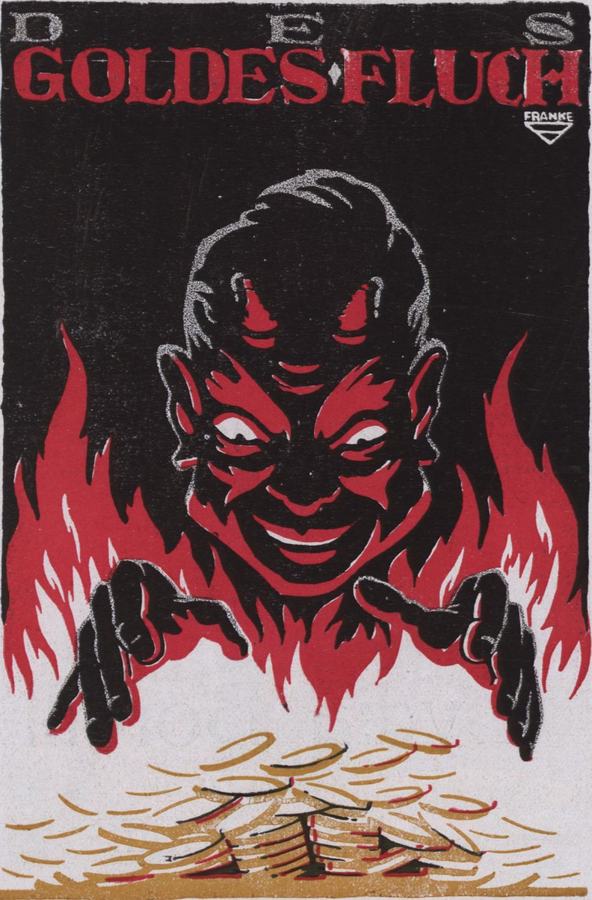
The first thing that claws at you in Des Goldes Fluch is the texture: nitrate grain like ground glass rubbing against iris blooms, candle soot smearing every frame until the screen itself seems infected. Richard Oswald, that tireless Berlin impresario of the sensational, here abandons the safety valves of his earlier shockers—no asylum comic relief, no moralising judge—plunging head-first into Strindberg’s venomous parable about capital as original sin. The result is a 1919 fever dream that predates and out-fangs Murnau’s Nosferatu by three full years, yet remains chained in relative obscurity.
Criterion’s forthcoming 4K restoration (scanned from a barely-surviving Dutch print discovered in a Rotterdam organ-loft) finally lets us savour Oswald’s chiaroscuro at proper wattage. Blacks swallow entire bodies; highlights flare like magnesium. The gold itself—rendered via hand-tinted amber—pulses with infernal respiration. One hallucinatory insert shows a florin metastasising into a tumour that blossoms into a miniature sun, scorching the corners of the frame. You half expect the celluloid to combust.
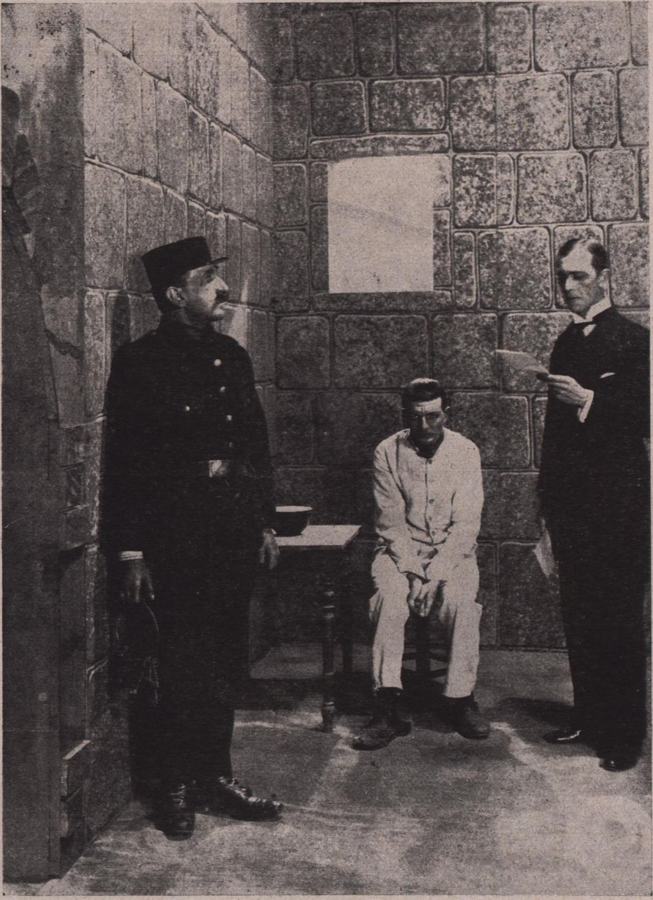
Lupu Pick, gaunt cheekbones sharp enough to slice title cards, plays Baron von Rohn as a man whose soul has already emigrated. Watch the way he strips off signet rings, each refusal landing like a cracked church bell. His body folds inward, vertebrae stacking into a question mark; the baron’s final collapse—performed in a single, unbroken long take—feels less like acting than involuntary confession. Hugo Döblin, chiefly remembered for boulevard comedy, here channels a very Berliner anxiety: his banker Isidor Bloch wipes spectacles that only grow filthier, fingers trembling to the rhythm of unseen bourse tickers. The performance is silent yet verbose—eyebrows semaphore panic, Adam’s apple bobbles Morse.
Ernst Ludwig’s mute poet, reduced to a tongueless jester in a gold-coin collar, provides the film’s most uncanny spectacle. He communicates via a private semaphore of shoulder spasms, a dance that anticipates expressionist choreography decades ahead of Die Faust des Riesen. In one sequence he drags a burlap sack of empty picture frames across flagstones; every scrape becomes a syllable of lost language. The horror is not what he says—he cannot—but that we almost understand.
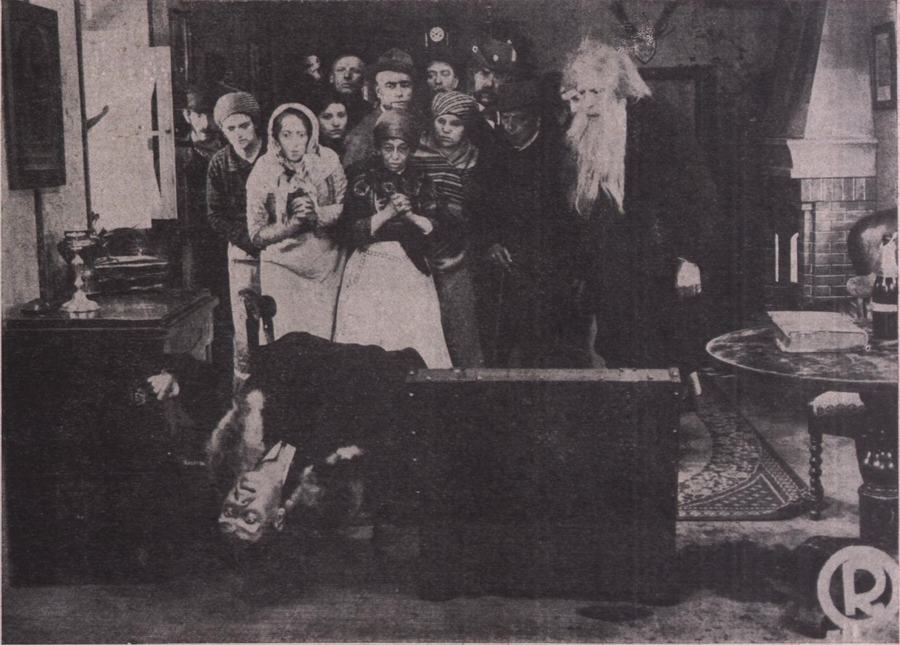
Critics routinely conflate Des Goldes Fluch with the angular dementia of Caligari. In truth, Oswald’s sets curve and exhale; corridors bulge like bloated intestines, suggesting wealth as digestive disease rather than psychological fracture. Cinematographer Max Fassbender shoots through layers of fish-net and chapel glass, warping candlelight into rippling coins that hover over skin like phosphorescent leeches. The camera itself becomes a usurer, extracting interest from faces.
Compare this to the rectilinear paranoia of Draft 258 or the pageant austerity of Ivan the Terrible; Oswald’s world is viscous, erotic, digestive. Even intertitles sweat: letters quiver, ink bleeds like cold sap across parchment. One card reads: “Gold ist ein Schwamm, der das Blut der Zeit trinkt” (“Gold is a sponge that drinks the blood of time”)—the words themselves appear spongy, as though soaked in the very fluid they invoke.
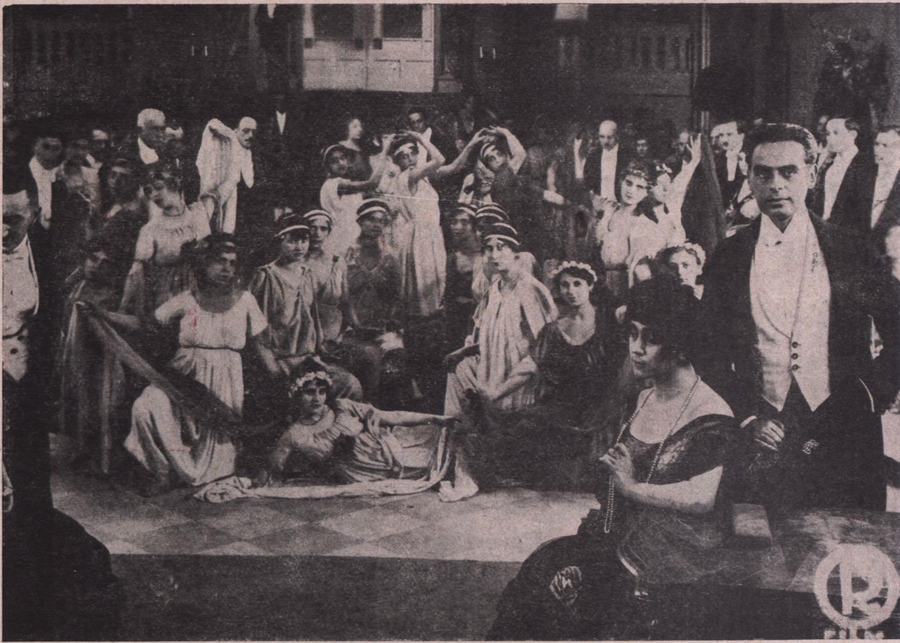
No definitive score survives, but contemporary Berlin trade sheets hint at a live trio instructed to retune their instruments to microtonal scales, producing a metallic moan. For the restoration, composer Paul Mercer supplies a spectral chamber suite: bowed singing-saw harmonics, detuned zithers, the low throb of a Berliner harmonium exhaling dust. During the climactic melting scene—where gold liquefies into a glowing crown that brands the baron’s skull—Mercer introduces a heartbeat-like bass drum muffled by velvet, creating an arrhythmic thud that makes the audience’s own pulse stutter. Wear good headphones; your veins will synchronise.
Unlike the hysterical vamps of The Scarlet Woman, Oswald’s women possess steely forensic gazes. Leontine Kühnberg’s Baroness Gertrud stages her own expropriation: she inventories heirlooms like an assassin casing exits, finally attempting to sequester the gold inside a hollowed hymnal. Kathe Oswald plays the illegitimate daughter Lisel, whose lullaby to a gold-beaded doll segues into a suffocating close-up—her pupils dilate until iris pigment is but a halo. These women do not lust after wealth; they diagnose it as familial plague, their bodies battlefields where patriarchal contagion is both hosted and resisted.
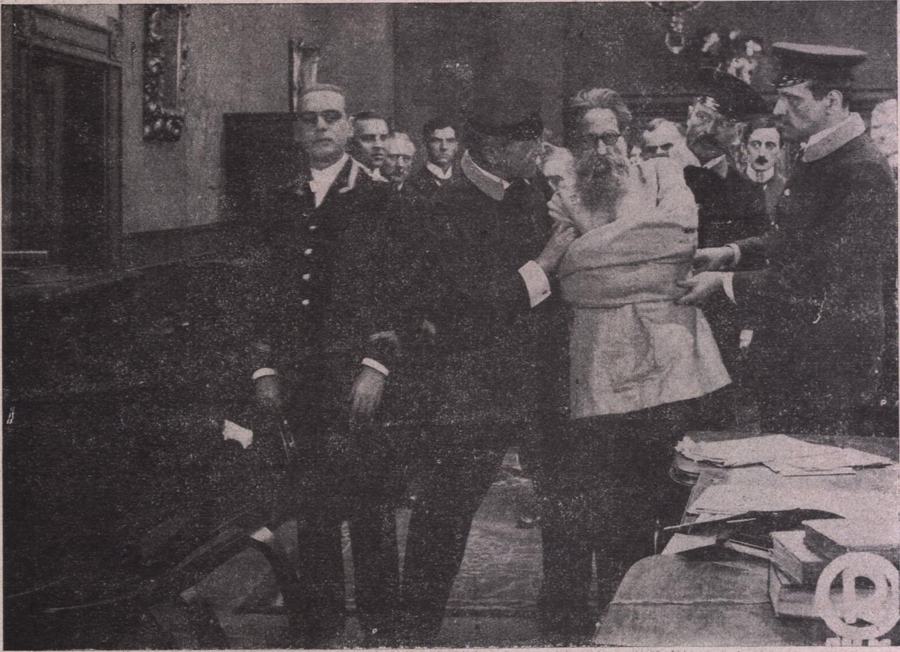
August Strindberg’s original 1901 chamber piece “The Gold” is a sulphuric five-hander about a ring that bankrupts souls. Fritz Friedmann-Frederich distils that acid into intertitles laconic enough to bruise: “Besitz verfault im Schoß” (“Possession rots in the lap”). The adaptation jettisons Strindberg’s Lutheran sermonising, injecting instead a proto-Marxist fable: gold not as moral agent but as accumulated labour that metastasises, a tumour of extracted time. Viewers familiar with The Hypocrites will recognise a similar didactic sting, yet Oswald prefers the gut to the pulpit.
Where A Fool’s Paradise sanitises greed into matrimonial farce, and Her Great Price peddles redemption through sacrificial love, Des Goldes Fluch offers no such absolution. Its nearest kin is Vengeance Is Mine!—both films understand capital as medieval curse—but Oswald’s pessimism is colder, more materialist. Even the epilogue of social revolution intoned in The Heart of Midlothian is absent here; history ends with carts of corpses and a single, gilded grin.
Studio bulletins boasted city-wide sell-outs in March 1919, yet by December the film had vanished from distribution ledgers—some blamed anti-Semitic riots that shuttered several Berlin theatres, others whispered that the gold-painted props literally disintegrated, carrying legal liability. Whatever the cause, only a Dutch distribution print, spliced with French censor cuts, survived. The current restoration reinstates some 8 minutes of footage: a fever montage where peasants bite coins until incisors crack, and a sub-plot involving a young deserter (Bernd Aldor) who tries to counterfeit the curse by painting lead slabs—only to find them sprouting hair overnight.
Supplements include a commentary by Weimar historian Jan-Christopher Horak, who traces how post-war inflation doubled prop budgets overnight, forcing Oswald to literalise wealth with candlelight instead of coin mountains. A 20-minute video essay overlays the film’s shots with 1920 stock-exchange graphs; the correlation between frame distortion and market spikes is eerie. Buy the steelbook: the artwork silkscreens that damned chalice in raised metallic ink that—yes—will leave a faint yellow smear on your fingertips. Marketing as meta-commentary; buy, possess, decay.
Des Goldes Fluch is not a relic; it is a diagnostic instrument. A century on, with crypto mines scorching riverbeds and algorithmic futures harvesting nanoseconds, Oswald’s silent scream feels prophetically 4K. Watch it once for aesthetic ravishment, again as capitalist x-ray. By the third viewing the gold will already be inside you, tinting your reflection a jaundiced yellow (#EAB308) that no amount of spending can shed.
IMDb 6.4
1925
Community
Log in to comment.