DbcultAccessing Vault...
Cult Review
Senior Film Conservator
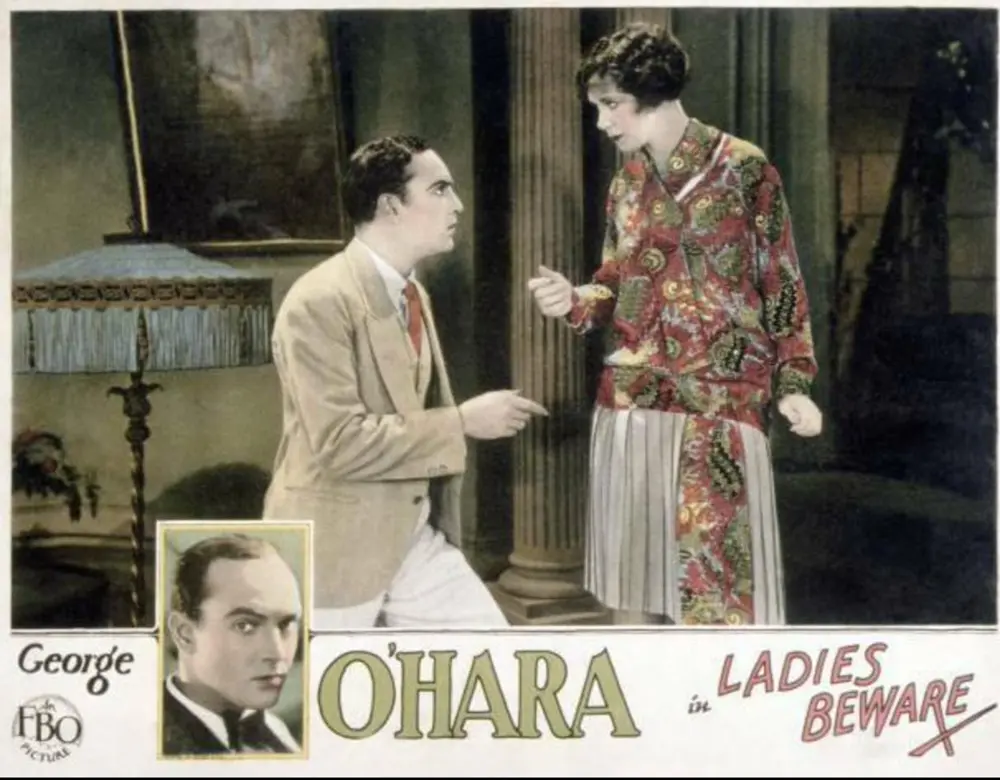
Is Ladies Beware worth watching today? Short answer: absolutely, if you approach it with the right lens. This is a film for silent cinema enthusiasts, those intrigued by early genre conventions, and anyone with a soft spot for charmingly simple period mysteries. It works. But it’s flawed.
However, if you're looking for fast-paced action, complex character arcs, or modern cinematic polish, this 1927 production will likely test your patience. It is decidedly not for viewers who struggle with the slower rhythm and exaggerated pantomime inherent to the silent era, or those who demand high-fidelity visual and auditory experiences.
This film works because of its straightforward, engaging premise and the surprisingly effective comedic timing of its lead, Jimmy Aubrey, who anchors the narrative with a certain rogueish charm. It fails, however, in its underdeveloped supporting characters and a pacing that, even for its era, can feel a tad leisurely in its exposition. You should watch it if you appreciate historical cinema and want to see a delightful, if minor, example of early mystery-comedy hybrids.
In the vast, often overlooked archives of silent cinema, Ladies Beware emerges as a curious, almost quaint artifact. Directed with a light touch and propelled by a script co-written by Frederick J. Jackson, Enid Hibbard, and J.G. Hawks, this 1927 feature offers a charming, if somewhat simplistic, foray into the world of jewel thieves and socialites. It’s a film that doesn't aim for grand statements but rather for an hour of pleasant diversion, a goal it largely achieves.
The narrative, centered around the jewel thief Jack, is a delightful romp through an upper-class house party. Jack, played by Jimmy Aubrey, is less a menacing criminal and more a mischievous rogue, a character type that was immensely popular in the era. His interactions, particularly with his former associate Jeannie (Nola Luxford), inject a welcome layer of personal history into what could otherwise be a by-the-numbers heist plot.
What strikes a modern viewer is the film's unpretentious nature. There's no attempt at profound social commentary or deep psychological exploration. Instead, it revels in the mechanics of a simple plot: the pursuit of a valuable ruby, the unexpected twist of a rival thief, and the lighthearted interplay between characters. This simplicity, while occasionally bordering on the naive, is also its greatest strength, allowing the audience to suspend disbelief and simply enjoy the unfolding caper.
The direction in Ladies Beware, while not groundbreaking, is competent and serves the story well. The film maintains a brisk pace once the central conflict is established, moving efficiently from scene to scene. There's a clear understanding of how to use intertitles not just for dialogue, but also for exposition and to build anticipation, a crucial skill in silent filmmaking.
One particularly effective sequence involves Jack's initial infiltration of the party. The camera often frames him slightly apart from the other guests, emphasizing his outsider status and illicit intentions, even as he attempts to blend in. This subtle visual cue allows the audience to instantly grasp his role without heavy-handed exposition. It’s a classic example of silent film visual storytelling, relying on blocking and framing to convey character and intent.
However, the film occasionally stumbles in its pacing during the setup. The initial scenes establishing Jack's predicament and the police's 'suggestion' feel a little drawn out, perhaps a consequence of needing to build sufficient justification for his desperate final heist. While necessary, a slightly tighter edit here could have propelled the narrative forward with more urgency.
The ensemble cast, while not all given equal opportunity to shine, contributes to the film's overall charm. Florence Wix, as the ruby-owning Georgette Ring, embodies the elegant, slightly oblivious socialite with aplomb, her expressions often conveying more than any intertitle could. Bud Jamison, a veteran of numerous silent comedies, delivers a solid performance that adds a touch of gravitas, even in a relatively small role.
Unconventional Observation: It's fascinating how the film uses the 'house party' setting. It's not just a backdrop for the crime, but a microcosm of societal class structures. The thief, Jack, is attempting to breach not just a physical safe, but a social barrier, highlighting a subtle tension between the haves and have-nots, even in a film primarily concerned with light entertainment. The presence of Jeannie, formerly an associate of Jack and now a secretary, further blurs these lines, suggesting a fluid, if precarious, social mobility within the criminal underworld and the domestic sphere.
Jimmy Aubrey, as Jack, is the undeniable anchor of Ladies Beware. His performance is a masterclass in silent film physicality, conveying cunning, wit, and occasional exasperation through exaggerated gestures and expressive facial contortions. His eyes, in particular, are incredibly dynamic, flickering with intention as he scopes out the ruby or reacts to Jeannie's interference. There's a scene where he almost gets caught near the safe, and his quick, almost balletic movements to appear nonchalant are genuinely amusing and effective. He carries the film's comedic and dramatic weight with surprising ease, preventing the character from ever becoming truly villainous.
Nola Luxford’s Jeannie provides a compelling counterpoint to Jack. Her character is more nuanced than typical silent film heroines; she's not just a damsel in distress but an active participant, attempting to prevent the theft due to her new loyalties, yet clearly still holding a past connection with Jack. Luxford conveys this internal conflict through subtle shifts in her posture and glances, hinting at a deeper history than the intertitles explicitly state. It’s a performance that adds a much-needed layer of emotional complexity.
The supporting cast, including George O'Hara and Kathleen Myers, fill their roles adequately, though without the same level of memorable impact as Aubrey and Luxford. Byron Douglas, as Count Bodevsky, manages to make his brief appearance as the true culprit impactful through a certain understated menace, a stark contrast to Jack's more boisterous criminality. His quiet, almost elegant theft is a stark and surprising juxtaposition to Jack's more overt attempts, making the twist genuinely effective.
The cinematography in Ladies Beware is functional rather than revolutionary. It adheres to the conventions of late silent cinema, utilizing clear, well-lit shots and a relatively static camera. There are few, if any, overtly artistic flourishes, but the camerawork is always competent, ensuring that the audience can follow the action and understand the characters' reactions. The film makes effective use of close-ups during moments of tension or revelation, particularly when focusing on the ruby itself or a character's conspiratorial glance.
One notable aspect is the effective use of depth within the frame, especially in the party scenes. Guests are often visible in the background, creating a sense of a bustling environment without distracting from the main action. This technique, while simple, adds a layer of realism to the setting. The lighting, too, is generally bright and even, a common approach to ensure visibility in a medium reliant on visual clarity without sound.
Compared to more ambitious films of the era, such as F.W. Murnau's Sunrise: A Song of Two Humans (also 1927), Ladies Beware doesn't push the boundaries of cinematic language. It’s a testament to the diverse range of films produced during the silent era, from high art to commercial entertainment. While it lacks the visual poetry of a Murnau, it succeeds in its own right by delivering a clear, engaging narrative through established visual grammar.
The tone of Ladies Beware is predominantly lighthearted and comedic, even with the underlying criminal element. There's a charming innocence to the proceedings, a reflection of a time before the Hays Code would impose stricter moral guidelines on Hollywood. The 'beware' in the title feels more like a playful warning than a genuine threat, perfectly encapsulating the film's gentle suspense and humor.
Its legacy, while not as prominent as films like The General or Metropolis, lies in its representation of everyday silent cinema – the bread and butter of movie houses across America. These were the films that entertained the masses, honing storytelling techniques and developing character archetypes that would endure for decades. Ladies Beware is a valuable entry point for understanding the commercial filmmaking landscape of the late 1920s.
My strong opinion is that films like Ladies Beware are essential viewing for anyone studying film history, not just for their artistic merit, but for their cultural significance. They show us what 'normal' cinema looked like, offering a crucial context against which the 'masterpieces' can be truly appreciated. Without these smaller, unassuming films, our understanding of the era would be incomplete.
Ladies Beware is a charming, if minor, silent film that offers a pleasant diversion for those willing to engage with its historical context. It's not a lost masterpiece, nor does it pretend to be. What it is, however, is an honest, entertaining piece of genre filmmaking from an era long past. Its strength lies in its simplicity, its engaging lead performance by Jimmy Aubrey, and a narrative twist that still holds up. While it may not convert skeptics of silent cinema, it certainly rewards those already appreciative of the form.
For film scholars and casual enthusiasts alike, it offers a valuable, unpretentious window into the popular cinematic tastes of 1927. It's a reminder that not every film needs to redefine the medium to be enjoyable or culturally significant. Sometimes, a well-told, lighthearted story is more than enough. Go in with an open mind, and you might just find yourself charmed by this forgotten caper.
IMDb 5.9
1934
Community
Log in to comment.