DbcultAccessing Vault...
4.6/10
Senior Film Conservator
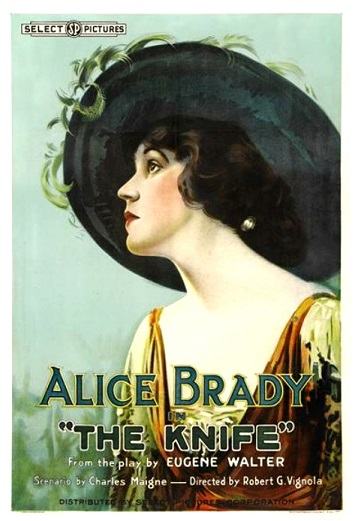
A definitive 4.6/10 rating for a film that redefined the boundaries of cult cinema. The Knife remains a cornerstone of transgressive art.
The Knife: A Silent Film’s Unflinching Gaze at Exploitation and Redemption
The 1929 silent film The Knife lingers in the memory like a fever dream of the American South and the industrial North colliding. Directed by Charles Maigne and written by Eugene Walter and Maigne himself, this film is less a conventional narrative and more a series of chiaroscuro tableaux, each one dissecting the rot beneath the veneer of respectability. At its core lies the tragic arc of Kate Tarleton (Alice Brady), a woman whose life is upended by the interplay of superstition, medical ambition, and the grotesque underbelly of urban vice. The film’s title—a metaphor for both surgical precision and violent intrusion—sets the tone for a story where healing and harm are inextricably linked.
A Southern Eden Shattered
Set against the backdrop of a decaying plantation, the film opens with Kate Tarleton as a figure of Southern grace, her life meticulously curated by her guardian, Dr. Robert Manning (Edwards Davis). Their relationship, though paternal, carries the weight of unspoken tension. When Manning proposes marriage, it is less a romantic gesture than a transactional alignment of power and protection. The narrative pivots when they travel to New York, a city symbolizing both opportunity and moral decay. Here, Kate’s superstition—a relic of her Southern upbringing—leads her to consult Stella Hill (Myra Brooks), a fortuneteller whose tarot cards mask a far darker trade. Stella’s transition from mystic to trafficker is a masterstroke of narrative subversion, reflecting the era’s anxieties about urbanization and the erosion of traditional values.
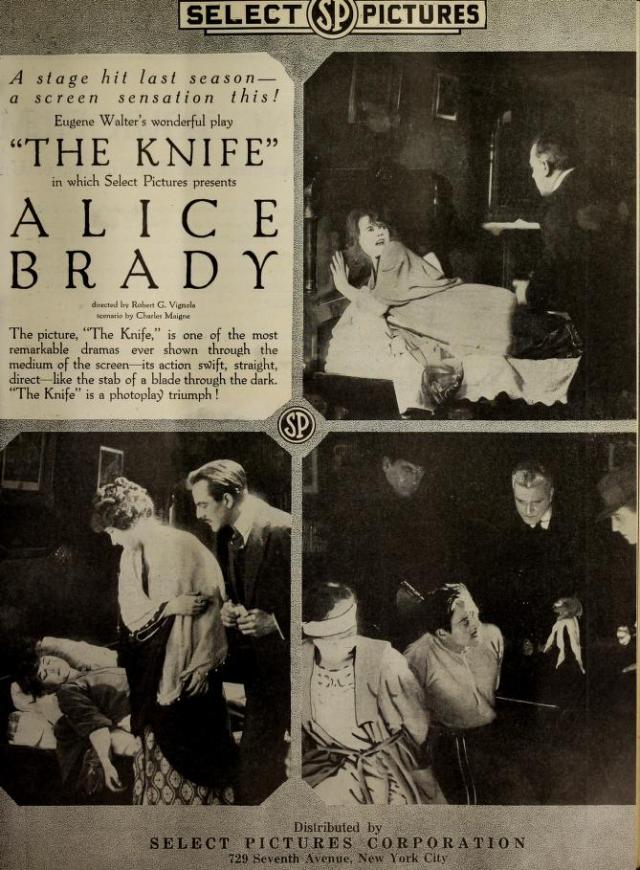
Stella’s “den of vice” operates as a microcosm of societal corruption. The film’s depiction of Kate’s captivity is less about explicit exploitation and more about psychological disintegration. Her contraction of syphilis—a disease often associated with moral decay in early 20th-century discourse—becomes a plot device to interrogate the ethics of medical experimentation. Dr. Manning’s subsequent use of Stella and her accomplice, Jimmy Bristol (Frank Evans), as experimental subjects raises profound questions about the cost of scientific progress. Is Manning a savior or a co-conspirator? The film refuses to offer easy answers, instead framing him as a tragic figure whose love for Kate justifies increasingly dubious methods.
Memory, Madness, and Morality
Kate’s eventual rescue and recovery are undercut by her amnesia, a narrative choice that forces the audience to confront the fragility of truth. Her fragmented memories return in the courtroom confrontation, a dramatic device that mirrors the film’s own structural dissonance between poetic symbolism and clinical realism. The trial scene is a masterclass in silent film storytelling, relying on Brady’s expressive performance and Walter’s taut script to convey the stakes of Kate’s testimony. When she recounts her ordeal, the implications for Manning’s reputation and Stella’s criminal enterprise hang in the balance. The resolution—where Manning’s name is cleared while Stella is exposed—feels less like justice and more like a truce with compromise.
Visual and Thematic Resonances
Visually, The Knife employs stark contrasts to mirror its thematic dichotomies. The Southern plantation is bathed in golden light, evoking a romanticized past, while New York’s industrial landscape is rendered in murky shadows. This visual language is reminiscent of La Gioconda (1913), another work that juxtaposes classical beauty with modern depravity. The film’s use of close-ups to capture Kate’s anguish and Manning’s conflicted resolve owes a debt to the German expressionist school, though its American context tempers its stylistic extremity.
Performances and Legacy
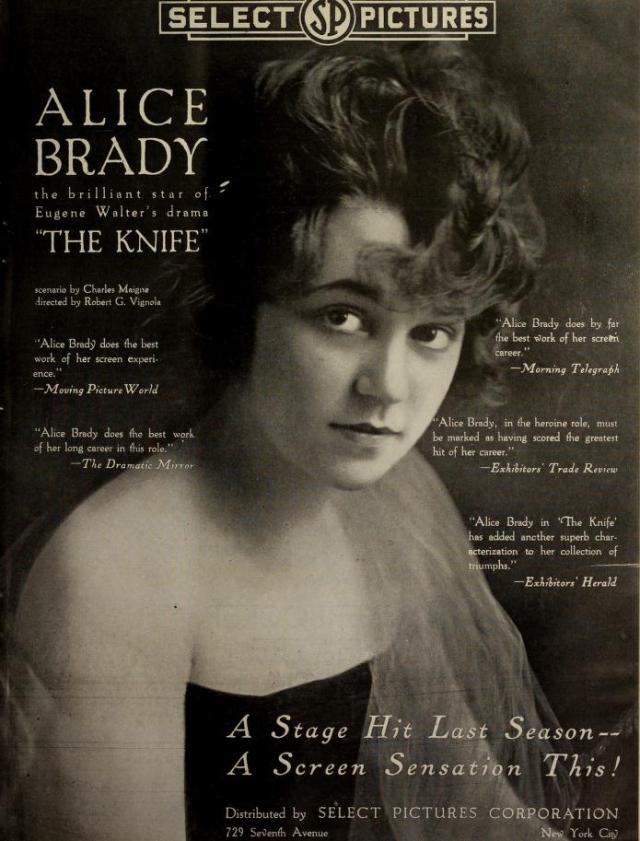
Alice Brady’s portrayal of Kate is a tour de force of silent film acting. Her wide-eyed vulnerability and gradual descent into madness are rendered with visceral intensity, a performance that recalls the tragic heroines of In the Power of Opium (1916). Edwards Davis, as Manning, channels a stoic resolve that masks inner turmoil, his character a proto-typical figure of the morally ambiguous physician. The film’s supporting cast, particularly Myra Brooks as Stella, adds layers of menace and pathos, ensuring the narrative remains anchored in human complexity.
Released in 1929, the film’s exploration of medical ethics and human trafficking resonates with the pre-Code Hollywood era’s penchant for edgy subject matter. Yet it also reflects the era’s racial and gender politics, particularly in its portrayal of the Southern plantation as both a sanctuary and a gilded cage. The film’s ambiguous conclusion—where Manning’s experiments yield a cure but at the expense of his integrity—echoes contemporary debates about scientific advancement versus ethical boundaries. This duality is further explored in Potop (1911), where historical upheaval forces individuals to confront moral contradictions.
While The Knife is often cited alongside Valdemar Sejr (1913) for its use of historical settings to critique modernity, its thematic focus diverges into the realm of psychological horror. The film’s treatment of memory and identity parallels Le torrent (1920), where natural forces externalize internal chaos. Yet The Knife distinguishes itself through its clinical examination of medical ethics, a theme later amplified in works like Dead Shot Baker (1920).
The Knife endures as a provocative meditation on the intersections of power, science, and exploitation. Its refusal to sanitize its characters or resolve its conflicts neatly makes it a compelling artifact of early cinema’s capacity to grapple with societal ills. For modern viewers, the film serves as a reminder of how historical narratives are shaped by the perspectives of those who tell them. In the silent film canon, it occupies a liminal space between melodrama and social critique, its legacy preserved in the chiaroscuro shadows of its final scenes.
IMDb —
1917
Community
Log in to comment.