DbcultAccessing Vault...
Cult Review
Senior Film Conservator
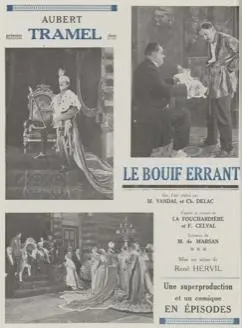
Is Le Bouif errant worth watching today? Short answer: yes, but with significant caveats that demand a particular kind of cinematic palate. This early 20th-century French farce is a peculiar time capsule, a film best suited for dedicated cinephiles and scholars of silent-era comedy, particularly those interested in the evolution of French humor and the ‘Prince and the Pauper’ trope pre-Hollywood mainstreaming. It is decidedly not for viewers seeking modern comedic pacing, sophisticated narrative complexity, or pristine visual quality.
At its core, Le Bouif errant offers a fascinating glimpse into a specific comedic tradition, one built on physical comedy, mistaken identity, and a gentle prodding of class distinctions. Its charm lies in its earnest, if sometimes clunky, execution of a timeless premise.
The premise of Le Bouif errant is deceptively simple: a commoner, Bicard (Frédérique), steps into the shoes of a prince, Ladislas (Albert Préjean). Yet, within this classic framework, the film attempts to weave a tapestry of slapstick and social commentary. Bicard, or Le Bouif, is introduced in a rather bizarre circumstance, lending his body to a Professor Caligari for scientific experiments. This initial absurdity sets the tone for the entire film, immediately signaling that logic will take a backseat to comedic chaos.
The true spark of the narrative ignites when Bicard encounters Ladislas. The prince, weary of his royal obligations, sees an opportunity for a temporary escape, exploiting Bicard's uncanny resemblance. This setup, while familiar, allows the film to explore the inherent humor in a fish-out-of-water scenario, contrasting the refined world of royalty with the rough-and-tumble existence of the common man. Frédérique, as Bicard, shoulders the comedic burden, his performance relying heavily on broad gestures and exaggerated reactions to the unfamiliar opulent surroundings.
The film works because it commits wholeheartedly to its farcical premise. There's an undeniable energy to Frédérique's performance, even if it feels dated. The central conceit of the commoner on the throne provides ample opportunity for sight gags and comedic misunderstandings. Its historical value as an artifact of early French cinema is also significant, showing a distinct style of humor that predates many of the more globally recognized silent comedies.
This film fails because its comedic timing often feels sluggish by modern standards, and its narrative occasionally meanders without the tight pacing we've come to expect. The humor, while present, isn't always sharp enough to overcome the technical limitations and the sometimes repetitive nature of the gags. The film’s pacing can feel like a slow burn, punctuated by bursts of physical comedy that don’t always land with the intended impact for a contemporary audience.
You should watch it if you are a dedicated student of film history, particularly interested in silent French cinema, or if you appreciate the raw, unpolished charm of early cinematic endeavors. It’s a curiosity, a piece of a larger puzzle, rather than a standalone masterpiece of entertainment.
The acting in Le Bouif errant is, as expected for its era, highly theatrical. Frédérique, in the dual role (effectively), carries the film with a physical exuberance that is both admirable and, at times, exhausting. His portrayal of Bicard, the commoner thrust into royal life, leans heavily into caricature. One memorable sequence sees him attempting to navigate a formal dinner, his table manners hilariously out of sync with the aristocratic etiquette, spilling drinks and fumbling with cutlery. This scene, while simple, encapsulates the core comedic tension of the film.
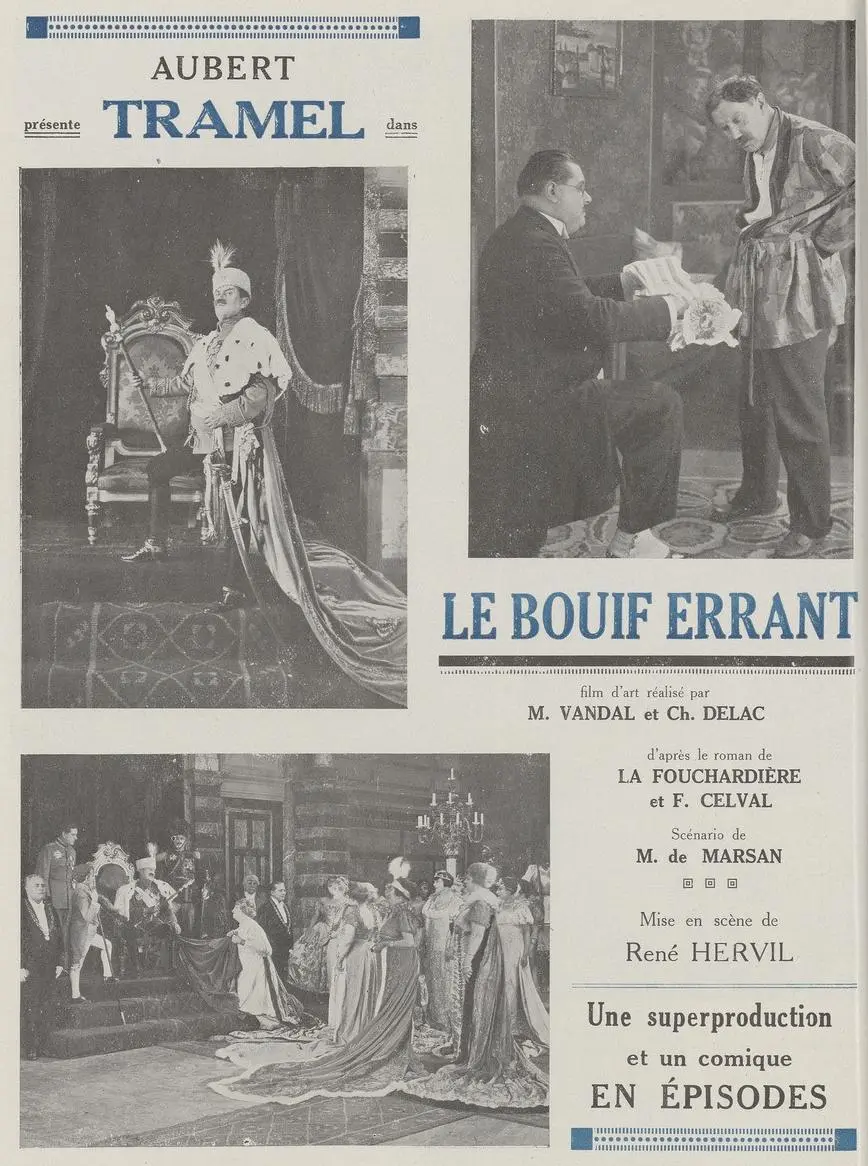
Albert Préjean as Ladislas, the prince, offers a more understated performance, serving as the catalyst for the farce. His initial nonchalance regarding his royal duties and his almost gleeful embrace of a commoner’s life provide a necessary contrast to Bicard’s frantic attempts at nobility. The supporting cast, including Joe Alex and Tramel, fill out the world with similarly broad strokes, each character serving a specific comedic function rather than offering deep psychological insight. Jane Pierson as one of the court figures, for instance, provides a prim and proper foil to Bicard's antics, her expressions of shock and disapproval adding to the humor.
The directing, likely a collaborative effort given the era’s production methods, prioritizes clarity of action over stylistic flair. The camera is largely static, capturing the theatrical performances in full frame. There are no elaborate tracking shots or complex editing sequences. Instead, the focus is on allowing the actors to perform, often in long takes, enabling the audience to fully absorb the physical comedy. This approach, while a product of its time, can feel somewhat flat to modern viewers accustomed to dynamic cinematography. However, it also offers an unvarnished look at early cinematic storytelling, where the stage influence was still incredibly strong.
The cinematography of Le Bouif errant is rudimentary by today's standards, yet it possesses a certain historical charm. Shot in black and white, the film relies on natural light or basic studio lighting, resulting in visuals that are often stark and lacking in depth. The sets, though clearly constructed, manage to convey the disparity between Bicard's humble beginnings and the opulence of the Corinthian palace. For example, the contrast between the cramped, almost claustrophobic interior of Bicard's initial dwelling and the expansive, if simply decorated, royal chambers is visually distinct, even with the limited photographic techniques.
Pacing is arguably the film's most challenging aspect for a contemporary audience. Silent films often operated on a different rhythm, and Le Bouif errant is no exception. There are moments of genuine comedic energy, particularly during Bicard's more frantic attempts to maintain his disguise or when he is subjected to the professor's experiments. However, these are interspersed with longer stretches where the narrative progresses at a more deliberate, almost languid, pace. This ebb and flow can test the patience of viewers accustomed to rapid-fire editing and constant narrative propulsion. It is a film that demands a certain level of commitment to its historical context to be fully appreciated.
The tone is consistently light-hearted and farcical. Despite the underlying social commentary implicit in the 'prince and the pauper' narrative, the film never veers into heavy drama or biting satire. Its aim is purely to entertain through humor, often broad and physical. This unwavering commitment to its comedic tone is one of its strengths, ensuring that even when the pacing falters, the film maintains a consistent, amiable spirit. It’s a peculiar film. It works. But it’s flawed.
For the casual viewer, Le Bouif errant might be a tough sell. Its silent film conventions, including intertitles and exaggerated performances, require an adjustment period. The comedic beats, while historically significant, may not always translate into modern laughter. However, for those with a keen interest in the origins of French cinema, the development of comedic tropes, or the evolution of the 'Prince and the Pauper' story, this film offers considerable value. It’s an important piece of cinematic history, showcasing a particular style of humor that was popular in its time.
It serves as a fascinating precursor to later, more polished comedic explorations of class and identity. One might even argue that Le Bouif errant inadvertently prefigures the 'Prince and the Pauper' trope with a distinctly French, almost Dadaist, comedic sensibility, long before Hollywood truly embraced it in films like The Wonderful Chance or even later, The Prince of Pilsen. It’s a testament to the enduring appeal of the premise, even when executed with early cinematic techniques. The film is a historical document as much as it is entertainment.
Le Bouif errant is a fascinating, if imperfect, relic of early French cinema. It won't convert skeptics of silent film, nor will it likely top anyone's list of 'must-see' comedies. However, for those willing to engage with its historical context and appreciate its raw, unpolished charm, it offers a unique window into a bygone era of entertainment. Its significance lies less in its ability to consistently entertain a modern audience and more in its role as a foundational piece in the tapestry of cinematic history. Approach it with an open mind and a historian's curiosity, and you might find a surprising amount to enjoy, or at least to ponder. It's a testament to the enduring power of a simple, absurd idea. But be warned: it’s an acquired taste.
IMDb —
1926
Community
Log in to comment.