DbcultAccessing Vault...
Cult Review
Senior Film Conservator
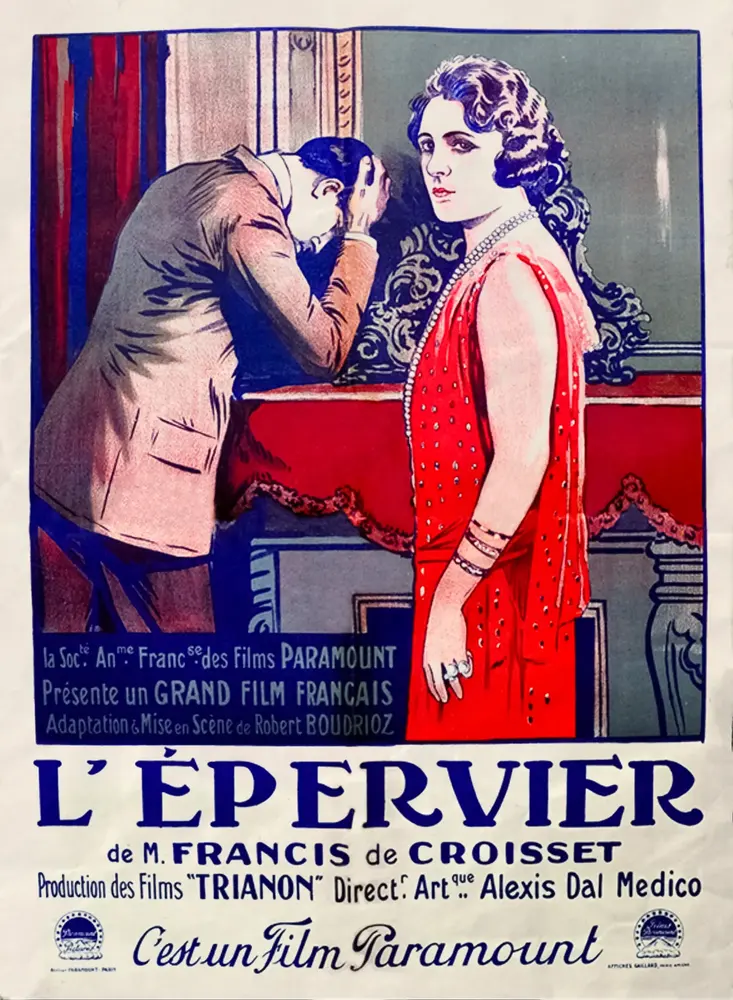
Is L'épervier a relic worth your time in the modern era? Short answer: yes, but only if you have the patience for the slow-burn psychological erosion that defined mid-1920s French cinema.
This film is specifically for those who appreciate the nuance of silent-era acting and the weight of social consequences; it is not for viewers who require rapid-fire editing or a clear-cut hero to root for. It is a dense, often suffocating experience that demands your full attention.
1) This film works because it treats moral bankruptcy as a physical contagion, manifesting visibly in the husband's eventual decline.
2) This film fails because the second act loses momentum by focusing too heavily on the diplomat's dry social circles, which lack the visceral tension of the card-sharp scenes.
3) You should watch it if you are a student of 1920s melodrama who prefers complex, messy character dynamics over simplistic morality tales.
L'épervier is a significant work of silent French cinema that explores the heavy price of social deception. It is worth watching for its nuanced performances and its refusal to offer a simple happy ending. Viewers interested in the evolution of 1920s drama will find its psychological depth rewarding and its visual storytelling remarkably sophisticated for its time.
Robert Boudrioz directs with a clinical detachment that makes the early scenes of card-cheating feel less like a heist and more like a surgery. We see the husband, played with a chilling, predatory stillness by Sylvio De Pedrelli, as he operates in the high-stakes rooms of Europe. He is the 'hawk' of the title, circling his prey with a terrifying grace.
Nilda Duplessy, playing his wife, is the emotional anchor. Her performance is a masterclass in silent restraint. While her husband focuses on the cards, her eyes are constantly scanning the room for the first sign of detection. It is exhausting to watch. You can feel the weight of every lie she tells on his behalf.
The film excels in these moments of high-tension social interaction. Unlike '49-'17, which relies on broader genre tropes, L'épervier stays grounded in the suffocating reality of the couple's situation. They are wealthy, but they are also prisoners of their own making.
The most striking element of L'épervier is the transformation of the husband. When we first meet him, he is a figure of power. By the final act, he is a shell of a man. The film suggests that his lifestyle—the constant lying, the fear of being caught, the lack of true connection—has literally eaten him from the inside out.
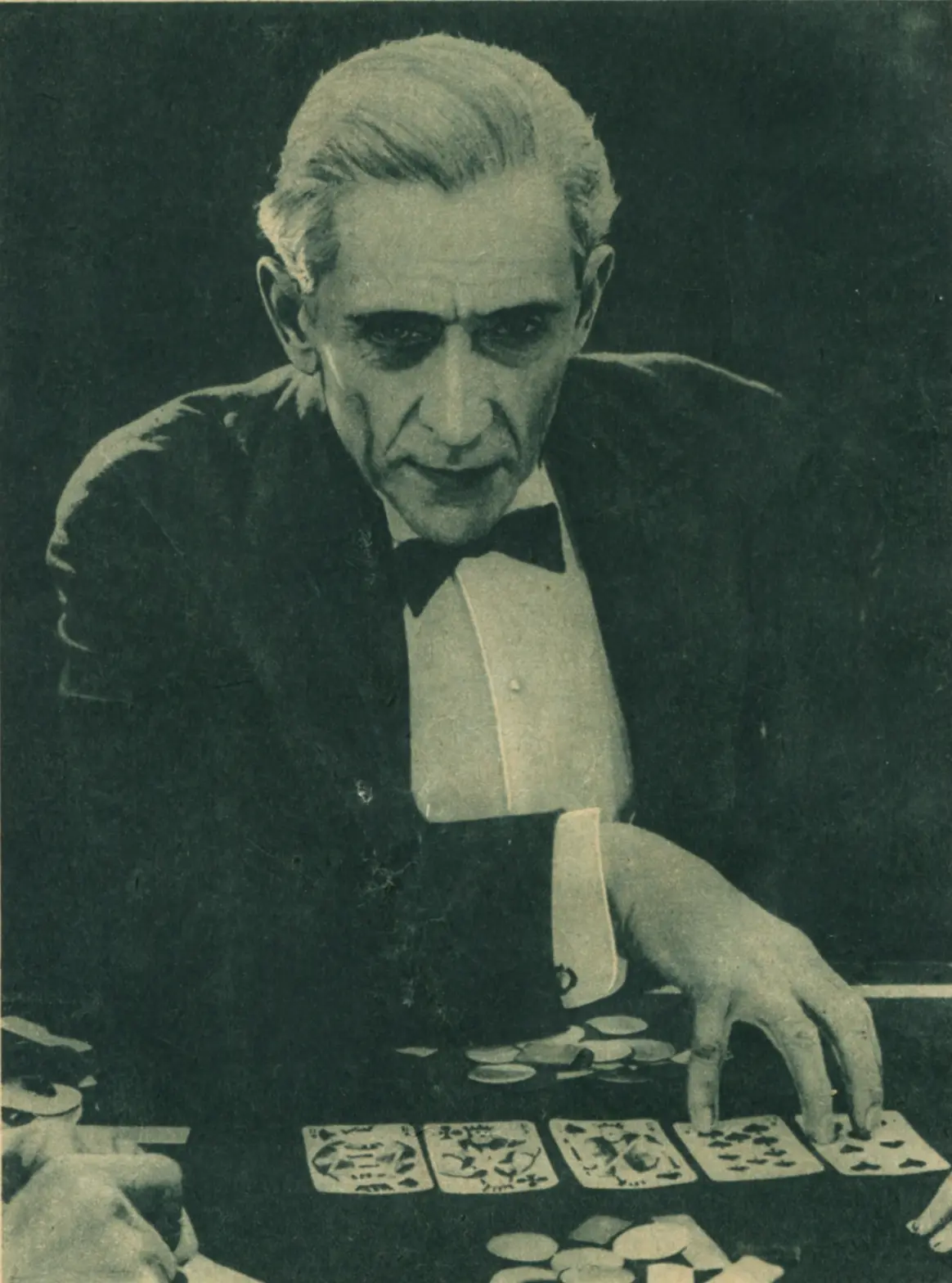
This reminds me of the thematic weight found in The House Built Upon Sand. Both films deal with the inevitability of collapse when a life is founded on deception. However, Boudrioz takes it a step further by making the wife's pity the final twist of the knife. She doesn't return to him out of love, but out of a crushing sense of obligation to the man she helped destroy.
The cinematography by Georges Lucas (not that one) and his team uses light to emphasize this decay. The diplomat's world is bright, airy, and full of open spaces. The husband's final quarters are dark, cluttered, and feel like a tomb. It is a visual representation of the wife's internal struggle.
Sylvio De Pedrelli’s performance is haunting. He manages to make the husband both loathsome and pitiable. In the scene where he re-encounters his wife, his physical frailty is shocking. He moves with a staggered, hesitant gait that contrasts sharply with the fluid predator we saw in the opening reels.
The pacing, however, is where the film may lose modern audiences. The transition from the wife's life with the diplomat back to her husband takes its time. It’s a deliberate choice by Boudrioz, intended to show the slow realization that she cannot escape her past. It works. But it’s flawed. Some of the intermediate scenes feel redundant, reiterating the diplomat's goodness without adding new layers to the conflict.
Compared to the more direct narrative of I promessi sposi, L'épervier is much more interested in the internal landscape of its characters. This isn't a film about what happens, but about how it feels to have your soul slowly eroded by your own choices.
Pros:
Cons:
One thing most critics miss about L'épervier is that it is secretly a horror movie. Not in the sense of ghosts or monsters, but in the horror of being permanently tethered to someone you no longer love. The husband’s illness is his final 'cheat'—it is the one thing that forces his wife back into his orbit. It is a manipulative, desperate act of survival that is more terrifying than any card-sharp trick he performed in his prime.
L'épervier is a tough, uncompromising look at the consequences of a life lived in the shadows. It lacks the populist appeal of Miss Jackie of the Navy or the historical scope of Pasteur, but it offers something far more intimate. It is a portrait of a woman caught between two impossible choices: a life of boring virtue or a life of tragic loyalty to a dying predator.
The film doesn't ask you to like its characters. It asks you to understand them. And in that, Robert Boudrioz succeeds brilliantly. It is a film of shadows, both literal and metaphorical, and it remains one of the more psychologically complex offerings of the silent era. It is flawed, yes. But it is also deeply human. It is a haunting reminder that our pasts are never truly behind us; they are simply waiting for us to grow weak enough to be caught.

IMDb 5.3
1932
Community
Log in to comment.