DbcultAccessing Vault...
Cult Review
Senior Film Conservator
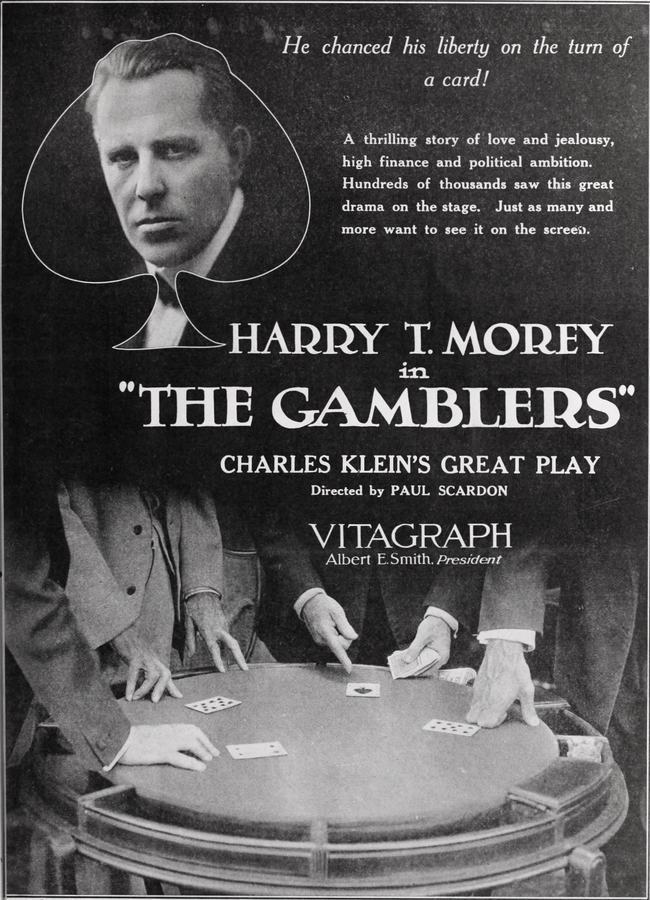
Stepping back into the flickering shadows of early 20th-century cinema, one often encounters narratives that, despite their age, resonate with an uncanny prescience, dissecting the enduring complexities of human nature. Such is the case with 1919's The Gamblers, a silent drama that, far from being a mere historical curio, stands as a potent exploration of impulse, loyalty, and the treacherous currents of financial ambition. Directed with a keen eye for melodrama and psychological tension, this film plunges its audience into a world where personal desires clash violently with societal expectations and the unyielding demands of justice. It’s a compelling testament to the power of silent storytelling, where every gesture, every facial expression, carries the weight of unspoken words and profound emotional turmoil.
At its core, The Gamblers unspools a narrative as intricate as it is emotionally charged, focusing on the ill-fated choices of Catherine Ames, brought to life with captivating intensity by Agnes Ayres. Initially, Catherine is presented as a woman adrift in the wake of emotional neglect, a common plight for many women in narratives of the era. Her relationship with Wilbur Emerson, portrayed by George Majeroni with a blend of charm and underlying ruthlessness, leaves her yearning for stability and recognition. It is this emotional void that propels her into an impulsive union with James Darwin, the stoic and morally upright district attorney, impeccably played by Harry T. Morey. This hasty marriage, intended as an anchor, instead becomes the very catalyst for a storm of betrayal and moral compromise that will engulf all three protagonists.
Emerson, meanwhile, is not content to merely fade into the background. His ambition, a driving force that overshadows all else, propels him into the cutthroat world of high finance. Here, the film deftly explores the precarious tightrope walked by those in pursuit of wealth, particularly in an era marked by burgeoning industrialism and often lax regulatory oversight. As his ventures teeter on the brink of collapse, Emerson resorts to desperate measures, engaging in the unlawful leveraging of promissory notes. This illicit maneuvering sets the stage for a dramatic clash with Darwin, whose professional duty as district attorney compels him to investigate the burgeoning financial scandal. The narrative skillfully interweaves the personal and the professional, demonstrating how individual choices, no matter how seemingly isolated, ripple outwards to affect entire lives and reputations. The tension mounts palpably as Darwin, driven by an unyielding commitment to justice, closes in on Emerson's illicit activities, unaware of the profound personal ramifications his professional pursuit will soon unleash.
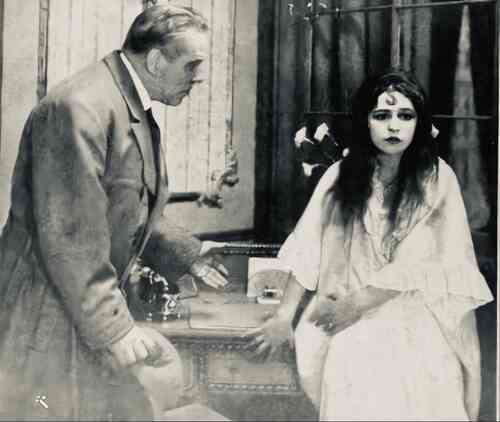
The dramatic fulcrum of the entire plot arrives with the signed confession of George Cowper, one of Emerson's business associates, delivered directly into Darwin's hands. This document, a tangible piece of evidence, acts as a ticking time bomb within the narrative, its presence threatening to detonate Emerson's career and freedom. The film masterfully builds suspense around this pivotal object, turning it into a symbol of both justice and impending doom. Emerson's desperation reaches a fever pitch, culminating in a audacious, almost theatrical, break-in into Catherine's private chambers. His intent is clear: to abscond with the incriminating confession and thus erase the evidence of his misdeeds. However, fate, or perhaps the meticulous narrative construction, intervenes. Darwin discovers Emerson in Catherine's room, not just with the confession in mind, but in a compromising situation that, in the rigid moral framework of the time, immediately casts a pall of suspicion over Catherine's fidelity.
The scene is a powerful display of silent acting, with Ayres, Morey, and Majeroni conveying a maelstrom of emotions—shock, betrayal, desperation, and accusation—without a single spoken word. Darwin's subsequent accusation of unfaithfulness is a devastating blow, not merely to Catherine's reputation, but to the very foundation of their marriage. It is here that Catherine, a character initially presented as somewhat passive, undergoes a profound transformation. In an act of stunning defiance and complex loyalty, she retaliates. Seizing the confession, she delivers it not to her husband, but directly to Emerson, where it is dramatically consumed by flames before Darwin's incredulous gaze. This moment is the narrative's true crescendo, a shocking immolation of evidence that simultaneously destroys her marriage and, perhaps, protects the man who once neglected her, or at least, prevents her husband from a perceived self-righteous victory. This act, so reminiscent of the destructive passion seen in films like The Cheat, where moral boundaries are blurred by intense emotional stakes, cements Catherine's role as a protagonist driven by impulses that defy easy categorization.
The consequences of Catherine's audacious act are swift and severe. Darwin, his trust irrevocably shattered, initiates divorce proceedings, the legal dissolution mirroring the emotional chasm that has opened between them. This development underscores the era's rigid societal expectations regarding marital fidelity and the profound disgrace associated with even the appearance of impropriety. Yet, amidst the wreckage of her marriage and the looming specter of social condemnation, Catherine's character reveals a surprising depth of conviction. In a final, poignant, and arguably tragic, declaration, she vows to wait for Emerson, who is subsequently led off to prison. This ending is far from a typical Hollywood resolution; it's a stark, almost bleak, affirmation of a complex loyalty that transcends conventional morality and legal justice. It leaves the audience to ponder the true nature of love, sacrifice, and the often-unforeseen repercussions of our most profound decisions.
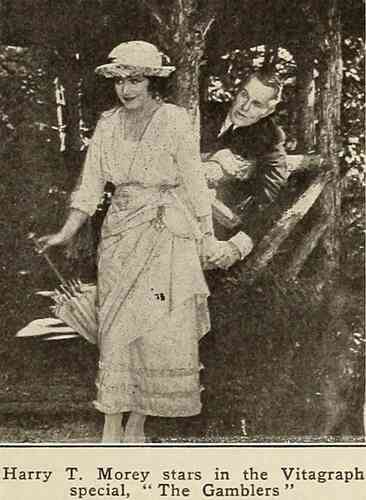
The undeniable heart of The Gamblers beats through the performance of Agnes Ayres as Catherine Ames. Ayres, a prominent figure of the silent era, delivers a nuanced and deeply empathetic portrayal of a woman caught in a maelstrom of conflicting desires and societal pressures. Her ability to convey Catherine's initial weariness, her impulsive leap into marriage, the shock of betrayal, and finally, her defiant, almost tragic, loyalty, is nothing short of masterful. Without the aid of dialogue, Ayres relies on a sophisticated repertoire of facial expressions, subtle body language, and the expressive power of her eyes to communicate Catherine's internal world. She transforms Catherine from a potentially passive victim into an active, albeit flawed, agent of her own destiny. In an era where female characters often served as moral compasses or damsels in distress, Ayres imbues Catherine with a compelling ambiguity, challenging the audience to grapple with her choices rather than simply condemn them. Her performance here, much like those in other dramas of the period such as The Savage Woman, showcases the profound emotional depth that silent actresses could achieve, often surpassing their contemporaries in the nascent talkie era.
While Ayres commands the screen, the performances of Harry T. Morey as James Darwin and George Majeroni as Wilbur Emerson provide essential counterpoints. Morey’s Darwin is a study in rigid rectitude, a man defined by his adherence to law and order. His portrayal of a husband grappling with professional duty and profound personal betrayal is both powerful and poignant. The silent medium allows his stoicism to speak volumes, his slowly dawning realization of Catherine’s perceived infidelity etched across his face with heartbreaking clarity. Majeroni, as the ambitious and desperate Emerson, skillfully navigates the fine line between charm and moral bankruptcy. He makes Emerson's desperation palpable, allowing the audience to understand, if not condone, his illicit actions. The supporting cast, including Helen Ferguson, Eric Mayne, Charles Kent, George Backus, and Harry T. Morey, each contribute to the film’s rich tapestry, creating a believable world where high stakes and personal dramas intertwine. Their collective efforts elevate the narrative beyond simple melodrama, grounding it in a sense of lived reality.
The directorial choices in The Gamblers are particularly noteworthy for their effectiveness in a medium reliant on visual storytelling. The film employs a classical narrative structure, building tension through carefully constructed scenes and judicious use of intertitles. Unlike some silent films that could feel static, this production demonstrates a dynamic camera, using medium shots and close-ups to emphasize emotional states and key narrative details. The pacing is deliberate, allowing the audience to fully absorb the gravity of each decision and its ensuing fallout. The visual symbolism, particularly around the confession and its eventual destruction, is potent. The burning of the document is not just a plot point; it's a visually arresting metaphor for the destruction of trust, the immolation of a marriage, and the ultimate triumph of a deeply personal, if morally ambiguous, loyalty. The film's aesthetic, while perhaps not as avant-garde as some European contemporaries like Le chemineau, is nonetheless polished and effective, serving the story with clarity and emotional resonance. The use of light and shadow, though perhaps not as stark as in later German Expressionist works, subtly enhances the dramatic mood, particularly during moments of clandestine activity or emotional distress.

The thematic richness of The Gamblers is perhaps its most compelling attribute. At its heart lies a profound examination of justice versus loyalty. Darwin represents the unwavering hand of the law, a man whose personal integrity is inextricably linked to his professional duty. Catherine, however, embodies a different kind of justice—one perhaps rooted in a more primal, emotional loyalty that defies legalistic boundaries. Her act of destroying the confession is not easily categorized as purely good or evil; it's a deeply human response, born from a complex web of past affections, present pressures, and a desperate desire to protect, even if it means self-destruction. This moral ambiguity elevates the film beyond a simple good-vs-evil narrative, inviting contemplation on the nature of right and wrong when personal stakes are impossibly high.
Furthermore, the film delves into the corrosive power of financial ambition. Emerson's downfall serves as a cautionary tale, illustrating how the relentless pursuit of wealth can lead to moral compromise and ultimately, ruin. This theme was particularly relevant in the early 20th century, a period of immense economic growth but also significant financial instability and ethical quandaries in the burgeoning corporate world. The writers, Sam Taylor and Lucien Hubbard, along with playwright Charles Klein, cleverly weave these contemporary anxieties into the fabric of the personal drama, making the film's stakes feel both intimately personal and broadly societal.
The role of marriage and societal expectations also comes under intense scrutiny. Catherine's impulsive marriage to Darwin, driven by a desire for security and a reaction to Emerson’s neglect, is ultimately revealed to be built on fragile foundations. The film critiques the societal pressure on women to marry for stability, often at the expense of genuine emotional connection, and then the subsequent condemnation they face when those marriages inevitably falter. Catherine's final vow to wait for Emerson, despite his incarceration and her ruined reputation, is a powerful, if melancholic, statement on enduring affection and perhaps, a rejection of the very societal norms that initially trapped her. This echoes themes of women's agency and societal judgment seen in other silent era films, where characters often navigate complex moral landscapes in the face of rigid social codes, sometimes with tragic results akin to those explored in Prøvens Dag or Wild Youth.
While The Gamblers is undeniably a product of its time, its exploration of universal human dilemmas—love, betrayal, ambition, and the profound consequences of our choices—ensures its continued relevance. It serves as a fascinating artifact for understanding the dramatic conventions and societal anxieties of the early 20th century, particularly how silent cinema tackled complex moral narratives. For cinephiles and historians alike, it offers a window into the evolution of cinematic storytelling, demonstrating how filmmakers, even without spoken dialogue, could craft narratives of compelling emotional depth and intellectual challenge. Its existence reminds us that the fundamental human struggles remain constant, regardless of the technological advancements in how we tell our stories.
In conclusion, The Gamblers (1919) is far more than a forgotten relic; it is a vibrant, compelling silent drama that deserves reappraisal. Its intricate plot, driven by well-drawn characters and anchored by Agnes Ayres's remarkable performance, explores themes that continue to resonate today. The film’s ability to weave together personal tragedy with broader societal critiques—of finance, marriage, and justice—speaks to the enduring power of its narrative. While it may not possess the grand scale of an epic or the experimental flourishes of some European art films, its strength lies in its focused, intense exploration of human morality under duress. It’s a powerful reminder of the sophisticated storytelling capabilities of early cinema and a testament to the fact that some narratives, like the choices made by its characters, are timeless. For those willing to engage with the silent form, The Gamblers offers a rich and rewarding experience, a dramatic roll of the dice where every player ultimately stakes their very soul.
IMDb 6.6
1921
Community
Log in to comment.