DbcultAccessing Vault...
8.4/10
Senior Film Conservator
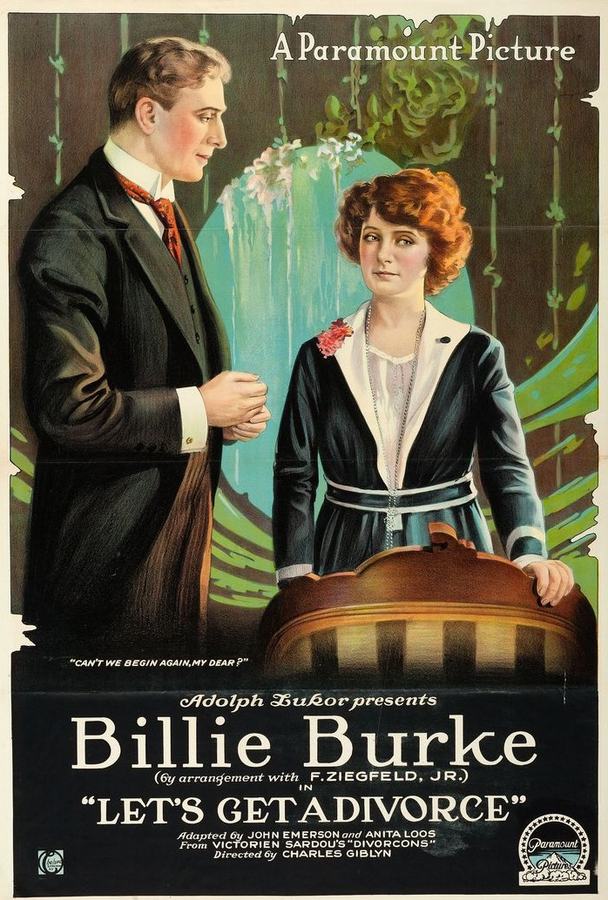
A definitive 8.4/10 rating for a film that redefined the boundaries of cult cinema. Let's Get a Divorce remains a cornerstone of transgressive art.
Ah, the timeless dance of matrimony and its discontents! Stepping back into the cinematic tapestry of 1918, we encounter a gem that, despite its vintage, pulsates with a surprisingly modern sensibility: Let's Get a Divorce (slug: lets-get-a-divorce). Based on Victorien Sardou's enduring play, this film delves into the often-comedic, sometimes poignant, intricacies of a marriage teetering on the precipice of disillusionment. It’s a narrative that, even a century later, still manages to poke and prod at our contemporary notions of love, freedom, and the ever-elusive quest for happiness within relational bounds. The film, brought to life by the directorial vision and adapted screenplay of John Emerson and Anita Loos, is more than just a period piece; it's a shrewd psychological study wrapped in the delightful guise of a drawing-room farce. It asks profound questions about what truly constitutes fulfillment, challenging the romanticized ideals that often clash with the humdrum realities of everyday existence. For those who appreciate a narrative that masterfully blends wit with keen observation, this film remains a compelling artifact, offering not just a glimpse into past societal norms but a mirror reflecting universal human desires and foibles. Its charm lies not just in its historical context, but in its ability to transcend time, inviting us to ponder the very foundations of our own romantic aspirations and the sometimes absurd lengths we go to achieve them.
At the heart of this marital maelstrom is Suzanne, portrayed with a vibrant, albeit somewhat naive, effervescence by Billie Burke. Suzanne is not merely bored; she is existentially adrift, a woman whose vivid inner world of romantic fantasy collides head-on with the placid reality of her marriage. Her husband, Henri, a man nearing forty, is undeniably kind, certainly well-meaning, but crucially, he is absorbed in his serious work, a pursuit that leaves little room for the intoxicating adventures and tumultuous passions Suzanne has so earnestly dreamed of. This isn't a marriage marred by cruelty or neglect, but rather by the subtle, insidious erosion of unmet expectations. Suzanne, like many before and after her, finds herself yearning for a love that exists more in the realm of poetry and novels than in the quiet companionship of her current life. Her decision that her existence has been "wrecked and ruined" by this lack of grand romance is, in its essence, a testament to the powerful, sometimes destructive, influence of idealized love narratives. It's a poignant illustration of how the mind, when left to its own devices, can conjure up a profound sense of lack even amidst comfort and security. Burke's portrayal is crucial here; she imbues Suzanne with a flighty charm that makes her folly understandable, even endearing. We see not a malicious wife, but a woman genuinely bewildered by the gap between her inner landscape and her external reality, a gap she foolishly believes only a divorce can bridge. Her conviction is absolute, her determination unwavering, yet it is rooted in a superficial understanding of true happiness, making her journey a captivating, and often humorous, spectacle of self-discovery through misadventure. This character arc, from discontented wife to a woman learning to appreciate the understated virtues of her life, is what truly anchors the film's enduring appeal, offering a timeless reflection on the pursuit of happiness. Unlike the stoic resolve often seen in characters grappling with marital strife in dramas of the era, such as perhaps The Reward of Patience where endurance is key, Suzanne's approach is one of impulsive, almost theatrical, rebellion.
Enter Henri, Suzanne's husband, a character who embodies a quiet, almost Machiavellian, wisdom. Played with understated authority by John Merkyl, Henri is far from a passive victim of his wife's romantic whims. Instead, he emerges as the true strategic mastermind of the narrative. His response to Suzanne's declaration of divorce is not one of anger or despair, but of cool, calculated pragmatism. He enters into a "little conspiracy" with friends, a brilliant maneuver designed not to thwart Suzanne, but to allow her the full, unadulterated experience of her desired 'freedom,' thereby exposing its inherent hollowness. Henri's genius lies in his understanding of human nature, particularly the psychology of desire and the allure of the forbidden. By ostensibly yielding to her wishes and making things as "easy and comfortable as possible" for her unsuspecting lover, Adhemar, Henri cleverly strips the illicit affair of its tantalizing mystique. He even goes so far as to invite Adhemar into their home and announces a generous financial settlement for Suzanne, a move that subtly, yet effectively, tests the lover's true intentions. This act of magnanimity is, in fact, a weapon, designed to highlight the superficiality of Adhemar's affections and to force Suzanne to confront the true cost, or rather, the true value, of her choices. Henri understands that the most effective way to cure a romantic fantasy is not to suppress it, but to allow it to run its course, unencumbered by obstacles, until its inherent flaws become glaringly apparent. His calm demeanor throughout this elaborate charade underscores his profound confidence in both his strategy and, perhaps, in Suzanne's eventual return to sanity. It's a portrayal that elevates Henri beyond a mere cuckolded husband, transforming him into a sagacious manipulator, orchestrating a grand lesson in love and loyalty. This contrasts sharply with protagonists in films like Urteil des Arztes, where professional duty might dictate a more direct, less nuanced approach to personal conflict.
The third point of this romantic triangle is Adhemar, Henri's cousin, brought to life with a certain opportunistic charm by Rod La Rocque. Adhemar is the quintessential 'lover handy,' a man whose ambition to have an "affair" with a charming married woman is as characteristically 'French' as his thriftiness. He is, to put it mildly, a poor young man, utterly unprepared, both financially and emotionally, to marry an "extravagant young lady" like Suzanne. His interest in Suzanne is less about profound love and more about the thrill of the chase, the cachet of a forbidden liaison, and, as Henri's settlement reveals, the potential for financial gain. Henri's strategic generosity proves to be Adhemar's undoing; the substantial sum settled upon Suzanne clearly weighs on the lover's mind, exposing the mercenary undercurrents of his supposed passion. As the novelty of the forbidden wears off, Suzanne's relations with Adhemar become increasingly commonplace, stripping away the very allure that initially drew her to him. The 'charm of forbidden fruit' dissipates under the harsh light of reality, revealing Adhemar to be a rather shallow, self-serving individual, more interested in the idea of an affair than in the actual complexities of a committed relationship. His character serves as a crucial foil, highlighting Suzanne's romantic naiveté and Henri's profound understanding of human motivation. Adhemar's ultimate indignation, seeking police protection over his 'future marital rights' when Suzanne dines with Henri, is the perfect comedic climax, underscoring his ridiculousness and the superficiality of his claims. His arc is a cautionary tale, illustrating how easily grand romantic gestures can devolve into petty grievances when confronted with genuine responsibility and the erosion of novelty. The contrast between his grand ambitions and his petty actions is a source of much of the film's satirical bite, a testament to the writers' keen observation of human foibles. This portrayal of a superficial suitor finds echoes in other films where characters are driven by less than noble intentions, though perhaps less overtly comedic, like some of the situational dilemmas in The Kill-Joy.
At its core, Let's Get a Divorce is a masterfully crafted exploration of several timeless themes: the illusion of romantic love, the true nature of freedom, and the often-underestimated value of fidelity and companionship. Suzanne's initial desire for divorce stems from a romanticized notion of love, one that prioritizes intoxicating passions over the quiet, steady affection of her husband. Her journey is a profound lesson in distinguishing between the ephemeral thrill of novelty and the enduring comfort of a well-established bond. The film cleverly deconstructs the idea that 'freedom' from a committed relationship automatically equates to happiness. By granting Suzanne the very freedom she craves, Henri allows her to discover that true fulfillment is not found in the absence of constraints, but often within the framework of a mature, appreciative relationship. Her subsequent disillusionment with Adhemar highlights that the grass is not always greener, and that the 'forbidden fruit' often loses its flavor once it becomes easily attainable. Furthermore, the narrative subtly critiques societal expectations placed upon women, particularly the pressure to seek romantic ecstasy as the ultimate goal in life. Suzanne's initial plight is a product of these romantic ideals, yet her eventual reconciliation suggests a more nuanced understanding of marital contentment, one that values magnanimity, stability, and genuine affection over fleeting excitement. Henri's character, through his patient and strategic manipulation, personifies a type of benevolent patriarchy, guiding his wife toward a realization she could not achieve through direct confrontation. His actions, while perhaps ethically dubious in a modern context, are presented as a means to a greater end: the restoration of sanity and the preservation of a potentially good marriage. The film, therefore, doesn't just entertain; it provokes thought on the complexities of human desire, the often-illusory nature of our romantic ideals, and the enduring strength of a bond forged through understanding and a touch of clever deception. It suggests that true love, or at least a stable, happy marriage, might sometimes require a dose of tough love and a strategic unraveling of romantic fantasies. The way it navigates these themes is quite distinct from other films that tackle marital issues with a more dramatic or moralistic tone, such as Sonad skuld (Atoning Guilt), which would likely approach domestic strife with a heavier hand and focus on redemption through suffering rather than comedic enlightenment.
The brilliance of Let's Get a Divorce owes much to its source material, Victorien Sardou's celebrated play, and its adaptation for the screen by John Emerson and Anita Loos. Sardou's original work provided a robust framework of sharp dialogue and intricate plotting, elements that Emerson and Loos skillfully translated into the visual language of silent cinema. Their screenplay maintains the theatrical pacing and witty exchanges, even without spoken words, relying on strong characterizations and well-timed physical comedy to convey the narrative's nuances. The direction ensures that the comedic beats land effectively, allowing the audience to fully appreciate the absurdity of Suzanne's quest and the cleverness of Henri's counter-strategy. The film navigates the delicate balance between farce and social commentary with remarkable dexterity, never allowing the humor to overshadow the underlying critique of romantic illusions. Billie Burke, as Suzanne, delivers a performance that is both captivating and subtly layered. She embodies the flighty, romantic idealist with a charm that prevents her character from becoming merely annoying. Her expressions and gestures convey a wide range of emotions, from naive hope to bewildered distress, making her journey of self-realization genuinely engaging. John Merkyl, as Henri, is the stoic anchor, his calm demeanor and knowing glances speaking volumes. He masterfully portrays a man who is always several steps ahead, his quiet confidence a stark contrast to Suzanne's tempestuous emotional landscape. Rod La Rocque's Adhemar, though a supporting role, is pivotal in providing the necessary foil, his superficiality and eventual indignation adding significant comedic value. The supporting cast, including Cesare Gravina, Pinna Nesbit, and Helen Tracy, contribute to the vibrant atmosphere, each playing their part in Henri's elaborate scheme. The collective effort of the cast, under Emerson's direction, ensures that the film's intricate plot unfolds with clarity and comedic precision, making it a standout example of early cinematic farce. The collaborative spirit in adapting a successful stage play to the screen, as seen here, is a testament to the era's evolving filmmaking techniques, much like how other narratives were translated, though perhaps with different thematic goals, in films like Varazskeringö or The Long Arm of the Law, which likely relied on strong narrative foundations.
While specific details about the cinematography or production design of a 1918 film can sometimes be elusive, the narrative of Let's Get a Divorce strongly implies a reliance on the prevalent visual styles of the era: clear, well-composed shots that prioritize character interaction and plot progression. The film's setting, likely opulent drawing rooms and elegant Parisian streets (even if recreated on a studio backlot), would have played a crucial role in establishing the social milieu of its characters. The use of elaborate costumes, reflecting the fashions of the time, would have further enhanced the visual richness, placing the audience firmly within Suzanne's world of upper-class comfort and romantic aspiration. The very nature of the plot, with its intimate dinners, private rooms, and rain-drenched pursuits, suggests a careful attention to creating atmospheric backdrops that support the narrative's emotional and comedic beats. The visual language would have been instrumental in conveying the subtle shifts in Suzanne's perception, from her initial starry-eyed longing to her eventual bewildered realization. The contrast between the confined, perhaps stifling, domesticity of her marriage and the imagined freedom of her affair would have been visually articulated through set design and staging. Even without the technical sophistication of later eras, early filmmakers like Emerson understood the power of visual cues to communicate character and theme. The film’s aesthetic, while constrained by the technology of its time, effectively serves its purpose, allowing the performances and the witty narrative to shine. The choice of locations, whether grand interiors or the bustling (or rain-swept) exterior of a restaurant, would have been carefully chosen to amplify the comedic and dramatic tension, culminating in the farcical scene involving the Commissary of police. This careful construction of visual space to serve character and plot is a hallmark of effective filmmaking, regardless of the era, akin to how other films of the period, such as Neptune's Daughter, would have used their settings to evoke specific moods or convey narrative information.
Let's Get a Divorce, even a century after its release, retains a remarkable freshness and relevance. Its central premise—a spouse's misguided quest for romantic fulfillment outside of a perfectly amiable, if unexciting, marriage—is a narrative thread that continues to resonate with audiences today. The film brilliantly skewers the romantic ideals that often cloud judgment, demonstrating how the pursuit of an idealized passion can lead to a profound appreciation for the less dramatic, but more substantial, comforts of an existing relationship. It’s a sophisticated comedy of manners that, beneath its farcical surface, offers a shrewd commentary on human psychology, the pitfalls of superficial desire, and the enduring strength of a bond built on understanding, even if that understanding is achieved through a circuitous and highly entertaining route. The film’s ending, with Suzanne's "restored sanity" and "complete reconciliation" with Henri, is not merely a convenient wrap-up but a hard-won realization. It suggests that true contentment often lies not in chasing an elusive ideal, but in recognizing and appreciating the value of what one already possesses. The genius of the film lies in its ability to deliver this profound message through laughter, making the audience complicit in Suzanne's folly while simultaneously rooting for her eventual enlightenment. It’s a testament to the enduring power of classic narratives that can transcend their historical context and continue to offer insights into the universal human experience. In an era when films like The Woman Who Gave might explore the dramatic sacrifices within relationships, Let's Get a Divorce provides a lighter, yet equally insightful, counterpoint, proving that sometimes, the most effective way to understand the complexities of love is through the lens of well-crafted comedy. It stands as a delightful and incisive piece of cinematic history, inviting viewers to reflect on their own romantic aspirations and the sometimes-circuitous path to genuine happiness.
IMDb 7.2
1923
Community
Log in to comment.