DbcultAccessing Vault...
Cult Review
Senior Film Conservator
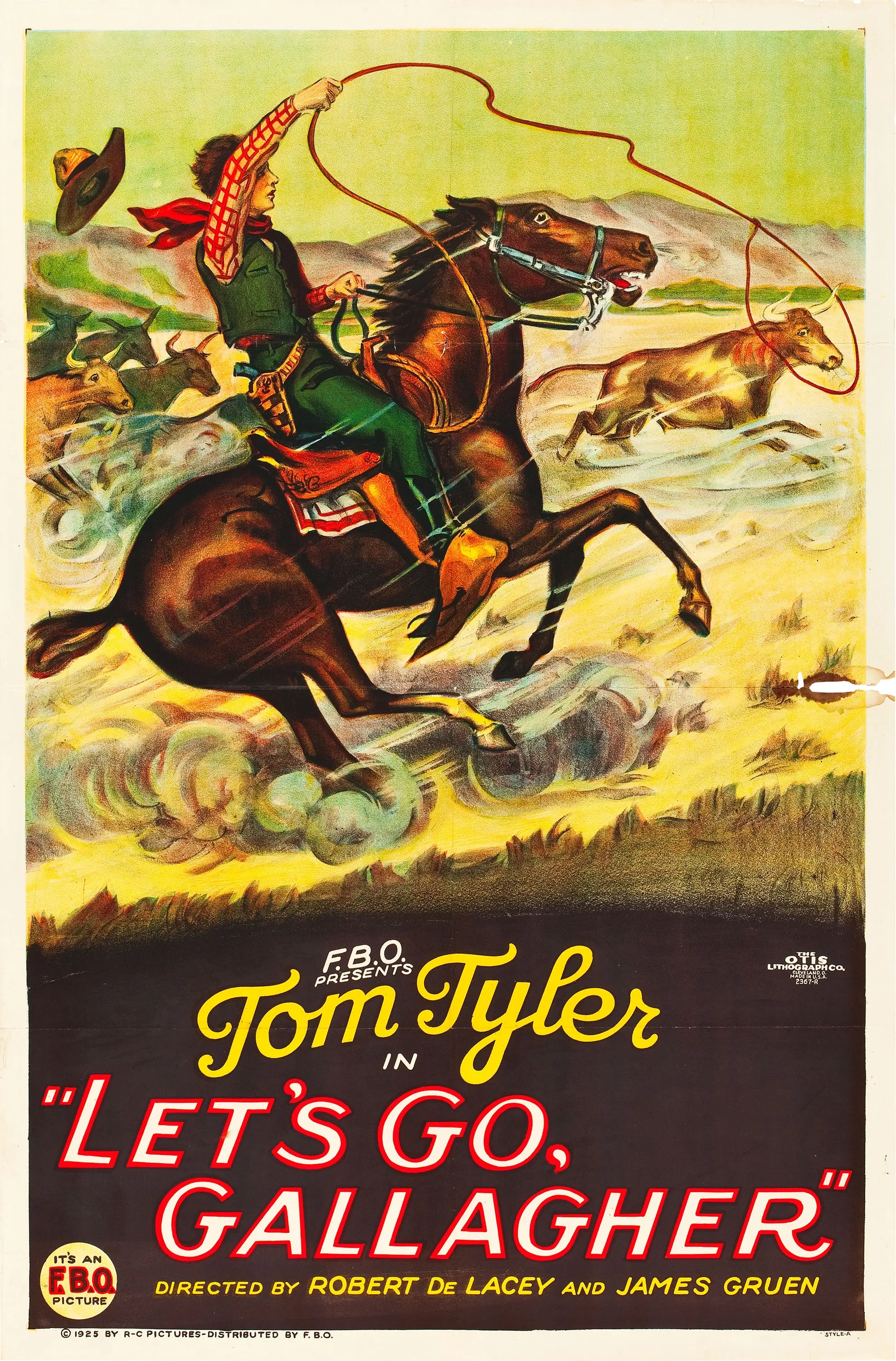
Is 'Let's Go, Gallagher' a film worth dusting off today? Short answer: yes, but with a clear understanding of what you're getting into. This isn't a profound cinematic experience designed to challenge your perceptions, but rather a charming, if formulaic, dive into the early Western genre, perfectly suited for aficionados and those seeking a simple, escapist narrative from a bygone era.
It’s a film that speaks to a specific palate, one appreciative of straightforward heroics, clear-cut villains, and the nascent conventions of a genre still finding its iconic stride. If you're looking for gritty realism, complex character arcs, or groundbreaking cinematography, this might not be your ride. However, if you yearn for the unpretentious joy of classic cowboy cinema, a world where right and wrong are unequivocally defined, and the good guy always gets the girl and saves the ranch, then "Let's Go, Gallagher" delivers.
Let's be direct about the merits and shortcomings of this vintage Western.
The narrative of "Let's Go, Gallagher," penned by James Gruen and Percy Heath, is less a complex tapestry and more a series of distinct, swiftly unfolding vignettes. From the opening brawl that propels our hero, Tom Gallagher, into motion, to the audacious "parcel post" delivery of Little Joey, the film wastes no time. This briskness is a hallmark of early Westerns, often designed for matinee audiences craving constant forward momentum and clear-cut action.
The plot, while straightforward, is remarkably efficient. Tom's rescue of Joey and his dog from an oncoming train is a prime example of this economy of storytelling; it establishes his heroism, introduces a key supporting character, and sets up his arrival at the Bar M Ranch, all within minutes. There's no lingering, no deep dives into character motivation – just pure, unadulterated plot progression. This relentless drive keeps the viewer engaged, even if the destination feels preordained.
However, this efficiency comes at a cost. The rapid succession of events, particularly the almost instantaneous resolution of major conflicts, occasionally strains credulity. Tom is hired as foreman almost immediately upon arrival, and the villains, Black Carter and Thug Peters, are already firmly entrenched in their cattle rustling operation. It's a world where convenience often trumps realism, but one that undeniably serves the film's primary goal: to deliver a rollicking good time without overthinking it. The pacing ensures there’s never a dull moment, a quality that remains surprisingly fresh even decades later.
The performances in "Let's Go, Gallagher" are less about nuanced character study and more about embodying archetypes. Tom Tyler, as the titular Tom Gallagher, is the quintessential stoic Western hero. He's tall, rugged, and speaks with a quiet authority that makes his heroism instantly believable. Tyler's strength lies in his physicality; he’s convincing in a saloon brawl and on horseback, projecting an image of unwavering competence that anchors the entire film. His character is a moral compass, a man of action who embodies the justice of the frontier.
Barbara Starr, as Dorothy Manning, is more than just a damsel in distress; she's a resilient ranch owner fighting for her livelihood. While the script eventually places her in peril, Starr imbues Dorothy with a spirited independence that prevents her from becoming a mere plot device. Her determination to save the Bar M Ranch gives the narrative its emotional stakes, even if her agency is ultimately reliant on Gallagher's intervention. She represents the land and the future, a prize worth fighting for in this rugged landscape.
Frankie Darro shines as Little Joey, providing much of the film's youthful energy and charm. Joey isn't just a sidekick; he's often instrumental in advancing the plot, whether through his initial delivery or his later aid in Dorothy's rescue. Darro brings a natural, unforced performance that makes Joey endearing and surprisingly capable. His bond with his dog, and later with Gallagher, forms a sweet, innocent core amidst the action.
On the villainous side, Alfred Hewston as Peters and Olin Francis as Carter are delightfully unambiguous in their villainy. They are sneering, conniving, and thoroughly despicable, serving their purpose as clear obstacles for our hero. While they lack complexity, their straightforward wickedness makes them easy to root against, fitting perfectly into the film's black-and-white moral framework. They are the shadows against Gallagher's light, and they play their parts with gusto, if not subtlety.
And then there's Beans the Dog. In an unconventional observation, it must be said that Beans arguably delivers one of the most consistent "performances" in the film. His loyalty, his timely barks, and his general presence add an authentic touch of companionship and, at times, unexpected narrative assistance. He’s more than a prop; he's a silent, furry co-star.
The direction in "Let's Go, Gallagher" is functional and efficient, prioritizing clarity and action over artistic flourishes. The camera work is largely utilitarian, designed to capture the unfolding events with minimal fuss. There are no elaborate tracking shots or complex compositions; instead, the focus is on straightforward blocking and clear sightlines, ensuring the audience always knows where the hero is and what he's doing.
However, within this practicality, there are moments that hint at the budding visual language of the Western. The wide-open spaces of the frontier are capably captured, even if not with the epic grandeur of later works by directors like John Ford. The horseback chases, while perhaps not as dynamically shot as in films like The Yellow Dog, convey a sense of speed and peril essential to the genre. The train rescue sequence, for instance, is staged effectively, building tension through simple cuts and the looming presence of the locomotive.
The saloon fight, a staple of Westerns, is choreographed with a raw energy that feels authentic to the era. It’s a brawling, messy affair, not a balletic display of martial arts, and it sets the tone for Gallagher’s no-nonsense approach to conflict. While the cinematography might not win any awards for innovation, it successfully establishes the setting and delivers the action, which, for a film of this vintage, is a significant accomplishment. It’s a testament to the idea that sometimes, less is more, especially when the story is king.
So, should you carve out time for "Let's Go, Gallagher" in your modern viewing schedule?
Absolutely, if you appreciate the foundational elements of the Western genre. It is a time capsule. It offers a straightforward adventure. It showcases early Hollywood's approach to heroism. This film is best for viewers seeking nostalgia or a historical look at cinema. It is not for those expecting intricate plots or deep psychological drama. It works. But it’s flawed.
At its heart, "Let's Go, Gallagher" is a film about justice. Tom Gallagher is an embodiment of righteous indignation, stepping in to right wrongs wherever he finds them. The thematic lines are drawn in bold, clear strokes: good versus evil, honest homesteaders versus greedy rustlers. There’s a strong undercurrent of rugged individualism, but also a celebration of community, particularly in the resilience of Dorothy and the Bar M Ranch against external threats.
The tone is overwhelmingly one of light-hearted adventure. Despite the threats of rustling, kidnapping, and financial ruin, the film maintains an optimistic, almost jovial spirit. The stakes feel real enough, but never overwhelmingly grim. This escapist quality is one of its greatest strengths, allowing the audience to simply enjoy the ride without dwelling on darker implications. It’s a Western that wants you to feel good, to believe in the triumph of decency.
One could argue that the film's climax, particularly Bendy Mulligan's accidental discovery of oil while taking a mud bath, is an egregious example of a deus ex machina. It's a plot device so convenient it borders on the absurd, instantly solving all of Dorothy's financial woes with a stroke of incredible luck. However, I would offer a strong, debatable opinion: this is not a flaw, but a feature of the genre at this nascent stage. It’s a fairy-tale ending, a wish fulfillment that perfectly aligns with the film's unpretentious, optimistic tone. It’s a cinematic shrug, acknowledging that sometimes, the good guys just deserve a break, even if it comes from an oil-soaked mud bath. It’s no less fantastical than the globe-trotting escapades in Around the World in 80 Days.
"The oil discovery isn't lazy writing; it's pure, unadulterated genre delight, a final, joyous flourish on a simple, satisfying adventure."
This film isn't trying to be a gritty examination of the hardships of the West; it's a celebration of its myths. It’s a comforting narrative, designed to reassure audiences that courage, loyalty, and a little bit of luck can overcome any obstacle. The tone is consistently upbeat, making it a pleasant, if not profound, viewing experience.
"Let's Go, Gallagher" is a delightful, if undeniably simplistic, romp through the early days of the Western genre. It doesn't aim for cinematic greatness, nor does it achieve it, but what it does offer is an earnest, fast-paced adventure that embodies the charm and straightforward morality of its era. It's a film that asks little of its audience beyond a willingness to embrace its unpretentious spirit, and in return, it delivers a thoroughly entertaining, if somewhat forgettable, cowboy tale. It's a testament to the enduring appeal of clear-cut heroes, dastardly villains, and the wide-open spaces of the American West. Give it a watch if you're in the mood for pure, unadulterated escapism. You might just find yourself tapping your foot to its galloping pace. It's not a masterpiece, but it's a solid, enjoyable ride.
IMDb 4
1928
Community
Log in to comment.