DbcultAccessing Vault...
6.7/10
Senior Film Conservator
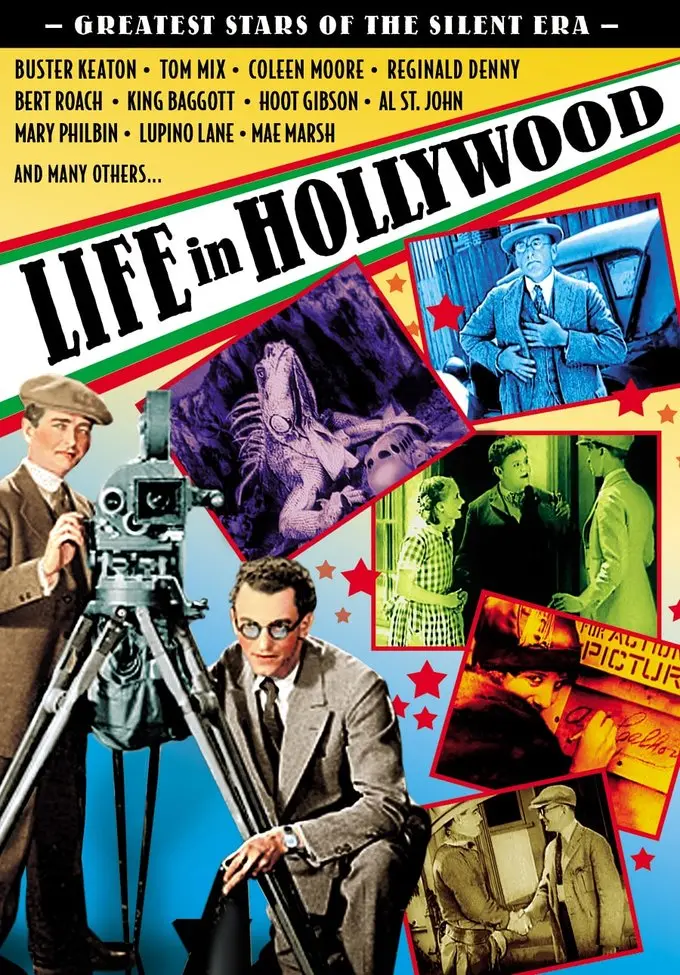
A definitive 6.7/10 rating for a film that redefined the boundaries of cult cinema. Life in Hollywood No. 1 remains a cornerstone of transgressive art.
Is 'Life in Hollywood No. 1' worth watching today? Short answer: yes, but with significant caveats that depend heavily on your viewing motivations. This series is an absolute must-see for film historians, aspiring industry professionals, and those fascinated by the early mechanics of Tinseltown, yet it will likely leave casual viewers yearning for more narrative depth and character-driven engagement.
This film works because it is an invaluable, if somewhat dry, historical document, offering an unparalleled glimpse into the very genesis of an industry that would come to define global entertainment. It fails because its sprawling, encyclopedic approach often sacrifices emotional resonance and narrative cohesion for sheer informational volume, leading to moments of profound disengagement. You should watch it if your interest lies in the academic study of cinema, the archival preservation of early 20th-century media, or a deep dive into the operational minutiae of Hollywood's formative years. Conversely, if you're seeking a compelling story, dynamic characters, or a briskly paced documentary, you might find its deliberate pace and broad scope a significant hurdle.
'Life in Hollywood No. 1' is not a film in the traditional sense, but rather the inaugural installment of an ambitious, seven-part series designed to peel back the layers of Tinseltown. Its premise is grand: to explore 'all aspects of Hollywood.' This is a monumental undertaking, especially for its time, and the series approaches it with a commendable, almost academic, rigor. The ambition alone is a testament to the foresight of its creators, aiming to document a burgeoning industry in real-time.
However, this very ambition becomes a double-edged sword. The 'No. 1' often feels more like a sprawling introduction than a self-contained work. It zips from the mechanics of studio financing to the daily grind of an extra, from the architectural marvels of a soundstage to the meticulously crafted illusions of early special effects. While each segment offers intriguing insights, the rapid transitions and lack of a central thesis can leave the viewer feeling adrift. It’s like being given a detailed blueprint of a building without ever seeing the finished structure. The parts are there, but the overall vision sometimes struggles to coalesce into a truly impactful whole.
One segment, for instance, meticulously illustrates the construction of a Western town set, detailing the carpentry, the painting, and the strategic placement of props. While fascinating in its granular detail, it quickly moves on to a fleeting interview with a studio publicist about star image, without allowing either subject to fully resonate. The commitment to breadth over depth is evident, leaving many tantalizing threads frustratingly untugged.
Given its documentary-style mandate, the directing in 'Life in Hollywood No. 1' is primarily one of careful observation. The unnamed director acts more as an archivist and curator, assembling a mosaic of scenes, interviews, and illustrative footage. There's a clear attempt to be comprehensive, to capture the very essence of the industry's operations.
The cinematography, while not groundbreaking for its era, is functional and often quite revealing. The camera work, largely static, prioritizes clarity and information. We get wide shots of bustling backlots, offering a sense of scale and activity, juxtaposed with tighter frames on specific crafts, like a costumer meticulously stitching a garment or a director consulting with actors on a set. These close-ups are particularly effective, grounding the vastness of Hollywood in human-scale detail.
There's a raw, unvarnished quality to much of the footage, especially when capturing candid moments of studio workers or the hurried pace of production. This gives the series a valuable historical texture, making it feel less like a polished narrative and more like a direct window into a bygone era. For example, a lingering shot of a camera crew setting up a cumbersome early motion picture camera offers a visceral understanding of the technological limitations and physical demands of filmmaking at the time, a stark contrast to the sleek digital cameras of today.
However, this observational approach occasionally borders on the monotonous. Without the guiding hand of a more interpretive director, some segments feel more like instructional videos than compelling cinematic explorations. It's a pragmatic choice, perhaps necessary for a series aiming for encyclopedic coverage, but it undeniably impacts the watchability for a modern audience.
As an exploratory series rather than a narrative feature, 'Life in Hollywood No. 1' doesn't feature traditional 'performances' in the dramatic sense. Instead, we encounter a diverse array of individuals – studio executives, technicians, actors, and extras – each playing their part in the vast machinery of Hollywood. Their 'performances' are largely authentic; they are simply being themselves, or at least presenting a version of themselves for the camera.
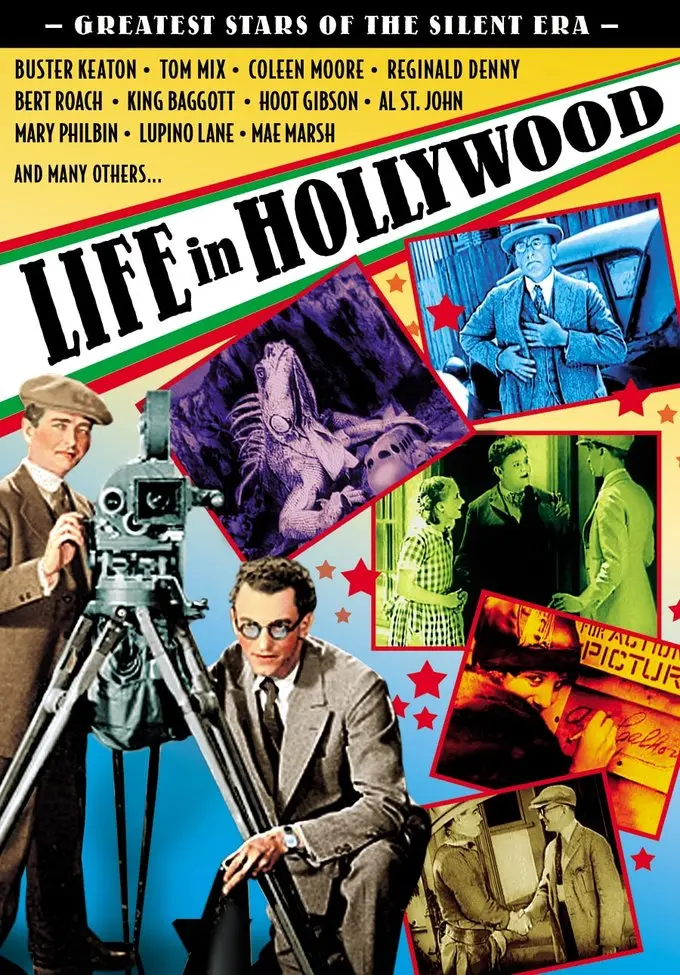
The most compelling 'characters' emerge from the often-unscripted interactions. There's a segment where a veteran character actor, perhaps one who has seen better days, offers a surprisingly poignant reflection on the fleeting nature of fame, his weathered face telling a story far richer than any intertitle could convey. Similarly, the earnestness of young aspiring actors, glimpsed in a casting call sequence, speaks volumes about the enduring allure of the silver screen and the often-brutal competition within the industry.
The series also makes use of illustrative dramatic vignettes to explain certain processes, such as the evolution of a storyline from concept to script. These moments, while clearly staged, are effective in their simplicity, utilizing the exaggerated gestures common in silent film to convey information. However, they lack the emotional depth or character development found in contemporary narrative films like The Girl and the Graft or Maid of the West. The focus here is on the function, not the feeling.
It’s a subtle but important distinction: the series is showcasing the *people* of Hollywood, not necessarily *their stories*. Their collective presence forms a human backdrop to the mechanical and creative processes being documented. The real 'performers' are arguably the industry itself, constantly in motion, constantly creating, and constantly reinventing its own image.
The pacing of 'Life in Hollywood No. 1' is undeniably deliberate, even leisurely by today's standards. This is not a series designed for quick consumption or for viewers accustomed to rapid-fire editing. It takes its time, allowing segments to unfold, often relying on extended shots and informational intertitles to convey its points. This unhurried approach can be both a strength and a weakness.
For those with a genuine interest in the subject matter, the methodical pacing allows for a deeper absorption of the details. You can observe the nuances of early studio operations, the specific tools and techniques employed, and the general atmosphere of a creative industry in its infancy. It feels less like entertainment and more like an archival visit, a privilege of witnessing history unfold.
However, for a broader audience, this slow burn can test patience. There are moments where the sheer volume of information, presented without much narrative flair, becomes overwhelming. The tone is largely objective and educational, almost clinical. While this lends credibility to its historical claims, it occasionally drains the series of the vibrant energy and dramatic tension one might expect from a subject as inherently dramatic as Hollywood itself. It lacks the personal touch or the critical lens that might make it more engaging for a casual viewer, opting instead for a detached, almost academic, presentation.
One might compare its approach to a scholarly text rather than a popular magazine article. It offers facts and observations, meticulously compiled, but doesn't often indulge in the kind of sensationalism or human drama that even early films like The Right of Way or His Jonah Day understood was essential for audience engagement. This makes it a niche viewing experience, but an incredibly valuable one for its target demographic.
Yes, but selectively. This series is a foundational document for understanding early Hollywood. It's a historical artifact that offers unique insights into filmmaking's roots. However, its educational focus means it lacks conventional entertainment value. Expect an informative, often slow, journey, not a thrilling narrative. It's best for academics and serious film buffs.
'Life in Hollywood No. 1' is a fascinating, if somewhat challenging, piece of cinematic history. It works. But it’s flawed. Its greatest strength lies in its sheer audacity and its commitment to documenting an industry in its formative years. This series is less a film to be enjoyed for its narrative merits and more a historical artifact to be studied, dissected, and appreciated for its documentary value. It's an unconventional observation that its very dryness, its almost clinical approach, is precisely what makes it so valuable today – it inadvertently preserves not just the facts of early Hollywood, but also the prevailing perspective of its own time, stripped of dramatic embellishment.
For those with a deep, abiding interest in the origins of the film industry, its technical evolution, and the societal structures that underpinned its rise, this is an indispensable resource. It offers a rare, unfiltered look behind the curtain, showcasing the sweat, ingenuity, and ambition that built Tinseltown. However, for anyone expecting the dramatic flair of a narrative feature or the slick production of a modern documentary, 'Life in Hollywood No. 1' will likely prove a test of endurance.
It demands patience and a genuine intellectual curiosity. Approach it not as a source of entertainment, but as a time capsule, a sprawling academic text brought to life. Its value is undeniable for the right audience, serving as a vital precursor to understanding the global phenomenon that Hollywood would become. It’s a testament to the fact that even the most ambitious projects can sometimes be more important for what they preserve than for how they entertain. A crucial, if not always captivating, start to an ambitious series.
IMDb 6.4
1916
Community
Log in to comment.