DbcultAccessing Vault...
Cult Review
Senior Film Conservator
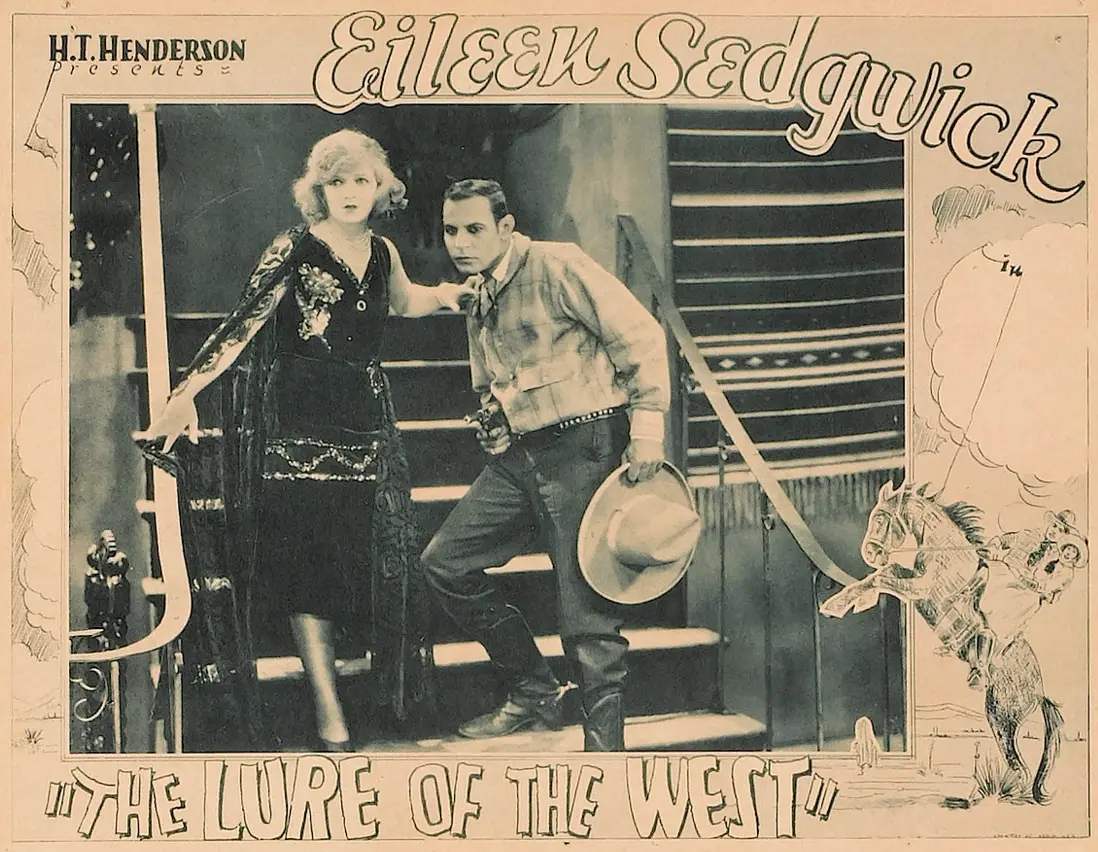
Is "Lure of the West" worth your valuable time in today's crowded cinematic landscape? Short answer: yes, but with crucial caveats. This isn't a film designed for casual viewers seeking modern spectacle; it's a gritty, foundational Western that rewards patience and an appreciation for the genre's authentic roots.
It's a film for those who yearn for the stark simplicity of early frontier narratives, for viewers who prioritize character and moral fortitude over elaborate set pieces. Conversely, if your tastes lean towards contemporary, action-heavy Westerns or you struggle with the slower pacing and often less nuanced performances of its era, "Lure of the West" might prove a challenging watch.
"Lure of the West", despite its age, still manages to carve out a compelling space within the Western canon. It works. But it’s flawed.
This film works because of its unwavering commitment to classic Western archetypes, delivering a morally unambiguous tale of good versus evil that, while predictable, is executed with a certain rugged charm and sincerity often missing in more cynical productions.
This film fails because its narrative, while strong in concept, occasionally stumbles in execution, relying on tropes that, even for its time, felt a little too familiar, hindering its potential for true innovation.
You should watch it if you have an enduring affection for vintage Westerns, appreciate the earnest performances of its lead actors, and are willing to overlook some of the technical limitations inherent to films of this period.
The film plunges us into the heart of a burgeoning Western settlement, a place where dreams of prosperity are as vast as the open plains. Here, we meet Alfred Hewston, portrayed with a stoic resolve by Alfred Hewston himself. He's not just drifting; he arrives with a purpose, perhaps a quiet hope for a new life, only to find the promise of the West tainted by ruthless opportunism.
The tranquility of this community is shattered by the encroaching shadow of Karl Silvera, a land baron whose ambition knows no bounds. Silvera, a character whose name itself suggests a certain cold, calculated avarice, employs a cadre of enforcers, most notably the menacing Dutch Maley, to systematically dispossess the local homesteaders.
Into this maelstrom steps Elsie Bower, a figure of remarkable resilience. Her family, like many others, faces the imminent threat of losing everything they've toiled for. Elsie's plight, and her refusal to yield, serves as a powerful catalyst, igniting Hewston's dormant sense of justice. He’s not a hero seeking glory, but a man compelled to act when confronted with undeniable injustice.
The narrative meticulously builds towards a confrontation, not just between individuals, but between competing visions of the West: one of shared opportunity, the other of ruthless exploitation. It's a classic setup, yes, but one that this film, in its unpretentious way, manages to make feel genuinely urgent. The stakes, though local, feel universal, tapping into that foundational American mythos of the individual standing against tyranny.
Alfred Hewston, in the titular role, embodies the archetypal Western protagonist with a quiet intensity. His performance isn't about grand gestures or soaring monologues; it's in the subtle shifts of his gaze, the set of his jaw, and the deliberate economy of his movements. He carries the weight of the moral burden, making Hewston’s eventual decision to intervene feel earned and authentic.
There's a scene, early on, where Hewston simply watches Dutch Maley intimidate a settler. Hewston’s face, etched with a mixture of disgust and simmering resolve, speaks volumes without a single word. It’s a masterclass in understated acting, a reminder that the most powerful performances often come from what is held back, rather than what is unleashed.
Elsie Bower, played by Elsie Bower, is far more than a damsel in distress. She possesses a spirited independence that makes her a compelling counterpoint to Hewston’s reserved nature. Her scenes, particularly those where she confronts Silvera’s men, showcase a fiery determination that anchors the film’s emotional core. She’s not just a plot device; she’s a force.
On the antagonist side, Dutch Maley delivers a genuinely menacing performance. His presence is a constant, looming threat, a physical manifestation of Silvera’s insidious influence. Maley's portrayal of a thug with just enough cunning to be truly dangerous is chilling, effectively elevating the stakes of every confrontation. His snarls and cold eyes are far more effective than any intricate dialogue could be.
The ensemble, including Eileen Sedgwick, Les Bates, Karl Silvera, and Ray Childs, rounds out the cast with solid, if sometimes less memorable, contributions. Karl Silvera, in particular, manages to convey a quiet, almost bureaucratic evil that contrasts sharply with Maley’s overt brutality. This duality in villainy is one of the film's more interesting, albeit underdeveloped, aspects, preventing it from becoming a one-note struggle.
Alan James’s direction in "Lure of the West" is remarkably unpretentious, focusing on clarity and narrative propulsion. He understands the visual language of the Western, utilizing sweeping vistas to emphasize the isolation and grandeur of the landscape, while employing tighter framing for moments of tension and intimacy. The sense of scale is palpable, even in what might have been a modest production.
The cinematography, while not groundbreaking by today's standards, effectively captures the harsh beauty of the frontier. The sun-drenched plains, the dusty main streets, and the stark shadows of evening all contribute to a vivid sense of place. There’s a particular shot, a wide angle of Hewston riding alone across an expansive desert, that perfectly encapsulates the solitary struggle inherent to the genre, echoing the iconic imagery of The Last Frontier.
James demonstrates a keen eye for staging action, particularly in the climactic shootout. While not overly stylized, these sequences feel kinetic and impactful, largely due to the director’s ability to build suspense through careful shot composition and judicious editing. He knows when to linger on a face and when to cut to a charging horse, maintaining a rhythmic tension that belies the film's age.
However, the direction isn't without its limitations. Some scenes feel a little too static, particularly in the dialogue-heavy portions, where the camera often settles into a functional rather than interpretive mode. This is a minor quibble, though, given the overall effectiveness of James’s vision in bringing the rugged world of "Lure of the West" to life.
The pacing of "Lure of the West" is deliberate, a slow burn that allows the audience to fully immerse themselves in the unfolding drama. It takes its time establishing the characters and the simmering tensions within the community before escalating into outright conflict. This patient approach is a hallmark of many classic Westerns, creating a sense of inevitability rather than rushed urgency.
There are moments, particularly in the middle act, where the narrative might feel a touch drawn out for modern sensibilities. However, this measured pace allows for a deeper appreciation of the quiet desperation faced by the settlers and the moral quandary confronting Hewston. It builds the foundation for the eventual payoff, making the final confrontation all the more satisfying.
The tone is consistently serious, almost somber, reflecting the harsh realities of frontier life. While there are flashes of camaraderie, the overriding mood is one of struggle and perseverance. This isn't a lighthearted adventure; it’s a story rooted in the often brutal pursuit of justice in an unforgiving land. It eschews the occasional levity found in films like A Son of Erin, opting for a more grounded realism.
This unwavering commitment to a serious tone is both a strength and, occasionally, a weakness. It lends the film gravitas, but at times, a touch more emotional dynamism could have elevated certain scenes. Nevertheless, the consistent tone ensures that the audience remains invested in the high stakes of the narrative, never losing sight of the core struggle.
Absolutely, for the right viewer. If you're a devotee of classic Western cinema, particularly those from the early to mid-20th century, then "Lure of the West" offers a compelling glimpse into the genre's formative years. It's a foundational text, showcasing many of the tropes and narrative structures that would come to define the Western for decades.
It’s not a film that attempts to reinvent the wheel, nor does it need to. Its value lies in its earnest execution of a timeless story. For those interested in the evolution of film, or simply seeking a well-told tale of frontier justice, it’s a rewarding experience. It provides context for later, more celebrated works, much like understanding early literary forms informs appreciation of modern novels.
"Lure of the West" is more than just a historical artifact; it's a sturdy, well-crafted Western that, despite its age and a few predictable turns, still delivers a satisfying narrative. It's a testament to the enduring appeal of simple, powerful stories told against the backdrop of an untamed land. It doesn't redefine the genre, but it certainly contributes to its rich tapestry, standing as a solid example of what made early Westerns so captivating.
While it may not possess the iconic status of a The Exiles or the experimental edge of a later period, its earnest performances and clear vision make it a worthwhile watch for those willing to saddle up and ride into a classic frontier tale. It’s a film that earns its place, not through flashy innovation, but through honest, heartfelt storytelling.
IMDb 6.6
1932
Community
Log in to comment.