DbcultAccessing Vault...
5.4/10
Senior Film Conservator
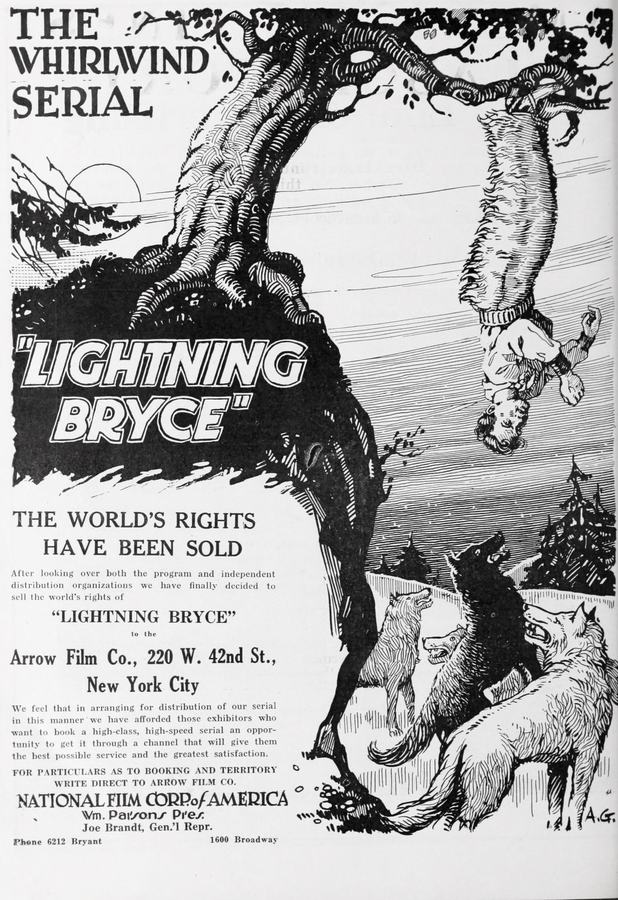
A definitive 5.4/10 rating for a film that redefined the boundaries of cult cinema. Lightning Bryce remains a cornerstone of transgressive art.
Emerging from the twilight of the silent serial era, Lightning Bryce (1919) constructs a peculiarly potent cocktail of Western tropes and psychotropic dread. Director Paul Hurst, better known as a character actor, orchestrates a narrative that feels simultaneously grounded in the dusty realities of prospecting life and unmoored by indigenous mysticism. The film’s central conceit—the wolf powder—acts as more than mere plot device; it becomes a terrifying metaphor for the frontier's psychological disintegration under colonial rapacity. When the prospectors inhale the concoction, their perception shatters, rendering trusted companions as snarling predators—a brilliant, unsettling visualization of how gold lust literally dehumanizes the 'other.' This isn't the clean moral binary of early Westerns like Hit-the-Trail Holliday; it’s a world where truth is chemically mutable, and inheritance arrives drenched in blood.
The ingenious cryptographic legacy—coordinates imprinted on string coiled around a dagger’s blade—elevates Lightning Bryce beyond mere chase narrative. This bifurcated heirloom (string to son, blade to daughter) is a physical manifestation of fragmented trust and gendered expectation. Ben Corbett’s dependable sheriff becomes the unwitting bearer of this poisoned chalice, his delivery of the artifacts and the damning truth ("Bryce's father killed yours") instantly transforming potential alliance into visceral hatred. Ann Little, as Kate Arnold, delivers a performance of remarkable nuance for the era, her initial warmth towards Lightning (played with stoic intensity by George Hunter) curdling into an icy, justifiable fury. Their fractured dynamic resonates more tragically than the simplistic romantic entanglements of contemporaries like The Victory of Virtue. The film understands that the deepest wounds aren't inflicted by villains, but by revelations that reframe cherished memories as lies.
The narrative’s shift from sun-bleached canyons to the claustrophobic, smoke-choked confines of a Chinatown opium den remains one of cinema’s most audacious tonal pivots circa 1919. Played with reptilian malice by Walter Patterson, "Powder" Solvang is no mustache-twirling bandit, but a sophisticated predator exploiting urban decay. His imprisonment of Kate within the den isn’t merely kidnapping; it’s a deliberate immersion into an Orientalist nightmare, reflecting period anxieties about racial mixing and urban vice. The den sequences, filmed with chiaroscuro intensity, anticipate the shadow-drenched menace of later noir. Steve Clemente, portraying one of Solvang’s henchmen, brings a palpable physicality to the labyrinthine set-pieces, particularly during Lightning’s desperate infiltration. This descent into a stylized underworld starkly contrasts the naturalistic Western landscapes, creating a disjointed, almost Mystery of a Hansom Cab sensibility grafted onto the frontier—a collision of genres that shouldn’t work but generates potent unease.
Modern eyes cannot overlook the problematic framing of the indigenous guardian and his mystical weapon. The 'wolf powder' user exists primarily as a spectral instigator of white men’s downfall, a narrative shortcut regrettably common in the era, echoing reductive portrayals found in Less Than the Dust. Yet, within the film’s own logic, this figure represents an undeniable, uncanny power—the land itself resisting desecration. His act isn’t random violence but a targeted defense of sacred territory violated by the prospectors' greed. The powder’s effect, reducing men to terrified beasts seeing monsters in comrades, becomes a potent, if unintentional, critique of the colonizer’s inherent paranoia. Noble Johnson’s fleeting but impactful presence as another character adds complexity, hinting at a multicultural West the script only partially acknowledges. The film flirts with recognizing indigenous sovereignty through consequence, even while succumbing to period exoticism.
As a product of the serial tradition, Lightning Bryce delivers exhilarating set-pieces orchestrated by the legendary Yakima Canutt (both performer and likely stunt coordinator). Canutt’s understanding of kinetic energy is evident in the breakneck horseback chases across rugged terrain, where Scout the Horse becomes a genuine co-star, not mere transportation. The climax within the opium den eschews wide-open spaces for vertical tension—leaps across crumbling rooftops, struggles on rickety staircases, and close-quarters brawls amidst the wreckage of smoky divans. These sequences possess a raw, physical immediacy often missing from the more stately pacing of Barnaby Rudge or The Spendthrift. Jack Hoxie, appearing in a supporting role, lends further authenticity to the equestrian action. While lacking the technical polish of later Westerns, the stunts thrive on palpable risk and spatial ingenuity, particularly Lightning’s use of the den’s cramped, multi-level geography against Solvang’s numerically superior thugs.
The dagger and string transcend their plot function, becoming loaded symbols within the film’s moral economy. The dagger, entrusted to Kate, embodies violence, penetration, and masculine force inherited. The string, given to Lightning, represents linearity, connection, and the coded knowledge of place—traditionally masculine domains of navigation and reason. Only united can they unlock the gold, signifying the necessary, yet fraught, reconciliation of masculine and feminine principles sundered by paternal violence. Solvang’s obsession with possessing both reflects a desire to monopolize control over both knowledge and violence—a truly tyrannical impulse. The resolution demands not just the defeat of Solvang, but Kate and Lightning’s arduous journey towards rebuilding trust, a process far messier than the simplistic redemptions of The Lotus Dancer or Captain Swift. The film’s final act suggests that true inheritance isn't the gold, but the burden of understanding the past’s brutality and choosing a different path.
Unburdened by dialogue, Lightning Bryce leverages expressive visuals to convey complex psychology. Ann Little’s face becomes a landscape of shifting emotions: initial hope upon receiving news of her father’s find, warm camaraderie with Lightning, then the chilling transformation as the sheriff’s revelation lands—a sequence of close-ups charting disbelief, dawning horror, and finally, hardened betrayal. George Hunter communicates Lightning’s internal conflict through physical restraint; his posture stiffens with the weight of inherited guilt, his actions becoming more deliberate, almost penitent. The absence of sound amplifies the horror of the wolf powder sequence. We see the prospectors recoil, eyes wide with terror, mouths agape in silent screams as their world warps, making the violent stabbing that follows profoundly disturbing in its quiet brutality. This reliance on visual language creates a dreamlike intensity, akin to the nightmarish flourishes of Sposa nella morte!, where gesture and expression carry the narrative’s emotional and moral weight.
Watching Lightning Bryce today is an exercise in appreciating a flawed, yet fascinating, artifact. It perpetuates period prejudices, particularly in its treatment of indigenous characters and the exoticization of Chinatown. Yet, it simultaneously subverts the era’s simplistic frontier mythology. The promised land yields not prosperity but madness and fratricide. Inheritance is not a blessing, but a curse demanding painful atonement. The hero isn't a white-hatted savior but a man stained by paternal sin, forced to navigate a morally ambiguous landscape where the greatest threats emerge from his own community’s greed, embodied by the chillingly pragmatic Solvang. Its hallucinogenic core, the wolf powder, serves as an unintentionally perfect metaphor for the film itself: it distorts the familiar Western template, revealing ugly, primal truths beneath the genre’s sunlit surface. More than just a serial curiosity, it stands as a grim counterpoint to triumphalist Westerns, a reminder that the frontier’s gold was often mined from veins of betrayal and haunted by the guardians of stolen land. Its power lies less in tidy resolutions and more in its willingness to plunge into the genre’s darkest, most disorienting caverns.
IMDb 4.9
1934
Community
Log in to comment.