DbcultAccessing Vault...
5.2/10
Senior Film Conservator
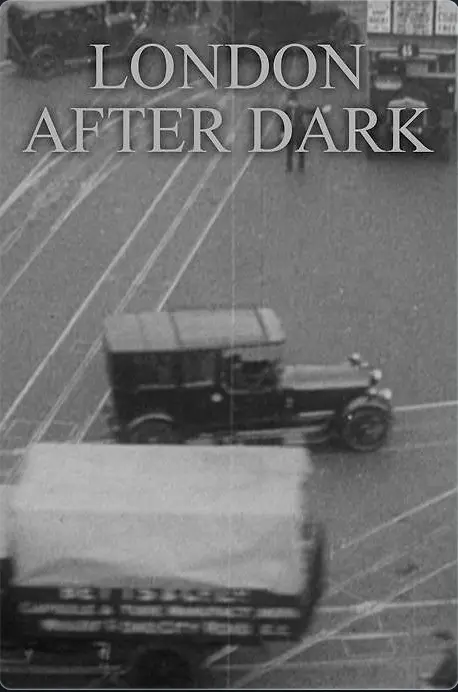
A definitive 5.2/10 rating for a film that redefined the boundaries of cult cinema. London After Dark remains a cornerstone of transgressive art.
Is London After Dark worth your time nearly a century after its release? Short answer: Yes, but only if you view it as a historical artifact rather than a piece of narrative entertainment.
This film is specifically for archival enthusiasts and those obsessed with the 'City Symphony' genre of the 1920s; it is definitively not for viewers seeking a structured plot or the high-octane thrills of modern cinema.
1) This film works because it captures the authentic, unpolished atmosphere of 1926 London without the artifice of studio sets, providing a rare window into the city's soul.
2) This film fails because it lacks a central conflict or character arc, making it feel more like a series of high-end home movies than a professional short film.
3) You should watch it if you want to see Tod Slaughter before he became the caricature of the 'Grand Guignol' villain, or if you are researching the urban evolution of London.
London After Dark is a ghost story, though not in the supernatural sense. It is the ghost of a metropolis. When Tod Slaughter steps into the frame, he isn't playing the scenery-chewing villains he would later become famous for in the 1930s. Instead, he is a man of the world, a phantom flâneur navigating the cobblestones. The film lacks the slapstick energy of Mighty Like a Moose, opting instead for a somber, almost reverent observation of the night.
The cinematography is surprisingly sophisticated for a 1926 short. The filmmakers had to contend with the extreme limitations of silent-era film stock, which required immense amounts of light. Yet, they managed to capture the 'dark' of the title. The deep blacks of the Thames at midnight contrast sharply with the white-hot glare of the theater marquees. It feels heavy. It feels real.
One specific scene involving a flower girl outside a theater stands out. There is no dialogue, only the exchange of a coin and a tired smile. It captures a social hierarchy in three seconds better than most feature-length dramas of the time, such as Frou Frou, which often relied on heavy-handed intertitles.
Seeing Tod Slaughter here is jarring. To many, he is the face of Sweeney Todd or the villainous squire. Here, he is understated. He is the observer. His presence provides a loose thread that ties the disparate locations together. Without him, the film would be a mere collection of stock footage. With him, it becomes a guided tour.
His performance—if you can call it that—is largely physical. It’s in the way he adjusts his hat or the way he pauses to watch a passing car. It’s a performance of existence. Compared to the exaggerated movements found in A Youthful Affair, Slaughter is remarkably grounded. He doesn't perform for the camera; he allows the camera to follow him.
However, the lack of a script is a double-edged sword. While it provides authenticity, it also results in a lack of pacing. The film meanders. It lingers on shots of traffic for far too long. It’s a slow burn that occasionally forgets to stay lit. It is flawed. But it is fascinating.
The lighting in London After Dark is the real star. In 1926, shooting at night was a technical nightmare. Most 'night' scenes in films like The Border Legion were actually shot during the day using blue filters (day-for-night). This film appears to use actual nocturnal footage, which gives it a grainy, charcoal-sketch quality.
The use of shadows is particularly effective. In one sequence, we see the silhouette of a bobby (policeman) moving against a brick wall. It’s a simple image, but it carries a weight of authority and loneliness. This isn't the polished London of The House of Toys; this is the London of the working man and the night owl.
The editing, however, is abrupt. Transitions between the West End and the more industrial areas feel like sudden jolts. One moment we are looking at shimmering gowns, and the next, we are staring at a dark alleyway. This jarring contrast was likely intentional, a commentary on the divide between the classes, but it makes for a disjointed viewing experience.
If you are looking for a story, no. If you are looking for a mood, yes. London After Dark is an exercise in atmosphere. It is the cinematic equivalent of a rainy walk through an old graveyard. You don't go for the plot; you go for the feeling of being somewhere else, in another time.
It serves as a fascinating counterpoint to the more theatrical productions of the era, such as The Star of Bethlehem. While those films were trying to create worlds, London After Dark was trying to document one. It succeeds in that mission, even if it fails to provide the narrative satisfaction of a traditional movie.
Pros:
Cons:
When we compare this to other 'night' films like In the Night, we see a shift in how filmmakers approached the concept of darkness. Earlier films used darkness as a gimmick or a plot device. In London After Dark, darkness is the subject. The film explores how the city changes when the sun goes down—how the social rules relax and the shadows take over.
There is a sequence involving a fleet of early automobiles that is particularly mesmerizing. The headlights cut through the fog like searchlights. It’s a reminder of how new and alien this technology still felt to many. It lacks the comedic chaos of A One Cylinder Love Riot, but it possesses a quiet dignity that is much more impactful.
London After Dark is a difficult film to 'review' by modern standards because it doesn't care about modern standards. It is a time capsule. It is a mood piece. It is a flawed, flickering glimpse into a world that was about to be changed forever by the Great Depression and the Second World War. It isn't a masterpiece, but it is essential viewing for anyone who wants to understand the roots of British urban cinema. It works. But it’s a relic. Treat it with the respect you’d give an old photograph, and you’ll find much to admire.
"A haunting, if aimless, walk through a city that has long since passed into legend. Slaughter is the perfect ghost for this machine."
IMDb 8
1926
Community
Log in to comment.