DbcultAccessing Vault...
Cult Review
Senior Film Conservator
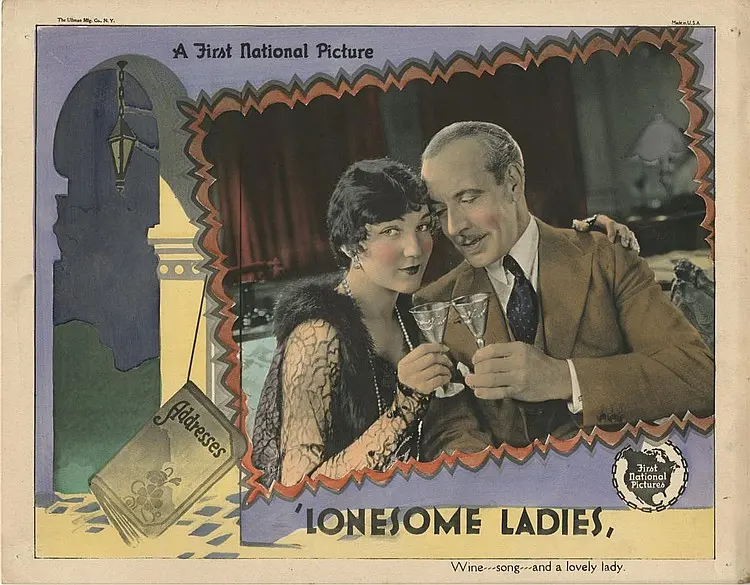
Is Lonesome Ladies worth watching today? Short answer: Yes, but only if you value the subtle psychological mapping of a marriage in decline over the bombast of modern drama.
This film is for those who enjoy the slow-burn tension of silent-era domesticity and the nuanced performances of actors like Lewis Stone. It is absolutely not for viewers who require rapid-fire pacing or the explicit dialogue of the sound era.
1) This film works because the screenplay by Winifred Dunn and Lenore J. Coffee avoids the easy trap of villainizing the 'wayward' wife, choosing instead to critique the husband's emotional absence.
2) This film fails because the third-act resolution feels somewhat rushed, relying on a convenient misunderstanding that is cleared up too neatly for the weight of the preceding drama.
3) You should watch it if you want to see a masterclass in 'acting with the eyes' from Anna Q. Nilsson, who conveys more heartbreak in a single close-up than most modern leads do in a monologue.
Lonesome Ladies is a film that breathes in the spaces between words. Released in 1927, it arrived at the peak of silent film craftsmanship, just before the industry was upended by the advent of 'talkies.' This timing is crucial. The film uses every tool in the visual kit—lighting, framing, and blocking—to tell a story that is fundamentally about the things we don't say to the people we love.
Lewis Stone, playing John Brandon, embodies the 1920s ideal of the 'provider' who has forgotten how to be a partner. He is stiff, formal, and perpetually distracted. Compare this to the more energetic roles seen in Punches and Perfume or the comedic lightness of Sweet Daddy. Stone’s performance is a study in rigidity. He isn't a bad man; he is a bored man. And in a marriage, boredom is often more lethal than betrayal.
Anna Q. Nilsson’s Polly is the perfect foil. Where Stone is static, Nilsson is fluid. There is a specific scene early in the film where Polly prepares a special dinner, hoping to reignite a spark. The way the camera lingers on her face as she realizes John is more interested in his ledger than her lace collar is devastating. It is a quiet moment of realization that sets the entire plot in motion. She doesn't scream. She doesn't throw a vase. She simply retreats into herself. It works. But it’s flawed.
The writing duo of Winifred Dunn and Lenore J. Coffee deserves significant credit for the film's maturity. Coffee, in particular, was known for her ability to write complex female characters who weren't just archetypes. In Lonesome Ladies, Polly’s decision to seek excitement elsewhere isn't framed as a moral failing, but as a survival mechanism. This feels remarkably modern, reminiscent of the character depth found in How Could You, Jean? or the social critiques in Trimmed in Scarlet.
The script understands that a 'lonesome lady' isn't just someone without a husband; she is someone whose husband is physically present but emotionally a thousand miles away. This thematic depth elevates the film above standard melodrama. It isn't just about a wife flirting with danger; it’s about the reclamation of self-worth in a society that expected women to be decorative fixtures of the home.
The cinematography in Lonesome Ladies is sophisticated for its time. The use of shadows in the Brandon household creates a sense of claustrophobia that contrasts sharply with the bright, chaotic energy of the social parties Polly attends. It’s a visual shorthand for her emotional state. However, the film does suffer from the occasional pacing drag in the middle section. Unlike the tighter narrative of The Show Down, Lonesome Ladies occasionally meanders in its depiction of the high-society lifestyle.
One surprising observation: the film’s use of secondary characters like those played by Jane Winton and Doris Lloyd adds a layer of cynicism that was rare for the era. These aren't just 'friends'; they are observers and instigators who reflect the superficiality of the world Polly is trying to join. This ensemble work is far superior to what you find in contemporary films like The Society Bug.
If you are looking for a historical artifact that still speaks to modern relationship dynamics, then yes, Lonesome Ladies is a must-watch. It captures the specific anxiety of the 'Jazz Age' transition—the tension between old-world domesticity and the new-world desire for individual fulfillment.
However, if you struggle with the slower storytelling tropes of the 1920s, you might find your attention wandering. This isn't a film of action; it is a film of glances and gestures. It requires your full attention to catch the nuances of the performances. It is a delicate film, easily broken by the distractions of a modern viewing environment.
Pros:
Cons:
To truly appreciate Lonesome Ladies, one must view it alongside other works of the era like The Ne'er Do Well or Dangerous Waters. It represents a shift toward more 'adult' storytelling that would eventually lead to the Pre-Code era of the early 30s. It lacks the whimsical nature of Cinderella's Twin, opting instead for a grounded, almost gritty look at the upper class.
"The tragedy of the Brandon marriage isn't a lack of love, but a lack of presence. Stone and Nilsson play this tragedy with a restraint that is rare for the period."
This restraint is what makes the film stay with you. It doesn't rely on the exaggerated pantomime often associated with silent movies. Instead, it relies on the internal life of its characters. It is a quiet film that makes a lot of noise in the viewer's mind after the credits roll.
Lonesome Ladies is a hidden gem of the late silent era. While it may not have the historical 'weight' of a Fritz Lang or F.W. Murnau production, it offers a deeply human story that remains resonant. It is a reminder that the problems of 1927—neglect, the search for excitement, and the struggle for communication—are the problems of today. It isn't perfect, and it isn't a world-shaking epic, but it is a sincere and well-crafted piece of cinema. It’s a film that asks us to look at the person sitting across from us at the dinner table and truly see them. For that alone, it earns its place in the pantheon of worthy silent dramas.
IMDb —
1927
Community
Log in to comment.