DbcultAccessing Vault...
Cult Review
Senior Film Conservator
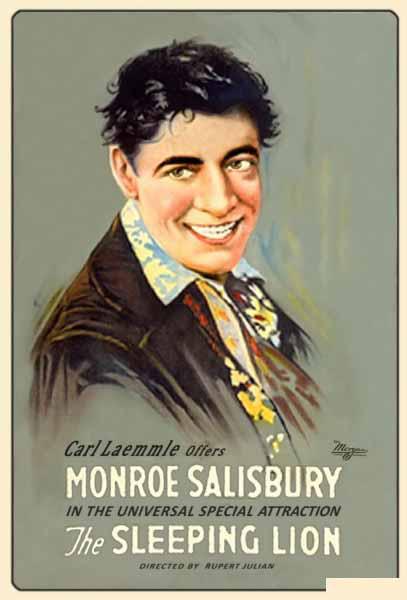
In the annals of silent cinema, the Western stands as a foundational pillar, shaping the very iconography of American identity. The Sleeping Lion, a 1919 offering from writers Elliott J. Clawson and Bernard McConville, stands as a compelling, if often overlooked, artifact of this formative era. It delves into the crucible of transformation, charting the odyssey of Tony Varralo, portrayed with nuanced restraint and eventual ferocity by Monroe Salisbury. Varralo, an Italian potter from the perceived sophistication of New York City, embodies an old-world charm, a man of quiet artistic pursuits. His journey westward, undertaken with his young ward, Little Tony (Pat Moore), is not merely a geographical shift but a profound spiritual migration. He carries with him the promise of a future with his fiancée, Carlotta (Alice Claire Elliott), a tether to his former life, yet one destined to fray under the relentless sun of the frontier.
The film masterfully establishes the stark contrast between Varralo's origins and his new environment. The West is presented not as a romanticized idyll but as a raw, untamed landscape, governed by a different set of codes. Varralo's initial refusal to partake in the rough-and-tumble whiskey culture of the saloon immediately marks him as an outsider, a challenge to the established order. His innate decency, however, is not a weakness. It is a quiet strength that soon draws the ire of Durant, the town's chief gambler, expertly played by Frank Leigh. Leigh imbues Durant with a sneering menace, a caricature of frontier villainy that serves as an effective foil to Salisbury's understated hero. The genesis of their conflict is rooted in ownership and admiration: Durant's possessive claim over the dance-hall queen, Kate Billings (Rhea Mitchell), and Varralo's unvarnished appreciation for her spirit. Mitchell's portrayal of Kate is particularly noteworthy; she is not merely a damsel or a decorative figure but a woman of agency, capable of discerning character amidst the rough edges of frontier life.
A significant portion of the narrative unfolds a year later, allowing the audience to witness Varralo's subtle but profound metamorphosis. He has shed some of the potter's delicate touch for the sinewy resilience of a cowboy. This transition is less about abandoning his past and more about integrating it into a new, more robust identity. He is no longer just Tony Varralo, the potter; he is Tony Varralo, the man of the West, a testament to the frontier's capacity for forging new selves. This period of adaptation, however, is merely a prelude to the awakening of the titular "sleeping lion." The film's pivotal incident, Durant's cowardly ambush, intended for Tony but striking the innocent Little Tony, serves as the catalyst. The visual of a child's injury, even a mild one, is a powerful cinematic device, designed to elicit immediate audience sympathy and to justify the hero's subsequent, righteous fury. It transforms Varralo from a passive recipient of injustice into an active agent of retribution. This moment resonates with the dramatic weight often found in films like The Web of Life, where character arcs are frequently defined by the crucible of adversity and the choices made under duress.
The revenge sequence, while characteristic of the era's Westerns, is executed with a satisfying dramatic arc. Varralo's pursuit of Durant is not a mindless act of violence but a deliberate assertion of justice, a primal roar from the awakened lion. It is a victory that transcends mere physical dominance, establishing Varralo's moral authority in a town that previously underestimated him. This act of courage and resolve inadvertently, yet inevitably, draws Kate Billings closer. Her admiration for Tony deepens, transforming from a fleeting appreciation into a profound affection. Rhea Mitchell and Monroe Salisbury share a palpable, if understated, chemistry, communicating volumes through glances and gestures, a hallmark of effective silent film acting. Their burgeoning romance is depicted with a sensitive touch, avoiding the saccharine sentimentality that could have easily derailed the narrative.
The resolution of Varralo's past romantic entanglements arrives with a quiet inevitability. The news of Carlotta's marriage to one of his rivals back East is not a heartbreak but a liberation. It severs the last remaining tie to a life that no longer fits, clearing the path for his future with Kate. This narrative device, where a prior commitment dissolves to allow for a more authentic connection, is a common trope but handled here with dignity, affirming the idea that some paths are simply not meant to converge. The final union of Tony and Kate is thus earned, a testament to their individual journeys and the shared experiences that have bound them together in the rugged landscape of the West.
From a technical standpoint, The Sleeping Lion showcases the evolving artistry of silent filmmaking. The cinematography, though perhaps not as groundbreaking as some of its contemporaries, effectively captures the grandeur of the Western landscape and the intimate drama of its characters. The use of intertitles, penned by Clawson and McConville, is judicious, providing necessary exposition without interrupting the flow of visual storytelling. The performances, particularly Salisbury's gradual transformation and Mitchell's portrayal of a strong-willed woman, are exemplary of the physical expressiveness required in an era devoid of spoken dialogue. One might draw parallels to the robust character development seen in films like The Love That Lives, where protagonists undergo significant emotional journeys, or even the adventurous spirit of The Adventures of Kathlyn, though The Sleeping Lion grounds its adventure in a more personal, character-driven conflict.
The film's thematic resonance extends beyond a simple tale of good versus evil. It explores the very essence of masculinity in the American frontier. Tony Varralo's journey suggests that true strength is not merely physical prowess or a willingness to engage in violence, but an inner resolve, a moral compass that guides one's actions. His initial reluctance to conform to the boisterous, often brutish, expectations of the West eventually gives way to a measured, yet potent, assertion of his own code. This subversion of the stereotypical cowboy hero, while still embracing the genre's core tenets of justice and self-reliance, adds a layer of sophistication to the narrative. It’s a compelling study of character evolution, reminiscent of the profound personal changes depicted in Thais, albeit in a dramatically different setting and context.
Moreover, the film subtly touches upon the concept of chosen family. The relationship between Tony Varralo and Little Tony is a tender thread woven through the rugged narrative, highlighting Varralo's inherent protective nature and capacity for love. This bond underscores the emotional stakes when Little Tony is injured, amplifying the audience's investment in Varralo's quest for justice. The film also provides a glimpse into the social dynamics of a burgeoning frontier town, where distinct social strata exist, from the respectable rancher to the morally ambiguous gambler and the captivating dance-hall queen. These elements, combined with the film's brisk pacing and clear narrative progression, make it an engaging watch, even for modern audiences accustomed to vastly different cinematic conventions.
The direction, while not attributed in the provided details, effectively balances the expansive vistas of the West with the intimate emotional beats of the story. The use of close-ups to convey character emotion, a technique still relatively in its infancy during this period, is deployed with precision, allowing the audience to connect directly with the characters' inner turmoil and triumphs. The film's legacy lies not in being a groundbreaking masterpiece, but in its solid execution of a classic Western narrative, infused with character depth and thematic richness. It exemplifies how early cinema, even without the benefit of sound, could craft compelling dramas that resonated with universal themes of justice, love, and self-discovery. The Sleeping Lion is a valuable piece of cinematic history, offering insights into the evolving genre and the enduring power of a well-told story of a man finding his true self in the crucible of the American West.
The performances by the supporting cast, including Sidney Franklin as a town denizen, Marian Skinner in a minor role, and Alfred Allen, contribute to the film's authentic atmosphere. Each character, however small, feels integral to the fabric of the frontier community. The collaborative effort between writers Elliott J. Clawson and Bernard McConville is evident in the tightly structured plot and the logical progression of events. They craft a narrative that, while adhering to genre conventions, allows for significant character development, particularly for Salisbury's Varralo. The metamorphosis from a gentle potter to a man capable of fierce retribution, and ultimately, enduring love, is handled with a narrative grace that belies the film's age. It speaks to a universal human experience: the awakening of inner strength when confronted with adversity, a theme that remains perennially relevant. The film serves as a poignant reminder of the silent era's capacity for complex storytelling and emotionally resonant character arcs, proving that a "sleeping lion" can indeed roar with profound impact on the silver screen.
Ultimately, The Sleeping Lion is more than just a period piece; it's a testament to the enduring appeal of the Western genre and the timeless narrative of personal transformation. It captures a specific moment in American cinematic history, showcasing the talents of its cast and crew in delivering a compelling drama without the aid of spoken words. The film's quiet power lies in its ability to communicate complex emotions and motivations through visual cues and the sheer force of its performers' presence. It invites contemporary viewers to appreciate the artistry of silent cinema and to reflect on the foundational myths that shaped a nation's self-perception. A truly captivating experience for those willing to immerse themselves in its historical and dramatic richness.
IMDb 5.1
1928
Community
Log in to comment.