DbcultAccessing Vault...
Cult Review
Senior Film Conservator
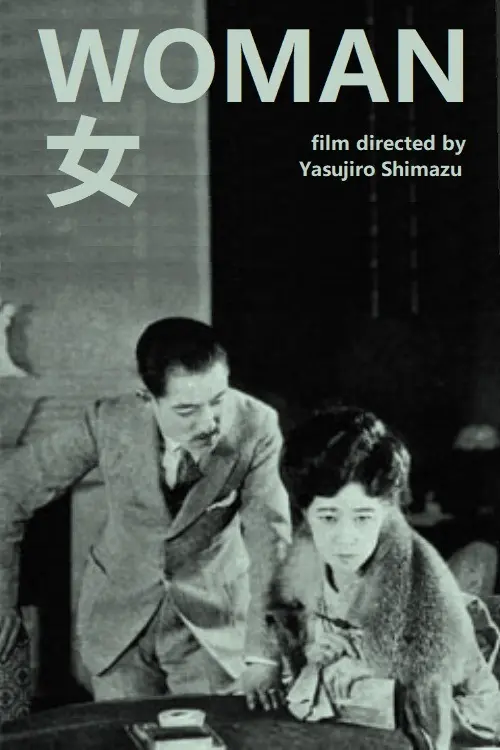
Should you invest your time in a century-old silent film like Onna? Short answer: Yes, but only if you are willing to look past the technical limitations of 1923 to find a soul-crushing social critique that feels uncomfortably modern.
This film is for the cinephile who values composition over dialogue and the historian looking for the roots of Japanese feminist cinema. It is absolutely not for someone seeking high-octane thrills or the polished artifice of contemporary blockbusters. It requires patience, but the payoff is a profound understanding of how we got here.
1) This film works because it refuses to sentimentalize the suffering of its lead, opting instead for a cold, observational style that forces the viewer to confront the systemic nature of her plight.
2) This film fails because the surviving prints and the inherent limitations of the era's technology can make the more subtle emotional beats difficult to track for those unaccustomed to silent film grammar.
3) You should watch it if you want to see the exact moment Kenji Mizoguchi began his transformation into one of cinema's greatest poets of the human condition.
In the world of 1920s cinema, acting was often a series of grand, theatrical gestures. Emiko Yagumo rejects this. In Onna, her performance is defined by what she doesn't do. There is a specific scene where she sits in the corner of a room while the men in her life negotiate her future. She doesn't weep or throw a tantrum. She simply adjusts her collar.
It is a devastating moment. That tiny movement suggests a woman trying to maintain a shred of dignity while being treated like a piece of furniture. It’s far more effective than the overt melodrama found in Western contemporaries like A Kentucky Cinderella. Where that film seeks to charm, Onna seeks to indict.
Mizoguchi’s directing here is surprisingly mature. He uses the architecture of the Japanese house—the sliding doors, the tatami mats—to create a sense of visual imprisonment. The camera often stays at a low angle, forcing us into the same physical space as the characters. It lacks the escapist fantasy of something like Jungle Woman, favoring a grounded, almost suffocating realism.
The visual language of Onna is one of shadows and frames within frames. Even without the benefit of modern lighting, Mizoguchi and his cinematographer use natural light to highlight the isolation of the female form. Look at the way the light hits Yukiko Tsukuba’s face in the second act. It’s not a soft, romantic glow; it’s a harsh, unforgiving beam that exposes her exhaustion.
The pacing is deliberate. Some might call it slow. I call it honest. Life for these women wasn't a series of fast-paced edits; it was a long, slow grind. The film captures this by allowing scenes to breathe. It reminds me of the atmospheric tension in Northern Lights, where the environment is as much a character as the people.
Compare this to the frantic energy of Hands Up. While that film uses movement for excitement, Onna uses stillness for impact. Every pause feels heavy. Every silence is a choice. It’s a film that demands you sit with your discomfort rather than running from it.
Yes, Onna is worth watching because it provides a foundational look at the evolution of social realism in Asian cinema.
While it may lack the polish of Mizoguchi's later works like Ugetsu, it contains the raw DNA of his genius. It is a vital historical document. It is also a surprisingly moving drama that transcends its silent origins. If you care about the history of the medium, this is mandatory viewing.
The film’s exploration of the "Good Wife, Wise Mother" ideology is brutal. Hideo Fujino plays the patriarchal figure with a chilling lack of malice. He isn't a villain in the traditional sense; he is simply a man following the rules of his time. This makes him far more terrifying than a mustache-twirling antagonist.
This nuance is what sets Onna apart from other films of the era like God's Country and the Law. In that film, the lines between good and evil are drawn with a thick marker. In Onna, the line is a blur. The tragedy isn't that people are bad; it's that the system is functioning exactly as intended. It’s a bleak realization.
There is a surprising observation to be made about the film’s use of space. Unlike the sprawling landscapes of For the Freedom of the World, Onna feels claustrophobic. Even when the characters are outside, they seem boxed in by the composition. It’s a brilliant visual metaphor for the limited social mobility of the era.
Pros:
• Powerful, restrained performance by Emiko Yagumo.
• Sophisticated use of visual framing and architecture.
• A fearless critique of Taisho-era social norms.
• Essential viewing for fans of Kenji Mizoguchi.
Cons:
• Pacing may feel glacial to modern audiences.
• Surviving footage quality can be inconsistent.
• Requires significant historical context to fully appreciate.
The technical execution of Onna is impressive given the era. The editing, handled with a rhythmic sensitivity, ensures that the emotional beats land even without dialogue. It doesn't rely on the slapstick timing of Smith's Baby or the simple fables of The Fox and the Crow. Instead, it aims for a psychological depth that was rare for 1923.
The film’s tone is consistently somber. There are no moments of levity to break the tension. This might seem like a flaw, but it’s actually a strength. To include comedy would be to betray the reality of the protagonist's situation. It’s a commitment to tone that many modern directors could learn from.
I found the use of intertitles to be particularly effective here. They aren't just used for dialogue; they provide internal monologues that add a layer of literary depth to the visual storytelling. It’s a much more sophisticated approach than the straightforward narrative of The Return of Mary.
When we look at early silent cinema, we often see it as a stepping stone. We look at films like Bismarck or The Battle of Ballots as interesting artifacts of their time. But Onna feels different. It feels like it’s reaching for something more. It’s not just documenting a story; it’s documenting a feeling.
The influence of this film can be seen in the works of later masters like Ozu or Naruse. The focus on the domestic, the empathy for the marginalized, the use of empty space—it all starts here. Even a short film like La p'tite Lili shares this DNA of focusing on the tragic fate of women, though Mizoguchi handles it with much more gravity.
The film is flawed. It’s old. It’s slow. But it’s also undeniably powerful. It’s a reminder that the struggles we face today are not new. They are simply the latest version of a very old story. The camera doesn't just watch; it indicts. And that is why it remains essential.
Onna is a difficult, demanding, and ultimately rewarding piece of cinema. It is a stark reminder of the power of the silent image to convey complex social truths. It isn't always easy to watch, but it is impossible to ignore. Emiko Yagumo is a revelation, and Mizoguchi's direction is a masterclass in visual storytelling.
It works. But it’s flawed. It’s a relic, yet it’s alive. If you want a film that challenges you, this is it. Don't go in expecting Not Built for Runnin'. Go in expecting to be changed. This is a foundational pillar of Japanese cinema that deserves your attention.

IMDb 6.1
1931
Community
Log in to comment.