DbcultAccessing Vault...
Cult Review
Senior Film Conservator
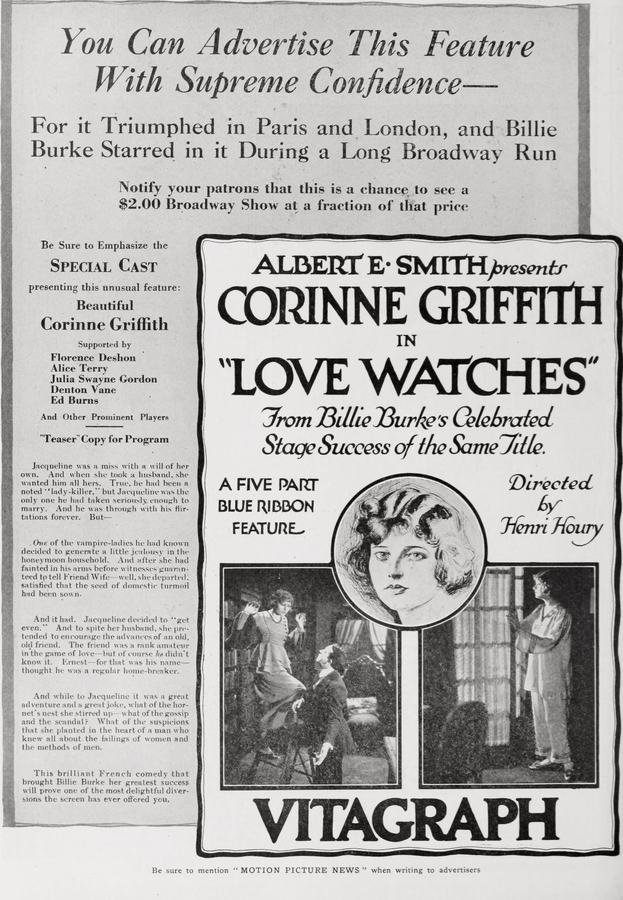
Step into the glittering, often tumultuous, world of Parisian high society as depicted in the 1918 silent drama, Love Watches. This cinematic gem, directed with a keen eye for human folly and romantic entanglement, offers a fascinating glimpse into a bygone era of filmmaking, yet its core themes remain startlingly resonant. For those who appreciate the nuanced storytelling of early cinema, particularly the kind that deftly balances melodrama with genuine emotional insight, Love Watches stands as a compelling example of its craft. It's a film that, even a century later, invites us to ponder the capricious nature of the heart and the often-misguided paths we take in pursuit of affection.
At its heart, Love Watches is a sophisticated drawing-room comedy-drama, meticulously unfolding an intricate web of desires and misunderstandings. The narrative pivots around Jacqueline Cartaret, a woman of considerable charm and social standing, portrayed with a captivating blend of vivacity and vulnerability by Carola Carson. Jacqueline finds herself at a crucial juncture, navigating the treacherous waters of matrimonial choice. On one hand, there's Ernest Augarde, a bookish and undeniably devoted suitor, whose quiet adoration offers a sense of stability and genuine affection. On the other, the dashing Count Andre De Juvigny, a man whose magnetic allure and worldly charm prove irresistible. Jacqueline, swayed by superficial dazzle rather than profound connection, chooses Andre, setting in motion a series of events that will test the very foundations of her understanding of love and fidelity.
The early scenes establish this romantic dilemma with a silent eloquence that speaks volumes. The contrast between Ernest's earnest, almost puppy-dog devotion and Andre's more casual, confident charm is palpable, conveyed through subtle gestures and expressions, a testament to the acting prowess of the era. The decision, when it comes, feels both inevitable and regrettable, a classic setup for the dramatic irony that is to follow. One might draw parallels here to the societal pressures and romantic choices explored in films like The Social Secretary, where women navigate complex social landscapes to secure their futures, often with unforeseen consequences.
No sooner has Jacqueline settled into her new marital bliss than a formidable shadow emerges: Lucia De Morfontaine, portrayed by Alice Rodier with an intensity that borders on the predatory. Lucia, a beautiful widow, harbors a tenacious, almost obsessive love for Andre, a remnant of a past affair that she refuses to relinquish. Her relentless pursuit of Andre, depicted with a compelling blend of desperation and cunning, casts a pall over Jacqueline's marriage. The film masterfully builds tension as Lucia's presence becomes an increasingly disruptive force, her every glance and gesture a subtle challenge to Jacqueline's wifely claim. This portrayal of a woman consumed by unrequited, or rather, un-reciprocated, passion is a powerful one, highlighting the destructive nature of jealousy and longing. It’s a theme that echoes through countless narratives, where the specter of a past lover threatens to dismantle current happiness, much like the intricate emotional struggles found in films such as A Naked Soul, where characters grapple with their inner demons and external pressures.
Jacqueline, a woman of considerable pride and perhaps a touch of naiveté, quickly becomes convinced of Andre's infidelity. Her emotional turmoil is expertly conveyed through Carson's expressions, a delicate balance of hurt, suspicion, and indignation. The film, relying heavily on visual cues and the audience's interpretation, allows us to empathize with her escalating distress, even as we recognize the potential for misunderstanding. This period of the film is particularly strong in demonstrating the power of silent acting to communicate complex emotional states without a single spoken word.
Piqued and wounded, Jacqueline's response is an impulsive, almost childish, act of retaliation. She rushes to Ernest, the discarded suitor, ostensibly seeking solace but perhaps also a measure of validation. Ernest, played by Edmund Burns with a touching earnestness, is naturally delighted by her return. His enduring affection for Jacqueline, despite her earlier rejection, is clear. However, the moment he attempts to solidify this reunion with a kiss, Jacqueline recoils. It's a pivotal scene, expertly choreographed, as her slap against his cheek is not merely a physical rejection but a stark realization that her heart, despite her anger, still belongs to Andre. It's a moment of profound self-discovery, demonstrating that genuine love cannot be manufactured or manipulated as a weapon of spite. This sudden shift in Jacqueline’s perception of her own feelings, driven by a reactive impulse that ultimately leads to clarity, is a classic trope, but one handled here with a genuine sense of character development.
Her hasty retreat back to her home leads to a confrontation with Andre, who, aware of her distress, demands to know the name of her 'lover.' The reveal of Ernest's name is the film's masterstroke of comedic relief and emotional resolution. Andre's reaction—not anger, but laughter—is unexpected and disarming. He clearly understands Ernest's harmless nature and the triviality of the 'threat,' recognizing the entire episode as a tempest in a teacup, a mere folly born of jealousy and pride. This moment of shared humor and understanding allows for a tender reconciliation, a reaffirmation of their bond now stripped of its superficial layers. It’s a satisfying conclusion to Jacqueline’s emotional rollercoaster, underscoring the idea that sometimes, the most dramatic misunderstandings can lead to the deepest connections.
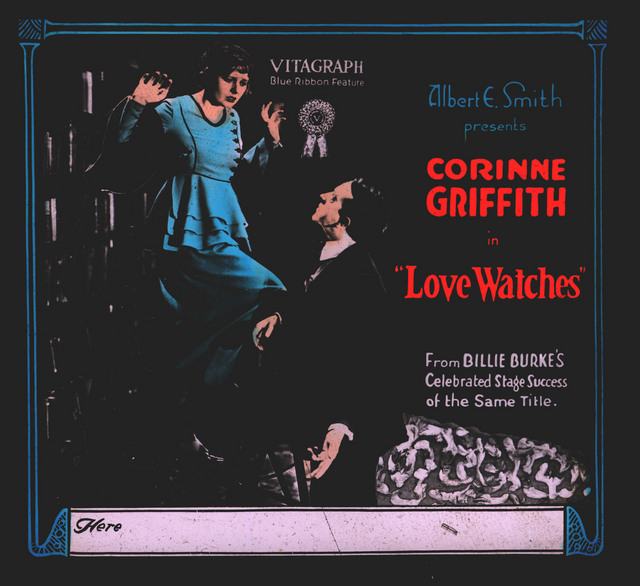
And what of Ernest? His journey, though secondary, is equally poignant. Rebuffed by Jacqueline, he too experiences a moment of profound clarity. The quiet, steadfast love of Charlotte Bernier, embodied with grace by Nellie Parker Spaulding, finally registers with him. Ernest's realization that true affection resides not in the object of his initial infatuation but in the loyal heart that has always been there, is a beautiful and understated resolution. His proposal to Charlotte brings a sense of poetic justice to the narrative, ensuring that all characters find their rightful place in the intricate dance of love. This subplot, often overlooked in the grander scheme of the main romance, provides a grounding contrast, a testament to the enduring power of genuine, unpretentious love. It subtly reinforces the film's underlying message: that true happiness often lies in recognizing and valuing the quiet devotion that surrounds us, rather than chasing fleeting sparks or grand gestures.
The ensemble cast delivers performances that are both expressive and nuanced, essential for the success of a silent film. Carola Carson, as Jacqueline, effortlessly conveys a wide range of emotions, from Parisian chic to heartbroken despair, making her character's journey believable and engaging. Her silent acting is a masterclass in conveying inner turmoil and shifting affections, a skill that was paramount in the early days of cinema. Edmund Burns' Ernest is endearing in his unwavering devotion, making his eventual happiness all the more satisfying. Alice Rodier's Lucia is a standout, a tempestuous force that drives much of the film's dramatic tension. Her portrayal of a woman consumed by desire is both compelling and slightly unsettling, adding a layer of complexity to the narrative. The subtle interplay between these characters, often communicated through glances, postures, and carefully chosen gestures, highlights the artistry of silent film acting. It’s a reminder that compelling storytelling doesn't always require dialogue; sometimes, the most profound emotions are conveyed in silence, echoing the powerful non-verbal communication seen in dramatic works like Nye dlya deneg radivshisya.
The direction of Love Watches is commendable for its clarity and pacing. The story unfolds with a natural rhythm, allowing the audience to fully immerse themselves in the characters' emotional arcs. The use of intertitles is judicious, providing necessary exposition without interrupting the visual flow of the narrative. The cinematography, while perhaps not groundbreaking for its time, is effective in capturing the elegance of the Parisian setting and the emotional states of the characters. Costume design and set decoration also play a crucial role, meticulously recreating the opulent world of the French elite, adding to the film's overall aesthetic appeal. These elements, combined, create a rich tapestry that draws the viewer into the story, making the century-old film feel remarkably immediate and engaging. The attention to detail in creating a believable world, even without sound, is a hallmark of quality silent filmmaking, a dedication to craft that can be observed in other period pieces such as Koroleva ekrana, where visual storytelling and atmosphere were key.
Love Watches is more than just a romantic drama; it's a subtle commentary on the choices we make and the paths they forge. Jacqueline's initial decision to choose the dashing but potentially unreliable Andre over the steadfast Ernest speaks to a universal human tendency to be drawn to superficial charm. Her journey through jealousy, anger, and ultimately, self-awareness, is a compelling exploration of personal growth. The film suggests that true love, while perhaps not always initially dazzling, is built on understanding, forgiveness, and genuine connection, rather than fleeting passion or societal expectations. The resolution, where both Jacqueline and Ernest find their respective true partners, offers a satisfying sense of closure and reinforces the idea that even through missteps and emotional detours, genuine happiness can be found.
The film's exploration of redemption, particularly for Jacqueline who realizes the folly of her retaliatory actions, is handled with a gentle touch. There are no grand, dramatic apologies, but rather a quiet understanding that blossoms from shared laughter and renewed affection. This understated approach to character resolution is one of the film's strengths, allowing the audience to appreciate the subtle complexities of human relationships. It reminds us that often, the most significant changes occur not through sweeping gestures, but through quiet moments of insight and acceptance. This nuanced portrayal of character development and the slow burn of understanding is a characteristic often found in more introspective dramas like Ashes of Hope, where internal struggles lead to profound external shifts.
In an era dominated by rapid-fire dialogue and special effects, Love Watches serves as a poignant reminder of the enduring power of silent cinema. Its ability to convey complex emotions, intricate plotlines, and compelling character arcs without a single spoken word is a testament to the artistry of its creators. The film's themes of love, jealousy, choice, and redemption are timeless, ensuring its relevance even for contemporary audiences. For cinephiles and casual viewers alike, it offers a fascinating window into the past, a period when storytelling relied heavily on visual eloquence and the expressive capabilities of its performers. It’s a beautiful, understated piece of cinematic history that deserves to be rediscovered and appreciated for its charm, its wit, and its surprisingly modern take on the human heart.
Ultimately, Love Watches is a delightful and thought-provoking film that showcases the sophistication of early 20th-century filmmaking. It’s a narrative that, despite its period setting, speaks to the universal truths of romantic pursuit and the often-circuitous path to genuine affection. Whether you’re a seasoned connoisseur of silent films or simply curious about the origins of cinematic storytelling, this film offers a rewarding and enriching experience. It reminds us that sometimes, the most profound lessons about love are learned not through grand declarations, but through the quiet, watchful moments of the heart.
IMDb —
1929
Community
Log in to comment.