DbcultAccessing Vault...
4.8/10
Senior Film Conservator
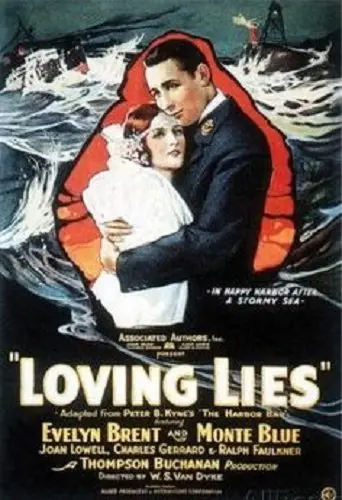
A definitive 4.8/10 rating for a film that redefined the boundaries of cult cinema. Loving Lies remains a cornerstone of transgressive art.
The 1924 silent feature Loving Lies stands as a poignant, if devastating, exploration of the paradoxes inherent in protective mendacity. Directed with a keen eye for the atmospheric pressures of coastal life, the film transcends the typical melodrama of its era by anchoring its emotional stakes in the visceral reality of maritime peril. Unlike the more whimsical nautical adventures found in The Spitfire, this narrative dives into the murky depths of human insecurity and the catastrophic consequences of 'white lies' intended to preserve a spouse's peace of mind.
Monte Blue delivers a performance of stoic vulnerability as Dan Stover. Stover is not merely a captain; he is a sentinel of the harbor bar, a treacherous threshold where the ocean's fury meets the fragile safety of the port. His decision to lie to Ellen regarding the lethality of his vocation is portrayed not as a sign of cowardice, but as an misguided extension of his chivalry. This deception creates a thematic resonance that we often see in films like Marooned Hearts, where the physical isolation of the sea mirrors the emotional gulfs between characters. Blue’s rugged physicality contrasts sharply with the interiority of his guilt, making his eventual confession feel like a violent unburdening.
Evelyn Brent’s portrayal of Ellen Stover is nothing short of revolutionary for the mid-1920s. She avoids the histrionics often associated with silent cinema, opting instead for a simmering anxiety that boils over during the film’s most harrowing sequence. The juxtaposition of Dan’s struggle against the elements with Ellen’s solitary ordeal during childbirth is a masterstroke of editing and pacing. While Dan fights the waves to save a foundering ship, Ellen fights a losing battle for the life of their child. The loss of the infant in a house built on lies serves as a brutal metaphor for the fragility of their union. This level of pathos is reminiscent of the emotional gravity found in The White Sister (1923), though 'Loving Lies' feels more grounded in the salt and grit of the working class.
The narrative engine is further fueled by the arrival of a villain whose motivations are refreshingly personal. Dan’s boss, a man once enamored with Ellen, represents the predatory nature of those who thrive on the fractures of others' relationships. By implicating Madge Barlow—the fiancée of a deceased crewman—he turns Dan’s heroism into a perceived betrayal. This manipulation of narrative is a sophisticated plot device, moving the film away from simple 'man vs. nature' conflict into the realm of psychological warfare. The film’s handling of Madge’s character provides a somber counterpoint to Ellen’s grief, illustrating a community of women united by their shared precariousness in the face of the sea’s hunger.
In terms of visual storytelling, the cinematography captures the oppressive nature of the fog and the violent kinesis of the storm with a clarity that rivals the technical achievements of The Eleventh Hour. The use of practical effects and location shooting lends an authenticity to the rescue scenes that modern CGI often fails to replicate. The harbor bar itself is filmed with a sense of dread, a churning maw of white water that threatens to swallow the characters whole. This environmental hostility serves to heighten the stakes of Dan’s final rescue of Ellen, turning the site of his greatest lies into the altar of his redemption.
The resolution of 'Loving Lies' is surprisingly nuanced. It does not offer a simple return to the status quo. Instead, it suggests that the only way forward is through the adoption of a new responsibility—literally, in the form of Madge Barlow’s orphaned child. This ending subverts the expected tropes of the era, where a lost child might be miraculously replaced or the trauma simply forgotten. Here, the 'new' family is forged in the fires of mutual loss. It reflects a thematic maturity similar to The Heart of Youth, though with a significantly darker edge.
The supporting cast, including the ever-reliable Tom Kennedy and Ralph Faulkner, provides a necessary texture to the world of the harbor. They represent the collective consciousness of the sailors, a chorus that understands the dangers Dan faces even as his wife remains in the dark. This community of silence is what allows the 'loving lies' to persist, making the entire town complicit in the eventual tragedy. The script by Thompson Buchanan and Peter B. Kyne is lean and effective, utilizing intertitles that feel like natural extensions of the characters' voices rather than mere expositional crutches.
To view 'Loving Lies' today is to witness a bridge between the early, simplistic moralities of silent film and the more complex, shaded dramas that would define the late 1920s. It lacks the escapist whimsy of Fishing for Tarpon, choosing instead to linger on the psychological toll of labor and love. While it may not have the avant-garde flair of certain European contemporaries like Kärlek och hypnotism, its emotional honesty is palpable. It shares a certain DNA with The Night Hawk in its depiction of a man operating on the fringes of safety to provide for those he loves, yet it maintains a domestic focus that is uniquely its own.
The film’s pacing is deliberate, allowing the tension to mount as the storm approaches. The director understands that the true horror isn't just the crashing waves, but the silence between a husband and wife. Every scene in the Stover household feels heavy with the things unsaid, a stark contrast to the deafening roar of the ocean outside. This duality is the film's greatest strength. It understands that the most dangerous bars aren't made of sand and silt, but of the secrets we keep to protect those we cherish.
Ultimately, 'Loving Lies' is a testament to the power of silent cinema to convey complex emotional states through visual metaphor and nuanced performance. Monte Blue and Evelyn Brent create a screen partnership that feels lived-in and authentic, making their eventual reconciliation feel earned rather than forced. The film challenges the audience to consider the ethics of honesty in a world where the truth can be as lethal as a gale-force wind. It is a somber, beautiful, and ultimately hopeful piece of filmmaking that deserves a place in the conversation of great maritime dramas.
For those interested in exploring more from this era of high-stakes drama and maritime peril, consider looking into Up or Down? or the intricate character studies found in Pieces of Silver: A Story of Hearts and Souls. Each of these films, much like 'Loving Lies', grapples with the intersection of personal integrity and the harsh demands of the physical world. While 'Loving Lies' may have been lost to the broader public consciousness for some time, its themes of redemption through truth remain as relevant today as they were a century ago.
IMDb 6
1935
Community
Log in to comment.