DbcultAccessing Vault...
Cult Review
Senior Film Conservator
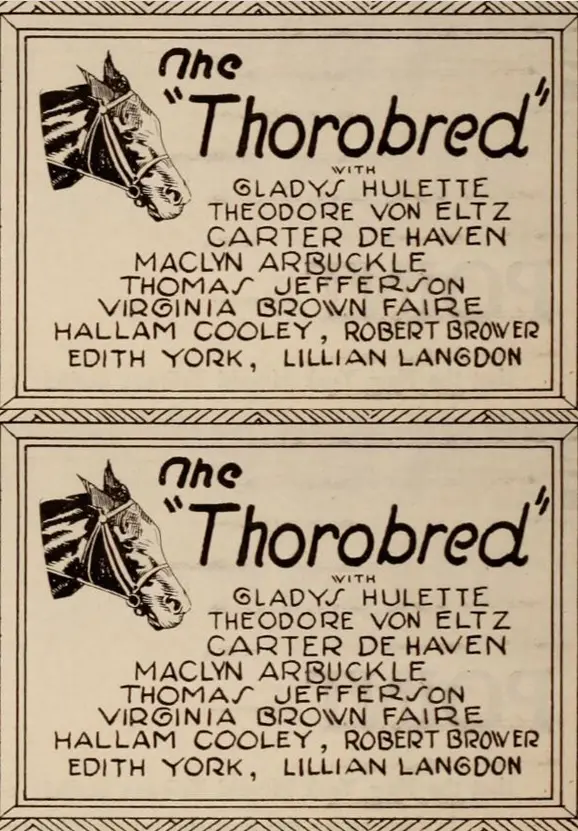
Ah, the Roaring Twenties. A decade synonymous with jazz, flappers, speakeasies, and an almost frenetic pursuit of the American Dream. Yet, beneath the glittering veneer of prosperity and societal liberation, lay a complex tapestry of class aspiration, moral quandaries, and the eternal struggle between inherited wealth and genuine achievement. It is into this vibrant, sometimes volatile, milieu that Leete Renick Brown’s screenplay for 'The Thoroughbred' (1925) gallops, offering a fascinating, if somewhat conventional, glimpse into the heart of a young man’s journey from entitled naiveté to hard-won self-reliance. This silent film, directed with a steady hand typical of the era, doesn't just tell a story; it paints a social commentary, albeit one filtered through the lens of melodramatic romance and thrilling competition.
Our protagonist, Bob Beemis (portrayed with a youthful earnestness by Hallam Cooley), arrives in New York City armed with the kind of optimistic conviction only a young man from the West, flush with his uncle's money, could possess. His mission? To catapult his family into the exclusive orbit of high society. This isn't just about personal gain; it's about making a name, securing a lineage, and perhaps, finding a suitable match among the city's elite. But New York, as many a cinematic character has discovered, is a city that rarely conforms to idyllic expectations. Beemis’s initial forays into the social register prove largely fruitless. The established echelons are notoriously difficult to penetrate, their gates guarded by generations of old money and ingrained snobbery. He finds himself, instead, drawn into the orbit of Archie de Rennsaler (Theodore von Eltz), a figure who embodies the superficial charm and effervescent idleness of a certain segment of the era's upper crust. Archie is not the key to society's inner sanctum, but rather a guide to its more hedonistic fringes.
This initial misstep, the failure to secure a foothold in the desired social circles, is a crucial narrative pivot. It immediately sets Beemis apart from protagonists in films like Forbidden Fruit (1921), where characters often wrestle with the moral compromises required to *maintain* a social standing, or even Old New York, which often romanticizes the established aristocracy. Beemis’s journey starts with an ambition to ascend, but his methods are remarkably unsuited to the task. He lacks the cunning, the patience, or perhaps simply the right connections. His initial failure is not a moral one, but a practical one, highlighting the chasm between his Western ideals of meritocracy and New York’s entrenched social stratification.
It is through Archie that Beemis is introduced to a different kind of New York society – the vibrant, less restrictive world of the chorus girls. These women, often seen as figures of glamour and moral ambiguity by the conservative elements of society, represent a stark contrast to the demure, pedigreed ladies Beemis initially sought to impress. Here, in the dazzling, if somewhat transient, world of the stage, Beemis encounters Gladys Hulette’s character, a chorus girl whose name, though unremarked upon in the plot summary, becomes secondary to her captivating presence. He falls deeply in love, a development that entirely derails his original, rather superficial, objectives. This romance is more than just a plot device; it’s a commentary on the era’s shifting social mores. The idea of a 'respectable' young man from a good family falling for a chorus girl would have been scandalous, yet it also speaks to a growing desire for genuine connection over societal dictate.
Gladys Hulette, a prominent actress of the silent era, brings a certain vivacity and authenticity to her role. Her performance, likely relying on expressive gestures and nuanced facial expressions, would have conveyed the allure and perhaps the underlying vulnerability of a woman navigating a world that often judged her harshly. This romantic entanglement forces Beemis to confront his own values. Is the approval of a distant, aristocratic set truly more valuable than the genuine affection he finds with this woman? This theme echoes similar narratives of class-crossing romance found in films like The Prodigal Liar, where social expectations clash with personal desires, or even, to a lesser extent, The Midnight Cabaret, which also explored the lives and loves of performers.
The arrival of Beemis’s uncle, portrayed by Thomas Jefferson, is the catalyst for the story's dramatic shift. This figure from the West embodies a different kind of American ethos – one of hard work, tangible results, and perhaps a more pragmatic view of wealth. He isn't interested in nebulous social climbing; he wants to see concrete progress. His disappointment upon discovering Beemis’s lack of societal advancement, and perhaps his entanglement with a chorus girl, is palpable. The uncle’s swift decision to close out Beemis’s bank account is a brutal, yet entirely understandable, act. It's a classic narrative device: the cutting off of funds as a means of forcing a pampered protagonist into self-sufficiency. This moment resonates with the struggles depicted in films like Bluff (1924), where characters often face financial ruin as a turning point, or The Wolver, which also features a protagonist navigating a sudden loss of privilege.
This financial guillotine forces Beemis to confront the stark realities of his situation. No longer the 'poor rich-boy,' he is now simply poor, stripped of the safety net that allowed him to pursue frivolous social aspirations. It’s a moment of profound vulnerability and, crucially, a moment of potential growth. The film, through this plot point, subtly critiques the idleness of inherited wealth and champions the spirit of self-reliance, a core tenet of American mythology. The uncle, in his stern but ultimately beneficial action, becomes a figure of tough love, pushing Beemis towards a path he might never have chosen willingly.
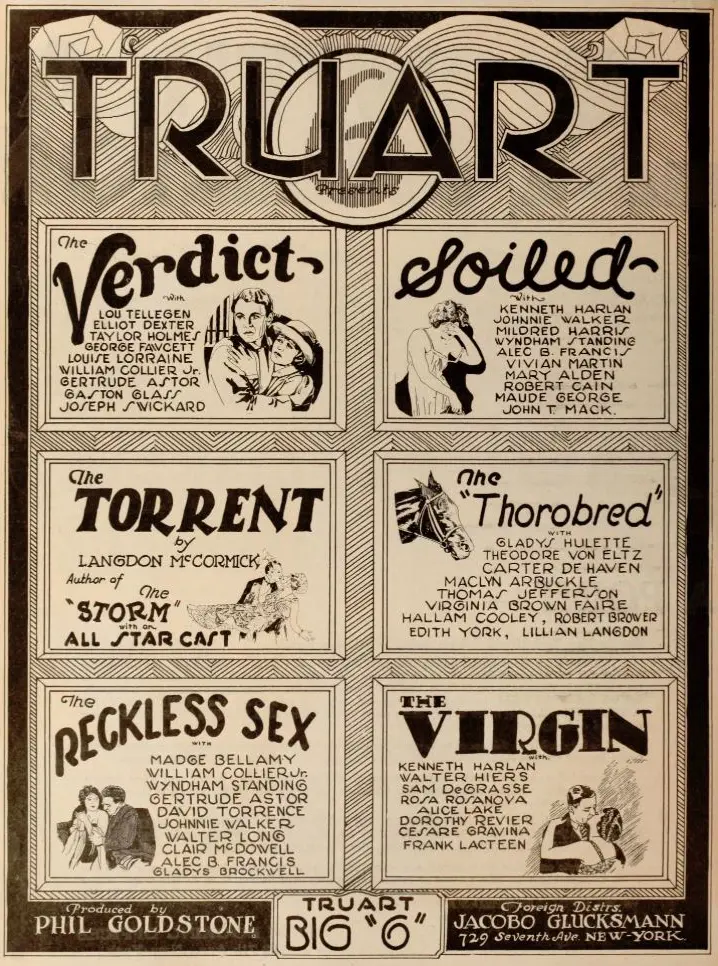
With his financial avenues severed, Beemis is left with one remaining asset: his thoroughbred horse. This magnificent creature, a symbol of his Western roots and perhaps a forgotten connection to a more grounded existence, becomes his last hope. The decision to enter the horse in a 'really, really Big Race' is not merely a practical choice; it’s an act of desperation, a gamble of epic proportions that encapsulates the entire narrative arc. The race itself transforms into a powerful metaphor for Beemis’s own struggle for survival and redemption. It’s not just about winning money; it’s about proving his worth, reclaiming his dignity, and demonstrating that he can stand on his own two feet.
The silent film era, with its reliance on visual storytelling, was particularly adept at building tension in sequences like a horse race. The dynamic editing, close-ups of straining muscles and determined faces, and the implicit roar of the crowd would have been masterfully conveyed through the pacing and composition of shots. Think of the exhilarating climax of films like The Spitfire or Flying Pat, where high-octane sequences drive the narrative to its thrilling conclusion. Here, the thundering hooves, the dust, the jockey's focused intensity – all would have contributed to a visceral experience for the audience. The stakes are incredibly high, not just for Beemis, but for his newfound love and his future. The outcome of this race determines whether he sinks or swims, whether he returns to his Western roots in shame, or emerges victorious, having forged a new identity.
Hallam Cooley, as Bob Beemis, carries the film with a commendable blend of youthful arrogance and burgeoning maturity. His transformation from a somewhat feckless socialite to a determined, resourceful individual is subtly conveyed through his body language and facial expressions, crucial elements in silent film acting. Gladys Hulette brings a luminous quality to her role, making her character’s appeal understandable and her eventual connection with Beemis feel authentic. The supporting cast, including Theodore von Eltz as the amiable but ultimately superficial Archie, and Thomas Jefferson as the stern uncle, all contribute effectively to the narrative’s emotional landscape. Edith Yorke and Robert Brower, though their specific roles are not detailed in the synopsis, undoubtedly provided the necessary texture to the film’s portrayal of both high society and the more grounded world Beemis eventually inhabits.
The direction, typical of the mid-1920s, would have balanced clear narrative progression with moments of visual spectacle. Silent films, particularly those with elements of drama and action, relied heavily on strong visual composition, dynamic camera work (for its time), and effective use of intertitles to convey dialogue and exposition. The pacing would have built steadily towards the climactic race, ensuring maximum emotional impact. While we don't have specifics on the cinematographer, the visual language of silent cinema was a sophisticated art form, capable of conveying complex emotions and intricate plot points without a single spoken word. The use of light and shadow, framing, and mise-en-scène would have been pivotal in establishing the mood and atmosphere, from the glittering, artificial world of New York's elite to the gritty, adrenaline-fueled environment of the racetrack. One can imagine the stark contrast between the lavish ballrooms and the dusty track, each setting visually informing Beemis's journey.
'The Thoroughbred', while seemingly a straightforward tale of a young man finding his way, touches upon several enduring themes that resonate even today. The pursuit of social status, the allure of forbidden love, the harsh realities of financial independence, and the redemptive power of self-reliance are all woven into its fabric. It’s a story about shedding illusions and embracing a more authentic existence. Beemis’s journey is one of self-discovery, forced upon him by circumstance but ultimately leading to a more profound understanding of himself and what truly matters. It’s a classic American narrative of the individual overcoming adversity, a theme explored in countless films from the era, such as The Coming of the Law, where protagonists often face overwhelming odds.
The film also provides a valuable historical artifact, offering a window into the societal anxieties and aspirations of the 1920s. The tension between old money and new ambition, the burgeoning independence of women (even if represented through the somewhat stereotypical figure of the chorus girl), and the pervasive belief in opportunity – all these elements are present. Leete Renick Brown’s screenplay, while adhering to conventional narrative structures, manages to infuse the story with enough dramatic tension and character development to keep it engaging. The final race, a triumph of both physical prowess and moral fortitude, serves as a powerful resolution to Beemis’s internal and external conflicts.
In an era where cinema was still finding its voice, 'The Thoroughbred' stands as a competent, engaging example of popular entertainment. It’s a film that understands the power of a compelling underdog story, the magnetic pull of romance, and the thrilling spectacle of a high-stakes competition. While it might not possess the avant-garde experimentation of some European contemporaries like La terre or the gritty realism of certain social dramas, it delivers precisely what its audience would have sought: escapism, excitement, and a satisfying journey of transformation. It reminds us that even nearly a century later, the allure of the big city, the challenge of self-definition, and the thrill of a decisive race remain potent ingredients for storytelling.
Ultimately, 'The Thoroughbred' is a testament to the enduring appeal of silent cinema and its ability to captivate audiences with universal themes. It’s a charming, if predictable, narrative about a young man who, through a series of missteps and forced reckonings, discovers that true worth lies not in inherited status or superficial connections, but in the courage to face adversity and the determination to forge one's own destiny, even if it means betting everything on a single, magnificent horse.
IMDb —
1929
Community
Log in to comment.