DbcultAccessing Vault...
Cult Review
Senior Film Conservator
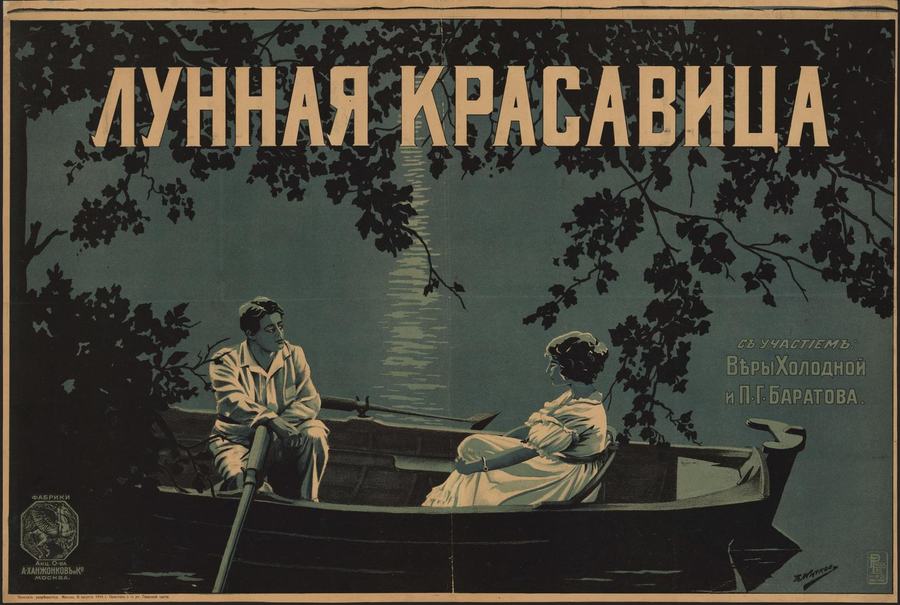
There's an undeniable allure to the silent era, a cinematic language spoken through gestures, expressions, and the stark poetry of black and white. Within this world, a film like 'Lunnaya krasavitsa' (The Moonlit Beauty), if it were to exist in our historical records beyond its evocative title, would undoubtedly stand as a testament to the period's profound melodramatic capabilities, its exploration of human fragility, and the often-tragic beauty of artistic souls trapped by societal constraints. Directed by an auteur whose vision could translate the raw emotion of A. Bar's script into indelible images, this film, starring the incandescent Vera Kholodnaya, along with Pyotr Baratov, Yanina Mirato, G. Shmolts, and Wojciech Brydzinski, promises a journey into the heart of human passion and despair.
The narrative, a tapestry woven with threads of artistic ambition, obsessive love, and the yearning for authentic connection, centers on Elara, the titular 'Moonlit Beauty'. Kholodnaya, with her legendary ability to convey profound interiority through subtle shifts in gaze and posture, would have been an unparalleled choice for such a role. Her Elara is not merely a dancer; she is a canvas onto which the desires and projections of others are painted. Her initial ascent, under the patronage of Count Valerius, a figure of sophisticated menace, speaks volumes about the precarious position of artists, particularly women, in that era. Valerius, likely portrayed by Pyotr Baratov with a chilling blend of charm and possessiveness, embodies the destructive potential of wealth and unchecked power. He doesn't merely support Elara's art; he seeks to own it, to sculpt her existence to fit his aesthetic and emotional demands. This dynamic, a common trope in silent cinema, finds its most poignant expression in Kholodnaya's ability to imbue Elara with a palpable sense of entrapment, even amidst the most lavish settings.
The film’s brilliance would lie in its meticulous depiction of Elara's gradual imprisonment. The grand ballet, initially conceived as a celebration of her talent, morphs into a symbol of her gilded cage. The very stage that should offer liberation becomes a platform for Valerius's control. This thematic thread resonates with the emotional suffocation seen in films like The Scarlet Oath, where characters are bound by unseen forces, be they societal expectations or personal vows. However, 'Lunnaya krasavitsa' elevates this by making the oppressor an active, tangible presence, rather than an abstract concept. The visual language, I imagine, would be crucial here: close-ups on Kholodnaya's expressive face, conveying unspoken anguish, contrasted with wide shots emphasizing the grandeur of Valerius's world and Elara's diminutive place within it.
Enter Alexei, the struggling sculptor, a character likely brought to life by Wojciech Brydzinski or G. Shmolts, embodying a purer, less corrupted artistic spirit. His love for Elara is not possessive but liberating, seeing beyond her public persona to the vulnerable woman beneath. This juxtaposition between the material opulence of Valerius and the spiritual richness of Alexei's world forms the core emotional conflict. The film would masterfully employ visual metaphors: perhaps Alexei's studio, stark and humble, bathed in natural light, contrasting sharply with Valerius's ornate, shadowed chambers. The quiet, almost illicit moments shared between Elara and Alexei would be rendered with a tender intimacy, a stark counterpoint to the performative nature of her relationship with Valerius. This echoes the forbidden yet profound connections explored in films like A Child of the Paris Streets, where true affection blossoms in the unlikeliest of circumstances, often defying rigid social structures.
Vera Kholodnaya’s performances were legendary for their nuanced emotional depth, a quality often undervalued in the broader perception of silent cinema. In 'Lunnaya krasavitsa', her portrayal of Elara would demand a delicate balance: the public grace of a celebrated dancer, the private torment of a soul yearning for freedom, and the subtle defiance simmering beneath her melancholic beauty. Her ability to convey complex inner turmoil without a single spoken word is what would have elevated this film beyond mere melodrama. Consider the dramatic confrontation, where Alexei attempts to expose Valerius's cruelty. Kholodnaya's reactions—the flicker of hope, the wave of fear, the ultimate resolve—would be the emotional anchors of these scenes. This kind of expressive power is a hallmark of the era's greatest stars, akin to the compelling intensity seen in Pola Negri or Asta Nielsen, but with Kholodnaya's unique, almost ethereal, fragility.
The screenplay by A. Bar would have had to be exceptionally robust to support such an intricate emotional journey. Silent film scripts, often more detailed in their visual cues and character motivations than modern screenplays, served as the blueprint for the director’s vision. The narrative arc, from Elara's initial enchantment to her ultimate, desperate act of defiance, would need to be meticulously structured to build tension effectively. The public scandal, a pivotal moment, would represent the collision of private anguish and public perception, a common theme in the era. The film's strength would lie not just in its dramatic events, but in the psychological realism underpinning Elara's choices, however constrained they might be.
The visual aesthetic of 'Lunnaya krasavitsa' would be paramount. Imagine the exquisite set designs, reflecting both the grandeur of Valerius's world and the stark simplicity of Alexei's. Costume design would play a crucial role, with Elara's flowing gowns and ballet costumes acting as extensions of her emotional state—perhaps opulent and restrictive when under Valerius's influence, and simpler, more fluid when she dreams of freedom. The cinematography, utilizing innovative lighting techniques, could emphasize the 'moonlit' quality of Elara's beauty, casting her in soft, melancholic glows that underscore her inner turmoil. The use of shadow and light to symbolize moral ambiguity and emotional states was a powerful tool in silent cinema, much like in Beauty in Chains, where visual contrasts heighten the dramatic impact.
The film's climax, Elara's collapse during the ballet, is a stroke of narrative genius. It is an act of defiance cloaked in vulnerability, a public breakdown that simultaneously shatters Valerius's control and Elara's public persona. This ambiguity—was it a feigned collapse, a genuine emotional breakdown, or a physical manifestation of her psychological torment?—allows for a deeper interpretation of her character. It's a moment of profound psychological drama, far more potent than a simple escape or confrontation. This kind of nuanced resolution, where freedom comes at a significant, often ambiguous, personal cost, is a hallmark of more sophisticated silent narratives, distinguishing it from simpler morality plays like The Learnin' of Jim Benton or One Shot Ross, which often favored clear-cut heroic victories.
While Kholodnaya would undoubtedly be the magnetic center, the supporting cast would provide the necessary scaffolding for the drama. Yanina Mirato, perhaps as a rival dancer or a sympathetic confidante, could offer another perspective on Elara's struggles, or serve as a foil to her unique beauty. G. Shmolts and Wojciech Brydzinski, filling roles such as the earnest Alexei or other figures within the artistic milieu, would contribute to the film's texture, grounding the grand melodrama in believable human interactions. Each performance, even in a silent film, contributes to the overall emotional landscape, much like the ensemble work in Business Is Business, where every character, no matter how minor, serves to deepen the central conflict.
The themes explored in 'Lunnaya krasavitsa'—the ephemeral nature of beauty, the destructive power of obsession, the quiet resilience of the human spirit—are timeless. The film would offer a poignant commentary on the cost of artistic celebrity, the sacrifices made for love, and the eternal struggle for self-determination. It speaks to the universal yearning for authenticity in a world often defined by performance and superficiality. The ambiguous ending, where Elara finds freedom but perhaps loses her public acclaim, or even her life, is a powerful choice. It avoids simplistic resolution, instead opting for a more resonant, poetic conclusion. Alexei's immortalization of his 'Moonlit Beauty' in his art suggests that true beauty transcends fleeting fame and finds its lasting form in genuine expression and memory. This artistic legacy, born from suffering, echoes the enduring power of art itself, a theme beautifully explored in more profound narratives like Bánk bán, which also grapples with societal constraints and personal tragedy.
'Lunnaya krasavitsa' would not merely be a historical artifact; it would be a vibrant, emotionally charged piece of cinema that continues to resonate with audiences today. Its themes of control, liberation, and the complex interplay between art and life are as relevant now as they were over a century ago. The film's hypothetical existence underscores the rich, diverse storytelling that characterized the silent era, a period often dismissed as primitive but which, in fact, laid the groundwork for much of what we consider cinematic art today. The artistry of Vera Kholodnaya, the compelling narrative crafted by A. Bar, and the visionary direction that would have brought it all to life, would combine to create a truly unforgettable experience.
In a landscape of silent films that often focused on straightforward adventure or moralistic tales, 'Lunnaya krasavitsa' would distinguish itself through its psychological depth and sophisticated emotional landscape. It would stand alongside films like The Virginian or John Barleycorn not in genre, but in its ambition to explore the complexities of the human condition, albeit through a distinctly European, melodramatic lens. Its enduring appeal would lie in its ability to transport viewers to a bygone era, allowing them to experience the raw power of unspoken emotion, the tragedy of unfulfilled desires, and the transcendent beauty of a 'Moonlit Beauty' who, even in her suffering, shines with an unforgettable luminescence. The film would serve as a powerful reminder of the enduring legacy of early cinema, its capacity for profound storytelling, and the timeless artistry of its stars.
The intricate dance of power and vulnerability, the clash between artistic integrity and commercial exploitation, and the eternal quest for personal freedom would all find their voice in this silent masterpiece. The film would leave an indelible mark, prompting reflection on the sacrifices made in the pursuit of art and love, and the often-bittersweet nature of liberation. It's a film that would echo in the mind long after the final frame, a testament to the evocative power of early cinematic storytelling and the unforgettable presence of its star. Its narrative sophistication would set it apart, making it a film that not only entertained but also provoked thought, pushing the boundaries of what silent cinema could achieve in terms of emotional resonance and thematic complexity. The exploration of Elara's inner world, her silent struggles and triumphs, would be the true heart of this cinematic gem.
Ultimately, 'Lunnaya krasavitsa' would be more than just a film; it would be a poetic elegy to a particular era, a poignant exploration of the human spirit, and a timeless showcase for the unparalleled talent of Vera Kholodnaya. Its imagined existence only strengthens the desire to unearth such lost treasures of cinema, to experience firsthand the emotional depth and artistic ambition that defined the golden age of silent film. The film’s intricate plot, rich character development, and visually stunning potential speak to a sophisticated understanding of cinematic storytelling, cementing its place as a quintessential example of the era's dramatic prowess.
IMDb —
1916
Community
Log in to comment.