DbcultAccessing Vault...
Cult Review
Senior Film Conservator
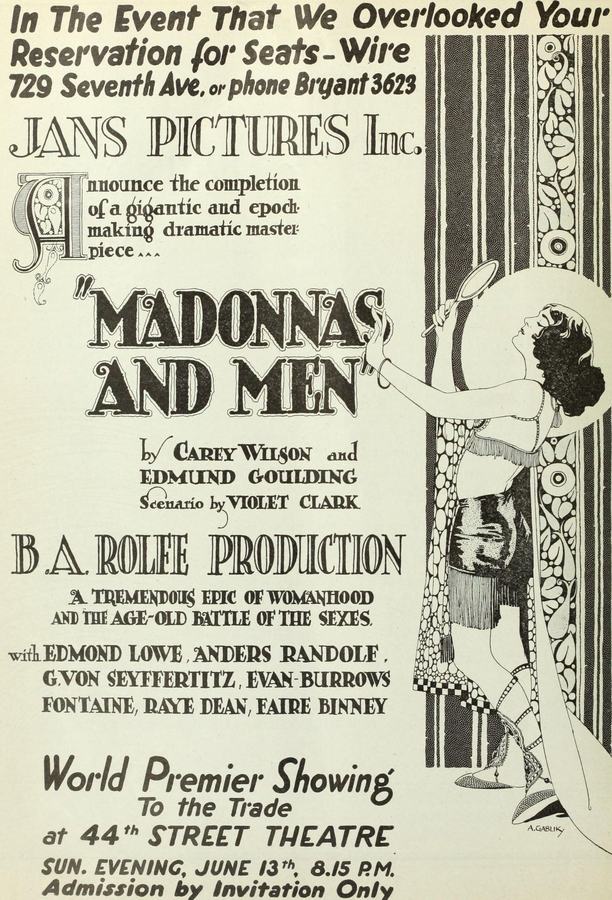
To approach Madonnas and Men is to engage with the sheer audacity of early 20th-century filmmaking, a period when the cinematic medium was grappling with its own potential for temporal fluidity and moral instruction. Directed with a sweeping sense of pageantry, this 1923 relic functions as a bridge between the historical spectacles of the previous decade and the burgeoning psychological dramas of the roaring twenties. It is a film that refuses to be confined by the singular constraints of its setting, opting instead for a narrative structure that is as ambitious as it is eccentric.
The film opens with a visceral immersion into the Roman Colosseum, a set piece that rivals the scale seen in The Colosseum in Films of that era. Here, Gustav von Seyffertitz portrays Emperor Turnerius with a sneering, reptilian malevolence that defines the 'decadent Roman' archetype. The atmosphere is thick with the smoke of incense and the anticipation of carnage. The visual language employed by the cinematographers highlights the stark contrast between the luminous, almost ethereal presence of the Christian martyrs and the shadowed, cavernous depths of the imperial box.
Edmund Lowe, playing Prince Gordian, provides a masterclass in silent film restraint. Unlike the broader histrionics often found in films like The Half-Breed, Lowe’s performance is anchored in a simmering internal conflict. He is the heir to a throne built on bones, yet his eyes betray a growing weariness with the spectacle of death. This internal friction becomes the engine of the plot when he is confronted with the plight of a Christian girl, played with a luminous vulnerability by Faire Binney.
The introduction of Grimaldo the magician is where the film pivots from a standard historical epic into the realm of the avant-garde. The magician is not merely a plot device but a metaphysical conduit. When he begins his tale of the future, the film undergoes a startling metamorphosis. The transition to 1920s New York is handled with a sophistication that predates many of the more famous 'time-slip' narratives in cinema. This segment serves as a precursor to the dual-identity themes explored in The Masquerader, though here the duality is historical rather than personal.
In the New York sequence, the film adopts a faster, more frantic editing rhythm. The roar of the lions is replaced by the roar of the subway and the clatter of the stock exchange. The parallel situation—a young man thwarting his father's corrupt machinations—is depicted with a gritty realism that contrasts sharply with the operatic tone of the Roman scenes. This juxtaposition suggests that while the costumes and technologies change, the fundamental struggle between power and morality remains a static human condition. It is a theme also touched upon in the social critiques of One of Many, where the individual is pitted against the crushing weight of societal expectation.
The screenplay, a collaborative effort between Edmund Goulding, Violet Clark, and Carey Wilson, is remarkably dense for a silent production. Goulding, who would later become a directorial titan in his own right, brings a certain rhythmic elegance to the intertitles. The dialogue—or what passes for it—is not merely functional; it is poetic, laden with the weight of destiny and the inevitability of change. The writing team managed to weave three distinct narrative threads into a cohesive whole, a feat that would be difficult even by modern standards.
Visually, the film utilizes lighting techniques that feel surprisingly modern. The use of low-key lighting in the prison cells of the Christians creates a sense of sacred intimacy, while the broad, flat lighting of the New York offices emphasizes the sterile, soulless nature of modern commerce. This visual storytelling is reminiscent of the atmospheric work in The Black Gate, where shadows are used to delineate moral boundaries. The costumes, too, deserve mention—from the heavy, ornate robes of the Roman court to the sharp, restrictive tailoring of the 1920s, every garment serves to illustrate the constraints placed upon the characters by their respective eras.
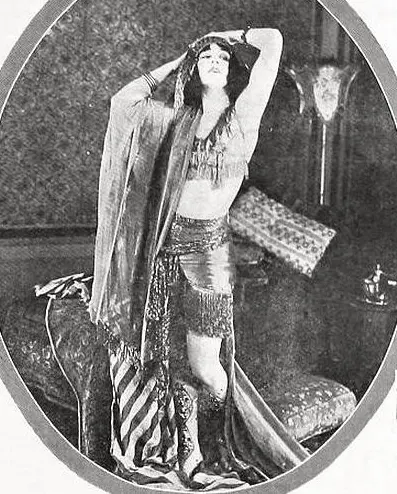
Evan Burroughs Fontaine as Nerissa provides a necessary foil to the male-dominated power structures of the film. Her performance is one of calculated poise, suggesting a character who has learned to navigate the treacherous waters of the imperial court through sheer force of will. In many ways, her role mirrors the sophisticated, often misunderstood female protagonists in films like Yvonne from Paris. She is a woman who understands that in Turnerius’s world, beauty is a currency that must be spent wisely.
Blanche Davenport and Anders Randolf round out the supporting cast, each bringing a level of gravitas that prevents the film from descending into melodrama. Randolf, in particular, has a presence that commands the frame, much like his work in The Poppy Girl's Husband. The ensemble works in harmony to create a world that feels lived-in and consequential. Even the smaller roles, such as the various senators and gladiators, are performed with a commitment that suggests a much larger world existing just outside the frame.
The climax of the film is a masterstroke of tension and catharsis. Gordian’s decision to leap into the arena is not merely an act of physical bravery; it is a spiritual revolution. The way the scene is shot—using wide angles to emphasize the isolation of the prince against the vast, blood-stained sand—is breathtaking. It is a moment of pure cinematic adrenaline that echoes the high-stakes drama found in An Even Break or the serialized thrills of The Adventures of Ruth.
The death of Emperor Turnerius is handled with a surprising level of psychological depth. It is not a sword stroke that kills him, but a "fit of rage"—the physical manifestation of his own obsolescence. As his world crumbles, the film effectively signals the end of an era. The coronation of Gordian is not just the rise of a new man, but the birth of a new moral order. This sense of historical inevitability is a common thread in silent epics, but rarely is it handled with such a unique, cross-temporal perspective.
While Madonnas and Men may lack the name recognition of *Ben-Hur* or *Intolerance*, it occupies a crucial space in the evolution of narrative cinema. It experiments with the idea of the 'universal story' in a way that feels both archaic and ahead of its time. When compared to the more straightforward narratives of Kennedy Square or the localized drama of Le trésor de Kériolet, this film stands out as a bold, if somewhat eccentric, outlier.
The film’s exploration of prophecy and fate also brings to mind the darker, more mysterious tones of Professor Nissens seltsamer Tod. There is a sense of cosmic justice at play here, a feeling that the characters are merely players in a much larger, divine drama. Even the lighter moments, which are few and far between, carry a weight of significance, much like the deceptive simplicity found in He Loved Her So or the breezy charm of Paz e Amor.
In conclusion, Madonnas and Men is a film that demands to be seen by anyone interested in the intersection of history, morality, and cinematic form. It is a work of high lexical diversity in its visual storytelling, using the past to comment on the present and the future to redeem the past. The performances are robust, the direction is inspired, and the central conceit—the magician’s tale—remains one of the most intriguing narrative gambits of the silent era. It is a film that captures the atavistic power of the arena and the cold, mechanical heartbeat of the city, proving that while the settings of our lives may change, the battle for the soul remains the same. Whether you are drawn to it for its historical spectacle or its philosophical inquiries, it remains a testament to a time when cinema was unafraid to reach for the stars, even while standing in the mud of the arena.
For those who have enjoyed the rugged landscapes of The Pale Pack Train, the urban sophistication of this film will provide a fascinating contrast. It is a cinematic odyssey that traverses time and space, leaving the viewer with much to ponder long after the final intertitle has faded into black.

IMDb 5.9
1927
Community
Log in to comment.