DbcultAccessing Vault...
Cult Review
Senior Film Conservator
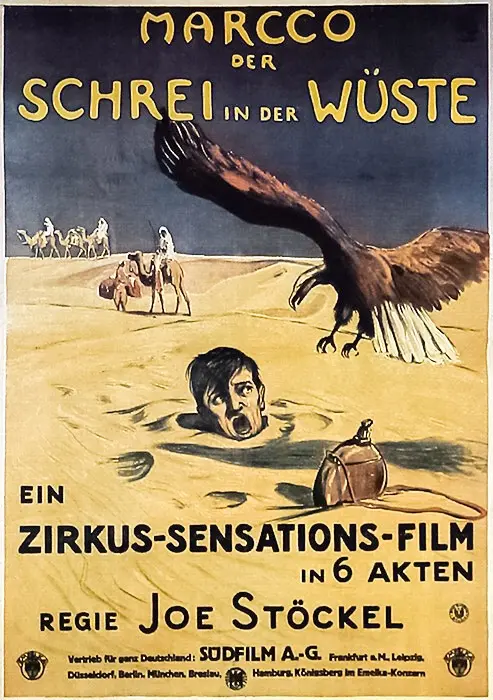
To witness Marco unter Gauklern und Bestien (1924) is to step into a flickering portal of Weimar-era anxieties, where the sawdust of the circus ring serves as a burial ground for innocence. This is not merely a film; it is a sensory excavation of the itinerant soul. In the mid-1920s, German cinema was pivoting from the jagged shadows of pure Expressionism toward a more grounded, yet no less harrowing, realism. Here, the 'Bestien' of the title are not merely the mangy lions pacing their cramped iron enclosures, but the primal urges that drive the human cast toward their inevitable collisions.
Joe Stöckel, an actor whose legacy is often unfairly tethered to his later, more rustic comedic turns, delivers a performance of startling gravitas. As Marco, he embodies a specific type of proletarian hero—muscular yet haunted, a man whose physical strength is constantly undermined by the machinations of a world he cannot fully comprehend. His physicality in this film reminds one of the rugged desperation seen in The Night Hawk, where the protagonist is similarly pitted against a landscape that demands a ruthless shedding of morality.
Stöckel’s Marco is a man caught in the gears of a traveling machine. The way he interacts with the animals—those 'beasts' that the title so provocatively highlights—suggests a kinship born of shared captivity. There is a sequence, captured in a series of tight, almost suffocating medium shots, where Marco stares into the eyes of a caged leopard. In that moment, the film transcends its plot, becoming a meditation on the nature of freedom. It echoes the thematic weight of The Heart of Youth, though it swaps that film’s sentimentality for a jagged, atavistic edge.
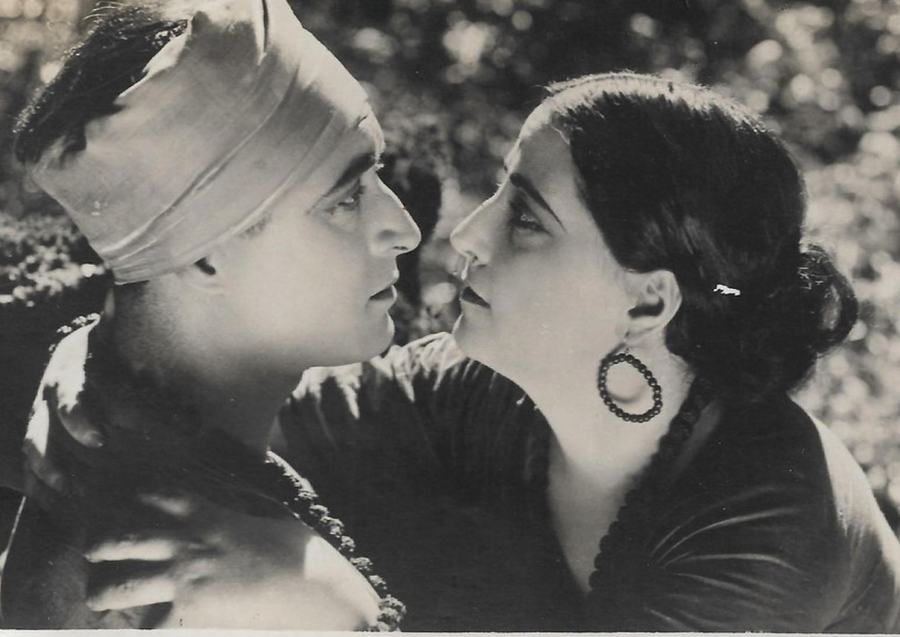
Contrastingly, Lotte Lorring serves as the film’s emotional anchor. Her presence is ethereal, a flicker of light in the dim, smoke-filled tents of the Gaukler. Lorring’s performance style is remarkably modern for 1924; she eschews the grand pantomime of her contemporaries for a more internalized, subtle expression of grief and longing. When she moves through the fairground, she looks less like a performer and more like a ghost haunting her own life, a motif that brings to mind the spiritual gravity of The White Sister (1923).
Her chemistry with Stöckel is built on a foundation of mutual silence. In the world of Marco unter Gauklern und Bestien, words are cheap—barkers shout them at indifferent crowds, and charlatans use them to weave webs of deceit. The true narrative is told through the eyes. The cinematic language here is one of glances and gestures, much like the wordless tension found in Kärlek och hypnotism, where the power dynamics are shifted not through dialogue, but through the sheer force of will.
The set design of the film deserves a scholarly analysis of its own. The circus is not presented as a place of wonder, but as a site of labor and peril. The tents are patched and grimy; the wagons are rickety structures that seem to groan under the weight of their own history. This gritty aesthetic aligns the film more with the realism of The Reed Case than with the polished spectacles of Hollywood. The camera wanders through the backstage areas with a voyeuristic curiosity, catching glimpses of performers in states of undress or exhaustion, stripping away the glamour of the 'Gaukler' to reveal the 'Bestie' of poverty underneath.
This focus on the mechanical and the mundane provides a stark contrast to the high-stakes adventure sequences. When the film does lean into action—particularly during a harrowing escape attempt—it possesses a kinetic energy that rivals the serial-like thrills of Die Jagd nach dem Tode - 4. Teil: Die Goldmine von Sar-Khin. Yet, even in its most frantic moments, the film never loses its philosophical footing. It remains a study of characters marooned in their own circumstances, much like the protagonists of Marooned Hearts.
To understand the significance of Marco unter Gauklern und Bestien, one must look at how it handles the concept of the 'outsider.' While La gitana blanca explores the exoticism of the Romani lifestyle with a certain romantic detachment, Stöckel’s film is far more cynical. It suggests that there is no romance in the nomadic life, only a different set of chains. The performers are not free spirits; they are prisoners of the public’s demand for sensation.
In terms of pacing, the film exhibits a sophisticated understanding of tension. It builds slowly, layering small humiliations and minor betrayals until the pressure becomes unbearable. This rhythmic construction is reminiscent of The Eleventh Hour, where the ticking clock is not a literal device but a psychological one. The viewer feels the impending doom long before it arrives on screen. This is a far cry from the more straightforward narrative beats of The Spitfire or the lighthearted gallop of The High Horse.
The cinematography utilizes a chiaroscuro palette that turns the circus into a landscape of sharp contrasts. The use of natural light in the outdoor scenes—particularly those involving the movement of the caravan—gives the film a documentary-like quality that was rare for 1924. It captures the dust, the mud, and the sweat with a fidelity that reminds one of the ruggedness in Fishing for Tarpon, albeit within a narrative framework.
There is a specific sequence involving a storm that stands as a masterclass in silent film editing. The cross-cutting between the panicked animals, the collapsing tent poles, and Marco’s desperate attempts to save Lorring’s character creates a sense of chaos that is both visceral and metaphorically resonant. It is the moment where the 'Gaukler' and 'Bestien' are truly leveled by the forces of nature, a theme of cosmic indifference that also permeates Byl první máj.
At its core, the film asks a question that was deeply relevant to a post-war Germany: what happens to the soul when it is treated as a commodity? The 'Gaukler' sell their skills, their bodies, and their dignity for a pittance, while the 'Bestien' are exploited for their ferocity. The film posits that the true tragedy is not the loss of life, but the loss of the capacity for empathy. This moral inquiry is as profound as that found in Pieces of Silver: A Story of Hearts and Souls, though it is wrapped in a much harsher, more unforgiving package.
The resolution of Marco’s journey is neither happy nor entirely tragic; it is a stalemate. He survives, but he is changed, his eyes reflecting the same weary resignation as the beasts he once tended. It is a haunting conclusion that refuses to provide the easy catharsis of Up or Down?. Instead, it leaves the audience with the lingering image of the road—a path that leads nowhere and everywhere, traveled by those who have seen too much to ever truly return home.
In the pantheon of silent cinema, Marco unter Gauklern und Bestien remains an underrated gem, a film that captures the grit and the gloom of the human condition with an uncompromising eye. It is a essential viewing for those who wish to understand the psychological landscape of the 1920s, and a powerful reminder that the most dangerous beasts are often the ones we carry within ourselves.
IMDb —
1923
Community
Log in to comment.