DbcultAccessing Vault...
Cult Review
Senior Film Conservator
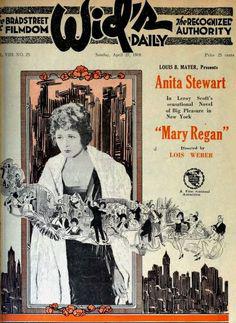
Step back in time with me, dear reader, to an era where storytelling unfolded without the spoken word, where emotions were writ large on the faces of stars, and moral dilemmas played out against a backdrop of societal upheaval. Today, we're unearthing a compelling artifact from the silent screen's golden age: Mary Regan. Released in 1917, this film, penned by the formidable Lois Weber and Leroy Scott, and brought to life by the luminous Anita Stewart, offers a fascinating glimpse into the human heart's complexities when confronted with the specter of a tarnished past.
The narrative of Mary Regan is, at its core, a profound exploration of inherited guilt and the relentless pursuit of redemption. Our protagonist, Mary, finds herself in a predicament that feels both tragically romantic and deeply unjust. Born to an heiress who, with a heart full of misguided hope, married a charismatic thief, Mary's life is shadowed by her father's criminal legacy. His subsequent imprisonment and her mother's untimely death leave her with a burden that transcends mere memory; it's a living, breathing obstacle to her own happiness. This is not merely a plot device; it's a thematic anchor, reminiscent of the societal pressures and moral quandaries often explored in contemporary dramas like The Woman Thou Gavest Me, where characters wrestle with reputation and destiny.
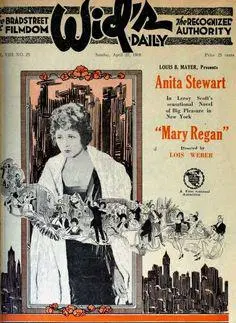
Mary's initial refusal to marry New York District Attorney Robert Clifford, portrayed with earnest conviction by J. Barney Sherry, stems from a deeply ingrained fear. She believes her family's criminal taint would inevitably derail his promising career. This act of self-sacrifice, while noble, is also a tragic miscalculation, setting in motion a chain of events that plunges her deeper into the very world she desperately seeks to escape. It's a classic cinematic trope, but here, under the careful hand of writers Lois Weber and Leroy Scott, it feels less like a cliché and more like a poignant character study. Weber, known for her progressive themes and strong female leads, imbues Mary with an inner strength that belies her seemingly passive choices.
Her refusal to cooperate with her father's former associates, the menacing Jim Bradley (Brinsley Shaw) and Peter Loveman (Larry Steers), further isolates her. These characters, embodying the insidious underbelly of urban life, serve as a stark contrast to Mary's inherent goodness. Their presence ensures that the shadow of her father's past is never truly dispelled, a constant threat lurking at the periphery of her existence. This dynamic sets up a tension that is palpable, echoing the struggles of characters in films like The Burglar and the Lady, where criminal elements constantly loom large.
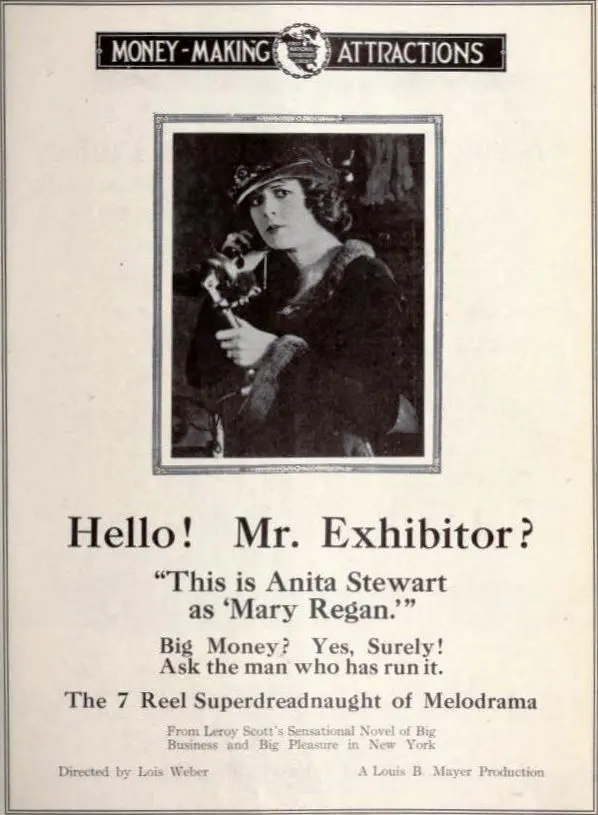
Mary's retreat to the mountains, seeking solace and anonymity, proves to be a temporary reprieve. The machinations of Bradley and Loveman are far-reaching. They ensnare Jack Morton (Carl Miller), a dissolute youth from a wealthy family, through the seductive charms of Nina Cordova (Hedda Nova), an adventuress whose motives are as murky as her past. This subplot introduces a layer of social critique, highlighting the vulnerability of the privileged class to moral decay and manipulation. Peter Loveman, a master manipulator, wins the trust of Morton's father, ostensibly to 'save' Jack from Nina's clutches, but in reality, to orchestrate a meeting with Mary, hoping to exploit her family ties for their nefarious ends.
The ensuing romance between Jack and Mary is fraught with dramatic irony. Jack, drawn to Mary's purity and strength, falls genuinely in love. Mary, ever the idealist, marries him with the hope of reforming him, believing she can pull him back from the precipice of self-destruction. This noble intention, however, is tinged with a familiar tragic echo: her mother's own ill-fated attempt to reform her criminal father. It speaks to a cyclical pattern, a generational burden that Mary valiantly attempts to break. Anita Stewart's portrayal of Mary here is particularly nuanced, conveying both her unwavering hope and the subtle undercurrent of desperation that drives her choices. We see her internal struggle through her expressive eyes and gestures, a testament to the power of silent acting.
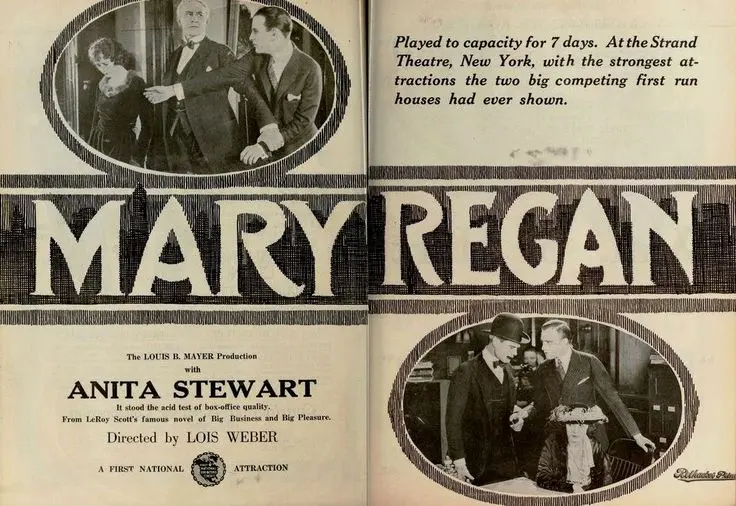
The fragile peace Mary constructs is shattered when Jack attempts to conceal his marriage from his father. This act of deception provides the perfect leverage for the gang, who attempt to blackmail Morton Sr. The stakes are raised, and Mary is once again forced to confront the criminal underworld she so desperately tried to escape. Her innate moral compass, however, remains true. In a pivotal moment, she contacts Robert Clifford, the man she once rejected to protect, now her only hope for justice. This reversal of roles, where the protector becomes the protected, adds a compelling layer to their relationship, highlighting the enduring nature of Robert's affection and Mary's quiet strength.
The climax is a whirlwind of action and consequence. Jack Morton, caught in the crossfire of his own poor choices and the gang's ruthlessness, is killed in a violent confrontation. His death, while tragic, serves as a catalyst, finally leading to the arrest of Bradley, Loveman, and their cohorts. It's a stark reminder of the brutal realities of the criminal world depicted, a theme that resonates across various silent films exploring urban crime, such as Black and Tan Mix Up, albeit with different tones. The swift justice meted out provides a satisfying, if melancholic, resolution to the immediate threat.
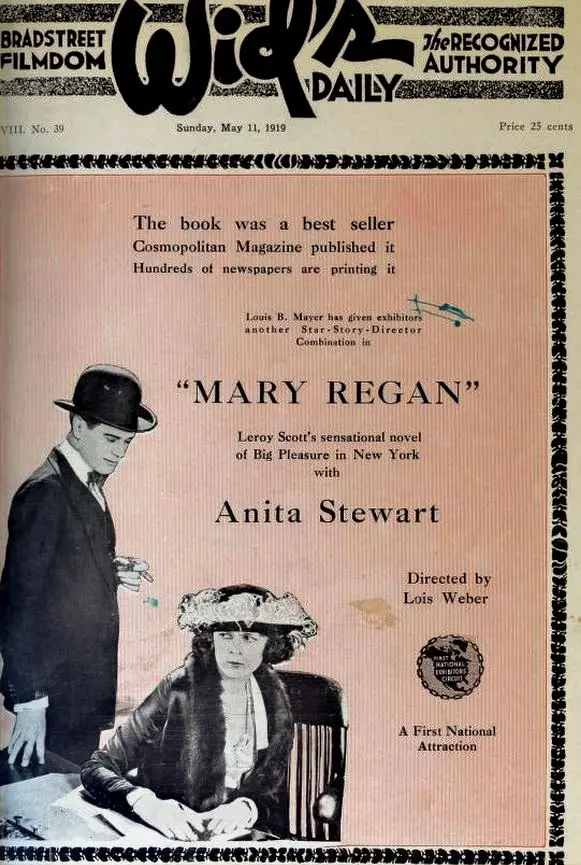
No discussion of Mary Regan would be complete without acknowledging the captivating performance of Anita Stewart. A true star of the silent era, Stewart possessed a unique ability to convey deep emotion with subtlety and grace. Her Mary Regan is not a damsel in distress, but a woman of profound conviction and quiet resilience. She navigates the film's melodramatic twists with an authenticity that grounds the story. Whether it's the anguish in her eyes as she rejects Robert, the determined hope in her attempt to reform Jack, or the steely resolve she displays when confronting the gang, Stewart's performance is a masterclass in silent film acting. Her expressive face and nuanced body language transcend the lack of dialogue, allowing the audience to feel every beat of Mary's tumultuous journey. This ability to command the screen without uttering a word sets her apart, a quality shared by other leading ladies of the era in films like A Coney Island Princess or Wives of Men, where female protagonists often carried the emotional weight of complex narratives.
The film's strong narrative backbone is undoubtedly a testament to the talent of its writers, particularly Lois Weber. As one of the most significant female directors and screenwriters of her time, Weber consistently championed stories with social relevance and complex female characters. While she isn't credited as director for Mary Regan, her writing, alongside Leroy Scott, clearly shapes its thematic depth. The exploration of moral choice, the consequences of inherited pasts, and the agency of women in difficult circumstances are hallmarks of her work. Her influence ensured that Mary Regan was more than just a crime drama; it was a psychological study wrapped in a thrilling plot. This kind of thoughtful scripting elevates the material beyond mere melodrama, a quality that resonates in some of the more impactful silent dramas of the period, such as A Wife's Sacrifice, where character motivations are meticulously crafted.
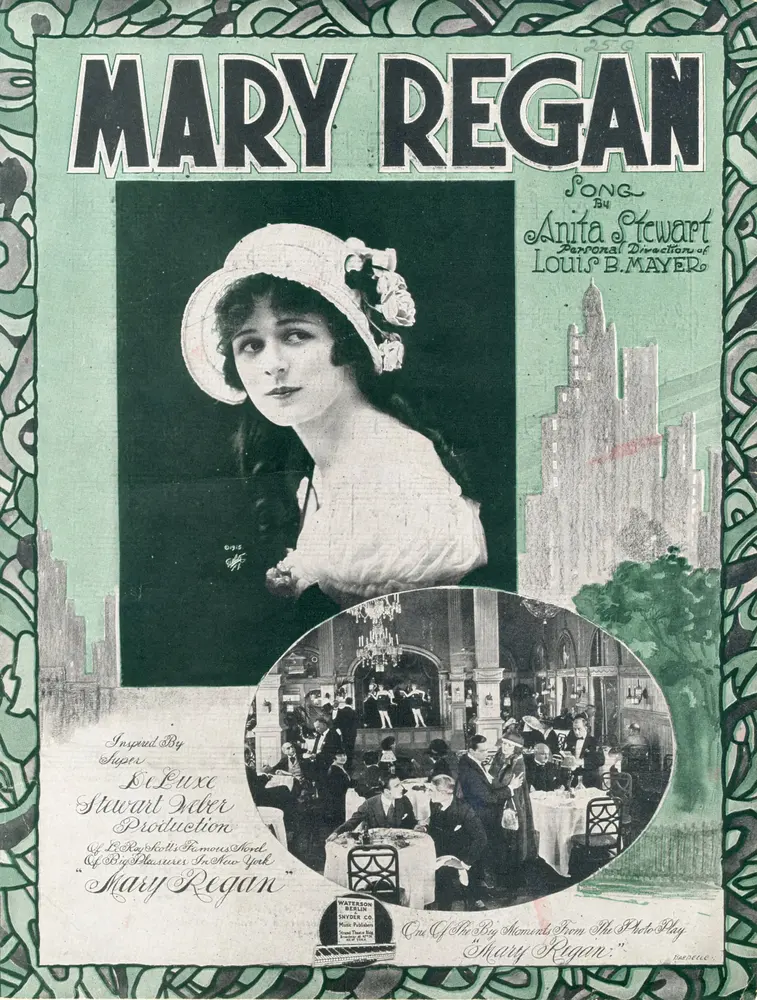
The supporting cast also deserves commendation for their contributions to the film's rich tapestry. J. Barney Sherry as Robert Clifford provides a steadfast moral anchor, his quiet strength a foil to Mary's internal turmoil. Larry Steers and Brinsley Shaw, as the nefarious gang members Peter Loveman and Jim Bradley, effectively embody the sinister forces at play, their performances adding a crucial layer of menace. George Hernandez, Frank Mayo, and Syn De Conde, though perhaps with less screen time, contribute to the intricate web of relationships and conflicts that drive the plot forward. Even Hedda Nova, as the adventuress Nina Cordova, plays her part in setting the stage for Jack Morton's downfall, a character type often seen in films dealing with moral corruption, like those found in Beatrice Fairfax Episode 11: The Wages of Sin.
In the aftermath of the violence and arrests, the film reaches its poignant conclusion. Robert Clifford, ever patient and devoted, finally convinces Mary to set aside her fears and accept his love. This resolution isn't merely a convenient happy ending; it's a profound statement on the power of love to transcend inherited burdens and societal judgments. It suggests that true happiness lies not in self-imposed exile or misguided sacrifice, but in embracing genuine connection and allowing oneself to be loved. Mary's journey is one from self-denial to self-acceptance, a testament to the idea that one's past does not entirely define one's future.
The visual language of Mary Regan, typical of the era, relies heavily on strong compositions, expressive intertitles, and the magnetic presence of its stars. The contrast between the dark, shadowy world of the city's criminals and the serene, natural beauty of the mountains visually reinforces Mary's internal struggle between her past and her yearning for a pure future. The dramatic lighting, the subtle shifts in camera angles, and the meticulous staging of scenes all contribute to a rich cinematic experience, even without the benefit of sound. This visual storytelling prowess is a hallmark of the silent era, seen in other powerful films such as Die Insel der Seligen, where spectacle and symbolism conveyed meaning.
Ultimately, Mary Regan stands as a compelling example of early cinema's capacity for complex character development and thematic depth. It's a tale that speaks to universal human experiences: the desire for belonging, the struggle against fate, and the redemptive power of love. Through the masterful performances, particularly that of Anita Stewart, and the thoughtful narrative crafted by Lois Weber and Leroy Scott, the film transcends its historical context to deliver a story that resonates even today. It reminds us that sometimes, the greatest act of courage is simply to allow oneself to be happy, to shed the burdens of the past, and to embrace a future built on genuine affection and trust. For those keen to explore the rich tapestry of silent film, Mary Regan is an essential viewing, a testament to the enduring power of visual storytelling and the timeless appeal of a well-told love story against all odds.
IMDb 6.6
1917
Community
Log in to comment.