DbcultAccessing Vault...
Cult Review
Senior Film Conservator
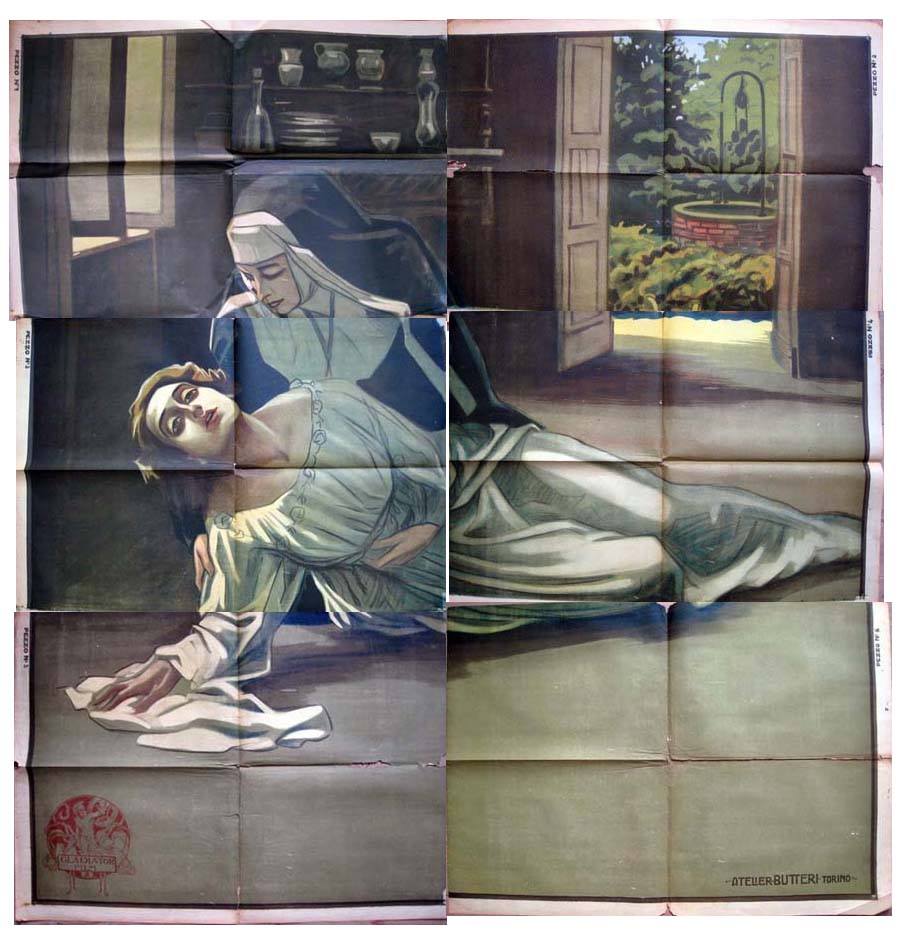
In the annals of early cinematic art, where nascent storytelling wrestled with the limitations and boundless potential of the silent screen, Roberto Bracco's "Maternità" emerges as a profound, if often overlooked, testament to the enduring power of human emotion. This Italian dramatic masterpiece, a veritable chiaroscuro of moral quandaries and unyielding maternal devotion, navigates the treacherous waters of societal condemnation and personal sacrifice with an intensity that transcends its lack of spoken dialogue. It's a film that speaks not through words, but through the eloquent gestures, the piercing gazes, and the very posture of its remarkable cast, led by the incomparable Italia Almirante-Manzini.
From its opening frames, "Maternità" plunges the viewer into a world where reputation is paramount and the slightest deviation from prescribed norms can lead to utter ruin. The narrative, a meticulously crafted tragedy, introduces us to Maria, a character portrayed with breathtaking vulnerability and strength by Almirante-Manzini. Her initial innocence, a delicate bloom, is swiftly imperiled by the magnetic, yet ultimately destructive, allure of Count Roberto, a role inhabited with a compelling blend of charm and callousness by Guido Trento. Their clandestine affair, a dangerous waltz on the precipice of scandal, is depicted with a nuanced understanding of burgeoning desire and its perilous consequences. The film, much like The Woman God Forgot, explores the moral complexities of such illicit relationships against a backdrop of rigid societal expectations.
The revelation of Maria's pregnancy forms the narrative's central pivot, a moment of crushing despair that simultaneously ignites an indomitable spirit within her. Roberto's swift and ignominious retreat, a betrayal that echoes through the film with visceral impact, leaves Maria to confront the full, unsparing force of an unforgiving society. Here, the film's silent artistry truly shines, as Almirante-Manzini's expressive performance conveys the maelstrom of emotions—shame, fear, defiance, and a burgeoning, fierce protectiveness—with an authenticity that few contemporaries could rival. The close-ups, a staple of early cinema, are utilized here to exquisite effect, allowing the audience to witness the subtle tremors of a soul in anguish and resolve.
The director's choice to depict Maria's solitary journey through childbirth, a scene rendered with stark realism and profound pathos, underscores the immense burden she carries. It is a powerful affirmation of life against overwhelming odds, a testament to the biological imperative that transcends social judgment. This segment of the film resonates deeply, perhaps even more so than similar themes explored in Outcast, due to its raw, unadorned portrayal of a woman's strength in the face of absolute isolation. The subsequent, agonizing decision to relinquish her child, Paolo, to an orphanage, under the guise of an anonymous benefactor, is perhaps the film's most potent stroke of dramatic genius. It's an act of profound, selfless love, a mother's sacrifice of her own happiness for the perceived betterment of her child, a theme that reverberates with timeless universality.
The passage of years is elegantly conveyed through subtle shifts in character portrayal and setting. Maria, now a figure of quiet dignity and respect within her community, carries the weight of her secret with a melancholic grace. Italia Almirante-Manzini’s performance here is a masterclass in restrained emotion, her eyes frequently betraying a depth of sorrow that words could never articulate. Her interactions, particularly with the younger generation, are imbued with a wistful longing, a silent acknowledgment of the life she chose to forgo. The film cleverly weaves in the growing presence of Paolo, portrayed with youthful vigor by Giuseppe Ciabattini, unknowingly circling the orbit of his true mother. The narrative tension builds with excruciating slowness, as the audience becomes acutely aware of the impending collision of past and present, a dramatic inevitability that feels both fated and tragic.
The return of Count Roberto, a catalyst for the film's climactic unraveling, is handled with a sense of impending dread. Bonaventura Ibáñez, alongside Giuseppe Almirante-Manzini, contribute significantly to the film’s rich tapestry of supporting characters, each playing a crucial role in the unfolding drama, their reactions often mirroring the societal attitudes of the time. Roberto's reappearance, a ghostly echo of Maria's youthful folly, threatens to shatter the fragile peace she has painstakingly constructed. The film excels in portraying the societal hypocrisy of the era, where a man's transgressions were often overlooked while a woman bore the full brunt of moral judgment. This stark contrast is a recurring motif, adding layers of social commentary to the personal tragedy.
The film's denouement is a masterstroke of silent melodrama. The revelation of Maria's secret, a moment of profound emotional catharsis, is orchestrated with exceptional skill. The shock, disbelief, and eventual understanding on the faces of the characters, particularly Paolo, are rendered with an intensity that transcends the silent medium. Almirante-Manzini's portrayal of Maria during this pivotal sequence is nothing short of transcendent, her vulnerability giving way to a fierce, protective love that knows no bounds. The film argues, eloquently and without a single spoken word, that the bond between a mother and child is an immutable force, capable of overcoming even the most entrenched societal prejudices.
Roberto Bracco's direction ensures that every scene, every gesture, contributes to the overarching emotional arc. The use of visual metaphors, common in films like The Terror, but here applied to internal psychological states rather than external horror, is particularly effective. The film's aesthetic, while simple by today's standards, is imbued with a raw, expressive power. The chiaroscuro lighting, the carefully composed frames, and the dynamic editing all conspire to create a viewing experience that is both visually engaging and emotionally devastating. The performances, particularly from Italia Almirante-Manzini, are a testament to the era's unique acting styles, relying on exaggerated yet deeply felt expressions to convey complex inner lives.
"Maternità" stands as a powerful example of early Italian cinema's capacity for profound emotional storytelling. While perhaps less widely known today than some of its contemporary American or German counterparts, its thematic depth and the sheer force of its lead performance cement its place as a significant work. The film's exploration of maternal sacrifice, societal judgment, and the enduring power of love remains as relevant today as it was a century ago. It challenges viewers to consider the arbitrary nature of social constructs and the often-unseen strength required to defy them.
The film's impact lies not just in its dramatic narrative but in its subtle critiques of patriarchal society. Maria's journey from innocent girl to ostracized mother to respected, yet secretly suffering, woman is a powerful commentary on the limited choices available to women in that era. Her strength is not loud or defiant in a revolutionary sense, but rather a quiet, internal fortitude that allows her to endure and protect her offspring at all costs. This nuanced portrayal elevates "Maternità" beyond simple melodrama, imbuing it with a timeless quality that resonates across generations.
Comparing it to other films of its time, "Maternità" holds its own with remarkable thematic consistency and emotional intensity. While The Whip might offer more overt action, and My Official Wife more espionage, "Maternità" delves deep into the human psyche, examining the intricate dance between duty and desire, shame and love. Its focus on the domestic and personal sphere, while seemingly smaller in scope, yields a much more profound and lasting emotional impact. It's a film that lingers in the mind, prompting reflection on the nature of sacrifice and the unbreakability of certain bonds.
The performances, particularly from Italia Almirante-Manzini, are a masterclass in silent film acting. Her ability to convey complex emotional states through facial expressions and body language is simply mesmerizing. One can see the lineage of great dramatic actresses in her work, a precursor to later stars who would dominate the silver screen. Giuseppe Ciabattini, as the grown Paolo, brings a youthful exuberance that contrasts beautifully with Maria's subdued demeanor, highlighting the generational gap and the innocence of the son unaware of his mother's profound sacrifice. Even the more villainous portrayal by Guido Trento is layered enough to avoid caricature, suggesting a man trapped by his own weakness and societal expectations.
Roberto Bracco, as the writer, crafted a narrative that is both compelling and morally complex. The story avoids simple black-and-white morality, instead presenting characters caught in the web of circumstance and societal pressure. The film doesn't preach, but rather allows the audience to witness the consequences of choices and the resilience of the human spirit. This nuanced approach to storytelling is a hallmark of truly great cinema, regardless of its era. It's a testament to the power of a well-conceived plot and deeply human characters.
While the technical aspects of silent films might seem rudimentary to modern viewers, it's crucial to appreciate the innovative techniques employed in "Maternità." The use of intertitles, while necessary, never feels intrusive, seamlessly guiding the narrative forward. The cinematography, though lacking the sophisticated camera movements of later eras, is often strikingly beautiful, capturing the emotional essence of each scene with elegant simplicity. The film's pacing, deliberate and measured, allows the emotional weight of each moment to fully sink in, a stark contrast to the rapid-fire editing prevalent in much of contemporary cinema.
Ultimately, "Maternità" is more than just a historical artifact; it is a vibrant, living piece of cinematic art that continues to speak to universal human experiences. It reminds us of the profound sacrifices made in the name of love, the often-cruel judgment of society, and the enduring strength found within the human heart. For anyone with an interest in the origins of dramatic storytelling on screen, or simply a desire to witness a powerful narrative brought to life by exceptional performances, "Maternità" is an essential viewing experience. Its themes of love, loss, and redemption are handled with a sensitivity and grandeur that transcend the limitations of its silent medium, solidifying its place as a poignant and powerful work of art that deserves renewed appreciation.
The film's exploration of societal pressure and individual agency finds echoes in various other silent era dramas, yet "Maternità" distinguishes itself through its specific focus on maternal sacrifice. Unlike the broader historical sweep of Potop or the more direct social commentary of What Money Can't Buy, Bracco's work zeroes in on the personal, intimate tragedy of a woman caught between love and societal dictates. Even in comparison to the romantic struggles in The Keys to Happiness, "Maternità" elevates its emotional stakes to a level of almost mythic proportion, making Maria's plight a universal symbol of selfless devotion. This film, truly, is a poignant historical document of human endurance.
IMDb 4.8
1919
Community
Log in to comment.