Summary
The De Havens—petite-bourgeois dreamers marooned in a pastel purgatory of picket fences and penny-pinching—covet a motorcar the way penitents yearn for beatitude. Their sacrament: a fistful of flimsy tickets spat from the till of Jones’s cash-and-carry, each one a paper Eucharist promising steel wings. In the parlor they rehearse velocity, twisting an imaginary wheel while floorboards creak like old confessionals; the fantasy sputters against the wallpaper’s faded roses. When the grocer, half-messenger half-trickster, whispers his rigged benediction, the couple sprint headlong into cargo-cult consumerism: a mail-order garage arrives in pine-scented crates, a flat-pack tabernacle for a god that never comes. Neighbors-turned-rival-apostles wrestle over Allen keys and ill-translated diagrams; the sky watches, impassive. Mrs. De Haven, unshackled by male bluster, completes the skeletal shed alone, her hammer falling like a judge’s gavel. Jones absconds, the draw dissolving into rumor, and the suburban cosmos tilts off its axis. Salvation arrives through mercantile jujitsu: surplus cans become currency, the garage mutates into a pop-up bazaar, and the cheated become cheaters in a giddy inversion. Profit bankrolls a jalopy rental; asphalt turns liquid, corners into whirlpools, destiny into slapstick. Confetti snows from a collision with a parade float, and amid the chromatic chaos the couple discover kinesis—imperfect, ludicrous, theirs. They purchase a wheezing flivver, kiss through dented fenders, and barrel past the horizon, leaving the suburb to its stasis.
Synopsis
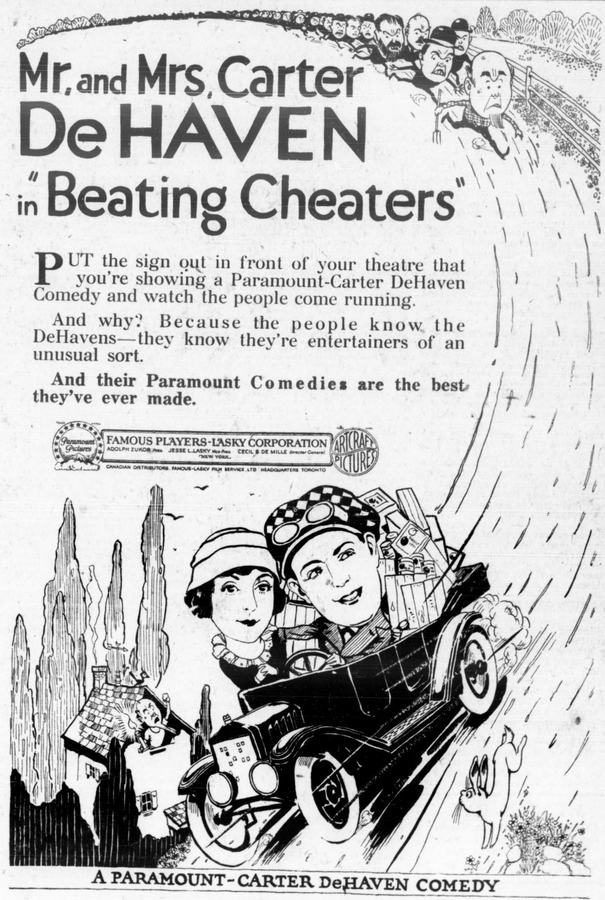
The De Havens, who live in a suburban town, are anxious to own an automobile. So when Jones, who runs a cash grocery, announces he will give away an automobile, to the lucky holder of a ticket representing a dollar's purchase of groceries, they became heavy buyers, and, in time, accumulate a large bunch of tickets. In anticipation of winning the automobile, the De Havens practice in their parlor the running of a motor car, but this proves eminently unsatisfactory. One day, De Haven overhears Jones tell his clerk that as the De Havens are good customers, he proposes to have them win the automobile. De Haven immediately buys a portable garage and he and his wife have an exciting time putting the parts together. A neighbor offers to help them and after a series of accidents, De Haven and the neighbor quarrel. While they are disputing, Mrs. De Haven completes the garage herself. On the day of the proposed drawing, Jones closes his store and leaves for parts unknown. The De Havens are heart broken, but it occurs to De Haven to sell his surplus groceries and beat the cheaters. He converts the garage into a store and sells off his groceries at a handsome profit. He then rents an automobile and starts down the road. The novelty nearly proves too much for De Haven who describes circles at street corners and collides with a confetti vehicle with unusual results. After many novel experiences, the machine is brought under control and the De Havens, after buying a flivver, kiss each other in glee.
Review Excerpt
"
There is a moment, early in Beating Cheaters, when Carter De Haven’s face—thin, fox-like, flickering between hope and suspicion—fills the frame like a cracked mirror aimed at every audience member who ever trusted a scratch-off ticket. The year is 1926, Wall Street is still tipsy but not yet vomiting over the curb, and the automobile sits in the American imagination like a chromium grail. The film, brisk as a Charleston and twice as jittery, skewers the national itch to possess speed, status, a..."