DbcultAccessing Vault...
5.4/10
Senior Film Conservator
A definitive 5.4/10 rating for a film that redefined the boundaries of cult cinema. Mice and Men remains a cornerstone of transgressive art.
Stepping back into the cinematic past, one encounters films that, despite their age, resonate with an almost startling contemporaneity. "Mice and Men," a 1916 production, is precisely such a work, a quiet meditation on the intricate dance between creation and surrender, control and autonomy. It’s a narrative that, at its heart, grapples with the very essence of human connection and the often-unforeseen consequences of attempting to sculpt another's destiny. The film, adapted from a play, delves into a psychological territory that feels remarkably sophisticated for its era, offering a nuanced portrayal of a man's grand, yet ultimately flawed, design.
The central figure, Mark Embury, brought to life with a compelling blend of paternal affection and proprietary ambition by William McKey, embarks on a truly audacious social experiment. His goal: to forge the perfect wife. Not through courtship or traditional means, but through an almost alchemical process of adoption and meticulous tutelage. Embury's vision isn't merely about finding a partner; it's about engineering one, shaping an innocent, pliable mind into the embodiment of his ideal companion. This premise alone sets "Mice and Men" apart, elevating it beyond a simple romance into a fascinating character study of a man whose love is inextricably entwined with a desire for absolute control. McKey's performance is a masterclass in silent film acting, conveying Embury's complex motivations — his deep-seated loneliness, his intellectual pride, and his profound, if misguided, affection — through subtle shifts in posture, gaze, and gestural language. He embodies the Pygmalion archetype, but with a twist that makes him far more tragic than triumphant.
The object of his transformative zeal is Peggy, portrayed with an exquisite blend of youthful innocence and burgeoning self-awareness by Helen Dahl. Dahl’s performance is nothing short of revelatory, especially considering the constraints of silent film acting. She conveys Peggy's evolution from a naive orphan, grateful for Embury's patronage, to a woman discovering her own heart and desires, with a subtlety that speaks volumes without a single spoken word. The early scenes, depicting Embury's "work" – his patient instruction, his careful cultivation of her manners, intellect, and character – are both charming and disquieting. We witness the success of his project unfold, a seemingly flawless creation emerging from his dedicated efforts. Peggy becomes everything he envisioned: intelligent, graceful, compassionate, and perfectly attuned to his world. Her transformation isn't just external; Dahl skillfully portrays the awakening of an inner life, a genuine spirit that Embury, for all his efforts, can't entirely dictate.
However, the very perfection Embury strives for becomes the catalyst for his ultimate dilemma. A truly perfect being, the film subtly argues, is one endowed with genuine agency, capable of independent thought and, crucially, independent affection. It’s here that the narrative takes its poignant turn. Peggy, now a fully realized woman, capable of deep emotion and connection, inevitably falls in love. But her heart, in a cruel twist of fate for Embury, is captured not by her creator, but by another man. This pivotal development forces Embury to confront the profound paradox of his success: he has indeed created the perfect wife, but her perfection lies precisely in her capacity for autonomous love, a love that she bestows upon someone else. This dramatic irony is the film's beating heart, challenging the patriarchal assumptions of its era regarding female roles and desires.
The emotional weight of this realization is carried beautifully by McKey, whose portrayal of Embury's internal struggle is masterful. We see his possessiveness warring with his genuine affection, his desire to claim his creation battling against the recognition of her inherent right to choose. It’s a testament to the film’s writing, credited to Madeleine Lucette Ryley and Hugh Ford, that Embury is never reduced to a villain. Instead, he emerges as a tragic figure, a man undone by the very brilliance of his own design. His journey towards acceptance, towards relinquishing his claim and finding satisfaction in the knowledge that he did, in fact, create the perfect woman, albeit for another, is the film’s emotional core. This theme of benevolent surrender, of finding contentment in another's happiness even when it means personal sacrifice, resonates deeply, offering a timeless meditation on the nature of true love.
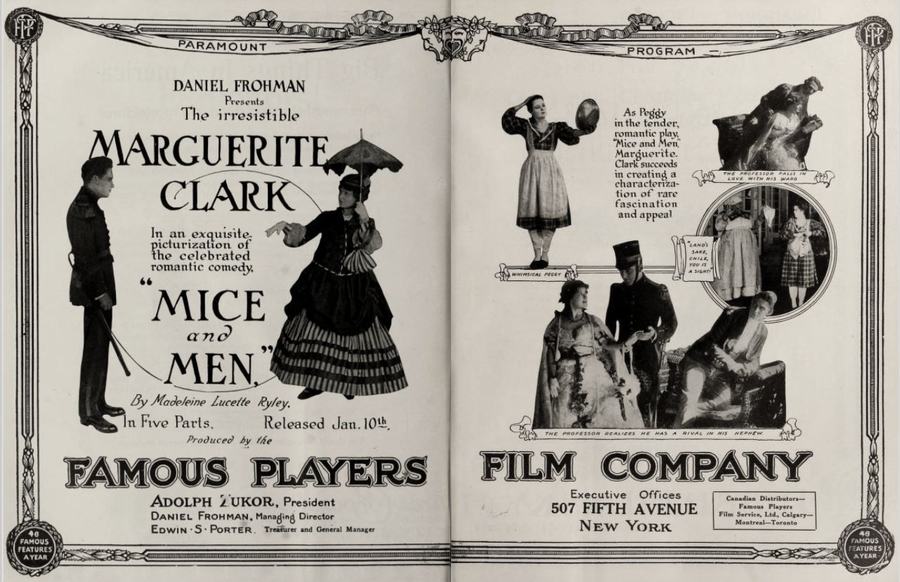
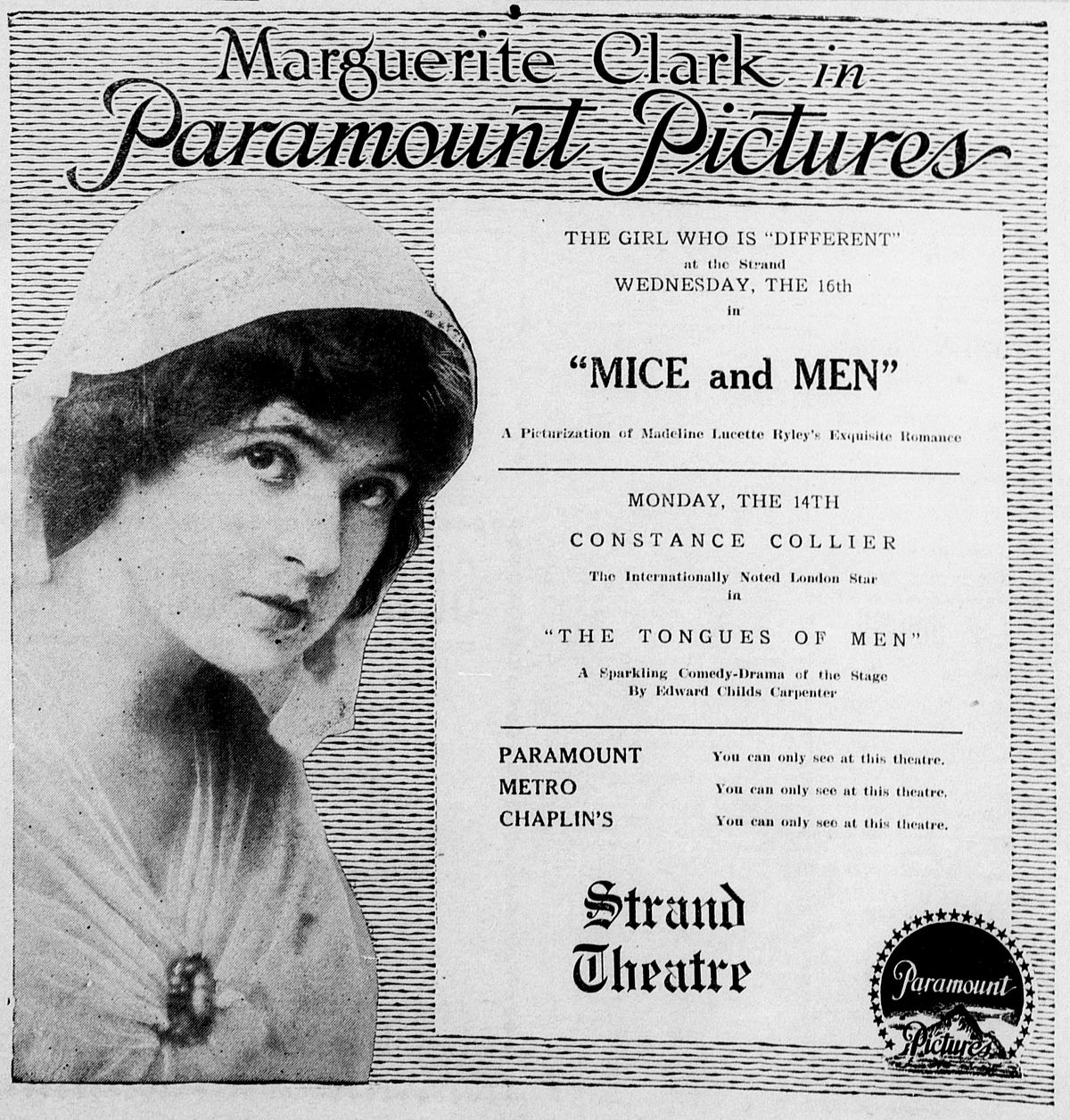
The supporting cast, though perhaps less central to the film's core psychological drama, contributes significantly to the richness of its world. Marguerite Clark and Francesca Warde, alongside Robert Conville and Clarence Handyside, populate the periphery with characters that ground the story in a believable social fabric. Their interactions, though often brief, add texture and context to Embury and Peggy's unique relationship, highlighting the societal norms and expectations against which their unconventional arrangement plays out. Even minor roles, like those filled by Marshall Neilan, Charles Waldron, Ada Deaves, and Maggie Fisher, contribute to the overall atmosphere, painting a picture of a society where such an experiment, while unusual, could conceivably unfold, offering glimpses into the social strata and prevailing attitudes of the time.
Visually, "Mice and Men" showcases the emerging artistry of early 20th-century cinema. While it might lack the grand scale or groundbreaking special effects of later epics, its strength lies in its intimate compositions and the evocative power of its close-ups, which allow the audience to truly connect with the characters' inner lives. The direction, likely a collaborative effort given the era but prominently attributed to Hugh Ford, ensures that the emotional beats land with precision, guiding the viewer through the complexities of Embury's internal conflict and Peggy's blossoming independence. The film's aesthetic, while simple by today's standards, is incredibly effective in conveying the mood and advancing the narrative without relying on overt melodrama, a common pitfall of the era. This restraint, a hallmark of sophisticated early filmmaking, allows the inherent drama of the human condition to take center stage.
Comparing "Mice and Men" to other films of its time reveals its unique thematic depth. While many contemporary productions, such as "The Christian" or "The Love Route", often focused on more straightforward narratives of morality, adventure, or traditional romance, "Mice and Men" dares to explore a more philosophical question about the nature of creation and ownership. It’s less about external conflict and more about internal revelation. One might even draw a parallel to the themes of societal molding and identity seen in later, more overt social commentaries, though "Mice and Men" approaches it through the lens of personal drama. Even against films like "The Book of Nature", which might explore naturalistic themes, "Mice and Men" focuses on the unnatural act of human creation, contrasting it with the organic unfolding of genuine emotion.
The film subtly critiques the patriarchal notion of women as objects to be shaped and possessed. Embury’s initial premise, while perhaps well-intentioned in his own mind, is inherently problematic from a modern perspective. However, the film's brilliance lies in its ultimate subversion of this very idea. By allowing Peggy to achieve true autonomy and choose her own path, the narrative ultimately celebrates female agency, even if it comes at the emotional cost to the male protagonist. This makes it a surprisingly progressive film for its time, hinting at the changing roles and aspirations of women in society, a theme that would become increasingly prevalent in cinema as the decades progressed. It's a quiet revolution, enacted not through grand speeches but through the simple, undeniable truth of a young woman's heart.
The screenplay, adapted from Madeleine Lucette Ryley's play, retains a theatrical elegance in its structure and dialogue (or rather, intertitles). The pacing is deliberate, allowing the psychological nuances to unfold gradually. Hugh Ford’s direction, in collaboration with the powerful source material, ensures that the film never rushes its emotional beats, giving the audience ample time to absorb Embury’s evolving predicament and Peggy’s quiet assertion of self. The narrative avoids easy answers or simplistic resolutions, instead opting for a bittersweet conclusion that speaks to the complexities of human relationships and the inherent unpredictability of the heart. The careful construction of the plot, moving from premise to conflict to resolution, is a testament to the enduring power of classic dramatic structure.
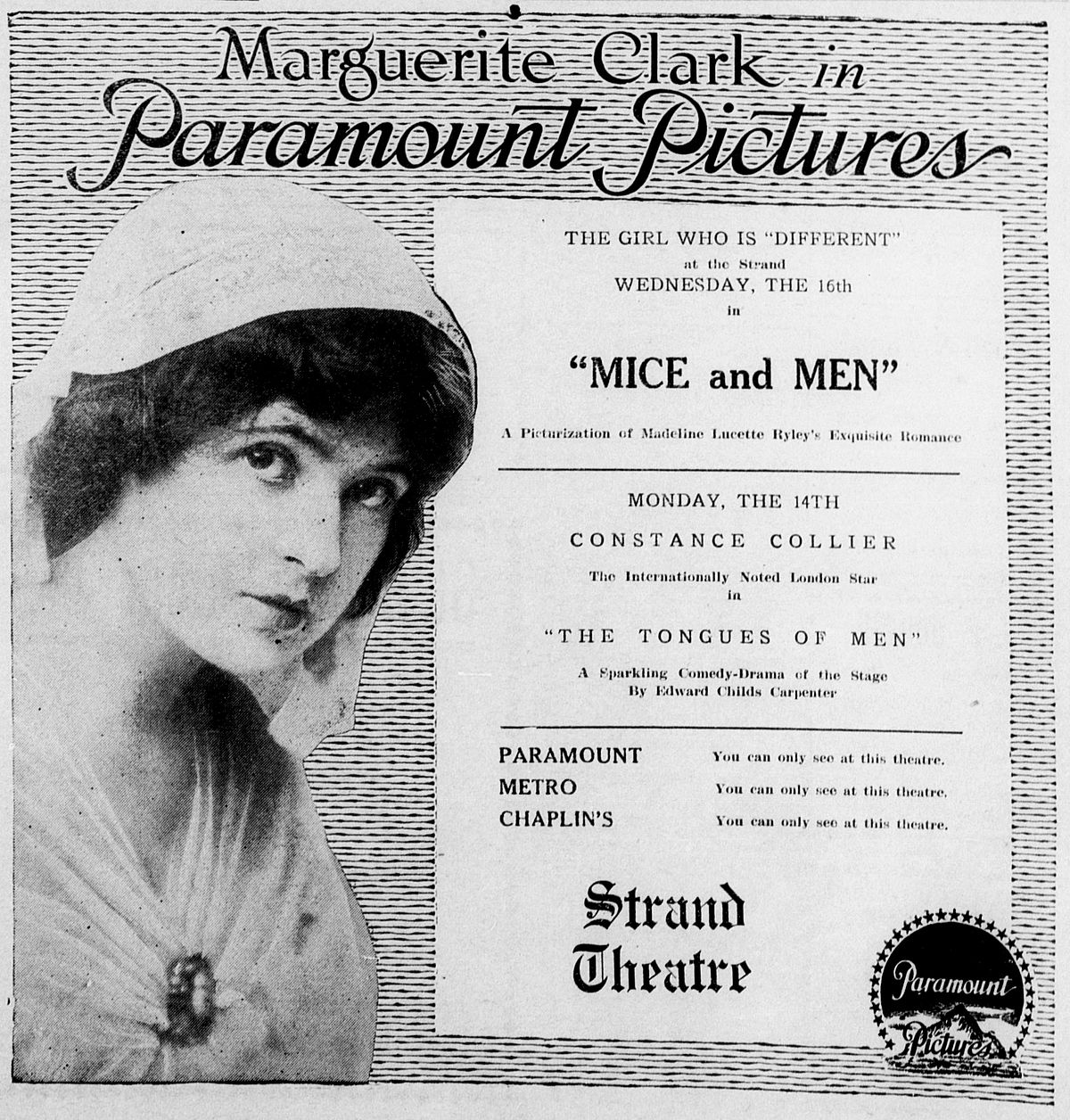
Consider the broader cinematic landscape of 1916. While films like "The College Orphan" might have focused on youthful exuberance, or "The Great Leap: Until Death Do Us Part" on more overt dramatic conflict, "Mice and Men" delves into a more internal, reflective drama. It's a film that asks its audience to ponder, rather than merely react. The strength of its storytelling lies in its ability to take a potentially melodramatic premise and imbue it with genuine emotional depth and psychological realism, a characteristic it shares with more introspective European films of the era, such as "När konstnärer älska" (When Artists Love), which also explored the complexities of personal relationships and artistic temperament.
The film’s title itself, "Mice and Men," subtly alludes to Robert Burns' famous poem, "To a Mouse," and its line, "The best laid schemes o' Mice an' Men / Gang aft agley." This literary echo immediately sets a tone of inevitable disappointment, of plans gone awry despite the best intentions. Embury's "scheme" to create the perfect wife, meticulously planned and executed, ultimately succumbs to the unpredictable forces of human emotion and free will. It’s a masterful choice of title, imbuing the entire narrative with a sense of tragic inevitability and a universal truth about the limits of control, a theme also subtly present in other narratives of the period dealing with fate versus human will, though perhaps less directly.
The performances are truly the bedrock of this film's enduring appeal. William McKey's Embury is a character of profound internal conflict. His gestures, his facial expressions, and his very posture convey a man grappling with a love that is both profound and possessive. When he finally accepts Peggy's choice, his quiet resignation is more powerful than any outburst could be, a testament to McKey’s nuanced understanding of his character. Helen Dahl, as Peggy, perfectly balances gratitude with a dawning awareness of her own individuality. Her journey from a blank canvas to a vibrant, self-possessed woman is handled with remarkable grace and conviction, making her a protagonist whose internal journey feels deeply authentic and relatable.
The themes explored in "Mice and Men" remain remarkably relevant today. The desire to control, to mold others to our expectations, to find happiness through possession rather than genuine connection, are timeless human struggles. The film serves as a potent reminder that true love, and indeed true perfection, often lies in the freedom of the beloved, even if that freedom leads them away from us. It’s a bittersweet lesson, but one delivered with profound empathy and artistic integrity, resonating with contemporary discussions about autonomy, personal boundaries, and the ethics of influence.
Stylistically, the film employs visual storytelling techniques common to its era but executed with a keen eye for emotional impact. The use of intertitles is artful, not merely relaying dialogue but often commenting on the internal states of the characters, guiding the audience through the psychological complexities without oversimplification. The cinematography, while not flashy, is deliberate, framing moments of introspection and interaction to maximize their emotional resonance. There's a particular quiet dignity to the visual approach that allows the performances to shine through, reminiscent of the restrained elegance found in certain artistic movements of the early 20th century.
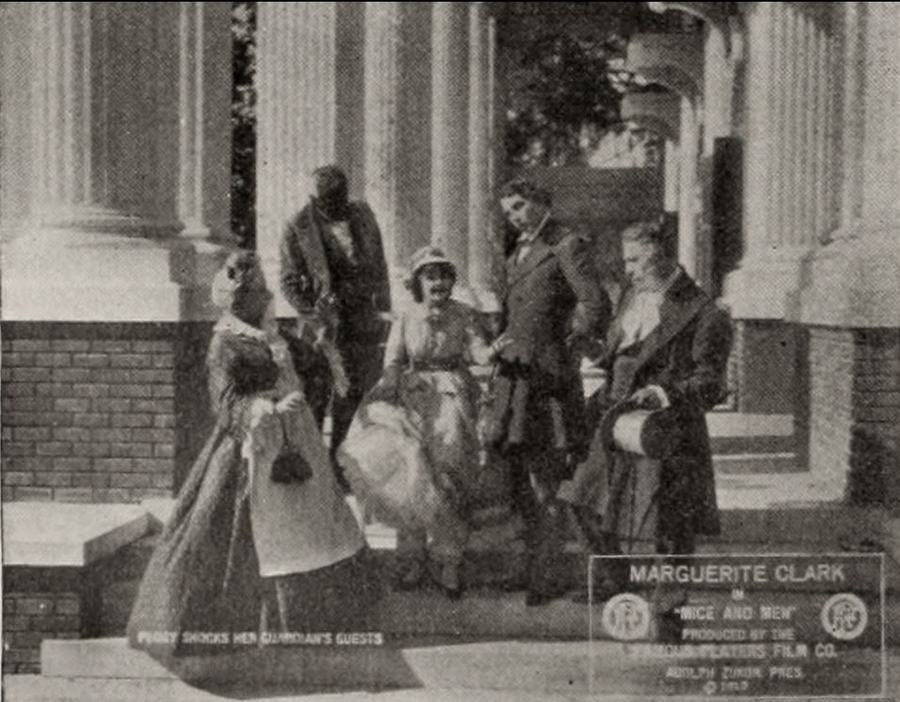
In an era when cinema was still very much in its infancy, "Mice and Men" stands out for its thematic maturity. It doesn't shy away from complex human emotions or uncomfortable truths. Unlike some of its contemporaries, which might lean towards broad strokes of good versus evil or clear-cut moral lessons, this film operates in the grey areas of human motivation. Embury is not evil; he is misguided by a potent, if possessive, love. Peggy is not rebellious; she is simply following her heart. This nuanced characterization elevates the film beyond mere entertainment into a work of genuine artistic merit, standing alongside other serious dramas like "The Jungle", which explored social issues, but with a more personal, internal focus.
The narrative arc, from Embury's initial ambition to his eventual, melancholic acceptance, is meticulously crafted. The writers, Madeleine Lucette Ryley and Hugh Ford, demonstrate a profound understanding of dramatic tension and psychological development. They build the premise carefully, allow the "perfect wife" to emerge, and then introduce the external force that challenges Embury's control. The climax is not a violent confrontation but a quiet, internal reckoning, making it all the more impactful. This thoughtful construction allows the film to explore its themes without resorting to sensationalism, a common pitfall in early cinema.
For those interested in the evolution of storytelling in cinema, "Mice and Men" offers a fascinating case study. It bridges the gap between early theatrical adaptations and the more sophisticated narrative techniques that would define the Golden Age of Hollywood. Its focus on character-driven drama, rather than spectacle, foreshadows many of the strengths of later cinematic masterpieces. It holds its own against other character-focused dramas of the period, such as "East Lynne" (1916), by offering a more introspective and less overtly melodramatic take on personal sacrifice and societal pressures. Its thematic depth also makes it comparable to films like "The Eternal Strife", but with a unique emphasis on the internal conflict of creation rather than external societal battles.
The lasting impression of "Mice and Men" is one of profound empathy for its complicated protagonist. While we might initially recoil at Embury's controlling ambition, his ultimate capitulation and the quiet dignity with which he accepts his fate evoke a powerful sense of pathos. He becomes a symbol of the human struggle to reconcile grand designs with the messy, unpredictable reality of love and personal freedom. It’s a film that, despite its century-plus age, feels remarkably fresh in its exploration of these timeless themes, urging us to consider the true meaning of creation and the ultimate joy—and sorrow—of letting go. The film serves as a reminder that the greatest acts of love often involve releasing our hold, allowing those we care for to truly fly, even if it means they soar away from us. It’s a beautiful, heart-rending, and ultimately uplifting testament to the enduring power of the human spirit.
The film’s careful pacing ensures that every emotional beat is given room to breathe, a quality often missing in the more frenetic narratives of today. This deliberate approach allows the audience to truly immerse themselves in Embury’s internal world, understanding his motivations and feeling the weight of his eventual heartbreak. It's not a film that provides easy answers, but rather one that encourages contemplation on the nature of love, possession, and the subtle art of true sacrifice. Its impact lies not in grand gestures but in the quiet, profound moments of realization and acceptance, making it a contemplative piece that rewards thoughtful viewing. This introspective quality also sets it apart from more action-oriented films of the era, such as "The Land of the Lost" or "The Cossack Whip".
The societal implications of Embury’s experiment, though not overtly preached, are palpable. In an era where women's roles were largely confined to the domestic sphere, Embury's attempt to engineer a perfect wife speaks volumes about the expectations placed upon them. Yet, Peggy's burgeoning independence serves as a quiet but powerful counter-narrative, suggesting that even within the confines of societal norms, the human spirit yearns for self-determination. Her choice, though painful for Embury, is ultimately a triumph for her own individuality, a subtle echo of the broader movements for women's suffrage and greater autonomy that were gaining traction in the early 20th century. This makes "Mice and Men" more than just a personal drama; it’s a reflection of deeper cultural shifts.
Ultimately, "Mice and Men" is a testament to the enduring power of well-crafted storytelling. Its themes, its performances, and its sensitive direction combine to create a cinematic experience that transcends its historical context. It is a film that speaks to the universal human desire to create, to nurture, and ultimately, to let go. A truly remarkable piece of early cinema that deserves to be rediscovered and appreciated for its timeless insights into the human condition. It stands as a beacon for how early cinema, even without sound or advanced visual effects, could deliver profound psychological drama and emotional resonance, proving that the heart of good storytelling remains unchanged regardless of technological advancements. The film’s quiet wisdom, its gentle yet firm assertion of human autonomy, makes it a timeless classic, far more impactful than many of its more boisterous or overtly dramatic contemporaries, such as "The Taint" or "Hearts United", which often relied on more conventional plot devices.

IMDb —
1936
Community
Log in to comment.