DbcultAccessing Vault...
Cult Review
Senior Film Conservator
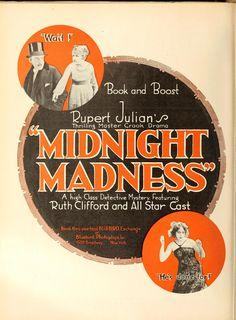
In the nascent years of the cinematic medium, the grammar of the thriller was written in the flickering shadows of nitrate film. Midnight Madness, directed with a burgeoning sense of spatial awareness by the era's luminaries, stands as a quintessential artifact of this evolution. It is not merely a story of theft and recovery; it is a psychological tableau that utilizes physical deformity—the wounded hand—as a recurring motif for moral ambiguity and shared destiny. Unlike the straightforward heroism found in Beyond the Law, this film leans into the fog of identity, where the line between the lawman and the lawbreaker is as thin as a hotel room wall.
The film opens with a sequence of high tension that establishes the recurring visual trope of the hand injury. This is not a mere plot device; it serves as a stigmata of the underworld. When Prentice Tiller, portrayed with a stoic intensity by Kenneth Harlan, overhears Gertrude Temple (the luminous Ruth Clifford) telephoning the villainous Aaron Molitor, the audience is immediately thrust into a world of voyeurism and tactical deception. This auditory intrusion sets the stage for a masquerade that rivals the complex social strata explored in The Foolish Virgin.
The narrative brilliance of Elliott J. Clawson’s script lies in its symmetry. The protagonist and the antagonist are bonded by a physical mark. This doubling creates a sense of uncanny dread. When Tiller attempts to intercept the jewels by posing as Molitor, the sudden appearance of the real Molitor—also wounded—shatters the illusion. This moment of confrontation is a precursor to the thematic depth we see in later works like The Mysterious Lady, where the mask of the spy is constantly threatened by the reality of the self. The tension is palpable, the pacing rhythmic, and the stakes are expertly escalated as Tiller narrowly escapes a grim fate amidst the crumbling masonry of a ruined church.
The use of ruins as a backdrop is particularly poignant. It suggests a world in decay, a post-war landscape (considering the 1918 release) where the old structures of morality are literally falling apart. This gothic sensibility distinguishes Midnight Madness from the more urbanized grit of Vem sköt? or the social critiques found in The Yellow Ticket. The church represents a sanctuary turned into a deathtrap, a subversion of sacred space that underscores the ruthlessness of Molitor’s syndicate.
As the action shifts to Paris, the film expands its aesthetic palette. The introduction of Chevat, the master crook, and his lover, Lola Montez (played with a searing, jealous fervor by Claire Du Brey), injects a volatile element into the proceedings. Lola is not a mere accessory; she is the narrative's wild card. Her jealousy toward Gertrude Temple drives the second act's momentum, providing a visceral counterpoint to the more calculated machinations of the male leads. Du Brey’s performance is a masterclass in silent-era expressionism, her eyes conveying a depth of malice that rivals the antagonists in The Prussian Cur.
The Parisian underworld depicted here is a labyrinth of secret meetings and hidden motives. It lacks the exoticism of Die Pagode, opting instead for a grounded, almost proto-noir atmosphere. The cinematography captures the interplay of light and shadow in the narrow streets, creating a sense of entrapment. Gertrude, caught between her uncle’s questionable associations and the predatory advances of the criminal elite, becomes the emotional anchor of the film. Ruth Clifford portrays her with a blend of vulnerability and nascent strength, a character arc that mirrors the protagonist’s shift from shadow-dweller to protector.
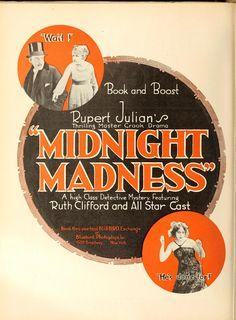
The climax of Midnight Madness is a triumph of structural payoff. The reveal of Prentice Tiller as a detective is handled with a sophistication that avoids the clumsiness of many contemporary "twist" endings. It recontextualizes every previous action—the eavesdropping, the impersonation, the narrow escapes—as part of a meticulous sting operation. This revelation brings a sense of justice that is far more satisfying than the somber resolutions found in Prestuplenie i nakazanie. Tiller’s use of a ruse to capture Chevat and his gang demonstrates an intellectual superiority over the brute force of the criminals.
The return of the jewels to their rightful owner serves as the formal restoration of order, but the film’s heart lies in the subsequent proposal. The romance between Tiller and Gertrude, forged in the crucible of danger, feels earned. It provides a hopeful coda to a story that spent much of its runtime in the dark. In comparison to the nationalistic fervor of Ireland, a Nation, Midnight Madness is a more intimate, character-driven triumph, focusing on the individual's capacity for redemption and love amid chaos.
Technically, the film is a marvel of its time. The editing by the uncredited cutters of the era manages to maintain a brisk pace despite the intricate plot. The set design, particularly the hotel interiors and the Parisian hideouts, reflects a high production value that was not always guaranteed in 1918. The film shares a certain visual DNA with The Whip, though it trades that film's spectacle for a more concentrated suspense. The use of close-ups on the "wounded hands" is an early example of using the camera to emphasize symbolic detail, a technique that would become a staple of the thriller genre.
The cast is uniformly excellent. Harry von Meter as Molitor provides a menacing presence that never veers into caricature, while Louis Willoughby’s Chevat is a study in suave villainy. Even the smaller roles, such as Simon Temple (Harry Holden), add layers of complexity to the social milieu. The film’s exploration of jealousy through Lola Montez offers a psychological depth that is often absent in silent melodramas like Had og Kærlighed or the more simplistic narratives of A csúnya fiú.
Looking back from a century's distance, Midnight Madness remains a vital piece of cinema history. It bridges the gap between the simple "chase" films of the early 1910s and the complex espionage thrillers of the 1920s and beyond. Its influence can be felt in the way it handles dual identities and the moral complexities of undercover work. While films like Zelyonyy pauk or Revelj explored different facets of the human condition, Midnight Madness remains focused on the thrill of the hunt and the ultimate triumph of the intellect over criminal greed.
For the modern viewer, the film offers more than just historical curiosity. It is a masterclass in visual storytelling, where every frame is utilized to build tension or develop character. The "midnight" of the title is not just a time of day; it is a state of mind—a place where identities are fluid, and danger lurks in every shadow. By the time the sun rises on Tiller and Gertrude’s future, the audience has been through a grueling, exhilarating journey through the darker corners of the human psyche. This is silent cinema at its most potent, a reminder that before there were words, there was the powerful, evocative image.
In the pantheon of 1918 releases, alongside ethnographic works like Indian Life, Midnight Madness stands out as a sophisticated entertainment that respects its audience's intelligence. It is a film that demands to be rediscovered, not as a relic, but as a living, breathing piece of art that still has the power to captivate and surprise. The wounded hand may heal, but the impression left by this cinematic gem is indelible.
IMDb 5.6
1924
Community
Log in to comment.