DbcultAccessing Vault...
Cult Review
Senior Film Conservator
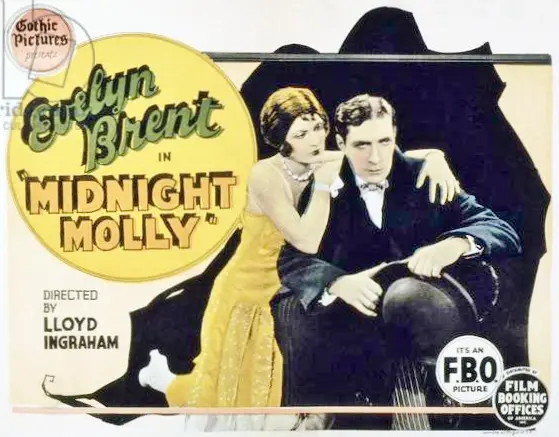
The 1920s cinematic landscape was often a playground for the 'fallen woman' and the 'reformed thief,' yet few entries manage the precarious tonal balance of Midnight Molly. Directed with a keen eye for the burgeoning aesthetics of noir, this 1925 gem offers more than just a plot of convenience; it presents a scathing critique of political artifice and the malleability of the female persona.
At the heart of the film lies the dualistic performance of Evelyn Brent. Brent, an actress of immense interiority, portrays Molly not as a victim of circumstance, but as a survivor of a rigid class structure. When she is struck by the car—a literal and metaphorical collision between the underworld and the upper crust—the film pivots into a high-stakes drama of impersonation. Unlike the atmospheric dread found in The Isle of the Dead, which relies on the supernatural, Midnight Molly draws its tension from the very real threat of exposure and the cold pragmatism of its protagonist.
John Warren, played with a calculated vulnerability by Bruce Gordon, is perhaps the most morally ambiguous character in the piece. His willingness to accept a total stranger as his wife to avoid a divorce scandal reveals the rot at the center of his political ambitions. This transactional marriage echoes the domestic fragility explored in Married in Name Only, yet here the stakes are elevated by the threat of criminal prosecution. The film asks the viewer: who is the greater criminal? The woman who steals a painting, or the man who steals a life to save his career?
Fred Myton’s screenplay is a marvel of economy and escalating stakes. The introduction of Detective Daley (John T. Dillon) serves as the narrative’s ticking clock. Daley represents the persistent shadow of the law, a figure that wouldn't be out of place in the gritty corridors of Trapped by the London Sharks. His suspicion is not merely a plot device; it is the catalyst for the film's most innovative sequence: the fingerprinting gambit.
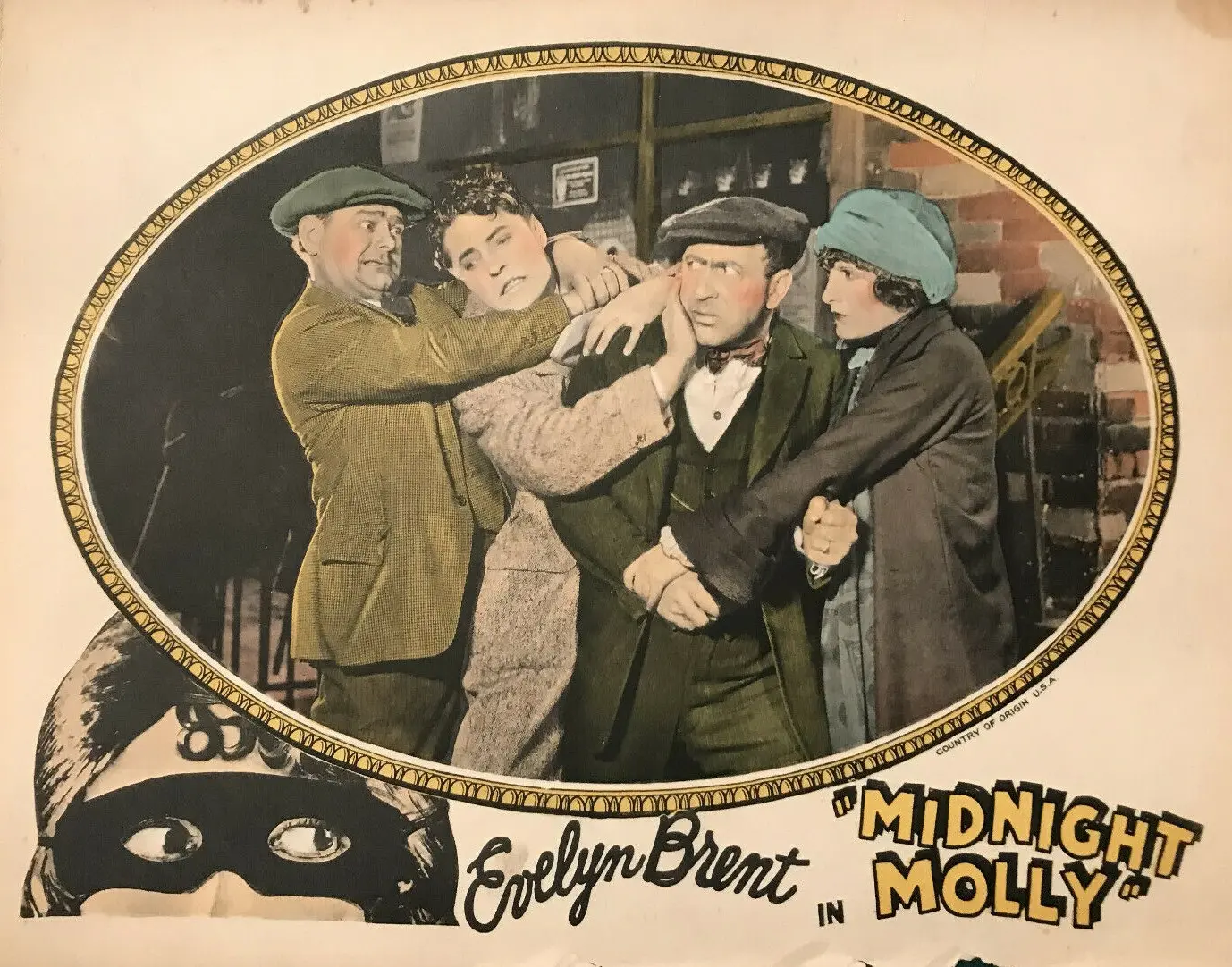
The use of fingerprinting as a climactic resolution was a cutting-edge forensic fascination in 1925. It represents the encroachment of science upon the romanticized deceptions of the silent era. When Molly forces the real Mrs. Warren to return for the test, she is effectively using the law to legitimize her lie. It is a moment of profound irony—the criminal uses the tools of justice to secure her place in high society. This subversion of morality is far more complex than the straightforward redemption arcs seen in films like A False Alarm or the sentimental journeys of The Runt.
Evelyn Brent’s performance deserves a contemporary reappraisal. She possesses a 'modern' face—expressive yet guarded. In Midnight Molly, she must play a woman playing another woman, a layered performance that requires subtle shifts in posture and gaze. She lacks the histrionics common to the era, opting instead for a simmering intensity. Her transformation from the desperate fugitive of the opening scenes to the poised political wife is a masterclass in physical acting. One can see shades of the social ostracization depicted in The Branded Woman, but Brent’s Molly is never a martyr. She is a strategist.
The chemistry between Brent and Gordon is built on a foundation of mutual utility that slowly evolves into genuine affection. This slow-burn romance is handled with more nuance than the typical 'love at first sight' tropes of the mid-20s. It feels earned because it is born out of shared secrets and the mutual defense against the predatory George Calvin (Léon Bary). Calvin is the quintessential villain of the piece, representing the hedonistic nihilism that threatens to shatter the fragile peace Molly and Warren have constructed.
Visually, the film utilizes high-contrast lighting to delineate the two worlds Molly inhabits. The dark, rain-slicked streets of her burglar past contrast sharply with the bright, airy, and somewhat sterile interiors of the Warren mansion. This visual dichotomy reinforces the theme of identity—Molly is a creature of the night trying to survive in the blinding light of the public eye. The cinematography captures the claustrophobia of her situation, often framing her against large, imposing architectural elements that dwarf her, emphasizing the weight of the social machine she is trying to manipulate.
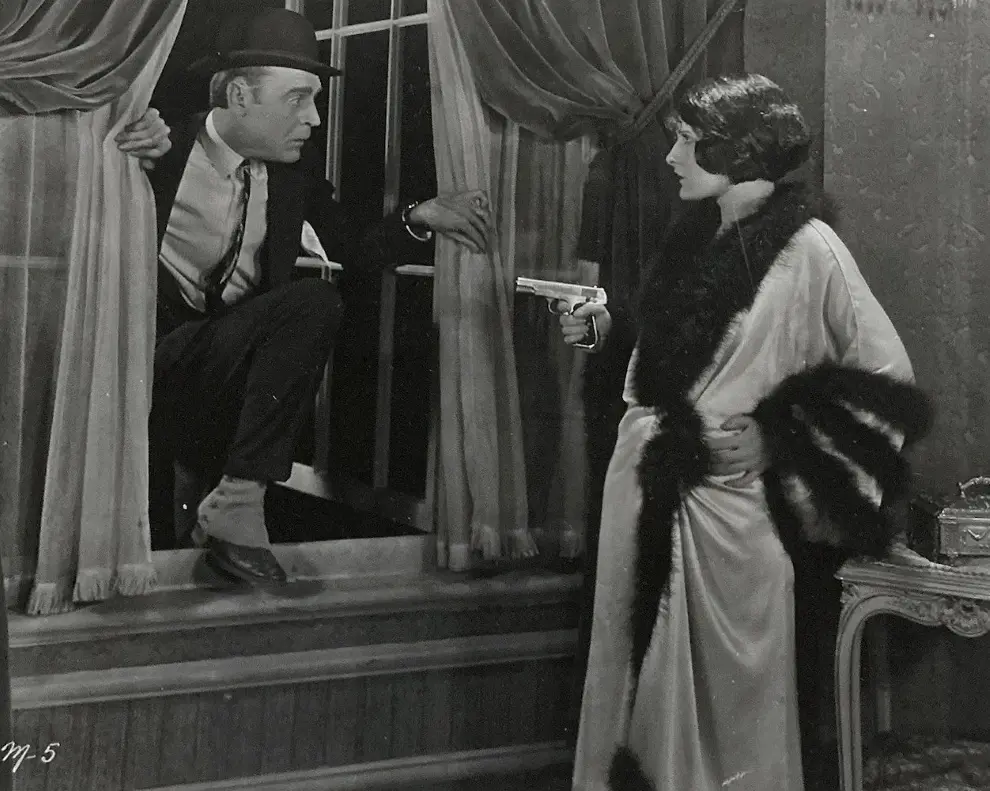
While not as grand in scale as a historical epic like Christopher Columbus, the production design of Midnight Molly is effective in its domestic realism. Every prop, from the stolen painting to the fingerprinting kit, feels heavy with narrative significance. The film avoids the slapstick tendencies of contemporary shorts like Loose Lions, maintaining a somber, almost cynical tone throughout.
When placed alongside Green Eyes, another film dealing with secrets and domestic tension, Midnight Molly feels more grounded in its exploration of class. It shares a certain thematic DNA with The Shuttle in its depiction of women navigating difficult social transitions, though Molly’s journey is far more perilous. The film also touches upon the 'double life' trope found in Sadhu Aur Shaitan, though it swaps the comedic elements for a tense, noir-inflected drama.
The ending—a convenient car accident that dispatches the real Mrs. Warren and her lover—is perhaps the film’s only concession to standard melodrama. However, it serves a thematic purpose. It is as if the universe itself conspires to validate Molly’s transformation. The real wife, who abandoned her duty for passion, is literally erased from the narrative, allowing the 'fake' wife, who performed her duty with excellence, to become the reality. It is a fascinating, if slightly dark, commentary on the value of performance over 'truth' in the social sphere. This echoes the cynical view of wealth and status seen in Broadway Gold.
Midnight Molly is a testament to the sophistication of the 1920s crime drama. It refuses to offer easy moral answers, instead presenting a world where identity is a mask and truth is whatever can be proven with a fingerprint. For fans of early cinema, it is a crucial watch, bridging the gap between the moralistic tales of the Victorian era and the hard-boiled cynicism of the 1940s. It stands tall among its peers, offering a more complex psychological profile than Seven Bald Pates and a more compelling central performance than the often-overlooked Syndig Kærlighed.
In the end, the film leaves us with a haunting question about the nature of the self. If a person can step into another’s shoes, perform their duties, and win the hearts of their peers, do they not eventually become that person? Molly’s journey from the shadows of the art gallery to the bright lights of the Mayor’s mansion suggests that in the theatre of life, the best actor wins the role. Even when compared to the tranquil beauty of In a Naturalist's Garden, the urban jungle of Midnight Molly offers a more profound, if more disturbing, look at the human condition.
IMDb —
1921
Community
Log in to comment.