DbcultAccessing Vault...
Cult Review
Senior Film Conservator
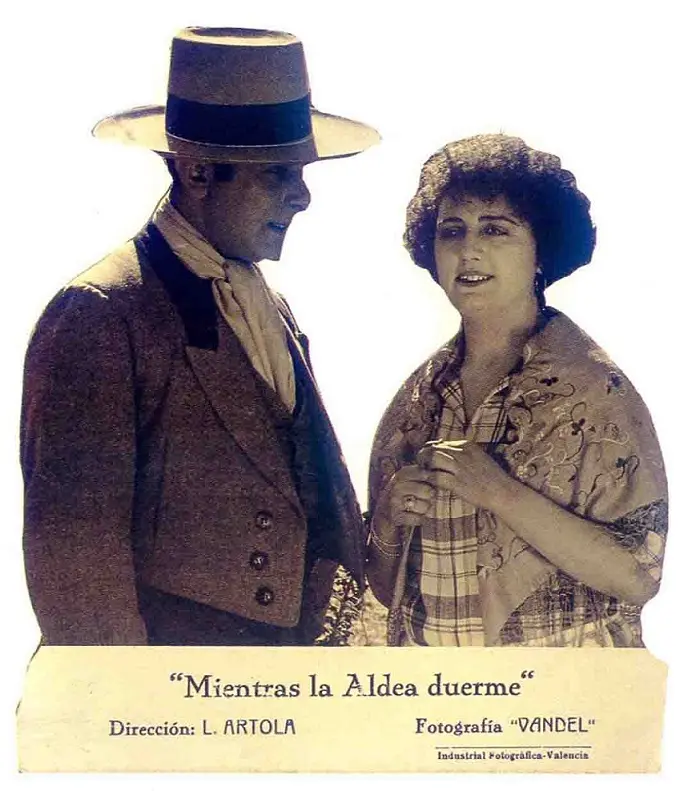
Is 1926’s Mientras la aldea duerme a hidden treasure of Spanish silent cinema? Short answer: Yes, but only if you have the patience for the rigid, often suffocating moral landscapes of the early 20th century. This film is for the dedicated cinephile interested in the socio-political roots of rural drama; it is absolutely not for anyone seeking a lighthearted escape or a balanced romantic arc.
1) This film works because it captures the terrifying reality of 'Caciquismo'—the absolute rule of local bosses—with a directness that feels almost documentary-like despite its melodramatic trappings.
2) This film fails because its secondary characters are often reduced to mere props in Don Fernando’s orbit, leaving the emotional stakes feeling somewhat lopsided.
3) You should watch it if you want to see how early Spanish directors used the lens to critique the very power structures that funded their industry.
Yes, for the historical weight alone. While many silent films of the era, such as The Bachelor's Romance, leaned into lighthearted social friction, Artola takes a much darker path. He presents a world where the father is not a protector but a predator. If you value film as a historical artifact that reveals the anxieties of its time, this is essential viewing. It is a stark reminder that the 'good old days' were often built on the backs of the powerless.
The central conflict of Mientras la aldea duerme is built on a foundation of profound discomfort. Manuel Soriano, playing Don Fernando, doesn't need to chew the scenery to be effective. His presence is a constant, looming shadow. In the 1920s, the village chief was more than a political figure; he was a social deity. When Fernando decides he wants his son’s fiancée, it isn't portrayed as a moment of sudden passion. It is portrayed as an acquisition.
There is a specific scene in the first act where Fernando watches the young couple from a balcony. The framing is tight, almost claustrophobic. You can see the gears turning. He isn't looking at a future daughter-in-law; he is looking at property. This coldness is what makes the film stand out from more sentimental silent dramas like Spring. It is a film about the death of agency.
The son, played by José María Jimeno, is a tragic figure of a different sort. He represents the youth of Spain—paralyzed by tradition and respect for a father who deserves none. The tragedy isn't just that he loses his love; it's that he cannot even find the words or the social standing to fight back. It is a brutal dynamic. The father is a monster. But the system is the cage.
León Artola’s direction is surprisingly disciplined for 1926. While he lacks the expressionist flair found in German cinema of the same period, like This Ancient Law, he makes up for it with a grounded, earthy realism. The village feels lived-in. The dust feels real. The 'aldea' (village) of the title isn't just a setting; it's a character that sleeps while a crime is committed in broad daylight.
The pacing is deliberate. Some might call it slow. I call it honest. Artola allows the weight of the social pressure to build until the final forced marriage feels inevitable. There are no last-minute rescues here. There is no divine intervention like you might find in The Man Who Played God. This is a film about the crushing reality of the status quo.
When we look at other films of the era, such as Blue Blood and Red, we often see class conflict resolved through some form of nobility or luck. Mientras la aldea duerme offers no such comfort. It shares more DNA with the gritty social realism that would later define Spanish cinema under more restrictive regimes. It is a precursor to the 'rural noir' that would emerge decades later.
The acting style is surprisingly restrained for the silent era. Mercedes Gadea, as the fiancée, conveys a sense of mounting dread through small gestures—the tightening of a shawl, the averting of eyes. It’s a performance of internalized trauma. She knows she is being traded. She knows the village is watching. She knows they will do nothing.
Pros:
Cons:
While Mientras la aldea duerme doesn't have the budget of a Hollywood epic like High Speed, it utilizes light and shadow to articulate the internal state of its characters. The interiors of Don Fernando’s home are shot with a sense of oppressive grandeur. The ceilings feel low. The walls feel thick. It is a prison of the highest quality.
The cinematography by the uncredited crew (common for the time) relies on deep staging. You often see characters in the background, unaware of the machinations happening in the foreground. This visual depth mirrors the social layers of the village. Everyone is connected, yet everyone is profoundly alone in their suffering.
"The film doesn't just tell a story of a stolen bride; it tells the story of a stolen culture, where the word of the father is the only truth allowed to exist."
It is interesting to note how this film compares to something like Fekete gyémántok. While the latter deals with industrial and romantic upheaval, Artola’s work is much more localized and intimate. The stakes are smaller, which makes the betrayal feel much more personal. It’s not about the fate of a nation; it’s about the fate of a single, broken household.
Mientras la aldea duerme is a difficult but rewarding watch. It strips away the romanticism often associated with the Spanish countryside and replaces it with a cold, hard look at the mechanisms of power. It is clunky at times. It is undeniably dated in its gender politics. But its core message—that power without accountability is a recipe for tragedy—remains hauntingly relevant. It works. But it’s flawed. It is a piece of history that refuses to be forgotten, and for that alone, it deserves your attention.
IMDb 6.6
1915
Community
Log in to comment.