DbcultAccessing Vault...
7.8/10
Senior Film Conservator
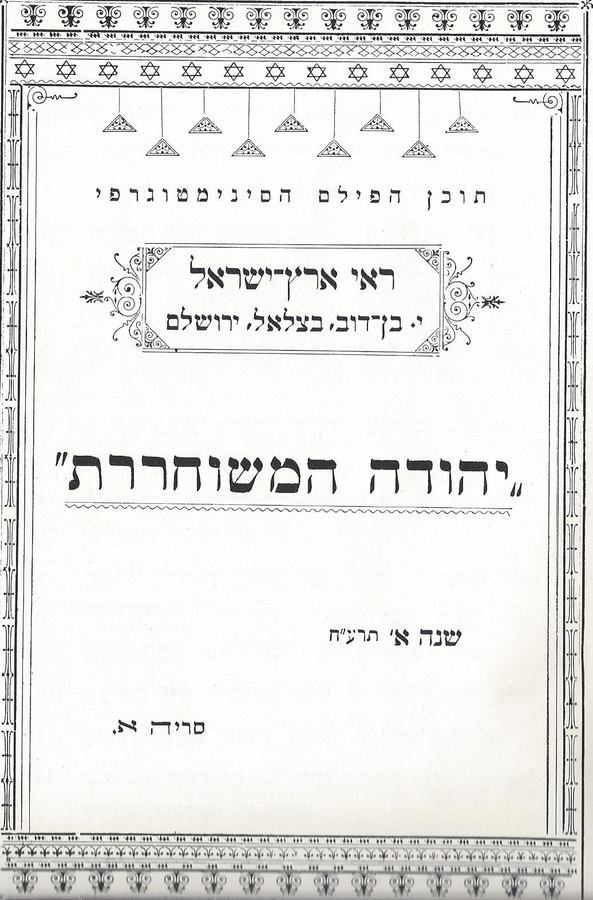
A definitive 7.8/10 rating for a film that redefined the boundaries of cult cinema. Yehuda Hameshukhreret remains a cornerstone of transgressive art.
There are films that entertain, and then there are films that resonate, burrowing deep into the psyche and challenging our most fundamental assumptions about existence. Ya'ackov Ben-Dov’s Yehuda Hameshukhreret unequivocally belongs to the latter category. This isn't a spectacle of grand gestures or explosive plot twists; instead, it’s a meticulously crafted meditation on the quiet tyranny of conformity and the profound, often solitary, journey toward self-liberation. It invites us not just to watch, but to introspect, to question the invisible chains that bind us in our own lives.
Ben-Dov, who not only penned the script but also takes on the titular role, delivers a performance that transcends mere acting. It feels less like portrayal and more like an excavation of the human spirit. His Yehuda is a man caught in the amber of societal expectations, a figure whose every movement, every muted expression, speaks volumes about the internal conflict raging beneath a placid surface. The film opens with a deliberate slowness, allowing us to sink into Yehuda's world, a world defined by ritual, by obligation, and by an unspoken understanding that personal desires must yield to communal harmony. This initial pacing, far from being tedious, is essential. It establishes the suffocating atmosphere from which Yehuda must eventually break free, making his eventual awakening all the more potent.
What distinguishes Yehuda Hameshukhreret from more conventional narratives of oppression is its focus on the internalized nature of confinement. There are no obvious villains here, no dictatorial regimes or physical prisons. Instead, Yehuda's chains are forged from the weight of tradition, the silent judgments of his peers, and perhaps most insidiously, his own ingrained reluctance to challenge the status quo. This is a film that understands that the most potent forms of bondage are often psychological, woven into the very fabric of identity from birth. It echoes the quiet desperation found in films like The Girl Who Doesn't Know, where ignorance or societal conditioning acts as a powerful, albeit invisible, constraint on individual agency. Yehuda's journey is a gradual peeling back of these layers, a slow dawning of awareness that the comfort he has always known is, in fact, a gilded cage.
The narrative is structured around a series of small, seemingly insignificant encounters and observations that collectively trigger Yehuda's introspection. A fleeting glance from a stranger, a child's unfiltered question, a forgotten melody – these are the catalysts that begin to chip away at his carefully constructed reality. Ben-Dov's writing shines here, crafting moments of quiet profundity that avoid exposition, instead relying on visual storytelling and the nuanced performance of the lead. We witness Yehuda's internal monologue playing out across his face, a masterclass in conveying immense emotional turmoil with minimal dialogue. It’s a testament to Ben-Dov's skill that he makes the audience feel every tremor of doubt, every flicker of defiance, without resorting to overt dramatic pronouncements.
The singular vision of Ya'ackov Ben-Dov as writer, actor, and implied director (given the profound unity of these elements) is the beating heart of Yehuda Hameshukhreret. His script is not merely a blueprint for a story, but a philosophical treatise disguised as a character study. It explores themes of identity, authenticity, and the courage required to forge one's own path against the powerful currents of tradition. The dialogue, sparse as it often is, is imbued with meaning, each word carefully chosen to advance Yehuda's internal struggle or to reveal another facet of the societal matrix he inhabits. This careful crafting is reminiscent of the meticulous attention to detail seen in films like Tsar Ivan Vasilevich Groznyy, where every element contributes to a singular, powerful artistic statement.
As an actor, Ben-Dov embodies Yehuda with an arresting blend of vulnerability and nascent strength. His performance is a masterclass in subtlety, conveying profound internal shifts through the merest alteration of gaze or the slightest tremor in his posture. He doesn’t simply play a character; he becomes a vessel for the film’s central question: what does it truly mean to be free? This question resonates with the existential angst explored in Out of the Darkness, though Yehuda's journey is less about escaping a literal shadow and more about illuminating the internal one. The confluence of these roles – writer and actor – allows for an organic, almost symbiotic relationship between the narrative and its portrayal, resulting in a performance that feels utterly authentic and deeply moving.
The cinematography of Yehuda Hameshukhreret is nothing short of exquisite, serving as a silent narrator throughout Yehuda's journey. The film often employs a muted color palette in its early scenes, reflecting the emotional flatness of Yehuda's initial existence. Shadows are not merely an absence of light, but active participants, symbolizing the unspoken truths and hidden anxieties that permeate his world. As Yehuda's awareness grows, so too does the visual language of the film. Subtle shifts in lighting, the introduction of warmer hues, and more expansive framing begin to mirror his internal awakening. The camera often lingers on mundane objects or architectural details, imbuing them with symbolic weight, transforming ordinary scenes into profound visual metaphors. This meticulous attention to visual detail elevates the film beyond a simple story, turning it into a poetic visual essay on the human condition.
The sound design, too, plays a crucial role. The film is often quiet, punctuated by ambient sounds that draw us deeper into Yehuda's subjective experience. The rustle of leaves, the distant murmur of voices, the rhythmic beat of his own footsteps – these elements combine to create an immersive soundscape that amplifies the sense of isolation and introspection. When music does appear, it is used sparingly and with great purpose, often a melancholic melody that underscores Yehuda's inner turmoil or a hopeful refrain that hints at the possibility of a different future. This deliberate use of sound and visuals creates a powerful, almost hypnotic rhythm that pulls the viewer into Yehuda's world, allowing us to experience his awakening alongside him.
The film is rich in symbolism, inviting multiple interpretations without ever feeling heavy-handed. Birds, often glimpsed through windows or in the periphery, represent the freedom Yehuda yearns for, their flight a stark contrast to his grounded existence. Water, whether a trickling fountain or a vast, distant sea, symbolizes cleansing, change, and the boundless potential of an unburdened spirit. Even the architecture of the community, with its repeating patterns and enclosed spaces, becomes a metaphor for the societal structures that both protect and imprison its inhabitants. This allegorical depth allows Yehuda Hameshukhreret to transcend its specific setting, speaking to universal themes of human yearning for authenticity. It’s a film that leaves you pondering its layers long after the credits roll, much like the enigmatic narratives of The Jungle, which uses its setting to explore primal human struggles and societal constructs.
True liberation, as depicted in Yehuda Hameshukhreret, is not a sudden epiphany followed by triumphant fanfare. It is a grueling, often lonely process of deconstruction, of dismantling the self that has been built on external expectations. The film doesn't shy away from the potential isolation that comes with such a profound transformation. When one sheds the skin of conformity, one also sheds the comfort of belonging. This aspect of the narrative resonates deeply with the themes of personal accountability and the often-solitary path to redemption found in films like Redemption or the fierce individuality explored in Vengeance Is Mine, though Yehuda's battle is internal rather than external.
Yehuda’s journey is not about finding a new community, but about finding himself. The film suggests that genuine freedom might lie not in escaping to a different place, but in radically reorienting one's inner world. It's a challenging proposition, one that forces the audience to confront their own compromises and the silent bargains they've made with their sense of self. The ending is deliberately ambiguous, offering not a definitive resolution but a sense of ongoing becoming. Yehuda is liberated, yes, but into what? The film wisely leaves this question open, implying that liberation is not a destination but a continuous process, a commitment to living authentically even when the path is uncertain and the company scarce. This mirrors the complex, often unresolved struggles against societal pressures depicted in films like The Slave Mart, though the nature of servitude in Ben-Dov's film is far more insidious and psychological.
In an era saturated with cinematic escapism, Yehuda Hameshukhreret stands as a refreshing, vital counterpoint. It demands engagement, reflection, and a willingness to sit with uncomfortable truths. It is a film that rewards patience and thoughtful viewing, revealing new layers with each subsequent watch. Ben-Dov has crafted a work that feels simultaneously ancient and utterly contemporary, a timeless exploration of the human yearning for authenticity and the courage it takes to pursue it. It speaks to anyone who has ever felt the subtle tug of societal expectation against the quiet whisper of their own spirit. The film's message is not shouted, but gently, persistently whispered, inviting us to listen to our own inner voices.
The film’s lasting impact is profound. It doesn't offer easy answers or tidy conclusions. Instead, it plants a seed of inquiry, encouraging viewers to examine their own lives, their own choices, and the invisible threads that might be holding them back. It’s a film that stays with you, prompting introspection long after the credits have rolled. Much like the poignant solitude found in The Man Hater or the quest for self-definition in Miss Robinson Crusoe, Yehuda's journey is a deeply personal one, yet its implications are universal. It is a powerful reminder that the most significant battles are often fought within, and that the greatest victories are those of the spirit.
For those who appreciate cinema that challenges rather than simply entertains, that delves into the complexities of the human psyche with artistry and grace, Yehuda Hameshukhreret is an indispensable viewing experience. It is a rare gem, a film that doesn't just tell a story, but evokes a profound sense of shared humanity in the quiet pursuit of individual truth.

IMDb —
1916
Community
Log in to comment.