DbcultAccessing Vault...
Cult Review
Senior Film Conservator
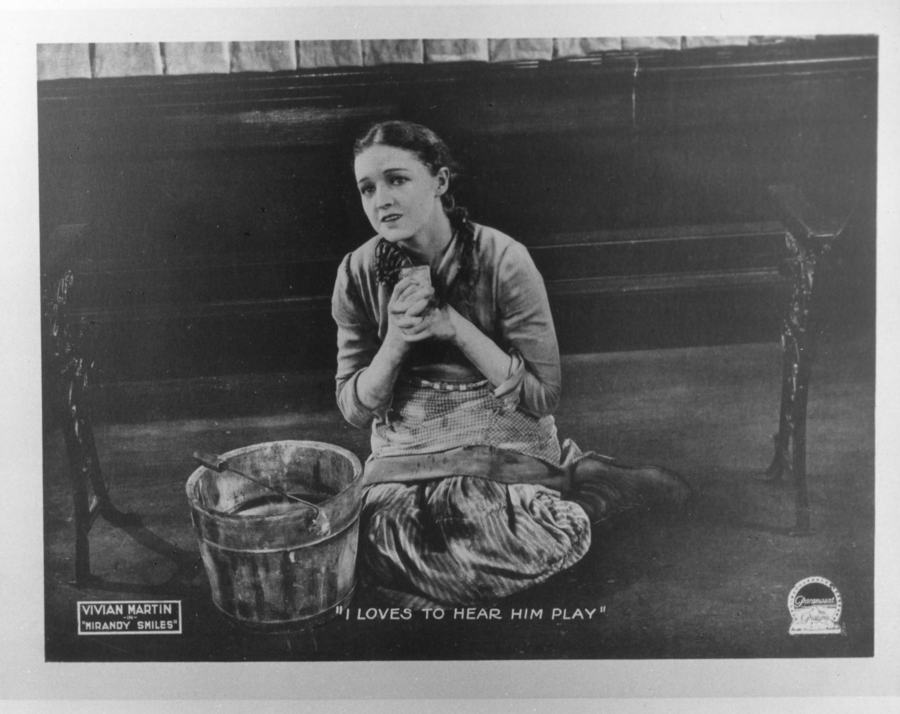
The silent era of cinema, particularly the transitional period of the late 1910s, served as a fertile crucible for narratives concerning the fluidity—or lack thereof—of the American class structure. In Mirandy Smiles (1918), we are presented with a pellucid example of the 'waif-to-woman' metamorphosis that captivated audiences of the time. Starring the irrepressible Vivian Martin, the film functions as both a charming romantic comedy and a subtle, perhaps unintentional, critique of the socioeconomic barriers that defined the era. Unlike the gritty realism found in later decades, this production drapes its social commentary in the soft focus of Artcraft’s high-production values, yet the underlying friction remains palpable.
Vivian Martin, often overshadowed in the historical record by the monolithic presence of Mary Pickford, brings a unique, sprightly energy to the titular role. Her Mirandy is not merely a victim of circumstance but an agent of her own destiny. When we first encounter her, she is knees-deep in the soap-scum reality of her mother's profession, yet her eyes are perpetually fixed upward. This verticality is mirrored in the film's spatial logic: the basement laundry, the ground-level scrubbing of the opera house, and the elevated loft where the organist resides. To understand Mirandy’s ambition, one must look toward Little Miss Nobody, where the struggle for identity amidst poverty serves as a precursor to this more refined exploration of status.
The narrative propellant of Mirandy Smiles is the protagonist’s realization that love, in its purest form, is often insufficient to bridge the chasm of cultural capital. Her affection for the organist (played with a stoic, melodic grace by Louis Willoughby) is the catalyst for a radical self-reinvention. This isn't just about wealth; it’s about the semiotics of the upper class—the way one walks, speaks, and carries the weight of their history. The film excels in depicting the 'labor' of being a lady. Mirandy’s attempts to improve her standing are reminiscent of the thematic underpinnings in A Royal Romance, where the artifice of nobility is both a goal and a cage.
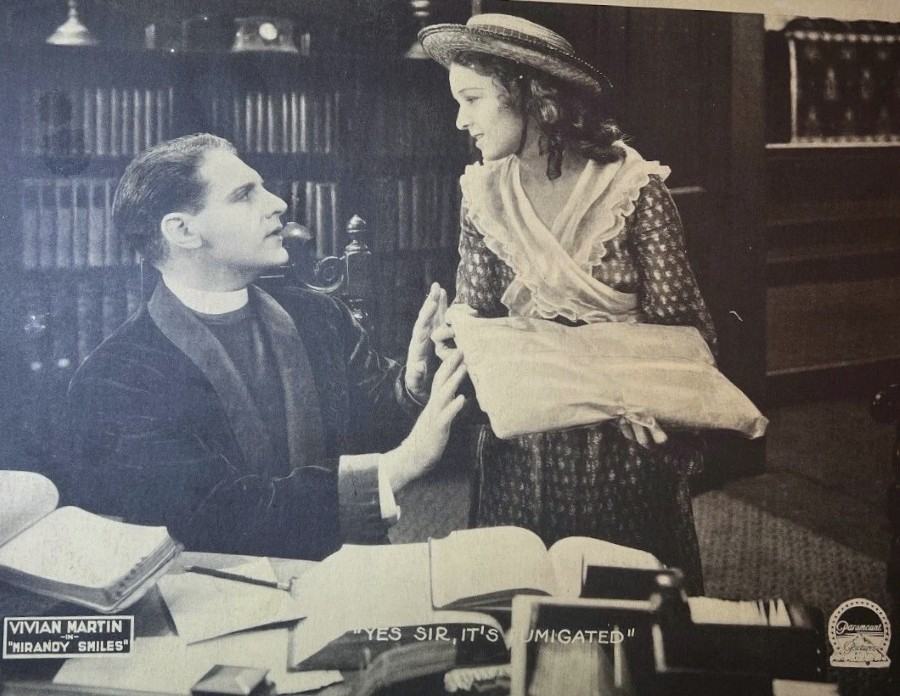
The opera house setting is a masterstroke of production design. It represents the pinnacle of high culture, a place where the elite gather to witness simulated tragedy while the 'invisible' workers like Mirandy ensure the marble floors reflect the diamonds in the audience. There is a poignant irony in her scrubbing the very stage where she might dream of standing. This dichotomy of visibility is a recurring trope in the works of writers Edith M. Kennedy and Belle K. Maniates, who frequently explored the interior lives of women trapped by the rigid expectations of their birth. One cannot help but compare this to the atmospheric tension in The Luring Lights, where the theatrical world serves as a deceptive siren for those seeking escape from the mundane.
Visually, the film benefits from the sophisticated lighting techniques that were becoming standard at Paramount-Artcraft. The use of chiaroscuro in the laundry scenes emphasizes the steam and the sweat, creating a tactile sense of burden. Contrast this with the bright, almost overexposed clarity of the social gatherings Mirandy eventually infiltrates. The camera lingers on Martin’s face, capturing the micro-expressions of a woman who is constantly 'code-switching' between her authentic self and her aspirational persona. It is a performance of layers, much like the deceptive identities explored in The Masqueraders.
Supporting performances by Douglas MacLean and Mayme Kelso provide the necessary friction to Mirandy’s trajectory. MacLean, in particular, offers a counterpoint to the organist’s refinement, representing a more accessible, albeit less 'elevated,' path. The tension between these two masculine ideals—the artistic and the pragmatic—mirrors the internal conflict Mirandy faces. Is she rising toward a genuine better life, or is she merely chasing a phantom of respectability? This existential query is handled with a lightness of touch that prevents the film from descending into dour moralizing, a pitfall that sometimes claimed contemporaries like Mothers of Men.
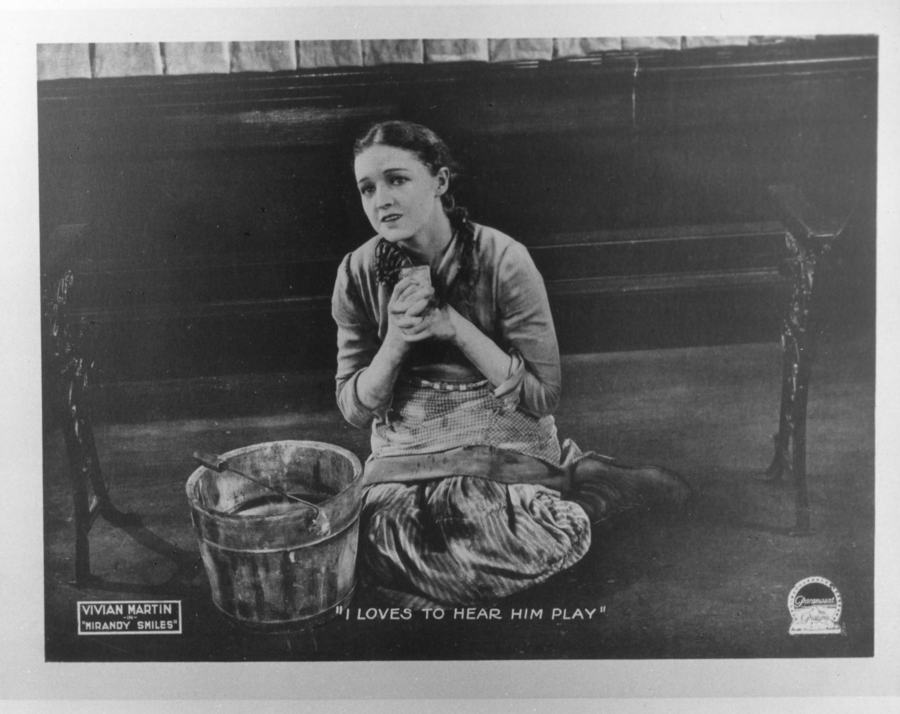
To view Mirandy Smiles today is to peer through a window into a world on the cusp of radical change. The end of the Great War and the impending suffrage movement inform the subtext of the film. Mirandy’s refusal to accept her 'place' is a microcosm of a larger societal shift. She is the 'New Woman' in embryonic form—ambitious, resilient, and unwilling to be defined by her domestic labor. While the film eventually leans into the conventions of the romantic resolution, the journey there is paved with a surprising amount of psychological depth. We see echoes of this struggle in the displaced characters of Half Breed, though Mirandy’s battle is fought in the drawing rooms rather than the rugged wilderness.
The screenplay by Kennedy and Maniates avoids the simplistic pitfalls of many 'rags-to-riches' stories. There is a palpable sense of the cost of social mobility. Every new dress, every practiced gesture, is a step away from her mother—a woman who embodies the dignity of labor. This maternal relationship provides the emotional anchor of the film. It reminds us that for every Mirandy who 'smiles' her way into the upper echelons, there is a foundation of unacknowledged toil. This theme of hidden domesticity and its consequences is explored with more gothic undertones in The Ghost House, but here it remains grounded in the mercantile reality of early 20th-century America.
Ultimately, Mirandy Smiles succeeds because of its unwavering belief in the transformative power of the human spirit—and, by extension, the power of cinema to reflect that transformation. It lacks the cynicism of modern social dramas, opting instead for a vibrant, almost tactile optimism. The organ music, though silent to the viewers of 1918, is felt through the rhythmic editing and the ecstatic expressions of the cast. It is a film that breathes through its visuals, a testament to a time when the image was the sole arbiter of truth. Comparing it to the international flair of Der neueste Stern vom Variété, one can see the distinct American flavor of self-improvement that defines Mirandy’s arc.
As the final reel spins out, we are left with the image of a woman who has not only gained a husband but has conquered her own insecurities. The 'smile' of the title is not just a gesture of happiness; it is a shield, a weapon, and a badge of victory. It is the smile of someone who has looked at the rigid structures of the world and decided to rewrite the rules. For those interested in the evolution of the female protagonist, Mirandy Smiles is an essential text, standing alongside works like Tyrant Fear as a study of resilience. It remains a sparkling gem of the silent era, deserving of a place in the pantheon of films that dared to suggest that even a laundress's daughter could reach for the stars—or at least, the organ loft.
IMDb 4.9
1930
Community
Log in to comment.