DbcultAccessing Vault...
Cult Review
Senior Film Conservator
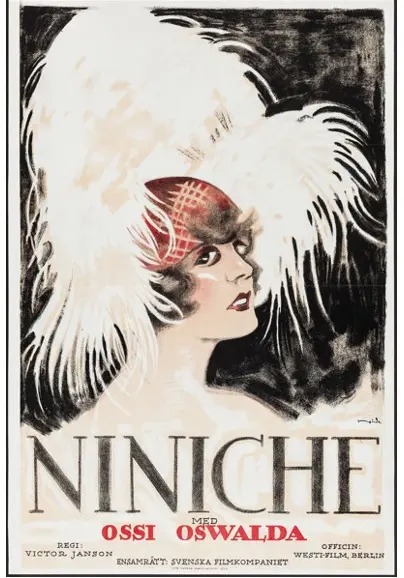
Is Niniche (1925) worth watching today? Short answer: yes, absolutely, especially if you appreciate the intricate mechanics of early silent comedy and the raw, unpolished charm of a bygone era. This film is a delightful discovery for silent film enthusiasts, cinephiles interested in the evolution of comedic storytelling, and those seeking a heartwarming, if somewhat simplistic, romance. It is decidedly not for viewers who demand fast-paced modern narratives, complex psychological depth, or dialogue-driven humor.
This German silent film, a spirited farce, offers a fascinating glimpse into the comedic sensibilities of the 1920s. It might lack the sophisticated polish of a later Lubitsch or the grand scale of a Murnau, but it possesses an undeniable, infectious energy. Its simplicity is its strength, allowing the physical comedy and the expressive performances to truly shine without the distraction of intricate subplots.
To truly appreciate Niniche, one must approach it with an understanding of its historical context. This isn't just a movie; it's a window into how stories were told and laughter was elicited a century ago. It works. But it’s flawed.
This film works because: Its central premise, while simple, provides a robust framework for classic comedic misunderstandings, driven by a delightful lead performance that anchors the entire narrative.
This film fails because: The pacing occasionally lags in the middle act, and some of the comedic resolutions feel a touch too convenient, even for a farce, undermining the stakes ever so slightly.
You should watch it if: You have an affinity for the innocent charm of 1920s cinema, appreciate broad physical comedy, and enjoy a romantic plot with a satisfying, if predictable, resolution that leaves you with a smile.
For those who cherish the artistry of silent cinema, Niniche offers more than just historical curiosity. It presents a masterclass in visual storytelling and the power of non-verbal acting. Ossi Oswalda, in particular, delivers a performance that transcends the limitations of the medium, making her character's plight genuinely endearing and her triumphs truly earned.
The core of Niniche is a classic case of mistaken identity, elevated by the inherent innocence of its protagonist. Yvette's scheme, while selfish, sets the stage for a delightful exploration of social class, appearance versus reality, and the unexpected nature of true love. The film skillfully plays on the audience’s knowledge of the deception, creating a constant undercurrent of dramatic irony.
Niniche’s initial foray into high society, clumsily attempting to mimic Yvette’s sophistication, is where much of the early humor lies. Her struggle to maintain the facade, coupled with her genuine kindness, is what ultimately captivates Clifton. This isn’t just a plot device; it's a commentary on authenticity. The film argues, quite convincingly, that genuine character will always win out over superficial pretense, no matter how convincing the act.
The turning point, the misunderstanding about the 'child,' is a brilliant comedic catalyst. It’s a moment designed to elicit both laughter and sympathy, highlighting the absurd lengths to which assumptions can lead. Niniche's desperation to clear her name, despite her inability to explain the situation without revealing Yvette's secret, builds significant emotional tension within the comedic framework. It's a testament to the script's ability to wring both humor and pathos from a simple premise.
The direction in Niniche, while not attributed to a single auteur in the credits, expertly utilizes the silent film vernacular to convey its story and gags. The camera often lingers on facial expressions, allowing the audience to fully grasp the internal turmoil or comedic delight of the characters. This visual emphasis is crucial for a film devoid of spoken dialogue.
Pacing is generally brisk, particularly in the setup and the resolution. The initial scenes establishing Yvette’s need for an imposter and Niniche’s hesitant agreement move with a commendable urgency. The film's energy occasionally dips during the prolonged period of Clifton’s confusion and Niniche’s silent suffering, which, while necessary for the plot, can test modern viewers’ patience. However, the payoff in the final act, with its flurry of revelations and reconciliations, reinvigorates the narrative.
Consider the scene where Clifton first confronts Niniche about the supposed child. The director employs quick cuts between Clifton's horrified expression and Niniche's bewildered, then heartbroken, reaction. The visual cues – the way Niniche clutches her hands, her downcast eyes – communicate more effectively than any intertitle could. This kind of precise, emotionally charged visual direction is what elevates the film beyond mere slapstick, akin to the nuanced emotional beats found in films like The Ghost of Rosy Taylor, which also relied heavily on visual storytelling to convey intricate emotional states.
The heart and soul of Niniche undoubtedly lie in its performances, particularly that of Ossi Oswalda as the titular character. Oswalda is simply luminous, embodying Niniche with a blend of wide-eyed innocence, clumsy charm, and profound emotional depth. Her transformation from a timid dishwasher to a hesitant imposter, and then to a heartbroken woman, is utterly convincing.
Oswalda’s physical comedy is impeccable, whether she’s awkwardly navigating a high-society event or expressing utter despair with a slump of her shoulders. Her ability to convey complex emotions through subtle gestures and expressive eyes is a masterclass in silent acting. When she is accused of having a child, her face shifts from confusion to profound hurt, a silent scream of injustice that resonates deeply.
Victor Janson, as Clifton, provides a solid foil. He plays the detective with a compelling blend of professional duty and romantic susceptibility. His transition from smitten admirer to shocked accuser, and finally to delighted suitor, is believable, if somewhat broad. The chemistry between Oswalda and Janson, though built on a foundation of misunderstanding, feels genuine, anchoring the romantic comedy aspect of the film.
The supporting cast, while less central, fulfills their roles adequately, contributing to the comedic chaos. Gerhard Ritterband as Ferdinand, Yvette’s fiancé, adds to the web of deceit, though his character serves primarily as a plot device rather than a fully fleshed-out individual. It’s Oswalda who carries the film, her presence magnetic, her performance unforgettable. She is the reason this film still holds charm today.
The cinematography in Niniche, while not groundbreaking for its era, is highly effective in serving the narrative. The camera work is functional, focusing on clarity and emotional impact. Close-ups are utilized judiciously to highlight key reactions, especially Oswalda’s nuanced expressions, drawing the audience into her emotional journey.
Set design plays a crucial role in establishing the stark contrast between Niniche’s two worlds. The opulent, ornate interiors of the hotel and Yvette’s lavish apartment starkly contrast with the humble, utilitarian setting of the hotel kitchen. This visual juxtaposition immediately communicates the social divide and the extent of Niniche’s deception. One particularly memorable shot captures Niniche, dressed in borrowed finery, looking utterly out of place amidst the grandeur, a visual metaphor for her internal conflict.
Lighting is also employed to enhance mood, though subtly. Brighter, more glamorous lighting often accompanies scenes of high society, while the kitchen scenes might feature a slightly dimmer, more naturalistic illumination. These choices, though standard for the period, are executed with precision, ensuring the visual storytelling supports the comedic and dramatic beats of the plot.
What strikes me most about Niniche is how profoundly the silent medium, paradoxically, amplifies the film's central theme of misunderstanding. Without dialogue, the characters are forced to rely on assumptions, visual cues, and the interpretations of others. This makes Clifton's misjudgment of Niniche, and her inability to articulate her truth, far more poignant and comedic than it might have been in a talkie.
The silence forces the audience to actively engage, to read every gesture, every glance, every intertitle with heightened attention. This creates a unique intimacy with the characters, especially Niniche, whose inner world is primarily conveyed through her expressive face. It’s a testament to the power of the medium that such a simple story can resonate so deeply without a single spoken word.
Niniche (1925) is more than just a historical artifact; it’s a charming, genuinely funny, and surprisingly heartfelt silent comedy. While its pacing might waver and some of its gags might feel a little quaint by today's standards, its central performances, especially Ossi Oswalda's, elevate it considerably. It’s a testament to the enduring power of simple storytelling and the magic of silent acting.
This film deserves to be rediscovered. It offers a warmth and innocence that is often missing in contemporary cinema, reminding us that laughter and love transcend the need for words. Don't expect a profound cinematic statement, but do expect to be charmed. It’s a delightful diversion, a sweet escape, and a wonderful example of early cinematic comedy. It works. But it’s flawed. And those flaws, ironically, make its successes all the more endearing. A definite watch for the right audience.
IMDb 7.7
1922
Community
Log in to comment.