DbcultAccessing Vault...
6.2/10
Senior Film Conservator
A definitive 6.2/10 rating for a film that redefined the boundaries of cult cinema. Mister Radio remains a cornerstone of transgressive art.
In the annals of silent cinema, where grand gestures and stark emotional landscapes often defined the narrative, Mister Radio emerges as a fascinating artifact, a testament to the era's boundless imagination and its nascent fascination with technology's dual promise and peril. Directed by Nunzio Malasomma and penned by Ernest Bouthley, this 1924 production transcends a simple adventure story, delving into the intricate web of human ambition, romantic entanglement, and the unforeseen consequences of scientific progress. It’s a film that demands a contemporary re-evaluation, not merely as a historical curiosity, but as a robust piece of storytelling that continues to resonate with themes that feel remarkably prescient even today.
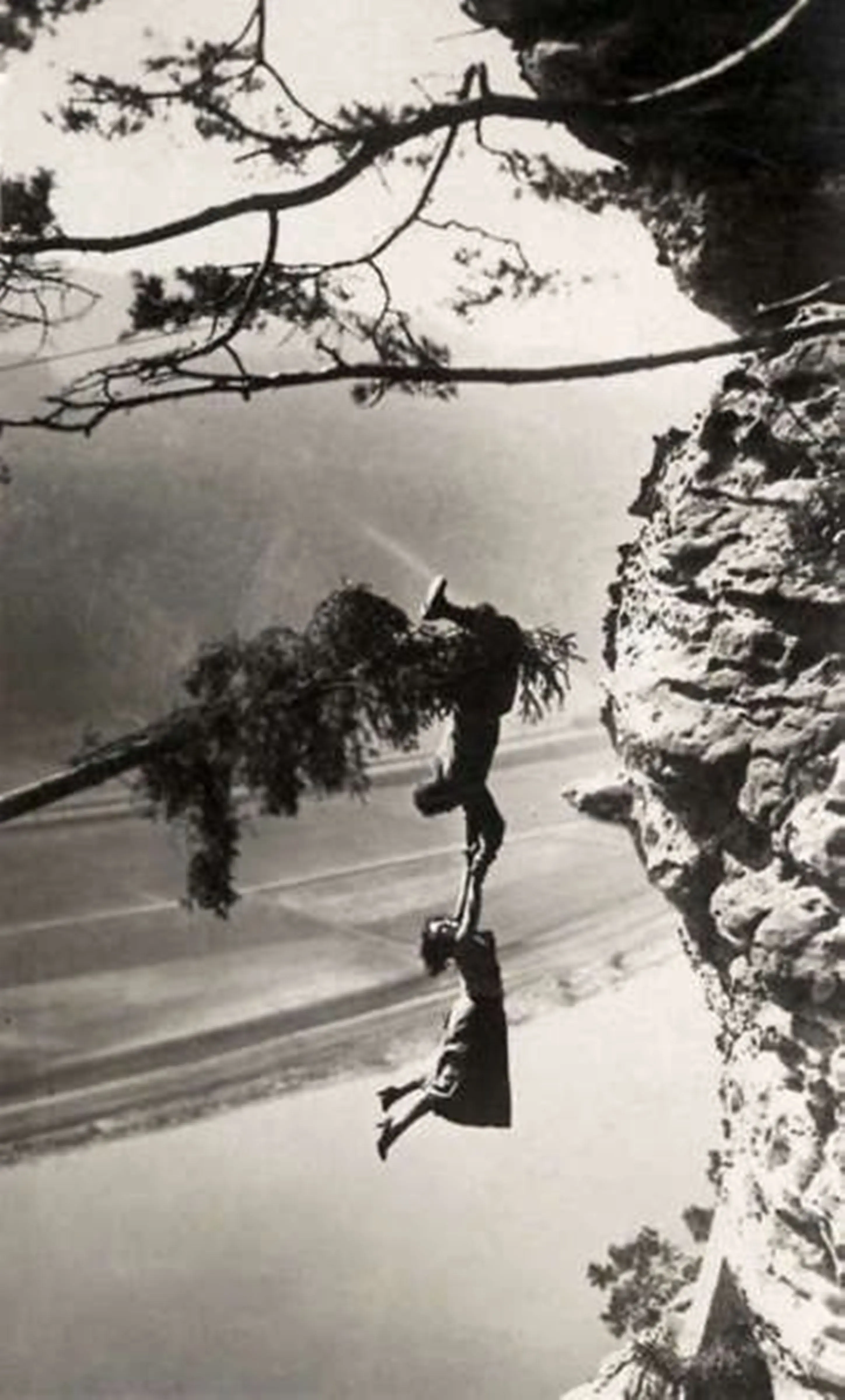
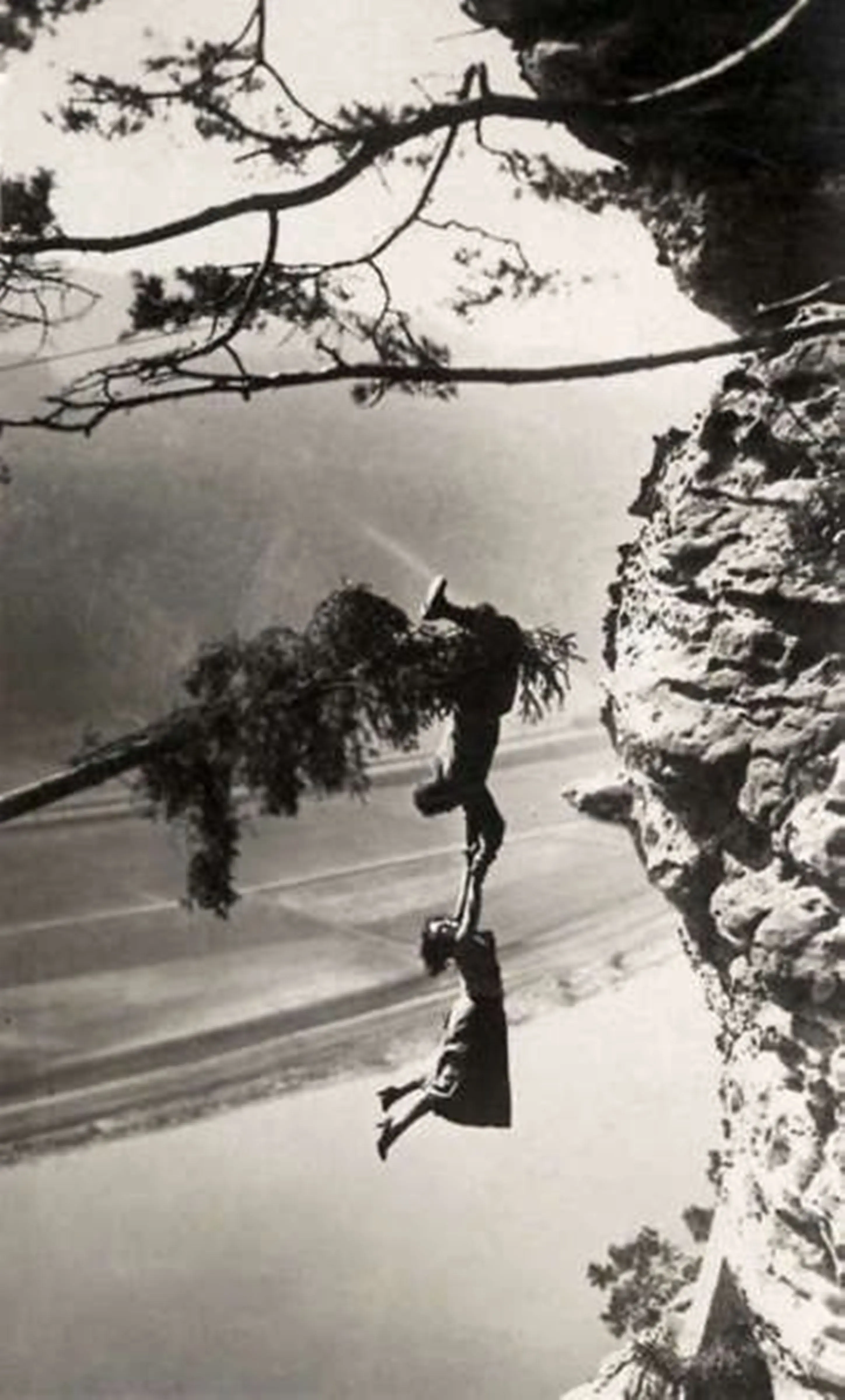
The narrative unfurls against the breathtaking, yet unforgiving, backdrop of the Saxon Alps. Here, amidst the vertical rockfaces that seem to scrape the very heavens, we are introduced to Gaston, portrayed with a compelling blend of athleticism and understated charisma by Angelo Rossi. His opening act is one of profound heroism: a daring rescue of four climbers teetering on the brink of oblivion. This pivotal sequence, executed with a palpable sense of tension and physical prowess, immediately establishes Gaston as a figure of formidable capability and inherent magnetism. It’s a classic cinematic trope, certainly, but one deployed here with an efficacy that sets the stage for the personal dramas that are soon to unfold. The sheer spectacle of the mountain rescue, likely a marvel for audiences of the time, is not merely an action beat; it’s the catalyst for the entire intricate plot.
The immediate aftermath of this life-saving feat sees Gaston inadvertently become the object of affection for two of the rescued women. This is where the film begins to weave its romantic complexities, moving beyond mere physical danger to explore the more treacherous terrain of the human heart. Evi Eva, with her expressive eyes and nuanced performance, embodies one of these admirers, her character likely representing a more traditional, perhaps more innocent, form of romantic devotion. The other, portrayed by M. Leonhard, presents a stark contrast. While equally smitten, her interest in Gaston is tinged with a pragmatism, or perhaps a shrewdness, that extends beyond mere infatuation. It is she who offers to finance Gaston’s grand, futuristic invention, a gesture that, while seemingly altruistic, carries with it an undercurrent of something more calculating, more deeply intertwined with her own mysterious machinations.
The very concept of a “futuristic invention” in a 1924 film titled Mister Radio is inherently intriguing. At a time when radio technology was still relatively nascent and rapidly evolving, its cinematic portrayal could range from a simple communication device to something far more ambitious and, frankly, fantastical. Malasomma and Bouthley shrewdly tap into the public's fascination and apprehension regarding new technologies. Is it a device for mass communication, a tool for control, or something else entirely? The film cleverly uses this ambiguity to build suspense, positioning the invention not just as a marvel of engineering, but as a potential harbinger of both progress and unforeseen peril. This thematic exploration of technology's double-edged sword is a common thread in cinema, from early works like Fritz Lang's Metropolis (though later) to contemporary sci-fi, and Mister Radio stands as an early, compelling example of this enduring cinematic concern.
The casting is uniformly strong, with each actor contributing to the film's rich tapestry. Angelo Rossi, as Gaston, anchors the film with a compelling presence. He conveys both the physical prowess of a mountain rescuer and the intellectual drive of an inventor, managing to make Gaston's dual roles believable and engaging. Evi Eva and M. Leonhard, as the romantic interests, navigate the complexities of their characters with skill, ensuring that their affections for Gaston, while passionate, never feel one-dimensional. The supporting cast, including Robert Scholz, Mario Fossati, Anna Gorilowa, Agnes Nero, Fred Immler, Magnus Stifter, and Luciano Albertini, flesh out the world of Mister Radio, each contributing to the escalating drama and the sense of impending revelation. Scholz, in particular, often excelled in roles that hinted at deeper, more sinister motivations, and it is plausible that his character here serves as a crucial antagonist or a key player in the financier's shadowy connections.
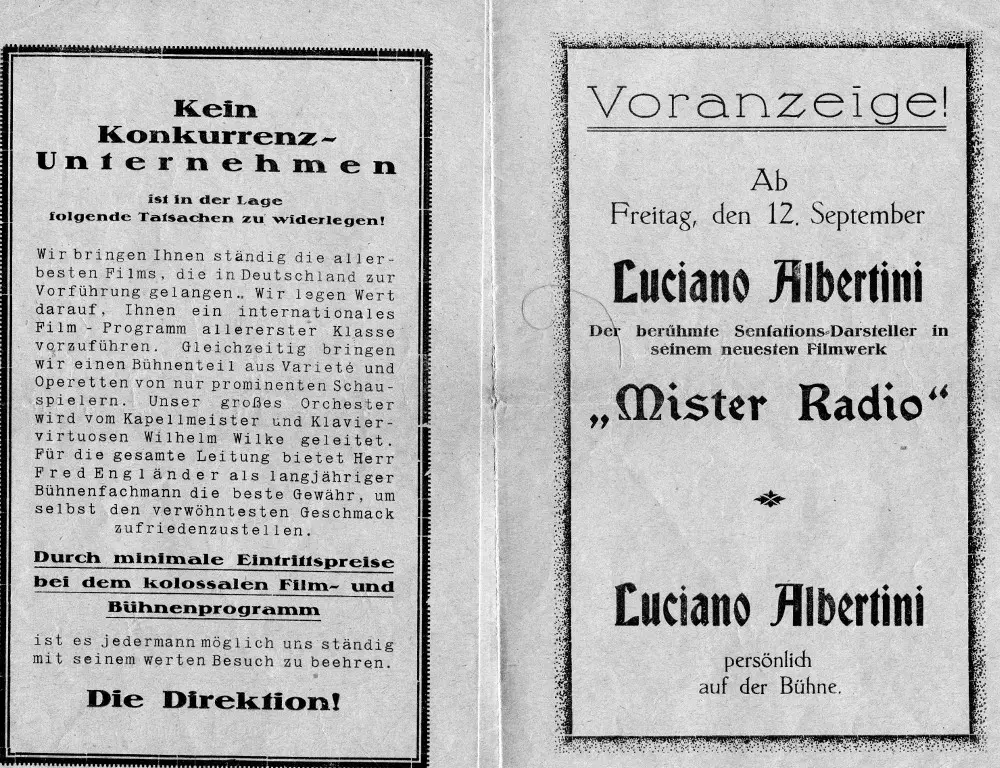
The narrative's central tension, beyond the romantic triangle, resides in the dark connection between the financier and Gaston’s fate. This plot device elevates Mister Radio beyond a mere melodrama, infusing it with elements of a psychological thriller. The audience is left to ponder the true motives behind the financier’s generosity. Is it love, manipulation, or a combination of both? This ambiguity is masterfully maintained, driving the narrative forward with an almost noir-like sense of impending doom. The film's ability to juxtapose heroic deeds and romantic overtures with a pervasive sense of underlying menace is one of its most commendable achievements. It suggests that even the most noble endeavors can be corrupted or exploited by unseen forces, a theme that resonates deeply in early 20th-century cinema, often reflecting societal anxieties of the time.
Cinematically, one can only imagine the visual grandeur of the Saxon Alps captured through the lens of 1920s filmmaking. The use of location shooting would have lent an undeniable authenticity and scale to the rescue sequences, contrasting sharply with the more intimate, perhaps claustrophobic, settings where Gaston's invention is developed or where the romantic intrigues unfold. The interplay of light and shadow, characteristic of German silent cinema, would undoubtedly have been employed to heighten the dramatic tension, particularly in scenes involving the mysterious financier and her dark secrets. The direction by Nunzio Malasomma, known for his ability to craft engaging narratives, likely uses these visual elements to their fullest, creating a world that is both expansive and intensely personal.
Comparing Mister Radio to other films of its era provides valuable context. The heroic exploits of Gaston might draw parallels to the grand adventures seen in films featuring characters like Maciste, as in Maciste turista, where physical prowess and moral fortitude are central. However, Mister Radio quickly diverges by introducing a layer of psychological complexity and technological intrigue that is more akin to the suspenseful narratives of Fantomas: The Man in Black, albeit with a focus on scientific innovation rather than pure criminality. The underlying sense of a hidden hand manipulating events, a common thread in European thrillers of the period, is expertly woven into the fabric of the story, making the audience question every seemingly benign interaction.
The exploration of human relationships under duress and the societal implications of ambition also finds echoes in films like Neglected Women, though Mister Radio frames these personal dramas within a larger, more technologically driven plot. The film's ability to balance these disparate elements—heroism, romance, scientific ambition, and moral ambiguity—is a testament to the sophisticated storytelling capabilities of Ernest Bouthley's screenplay. It’s a narrative that refuses to be neatly categorized, constantly evolving and surprising the viewer with its twists and turns. The writers seem keenly aware of the power of suggestion, allowing the audience to fill in certain gaps, thereby enhancing the overall sense of mystery and engagement. This approach keeps the audience on edge, actively participating in the unraveling of the plot rather than passively observing.
The character arcs, particularly that of Gaston, are compelling. He is not merely a static hero; his journey is one that forces him to confront the moral implications of his genius and the true nature of those who would support him. The two women, too, are more than simple love interests; they represent different facets of influence and desire, each pulling Gaston in a distinct direction. Evi Eva's character likely embodies the more idealized, perhaps purer, form of love, while M. Leonhard's character, the financier, symbolizes the seductive yet perilous lure of power and ambition. This dichotomy creates a powerful dramatic tension that propels the narrative towards its inevitable, and perhaps tragic, conclusion. The performances are crucial in conveying these subtle layers, relying heavily on gesture, expression, and the evocative power of intertitles to communicate complex emotional states.
The film's exploration of technology also touches upon the anxieties of a world grappling with rapid industrial and scientific advancement. The 'radio' in the title, while specifically referring to Gaston's invention, also serves as a broader metaphor for the unknown and potentially uncontrollable forces unleashed by human ingenuity. In this respect, it mirrors the fascination and fear surrounding scientific breakthroughs seen in other genre films of the era, such as Der grüne Skarabäus, which often explored the darker side of scientific ambition or mystical powers. The very notion of a 'futuristic invention' in the 1920s was laden with both utopian dreams and dystopian fears, and Mister Radio seems to deftly navigate this complex emotional landscape.
The climax of Mister Radio, while not explicitly detailed in the synopsis, undoubtedly revolves around the convergence of these threads: the ultimate revelation of the financier's true intentions, the fate of Gaston's invention, and the resolution of the romantic entanglements. Given the 'darkly connected' nature of the financier to Gaston's destiny, one can infer a dramatic confrontation, perhaps one that forces Gaston to make a profound moral choice or to face the devastating repercussions of his own brilliance. This kind of high-stakes resolution was a hallmark of silent era drama, designed to leave audiences breathless and pondering the film's deeper implications long after the credits rolled.
The enduring legacy of Mister Radio lies in its ability to combine elements of adventure, romance, and early science fiction with a compelling sense of psychological suspense. It’s a film that speaks to the universal human desires for heroism, love, and intellectual triumph, while simultaneously cautioning against the dangers of unchecked ambition and the hidden costs of progress. The intricate plotting, strong performances, and evocative setting all contribute to a cinematic experience that, even a century later, retains its power to captivate and provoke thought. For enthusiasts of silent cinema and anyone interested in the foundational narratives of early genre filmmaking, Mister Radio is not just a film to be watched; it is a film to be studied, appreciated for its sophisticated narrative construction and its timeless themes.
In a broader context of European silent films, Mister Radio fits comfortably within a tradition of films that explored the individual's struggle against larger, often insidious, forces. It’s not a simple hero’s journey but a more nuanced exploration of how personal acts can ripple through a complex social and technological landscape. The film’s ability to hint at a vast, unseen network of influence, represented by the mysterious financier, gives it a depth that elevates it beyond mere entertainment. This complexity is characteristic of the best silent films, which often communicated profound ideas through visual storytelling and the emotional resonance of their performers. The contributions of writers Ernest Bouthley and Nunzio Malasomma are evident in this intricate plotting, demonstrating a keen understanding of dramatic structure and character motivation that ensures the film's continued relevance.
Ultimately, Mister Radio stands as a testament to the creative vigor of early 20th-century cinema. It masterfully blends the thrill of physical adventure with the intrigue of a romantic drama and the speculative wonder of science fiction, all underscored by a pervasive sense of moral ambiguity. It invites viewers to ponder the price of genius, the true nature of love, and the inescapable intertwining of individual destiny with the broader currents of technological and societal change. It’s a film that, despite its age, speaks volumes about the human condition, making it a compelling watch for anyone with an appreciation for the foundational artistry of the moving image.
Review by an expert film critic. All rights reserved. For more classic film insights, explore our archives.
IMDb —
1919
Community
Log in to comment.