DbcultAccessing Vault...
Cult Review
Senior Film Conservator
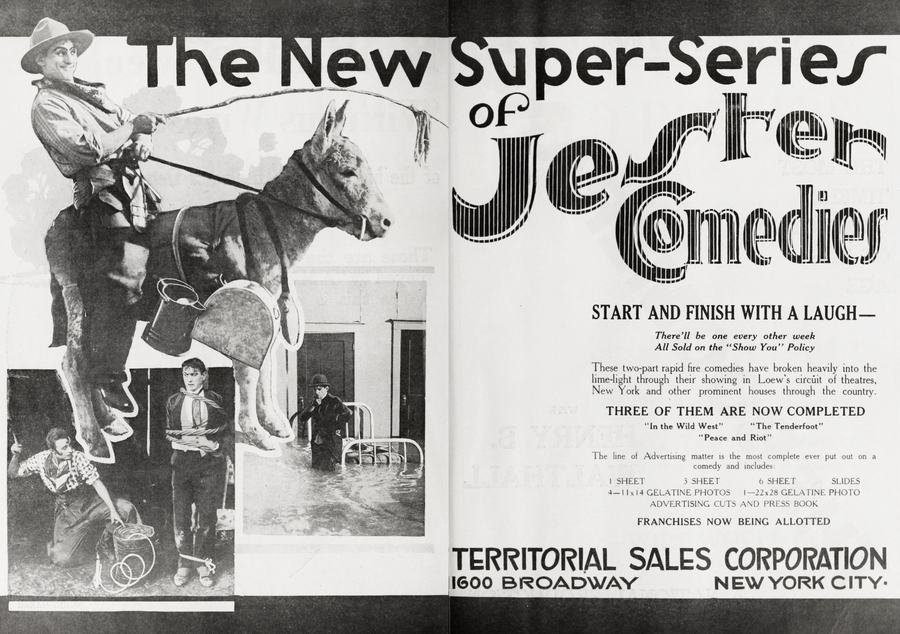
Stepping back into the cinematic past, one encounters a fascinating tapestry of storytelling, and among its most vibrant threads is the silent comedy. Marcel Perez's 1919 creation, The Tenderfoot, offers a delightful plunge into this bygone era, a period where physical performance and visual ingenuity reigned supreme. Perez, a polymath of early cinema—directing, writing, and starring—crafts a narrative that, while ostensibly simple, resonates with a timeless humor rooted in the universal struggle of adaptation. His portrayal of Percival Piffle, a character so utterly out of his element, is a masterclass in comedic timing and expressive physicality, solidifying his place alongside the great clowns of the silver screen.
The film opens by introducing Percival, a man meticulously groomed and impeccably dressed, a veritable caricature of urban refinement. His world is one of polished manners, hushed libraries, and perhaps the occasional afternoon tea. This carefully constructed existence is then spectacularly upended by the news of an inheritance: a sprawling, if somewhat dilapidated, ranch in the rugged American West. The sheer incongruity of this situation immediately sets the comedic tone. Percival’s journey westward is depicted with a charming naiveté; he arrives not with a spirit of adventure, but with a palpable sense of mild inconvenience and a trunk full of sartorial choices utterly unsuited for dusty plains and unruly livestock. This initial clash of worlds is where Perez’s genius truly shines, as he meticulously details every awkward stumble, every bewildered glance, every futile attempt to impose his metropolitan sensibilities upon an environment that simply refuses to conform.
Perez, as Percival, embodies the 'tenderfoot' archetype with an almost pathological commitment. His physical comedy is precise, yet wonderfully chaotic. We witness him attempting to mount a horse, a sequence that transforms into a ballet of missteps, near-falls, and bewildered equine expressions. The lasso, an iconic tool of the cowboy, becomes a serpentine menace in his hands, entangling himself more often than any steer. His interactions with the ranch animals are particularly memorable, born from a profound misunderstanding of their nature. A prize bull, majestic and formidable, is approached with the gentle cooing one might reserve for a lapdog, leading to predictable, yet uproarious, consequences. These vignettes are not merely slapstick; they are carefully orchestrated comedic pieces that highlight the absurdity of Percival's situation and his unwavering, if misguided, optimism in the face of overwhelming evidence to the contrary.
The supporting cast, while perhaps less central to the film's comedic engine, nonetheless provides essential foils and anchors for Percival's antics. Nilde Baracchi, portraying Maria, injects a much-needed dose of grounded realism and spirited pragmatism into the wild West setting. Her initial reactions to Percival are a delightful blend of incredulity and exasperation, a humanizing mirror for the audience's own amusement. Maria’s character arc, moving from dismissive observer to a figure of subtle support and even burgeoning affection for Percival, is handled with a delicate touch, adding a layer of warmth beneath the constant stream of gags. This slow-burn development of their relationship provides a gentle emotional core, preventing the film from devolving into mere spectacle. Edna Holland, in her role, possibly as a rival rancher or a sophisticated visitor from Percival's own world, brings a different kind of energy. Her presence often serves to underscore Percival’s social awkwardness, her refined demeanor contrasting sharply with his escalating blunders, offering a subtle commentary on class and societal expectations.
Marcel Perez's directorial hand is evident in every frame, demonstrating a keen understanding of visual storytelling in the silent medium. The pacing is brisk, allowing gags to land effectively without overstaying their welcome, yet also providing moments for the audience to register Percival's bewildered expressions. He utilizes deep focus and carefully composed shots to ensure that multiple comedic elements are simultaneously visible, rewarding attentive viewers. The sets, though perhaps simple by today's standards, are effectively designed to facilitate the physical comedy, from rickety fences to strategically placed water troughs. Perez’s ability to extract humor from both broad physical action and subtle facial expressions speaks volumes about his directorial prowess. One can draw parallels to the meticulous staging seen in other contemporary comedies, such as The Honeymoon, where every prop and every movement is part of a larger comedic design. The ingenuity required to convey complex emotions and narratives without dialogue is a testament to the artistry of this era, and Perez navigates it with remarkable skill.
Thematically, The Tenderfoot delves into the timeless clash between urban sophistication and rural ruggedness, a narrative trope that has fueled countless stories. Percival’s journey is one of forced self-discovery, where his preconceived notions of competence and societal standing are systematically dismantled. Yet, the film avoids cynicism. Instead, it champions the idea that genuine character can emerge from the most unlikely of circumstances. Percival's eventual, if accidental, triumph over a nefarious scheme to rustle his cattle or swindle him out of his land is not a result of him suddenly becoming a master cowboy. Rather, it is a testament to the power of sheer, unadulterated luck and his own bewildering incompetence creating unexpected obstacles for the villains. This narrative choice is refreshing; it suggests that heroism isn't always about strength or skill, but sometimes about stumbling into the right place at the right time, or simply being too stubborn (or too clueless) to give up. This accidental heroism is a hallmark of many silent comedies, often seen in the works of other greats, where the protagonist's ineptitude inadvertently saves the day, much like in some sequences of Young Mr. Jazz.
The film also offers a fascinating glimpse into the social fabric of 1919 America. The Wild West, while perhaps already romanticized, still held a potent allure as a place of opportunity and challenge. Percival's arrival symbolizes the lingering tension between the established East and the burgeoning, untamed West. The film playfully critiques both worlds: the East for its effete gentility, and the West for its rough-and-tumble lack of refinement. Perez, with his European background, brings a unique observational quality to these cultural contrasts, perhaps even an outsider's perspective that allows for a more nuanced, albeit comedic, portrayal. This cultural commentary, subtle as it may be, elevates The Tenderfoot beyond mere entertainment, imbuing it with a surprising depth.
Technically, the film is a commendable effort for its time. The use of natural light for outdoor scenes adds an authentic texture to the ranch setting, a stark contrast to the often-staged environments of indoor productions. The costumes, particularly Percival’s progressively disheveled but always initially pristine attire, are integral to the visual gags. The film's editing, while perhaps not revolutionary, is purposeful, ensuring clarity in the rapid succession of comedic events. There's a particular sequence involving Percival attempting to milk a cow, which turns into a messy, multi-shot spectacle of flying milk and startled animals, a masterclass in silent film editing to maximize comedic impact. Such precise editing is a hallmark of well-executed silent comedies, akin to the careful construction of gags in Love and Lather.
The performances are universally strong, anchored by Perez’s magnetic presence. His ability to convey a wide range of emotions—from befuddlement to momentary indignation, from misplaced confidence to utter despair—all without uttering a single word, is truly remarkable. Baracchi’s Maria is not just a love interest but a character with agency and a refreshing practicality, often serving as the voice of reason amidst Percival’s chaos. Her subtle shifts in expression, from an initial eye-roll to a tender smile, speak volumes. Holland, too, delivers a nuanced performance, providing an elegant counterpoint to the rustic setting and Percival’s awkwardness. The ensemble works in harmony, creating a believable, if exaggerated, world for Percival’s misadventures to unfold.
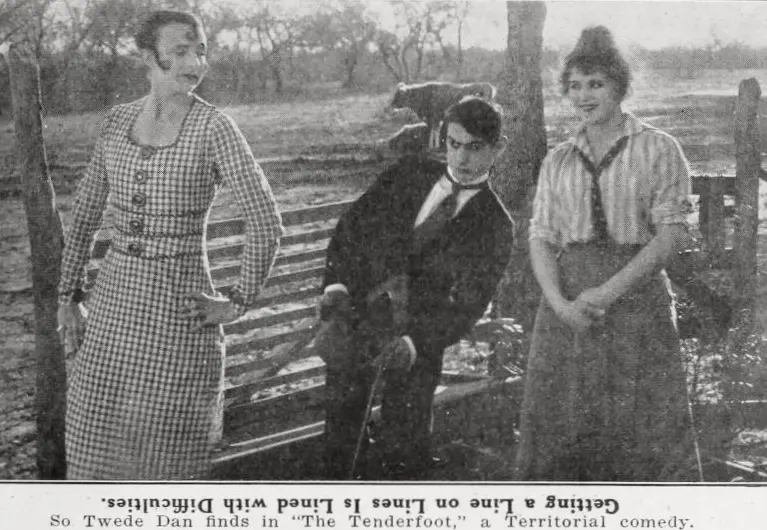
One of the enduring appeals of silent comedies like The Tenderfoot lies in their universal language. Laughter transcends spoken words, and the physical comedy, the exaggerated expressions, and the relatable predicaments of a character out of his depth speak to audiences across generations and cultures. While the specific context of a Wild West ranch might be dated, the core humor of a fish-out-of-water story remains potent. It's a reminder that human foibles and the absurdity of life are perennially funny. In an era dominated by rapid technological change and societal shifts, these films provided an escape, a moment of pure, unadulterated joy, and Perez was a master at delivering just that. The simple, yet profoundly effective, narrative arc ensures that the audience is consistently engaged, rooting for Percival even as they laugh at his continuous misfortunes.
Comparing The Tenderfoot to other films of its period, it stands as a testament to Perez's unique comedic voice. While Charlie Chaplin often explored themes of the underdog in urban settings, and Buster Keaton perfected deadpan stoicism amidst elaborate stunts, Perez carved out his niche with characters who were often well-meaning but hopelessly outmatched by their circumstances. His brand of humor is less about the grand, impossible stunt and more about the accumulation of small, humiliating, yet endearing failures. It's a comedy of manners colliding with the untamed, a gentle satire wrapped in a package of slapstick. This particular blend gives The Tenderfoot a distinct flavor, setting it apart from the more overtly dramatic or purely adventurous serials of the time, such as The Active Life of Dolly of the Dailies. Its focus is squarely on character-driven comedy, allowing the audience to invest emotionally in Percival's plight.
The enduring legacy of films like The Tenderfoot lies not just in their historical significance but in their continued ability to entertain. Watching Perez navigate the perils of ranch life with such earnest ineptitude is a pure joy. It’s a reminder of the power of visual storytelling, of the comedic brilliance that can be achieved without a single spoken word. The film is a valuable artifact, preserving a style of comedy that is both historically specific and universally appealing. Its charm is undeniable, its humor infectious, and its protagonist, Percival Piffle, an unforgettable figure in the annals of silent cinema. The meticulous detail in his character's progression, from an almost cartoonish urbanite to a slightly less cartoonish, but still hilariously out-of-place, ranch owner, is a testament to Perez's narrative skill. The film’s climax, where Percival inadvertently saves the day, is not a sudden transformation into a hero, but rather a culmination of his persistent, if often misguided, actions, reinforcing the film’s core message that sometimes, success is simply a happy accident.
In conclusion, The Tenderfoot is far more than a mere historical curiosity; it is a vibrant, engaging piece of cinematic art that continues to resonate. Marcel Perez’s multifaceted contribution, from behind the camera to front and center, is a remarkable achievement. It stands as a testament to the ingenuity and comedic genius prevalent during the silent era, offering a rich viewing experience that combines genuine humor with a subtle, yet insightful, commentary on human nature and societal contrasts. For aficionados of early cinema and newcomers alike, this film provides a delightful and thoroughly entertaining journey into the heart of silent comedy. The film’s vibrant energy, much like the spirited performances found in La principessa, ensures that it remains a captivating watch, proving that true comedic talent transcends the limitations of its medium and era. It’s a delightful exploration of how a fish-out-of-water can, through sheer comedic force, become the most captivating creature in the pond.
The narrative arc, while seemingly straightforward, is punctuated by a series of escalating comedic set pieces that demonstrate Perez's understanding of comedic rhythm. From his initial attempts to command respect from the hardened ranch hands, which typically result in him being playfully, or sometimes accidentally, humiliated, to his struggles with the very tools of the trade – the saddle, the branding iron, the cowboy hat that never quite stays put – every moment is crafted for maximum mirth. The visual gags are not merely isolated incidents but build upon each other, creating a cumulative effect of delightful chaos. One particular scene, where Percival attempts to repair a fence using only a tiny, ornamental hammer and nails that refuse to cooperate, culminates in a domino effect of collapsing structures, perfectly illustrating his profound unsuitability for manual labor. This meticulous construction of comedic sequences is a hallmark of Perez's style, reminiscent of the careful orchestration of mishaps in films like The Suburban.
Moreover, the film's depiction of the Wild West, while undoubtedly stylized for comedic effect, still manages to capture a sense of its vastness and inherent challenges. The backdrop of rugged landscapes and dusty trails provides a stark, yet beautiful, contrast to Percival's delicate sensibilities. This visual juxtaposition enhances the humor, making his struggles seem all the more pronounced against the epic scale of his surroundings. The cinematography, though black and white, effectively conveys the harsh sunlight and expansive horizons, grounding the fantastical elements of Percival's journey in a tangible world. This attention to setting, even within a comedic framework, speaks to the overall quality of production for its time. It’s not just a stage for gags, but a character in itself, constantly challenging Percival and providing endless opportunities for humorous conflict.
The subtle nuances in character interaction also contribute significantly to the film's charm. Maria's gradual softening towards Percival is portrayed through small gestures and knowing glances rather than overt declarations, adding a layer of genuine human connection. Her initial mockery slowly transforms into a protective amusement, and then perhaps even a budding admiration for his sheer resilience, despite his utter lack of skill. This emotional development is crucial, preventing Percival from becoming a one-note caricature. Even the grizzled cowboys, initially disdainful, eventually come to tolerate, and perhaps even affectionately tease, their new, peculiar boss. This evolution of relationships adds depth, much like the intricate character dynamics observed in Her Great Price, demonstrating that even in broad comedies, character development can be thoughtfully handled. It's a testament to the film's balance between outright hilarity and understated emotional resonance.
Perez’s genius lies in his ability to make Percival relatable, despite his exaggerated ineptitude. We laugh at him, certainly, but never entirely maliciously. There's an underlying sympathy for his predicament, a recognition of the universal experience of feeling out of place or unprepared. His sheer determination, however misguided, is oddly admirable. This connection with the protagonist is vital for the film's success, transforming what could have been a series of disconnected gags into a cohesive and emotionally engaging narrative. The audience roots for Percival, not necessarily to become a competent rancher, but to simply survive and, perhaps, find his own peculiar form of happiness. This empathetic connection is a hallmark of truly great comedic performances, allowing the humor to land more effectively because we care about the character experiencing the mishap. Much like the endearing qualities of protagonists in Maman poupée, Percival's vulnerability makes him all the more appealing.
The film's enduring appeal is also tied to its historical context. As a product of 1919, it captures a moment in time when cinema was rapidly evolving, exploring its capabilities and defining its genres. The Tenderfoot is a snapshot of early comedic filmmaking at its most vibrant, demonstrating the techniques and tropes that would go on to influence generations of comedians and filmmakers. Its simplicity is its strength, allowing the performances and visual gags to take center stage without the distractions of complex plots or special effects. It’s a pure form of entertainment, relying on the fundamental principles of comedy: character, situation, and timing. This purity is what makes it so accessible even today, offering a refreshing contrast to the often-overproduced blockbusters of modern cinema. Its historical value is undeniable, showcasing the foundational elements that would later be refined in films like It's a Bird.
Ultimately, The Tenderfoot stands as a charming and significant entry in Marcel Perez's filmography and in the broader history of silent comedy. It is a film that demands to be seen not just as a historical document, but as a vibrant, laugh-out-loud entertainment piece that continues to delight. Its themes of adaptation, unexpected heroism, and the clash of cultures remain perennially relevant, wrapped in a package of expertly delivered physical comedy and engaging character work. The film is a testament to the fact that sometimes, the greatest successes emerge not from deliberate skill, but from the glorious chaos of simply trying your best, even when your best is spectacularly, hilariously inadequate. It’s a joyous celebration of the human spirit, albeit a clumsy, bumbling one, and a firm reminder of the timeless power of laughter to bridge divides and illuminate the absurdities of life. The meticulous planning of each scene, ensuring that every visual joke lands with precision, underscores Perez's commitment to his craft, making The Tenderfoot a truly memorable cinematic experience.

IMDb —
1926
Community
Log in to comment.