DbcultAccessing Vault...
Cult Review
Senior Film Conservator
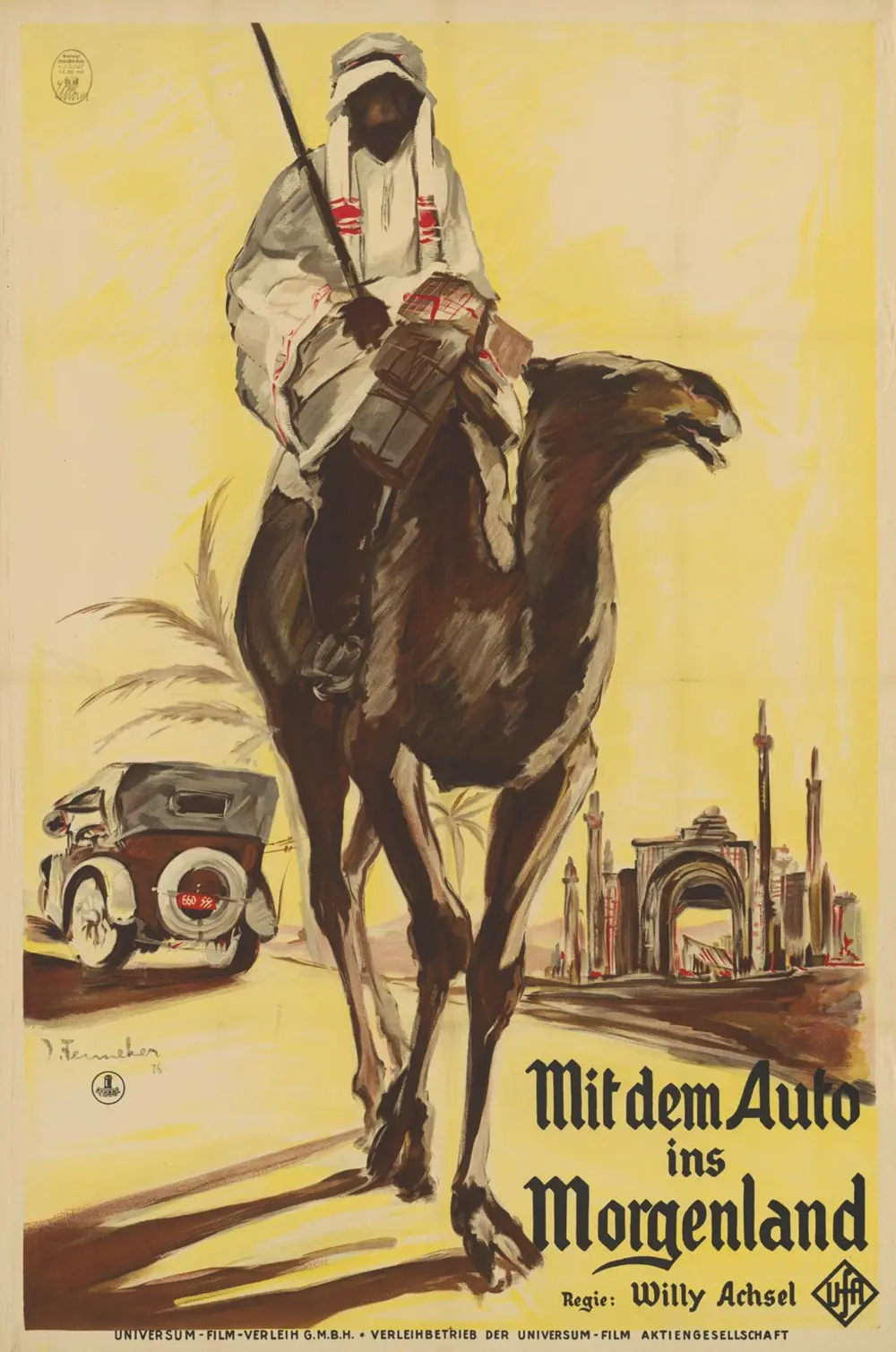
Is this film a must-see for the modern viewer? Short answer: only if you treat it as a moving museum exhibit rather than a cinematic narrative.
This film is for historians, automotive obsessives, and those curious about the Weimar Republic's obsession with exoticism. It is absolutely not for anyone seeking a fast-paced thriller or a deep character study.
1) This film works because it captures a world that no longer exists with a raw, high-contrast photographic clarity that modern digital filters can't replicate.
2) This film fails because it lacks a cohesive emotional core, often feeling like a glorified car commercial for an era of unreliable engines.
3) You should watch it if you want to see the exact moment when Western technology first collided with the ancient landscapes of the Middle East on celluloid.
Willi Achsel was not a subtle director. In Mit dem Auto ins Morgenland, he approaches the landscape of the Orient with the same cold, analytical eye one might use to inspect a cylinder head. The film isn't about the people of the Balkans or Turkey; it is about the triumph of the German axle over the Anatolian dust. This is a film of gears, grease, and grit. It feels heavy. The cinematography by the uncredited camera team is surprisingly sharp, capturing the shimmering heat of the desert with a starkness that reminds me of the visual depth in The Avalanche.
There is a specific scene where the car becomes bogged down in a riverbed. The camera lingers not on the frustration of the actors, but on the spinning tires. It is a fetishization of the machine. The human element, represented by Dorit Leska and Walter von Allwoerden, often feels secondary to the vehicle. They are merely the car’s attendants. This stylistic choice is bold, but it makes for an alienating experience. It is a film that demands you care about the journey’s logistics more than its destination.
Dorit Leska provides a performance that is surprisingly restrained for the silent era. Unlike the grand theatricality found in La Gioconda, Leska plays her role with a modern, almost weary pragmatism. She isn't a damsel; she is a passenger in a world that doesn't want her there. Walter von Allwoerden, playing the lead adventurer, is less a character and more a symbol of European confidence. He stands, he drives, he looks at maps. There is very little internal life here.
The supporting cast, including Heinrich Gotho and Aruth Wartan, are used primarily as local color. This is where the film’s age shows most painfully. The "locals" are often framed as obstacles or curiosities. It lacks the humanist touch seen in Sacrifice, where the characters feel integrated into their environment. Here, the Europeans are like oil on water—never mixing, always floating on the surface of the cultures they pass through.
The pacing of Mit dem Auto ins Morgenland is, to be blunt, exhausting. It mimics the actual experience of a 1920s road trip. This means long stretches of nothing followed by sudden mechanical failure. For the modern viewer accustomed to the tight editing of something like The Train Wreckers, this will feel like a slog. There is no traditional three-act structure. It is a linear progression of geography. Berlin. Sofia. Istanbul. Damascus. Jerusalem.
Each location is given a similar amount of screen time, regardless of its narrative importance. This egalitarian approach to geography kills the tension. We don't feel the stakes rising as they move further from home. We only feel the tires getting thinner. It is a film that refuses to build to a climax. It simply ends when the fuel runs out or the destination is reached. It is honest, perhaps, but it is not particularly dramatic.
Yes, but only if you are looking for a historical document. As a piece of entertainment, it is largely obsolete. However, as a record of the 1920s Middle East, it is invaluable. You see streets in Istanbul before they were paved. You see the faces of people who have never seen a camera before. That raw reality is worth the price of admission for the patient viewer.
One cannot discuss this film without addressing the elephant in the room: the colonial gaze. Achsel and Petersen’s script treats the Orient as a playground for Western technology. There is a sense of entitlement in every frame. The car is an invader. This makes for an uncomfortable viewing experience in the 21st century. Unlike Kaliya Mardan, which explores indigenous mythology with a sense of internal ownership, Mit dem Auto ins Morgenland is a film about looking from the outside in. It is voyeuristic. It is arrogant. And yet, that arrogance is exactly what makes it a fascinating study of the era's mindset.
The technical achievement of filming in these conditions in 1926 cannot be overstated. The cameras of the time were heavy, hand-cranked beasts. Keeping sand out of the gate and keeping the film stock cool in the desert heat was a Herculean task. The sharpness of the image suggests a level of technical mastery that rivals the best work in The Painted World. The light is harsh, but the filmmakers use it to create a sense of overwhelming space. The desert looks infinite. The car looks tiny. This scale is the film's greatest strength.
Pros:
Cons:
Mit dem Auto ins Morgenland is a fascinating failure. It fails as a drama because it forgets to be about humans. It succeeds as a time capsule because it captures the world with a clarity that few other films of the 1920s managed. It is a film of gears and sand. It is cold, it is distant, and it is occasionally breathtaking. If you can survive the slow pacing, you will be rewarded with a vision of the world that has long since vanished. But don't expect to be moved. Expect to be exhausted. It is a film that respects the road more than the audience. It works. But it’s flawed. In the end, it is a journey worth taking exactly once.

IMDb 5.6
1931
Community
Log in to comment.