DbcultAccessing Vault...
Cult Review
Senior Film Conservator
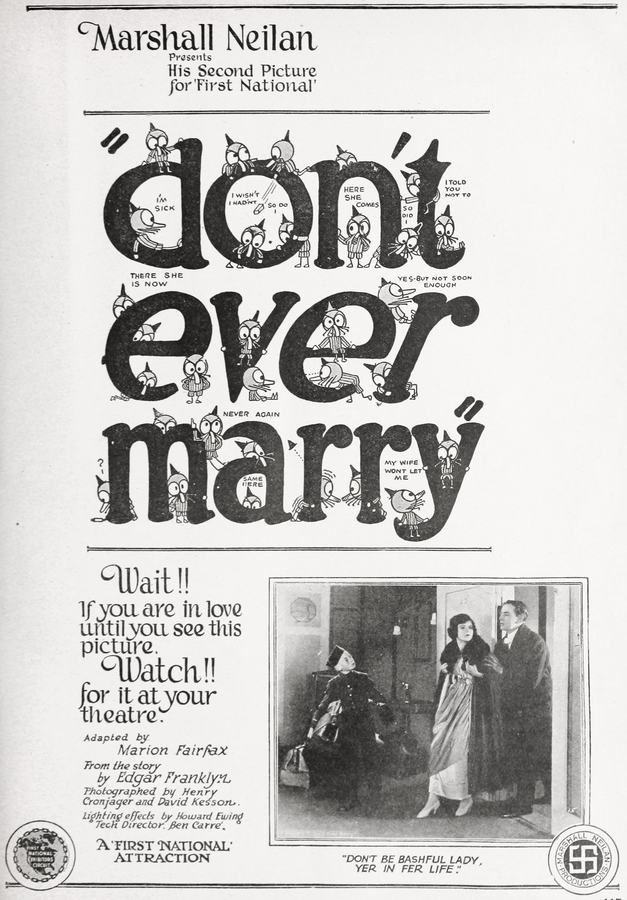
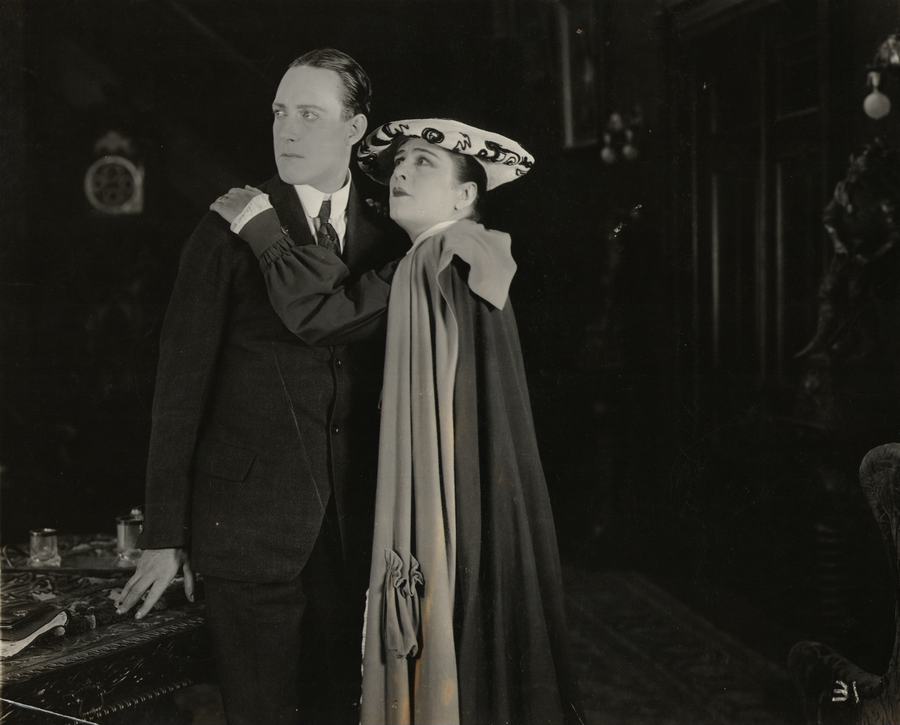
In the pantheon of early American cinema, the farce functions as a clockwork mechanism, and Don't Ever Marry (1920) operates with the precision of a Swiss horologist. Directed by the formidable duo of Marshall Neilan and Victor Heerman, this celluloid excursion into the perils of clandestine matrimony serves as a poignant reminder that the 1920s were not merely roaring, but screaming with comedic anxiety. The film eschews the heavy-handed moralism often found in contemporary dramas like Life of Christ, opting instead for a breathless exploration of how a single lie can metastasize into a terminal social condition.
The narrative architecture, penned by the astute Marion Fairfax and Edgar Franklin, relies on the 'blocking character' archetype, embodied here by the volatile Colonel Wynn (Tom Guise). His irrational hatred of Joe Benson (Matt Moore) provides the necessary friction to launch the plot into the stratosphere of absurdity. While films like Wrath might explore the darker psychological manifestations of anger, Don't Ever Marry transmutes that same energy into a source of perpetual motion. The secret marriage between Joe and Dorothy (Marjorie Daw) is not just a romantic transgression; it is an act of survival in an era where parental consent carried the weight of law.
The resort setting functions as a pressure cooker, a microcosm of high society where every hallway is a potential site of exposure. The introduction of Barbara Dow (Betty Bouton) introduces a layer of cynical opportunism that feels remarkably modern. Unlike the more traditional romantic obstacles found in The Wooing of Coffee Cake Kate, Barbara is an agent of chaos whose motivations are purely transactional. Her demand that Joe pretend to be her husband—in the presence of his actual wife—creates a visual and narrative dissonance that the directors exploit with surgical efficiency.
Matt Moore’s performance as Joe Benson is a masterclass in the 'slow burn.' He navigates the escalating demands of his three 'wives' with a physicality that borders on the acrobatic. The frantic energy of his performance mirrors the structural complexity of other ensemble pieces like Bride and Gloomy, yet Moore brings a specific brand of harried dignity to the role. He is the quintessential silent film protagonist: a man being crushed by the weight of a world he did not build, yet possessing the elasticity to bounce back from every metaphorical blow.
Visually, the film utilizes the depth of field available to 1920s cinematographers to create a sense of frantic spatiality. The doors, the balconies, and the long corridors of the resort are not merely backgrounds; they are participants in the comedy. This utilization of architecture as a comedic tool is a hallmark of the era, seen in varying degrees in films like Mary Regan, though here it is tuned specifically to the frequency of slapstick. The lighting remains bright and high-key, ensuring that every micro-expression of Joe’s mounting panic is legible to the audience.
The arrival of Myra Gray (Christine Mayo) and her bellicose ex-husband adds a third dimension to the deception. This subplot introduces a darker, almost noir-like element of jealousy that contrasts sharply with the lighter tone of the initial secret marriage. It evokes the atmospheric tension of Black Fear, but quickly pivots back to the safety of the comedic genre. The film’s ability to flirt with genuine danger—the threat of the Colonel’s violence or the ex-husband’s rage—without losing its whimsical footing is a testament to Neilan’s directorial control.
One must appreciate the linguistic wit embedded in the title cards. Marion Fairfax, a writer of significant repute, injects a level of sophistication into the dialogue that transcends the simple 'he said, she said' of lesser silents. The interplay between the characters is characterized by a sharp, staccato rhythm. Even without the benefit of synchronized sound, the audience can 'hear' the overlapping arguments and the frantic whispers. This narrative density is what separates a masterpiece like Don't Ever Marry from more ephemeral works like The Snail.
The character of the Colonel, played with blustering perfection by Tom Guise, represents the old guard—the rigid, unyielding social structures that the youth of the 1920s were so desperate to dismantle. His eventual capitulation, triggered by his own attraction to Myra Gray, is a brilliant subversion of the 'paternal blessing' trope. It suggests that morality is often a matter of personal convenience, and that even the most fervent traditionalist can be swayed by a pretty face and a bit of charm. This cynical undercurrent provides the film with a depth that persists long after the final iris-out.
When placed alongside the existential wandering of Peer Gynt or the grim naturalism of A White Wilderness, Don't Ever Marry appears deceptively light. However, its exploration of identity and the performance of social roles is no less profound. The protagonist is forced to inhabit multiple personas simultaneously, a theme that resonates with the psychological complexity of The Unknown. Joe Benson is a man fractured by the expectations of the women around him and the looming threat of patriarchal violence.
The supporting cast, including the young Wesley Barry and the veteran Thomas Jefferson, provide a rich tapestry of reactions that flesh out the resort's ecosystem. Every character, no matter how minor, seems to be hiding a secret or pursuing an agenda. This sense of a world populated by individuals with their own internal lives is a hallmark of the Neilan style. It creates a lived-in feel that is often missing from contemporary farces that rely solely on the central couple's chemistry.
The final act of the film is a whirlwind of resolution that somehow manages to tie every disparate thread into a neat, albeit absurd, bow. The misadventures that lead Joe and Dorothy to the brink of disaster are resolved not through honesty—which is rarely the currency of farce—but through a more complex alignment of desires. The Colonel's enamorment with Myra Gray is the 'deus ex machina' that the story requires, yet it feels earned through the sheer audacity of the preceding hour. It is a conclusion that mirrors the unexpected shifts in fortune found in Nászdal or the political maneuvering of Alemdar Mustafa Pasa.
In the end, Don't Ever Marry stands as a vibrant document of its time. It captures the frantic energy of a generation trying to redefine the rules of engagement in the romantic arena. It is a film that rewards multiple viewings, as the subtle background gags and the intricate plotting reveal new layers of ingenuity with each pass. While it may not possess the philosophical weight of Ferdinand Lassalle, it offers something arguably more precious: a perfectly calibrated escapist experience that reflects the universal absurdity of the human condition.
The enduring appeal of this film lies in its recognition that marriage, for all its romantic trappings, is a social contract fraught with peril, negotiation, and the occasional need for a good hiding place. It is a cinematic triumph of timing, tone, and the transformative power of a well-placed lie. For anyone seeking to understand the mechanics of silent comedy, or for those who simply wish to see a man juggle three lives while standing on a metaphorical tightrope, this film is essential viewing.
IMDb —
1920
Community
Log in to comment.