DbcultAccessing Vault...
Cult Review
Senior Film Conservator
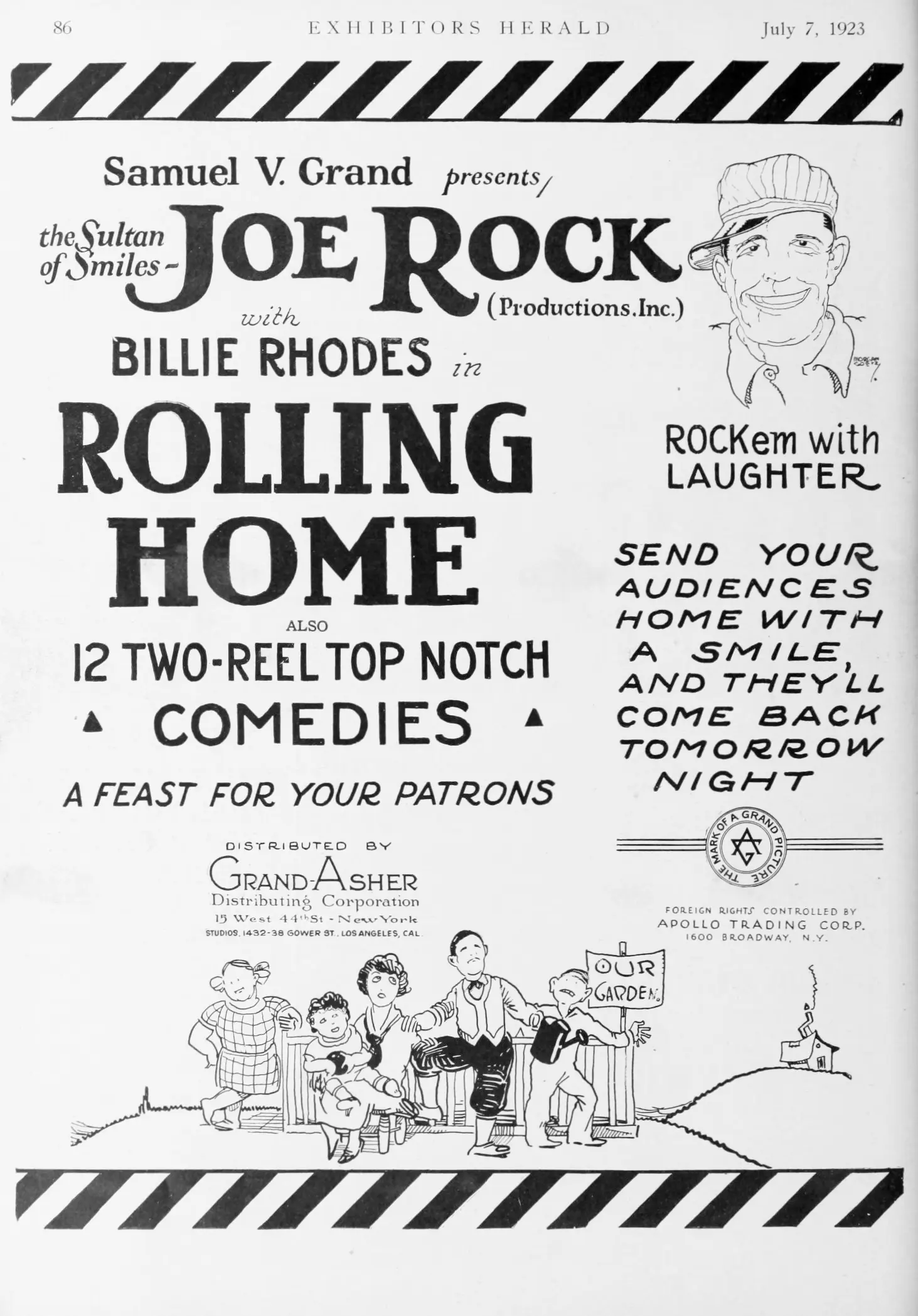
In the pantheon of silent comedy, few figures possess the frenetic, mechanical curiosity of Joe Rock. In Rolling Home, Rock manages to distill a burgeoning social anxiety—the scarcity of affordable urban living—into a masterclass of physical timing and prop-based humor. While contemporary audiences might view the 'tiny house' movement as a modern aesthetic choice, Rock’s protagonist views it as a survivalist necessity. The film opens not with a joke, but with a realization: the city has no room for the dreamer, only for the rent-collector.
The premise is deceptively simple yet profoundly resonant. Joe, faced with the impossibility of securing a traditional apartment, decides to bypass the real estate market entirely. He constructs a home on the chassis of an automobile. This is not merely a camper; it is a full-scale domestic rebellion. The ingenuity of the set design is where the film truly shines. Every inch of the vehicle is utilized, creating a claustrophobic yet functional environment that mirrors the density of the city Joe is attempting to escape. Much like the social commentary found in The Upstart, Rock uses his environment to highlight the friction between individual needs and societal structures.
While Joe Rock is the undeniable engine of the film, the supporting cast provides the necessary friction to keep the comedy grounded. Ella McKenzie brings a luminosity to her role that prevents the film from descending into pure cartoonishness. Her chemistry with Rock is built on a shared sense of desperation and hope, making their mobile domesticity feel like a genuine partnership rather than a mere plot device. Billie Rhodes and Buddy Williams round out the ensemble, offering a variety of comedic archetypes that challenge Joe’s nomadic lifestyle at every turn.
The performances here are markedly different from the heavy melodrama often seen in films like The Hunted Woman. In Rolling Home, the stakes are high, but the delivery is light. There is a specific rhythm to Rock's movements—a staccato energy that matches the sputtering engine of his house-car. When the vehicle hits a bump, the entire domestic order is upended, leading to a sequence of visual gags involving flying breakfast items and collapsing furniture that rivals the best of Keaton or Lloyd.
What elevates Rolling Home above standard slapstick fare is its underlying critique of the American Dream. The "hearth" has long been a symbol of stability and success, but Rock’s hearth is literally on wheels, subject to the whims of traffic laws and fuel prices. This subversion of the domestic space is a recurring theme in the era's more sophisticated comedies. For instance, while Mrs. Temple's Telegram deals with the lies told within the home, Rolling Home deals with the lie of the home itself—the idea that a permanent, stable address is a prerequisite for dignity.
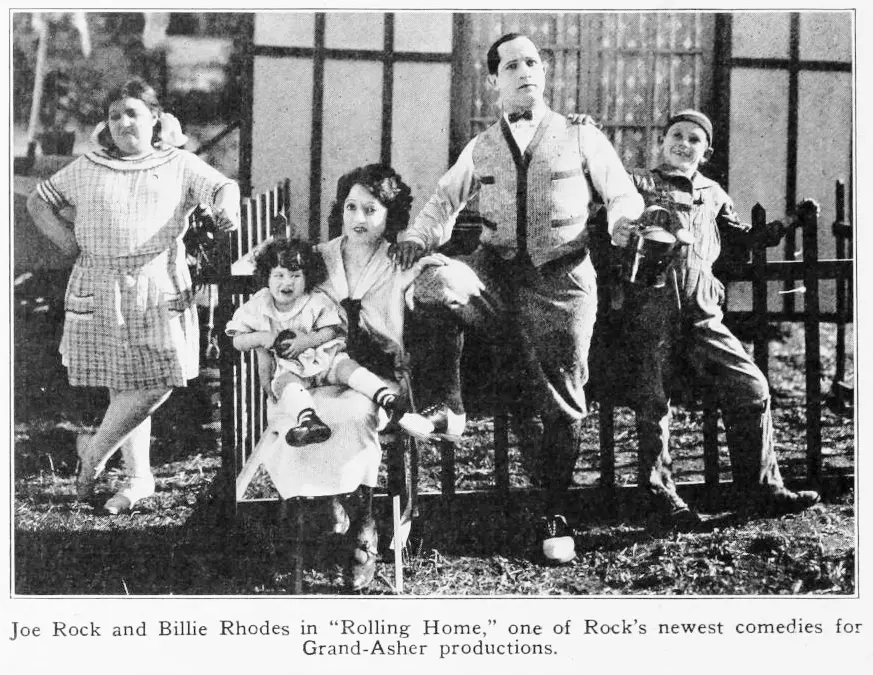
The film’s pacing is relentless. From the initial construction of the vehicle to the inevitable chaos of the open road, the narrative never stagnates. The cinematography captures the frantic nature of Joe’s existence, utilizing wide shots to emphasize the absurdity of a two-story structure weaving through traffic, and tight interior shots to highlight the logistical nightmare of living in a space designed for transport. The contrast with the more static, stage-like compositions of Samson and Delilah is stark; Rolling Home is a film defined by its refusal to sit still.
The "house-car" is the true star of the second act. The filmmakers clearly took great delight in engineering the various gadgets and hidden compartments that Joe uses to make his life livable. There is a sequence involving a fold-out bed that nearly traps Joe within the engine block—a metaphor, perhaps, for how modern man is increasingly consumed by his own inventions. This mechanical obsession is a hallmark of Joe Rock’s style, distinguishing his work from the more character-driven narratives found in The Great Love.
The visual language of the film relies heavily on the concept of "unstable space." In a traditional home, the floor is a constant; in Joe’s home, the floor is an active participant in the comedy. The way the characters compensate for the swaying of the house while it is in motion creates a unique physical vocabulary. It is a dance of survival, choreographed with the precision of a clockmaker. The film’s climax, involving a high-speed chase where the house begins to literally shed its exterior, serves as a poignant reminder of the fragility of Joe’s solution to the housing crisis.
To understand the impact of Rolling Home, one must look at the post-war urban boom of the 1920s. Cities were swelling, and the infrastructure was failing to keep pace. This film tapped into a very real anxiety, much like the social tensions explored in The False Trail. However, where other films might have turned to tragedy, Rock found the comedy in the struggle. He presented the "house-car" not as a tragedy of poverty, but as a triumph of the spirit.
The film also touches upon the burgeoning car culture of America. The automobile was no longer just a luxury; it was becoming the central axis around which American life revolved. By merging the car with the home, Rock was making a prescient statement about the future of the American landscape. He anticipated the trailer parks, the suburbs, and the modern digital nomad long before they became cultural staples. In this regard, Rolling Home is far more forward-thinking than contemporaneous works like Mistress Nell, which remained rooted in historical artifice.

It is often easy to dismiss silent comedy as mere "pie-in-the-face" humor, but Rolling Home demands a more nuanced reading. Every fall Joe takes is a fall against the system. Every time the house-car breaks down, it represents a failure of the dream of self-sufficiency. The humor is derived from the gap between Joe’s aspirations and his reality. He wants a mansion; he has a chassis. He wants a garden; he has a radiator leak. This dichotomy is the engine of the film’s brilliance.
When we compare this to the moralistic undertones of The Five Faults of Flo, we see that Rock is less interested in lecturing his audience and more interested in inviting them to laugh at the shared absurdity of their condition. There is no villain in Rolling Home other than the abstract concept of "the rent." Even the figures of authority—the police, the landlords—are treated as bumbling obstacles rather than malicious forces. The conflict is man versus the environment, and in this case, the environment is both the city and the machine.
In the final analysis, Rolling Home remains a vital piece of cinematic history because it refuses to age. The housing crisis of 1926 feels remarkably similar to the housing crisis of the 21st century. The desire to break free from the shackles of a landlord and find a space of one's own is a universal human drive. Rock’s solution—to put that space on wheels—remains the ultimate fantasy of the disenfranchised.
The film’s influence can be seen in everything from the works of Jacques Tati to modern sitcoms. Its ability to find humor in the logistical details of daily life is a testament to the writers' observational skills. While it may not have the haunting atmosphere of Fantasma or the religious fervor of Il miracolo della Madonna di Pompei, it possesses a vitality and a groundedness that makes it infinitely more relatable. It is a film about the small victories: a roof that doesn't leak (mostly), an engine that starts (eventually), and a place to call home, even if that home is currently parked in a no-standing zone.
As we watch Joe and his family navigate the hazards of the road, we are reminded that the "home" is not a fixed point, but a state of mind—and occasionally, a very well-engineered piece of machinery. Rolling Home is a joyous, chaotic, and deeply intelligent exploration of what it means to live on the edge of society, literally and figuratively. It is a must-watch for anyone interested in the evolution of comedy and the enduring power of the human imagination to solve the most mundane of problems in the most extraordinary of ways.
Whether you are a fan of the physical comedy found in Up the Road with Sallie or the high-stakes tension of The $1,000,000 Reward, Rolling Home offers something unique. It is a film that moves with the times, quite literally, and remains a testament to the genius of Joe Rock and the enduring appeal of the mobile life.

IMDb 6.7
1936
Community
Log in to comment.